COIN$147.35▼ 0.89%AAPL$306.08▼ 0.71%LEO$9.41▼ 2.40%NATGAS$2.89▼ 8.25%XAG$65.10▼ 0.02%XMR$390.09▼ 0.70%ADA$0.1855▼ 4.80%WTI$80.46▼ 5.13%MSTR$95.88▼ 1.49%XRP$1.01▼ 1.30%ZEC$467.70▼ 7.00%NVDA$216.91▼ 0.29%BRENT$83.76▼ 1.92%MSFT$502.42▼ 0.72%BNB$609.47▲ 1.40%RAIN$0.0128▲ 0.50%GOOGL$347.30▼ 2.86%AMZN$271.83▼ 2.25%TRX$0.3347▲ 1.10%ETH$1,862.39▼ 0.60%TSLA$331.44▲ 0.17%HYPE$53.82▼ 0.80%BTC$63,436.00▼ 1.20%NFLX$74.84▼ 1.90%SOL$74.93▼ 1.40%FIGR_HELOC$1.02▲ 1.60%META$603.11▲ 1.38%XAU$4,443.10▲ 1.86%USDS$0.9997▸ 0.00%DOGE$0.0704▲ 1.20%COIN$147.35▼ 0.89%AAPL$306.08▼ 0.71%LEO$9.41▼ 2.40%NATGAS$2.89▼ 8.25%XAG$65.10▼ 0.02%XMR$390.09▼ 0.70%ADA$0.1855▼ 4.80%WTI$80.46▼ 5.13%MSTR$95.88▼ 1.49%XRP$1.01▼ 1.30%ZEC$467.70▼ 7.00%NVDA$216.91▼ 0.29%BRENT$83.76▼ 1.92%MSFT$502.42▼ 0.72%BNB$609.47▲ 1.40%RAIN$0.0128▲ 0.50%GOOGL$347.30▼ 2.86%AMZN$271.83▼ 2.25%TRX$0.3347▲ 1.10%ETH$1,862.39▼ 0.60%TSLA$331.44▲ 0.17%HYPE$53.82▼ 0.80%BTC$63,436.00▼ 1.20%NFLX$74.84▼ 1.90%SOL$74.93▼ 1.40%FIGR_HELOC$1.02▲ 1.60%META$603.11▲ 1.38%XAU$4,443.10▲ 1.86%USDS$0.9997▸ 0.00%DOGE$0.0704▲ 1.20%
Delayed

Author: Raphael Rocher

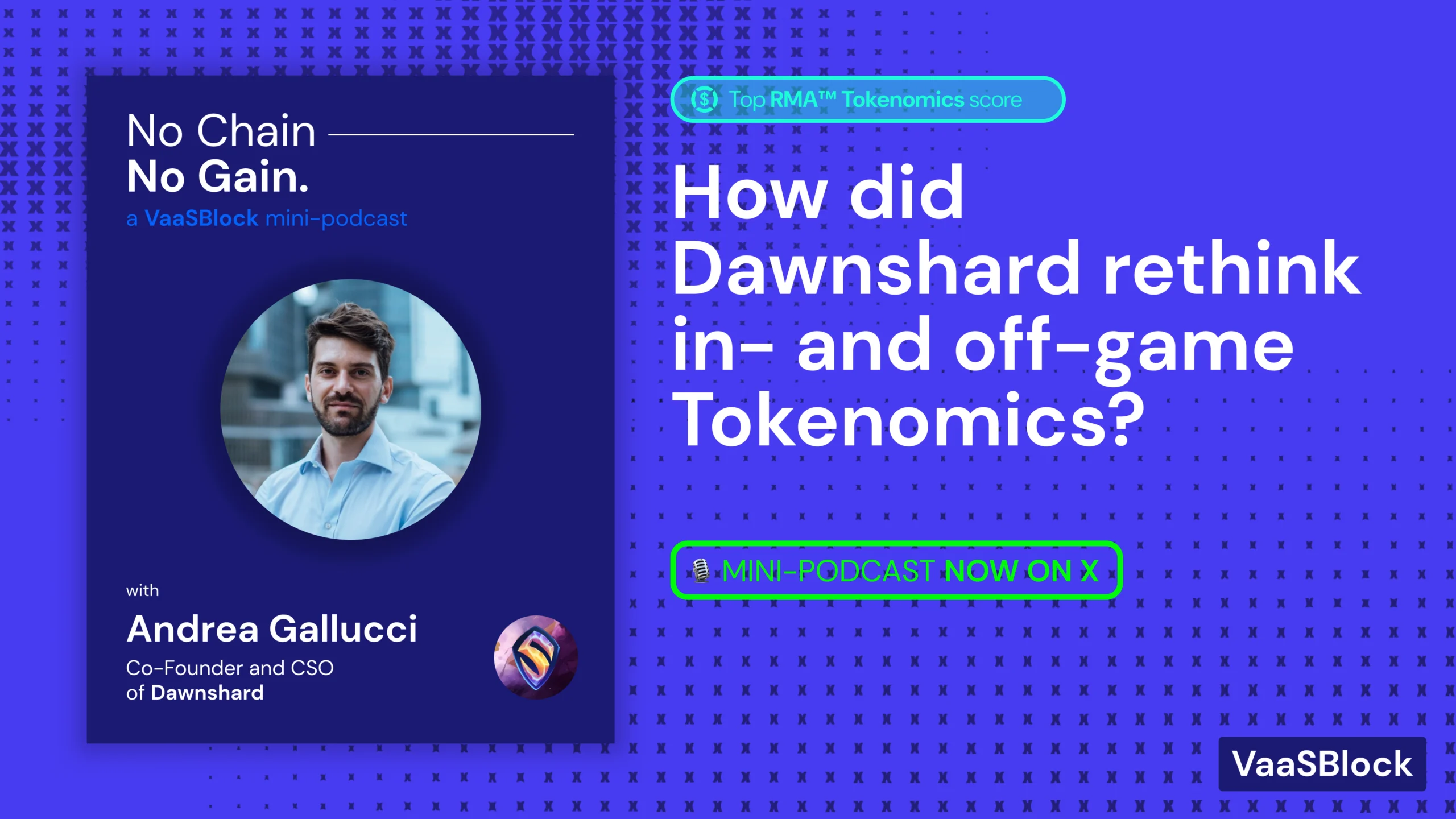
  • Early-stage web3 founders Andrea & Federico Gallucci, co-founders of Dawnshard

    Early-stage web3 founders Andrea & Federico Gallucci, co-founders of Dawnshard

    TL;DR: In this episode, host Raphael Rocher speaks with Andrea and Federico Gallucci, the team behind Dawnshard, a strategy card game designed to reward creativity and deck-building discovery. Federico explains the game’s core direction: deep card synergies, fast balance iteration, and strong player expression so multiple play styles stay viable. Andrea shares the product and Web3 vision, focused on ownership and on-chain identity that lets players truly own items and achievements, while keeping onboarding simple through flexible wallet options and low-friction (including gasless) interactions. Together they emphasize a “gameplay-first” philosophy, with Web3 features meant to enhance the experience without getting in the way for traditional players. The conversation closes on Dawnshard’s long-term plan to expand creator tools and community-driven content, building a player-centric ecosystem over time.

    Context

    NCNG host Raphael Rocher welcomes Andrea and Federico Gallucci to discuss Dawnshard and the thinking behind its design. Federico, the game director, outlines how the project aims to bring back the joy of discovering new deck synergies, while keeping the competitive meta fresh through rapid iteration and balance. Andrea, co-founder, complements this with a Web3 and product perspective, centered on player ownership, identity, and seamless onboarding.

    Across the conversation, the guests explain what makes Dawnshard different from other card games, how blockchain features are integrated without adding friction, and why “fun first” is non-negotiable. They also tease the long-term roadmap toward creator tools and community-driven value.


    Conversation Transcript

    About Dawnshard

    Raphael Rocher (Host, NCNG): Let’s start with a quick introduction. Please give us a short description: who you are, what you do, and what your project is.

    Federico Gallucci (Game Director, Dawnshard): Hi everyone, my name is Federico. I’m the game director of Dawnshard. Dawnshard is a strategy card game where we are aiming to create a fresh, competitive experience that rewards creativity and uniqueness in play style. We want to bring back the feeling of discovering synergies and building decks that feel truly your own.

    Raphael Rocher (Host, NCNG): To achieve that vision, what are the core pillars of the game? And what is your position in the project?

    Federico Gallucci (Game Director, Dawnshard): I lead the game design and direction—figuring out the mechanics, the cards, how everything fits together. I design the algorithm for matchmaking and progression and oversee the meta so players have many viable strategies instead of just one dominant build.

    Raphael Rocher (Host, NCNG): Okay. How about you, Andrea?

    Andrea Gallucci (Co-founder, Dawnshard): I’m Andrea. I focus on the blockchain and Web3 side—on-chain identity, item ownership, and how players can carry value across the ecosystem. I also handle product and growth, making sure the tech choices support the experience and the community.

    Raphael Rocher (Host, NCNG): Great. Could you explain what makes Dawnshard unique compared to other card games?

    Federico Gallucci (Game Director, Dawnshard): We’re building around three things: (1) deep synergy—cards that interact in unexpected ways; deck-building mechanics and card synergies; (2) fast iteration—balance updates that keep the meta fresh; and (3) player expression—tools that reward inventiveness, not just memorizing a top-tier deck list. We want players to win because they discovered something clever, not because they copied the latest trend.


    Long-term Vision

    Raphael Rocher (Host, NCNG): And on your side, Andrea—what’s the long-term vision from the Web3/product angle?

    Andrea Gallucci (Co-founder, Dawnshard): Ownership and identity. Players should own their collections and achievements and be able to bring them forward—this aligns with how Web3 and blockchain are enabling true digital ownership in games. We’re careful to keep onboarding simple—wallet choices, custodial options, gasless flows that remove friction, so players can just play. Over time we’ll open creator tools and community-driven content so value isn’t only top-down from the studio.


    What’s Next?

    Raphael Rocher (Host, NCNG): Anything else you’d like to add before we wrap?

    Federico Gallucci (Game Director, Dawnshard): Just that our focus is gameplay first. If it’s not fun, nothing else matters. We’re excited to show more soon. Andrea Gallucci (Co-founder, Dawnshard): Same here. We’ll keep the Web3 side invisible unless you want it—smooth for traditional players, powerful for advanced users. We believe in building a true player-centric ecosystem, as described in how Web3 gaming is redefining play, ownership, and community.

    Raphael Rocher (Host, NCNG): Perfect. Thanks Andrea and Federico, this was great.


    About Dawnshard

    Dawnshard is a strategy card game led by Federico Gallucci (Game Director) and Andrea Gallucci (Co-founder). The team is building a competitive experience centered on deep card synergies, fast iteration of balance and meta, and player expression that rewards invention over copying established deck lists. On the Web3 side, Dawnshard focuses on ownership and identity, allowing players to truly own collections and achievements while keeping onboarding simple through flexible wallet options and low-friction interaction. The long-term vision includes creator tools and community-driven content, creating a player-centric ecosystem where gameplay remains the priority.

    Since 2024, Dawnshard is an RMA-verified company.

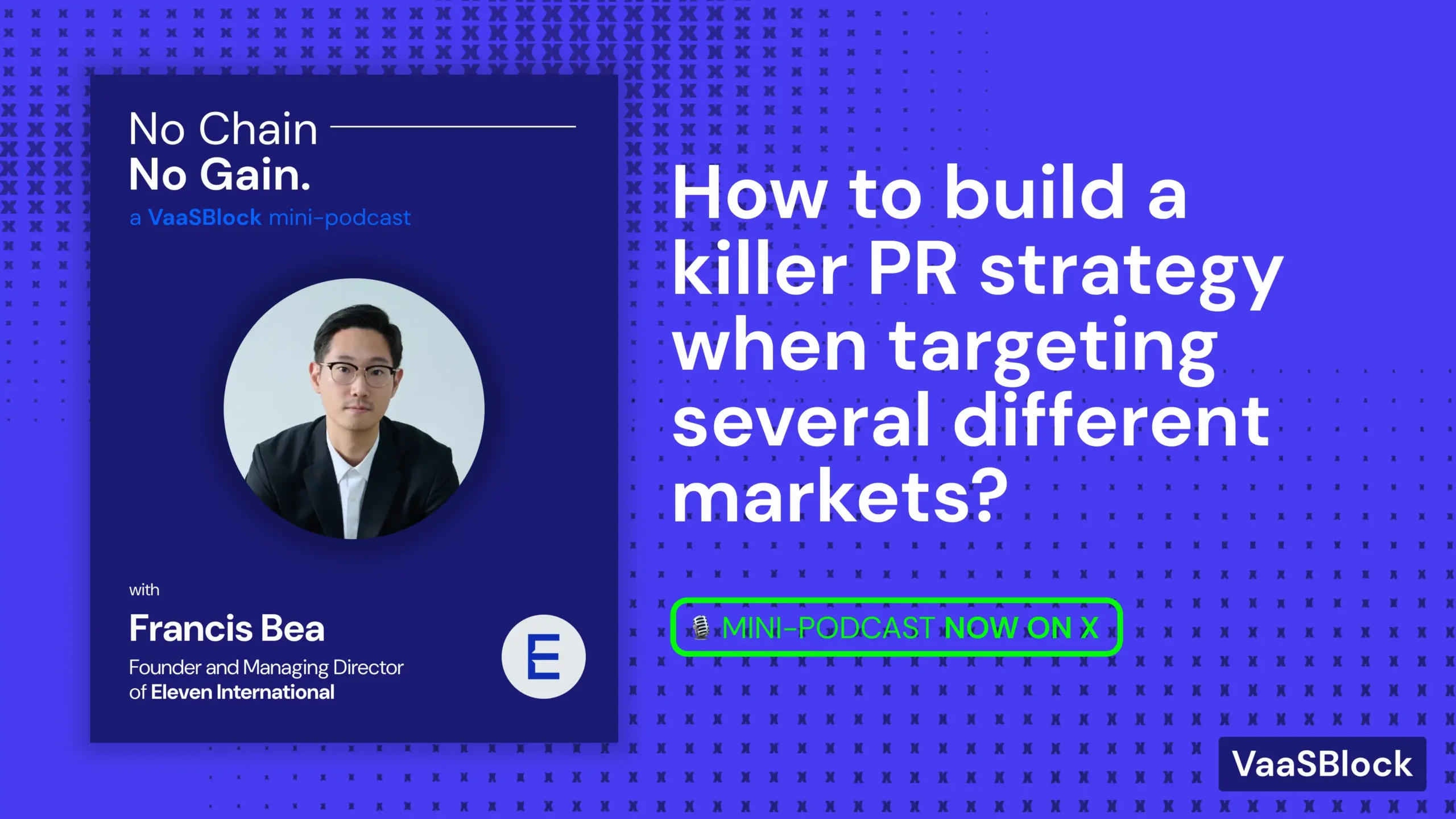
  • PR/Marketing agency director Francis Bea, founder of Eleven International

    PR/Marketing agency director Francis Bea, founder of Eleven International

    TL;DR: In this episode, Raph Rocher chats with Francis Bea, founder of Eleven International, about how a boutique cross-border PR agency can stay credible while working across both Web2 and Web3. Francis shares Eleven’s background (consumer tech, B2B tech, and crypto clients) and explains why Web3 reputation challenges require traditional communications discipline, not pay-to-play crypto PR. Their playbook: find angles journalists already care about: security, regulation, market trends.. and reframe announcements inside those larger narratives to earn tier-one and mainstream coverage. They also discuss a shrinking media landscape, making ongoing thought leadership essential between launches so journalists don’t forget a brand. Finally, Francis breaks down how PR fundamentals stay the same across industries, but execution must adapt heavily by region, with Western markets demanding far stronger news hooks. The conversation closes on Eleven’s results-driven positioning: high responsiveness, measurable outcomes, and a model built for demanding cross-border clients.

    Context

    NCNG host Raphael Rocher talks with Francis Bea, founder of Eleven International, about running a cross-border PR agency spanning Web2 and Web3. Francis shares his path from journalism to marketing and creating Eleven seven years ago. The boutique team (under 25 people) has supported brands like Xiaomi and Xreal, launched Brilliant Labs’ Frame AI glasses, and advised crypto firms including Kobo Wallet, imToken, Babel Finance, and Conflux.

    Credibility is the centerpiece: Web2 clients benefit from built-in trust, while Web3 brands still fight a “wild-west” image. Eleven’s answer is traditional media strategy over pay-to-play crypto wires, finding angles journalists already cover (security, regulation, market trends) and reframing token or product news inside those narratives. This helps Web3 clients reach both tier-one crypto press and mainstream outlets.

    They also discuss media contraction, the need for ongoing thought leadership between launches, and how PR fundamentals stay constant while tactics must adapt to local market norms.


    Conversation Transcript

    Introduction & Background

    R. Rocher (Host): There we go. To start things off, can you start by introducing yourself in two or three sentences, telling me what you do and a few elements of your background.

    F. Bea (Eleven International): My name is Francis, and I come from a general marketing and branding background. That started with my experience in journalism back in the day. That segued into me starting this agency called Eleven International, which has been around for about seven years already, which is quite a long time, I guess.

    For an agency like ours, we’re still at that boutique stage: we’re a little bit less than 25 people. But we do work with reputable clients, some of which have a global reputation. Names people might be familiar with would be Xiaomi and Xreal AR glasses. We’ve worked with a slew of smartphone brands and quite a few startup companies.

    For example, earlier this year we launched AI glasses called Frame from Brilliant Labs. And at the same time, we also work with crypto firms. We were the folks that launched some of the more well-recognized crypto companies like Kobo Wallet and imToken. At one point we helped launch and scale Babel Finance — of course they were eventually liquidated, though we did help them through that process from a communication standpoint.

    We also launched companies like Conflux, et cetera. For us, we straddle the best of both worlds in the sense that we’re fundamentally a traditional communications agency. Most clients know us for our expertise in the US and UK markets, but recently we’ve expanded to regions like Korea, Southeast Asia, and a bit of Europe and Japan. So we’re looking to diversify.

    The vast majority of our clients are in tech, but we’ve also been working with other types of clients. For example, a supplement brand from India that’s looking to build their reputation in the US. So overall, we’re a traditional cross-border communications agency helping brands jump from one country to another.

    What makes us unique is that we’re quite results-driven, even as a communications agency. There aren’t that many firms that can make that claim. We provide a certain level of guarantees in terms of results or expectations — especially because a lot of our early clients were Asian brands, and their expectations aren’t always the same as Western brands. That model has worked for us, and we apply it now with clients in the US and Canada as well.


    Keeping Credibility in Web2 & Web3

    R. Rocher (Host): OK, thanks. You mentioned you have different types of clients, including blockchain and Web3 companies. How do you manage to keep credibility on both sides, with Web2 corporations and with Web3, knowing that Web3 doesn’t have the best reputation globally? How do you manage that balance without giving up on your identity as a company?

    F. Bea (Eleven International): For Web2 companies it’s a little less difficult because there’s an implicit trust, especially with hardware companies or SaaS brands. But with Web3 or crypto, due to the history and reputation of a kind of wild-west ecosystem, the reputation has suffered.

    Of course, since institutional investors like banks and family offices became involved, things stabilized and the reputation has improved. But from outside looking in, there’s still that unfortunate negative reputation.

    So our goal with Web3 clients is to apply traditional communications methods. A lot of Web3 companies get pitched by random crypto agencies or newswire agencies that claim to be a full solution. But publishing on newswire or Chainwire doesn’t build trust or credibility with journalists — it’s pay-to-play. Journalists recognize it as sponsored or wire-republished, and it doesn’t create real long-term benefit.

    Short term, I understand there’s value — like token launches where few journalists want to touch it. But for us, we help clients identify key messages that communicate real value journalists will cover, often tied to current events or market trends.

    If a company is just announcing a token, few journalists will cover it unless it’s something huge like Coinbase. Unknown startups face a high probability of no coverage because journalists don’t want to accidentally promote scams — and unfortunately that’s still valid today with pump-and-dump schemes, meme coins, etc.

    So we apply traditional strategy: sometimes we push the client outside the box toward topics journalists will embrace — regulatory angles, security issues, things like that — and then bring in what the client wants to discuss within that frame.

    For example, when we launched a Web3 gaming company while Axie Infinity had big issues, we tied the token launch into the broader story of building a sustainable in-game economy. That let us “reframe” the token as part of solving a known industry problem.

    That approach opens doors not only with tier-one crypto publications like Cointelegraph, CoinDesk, Decrypt, but also mainstream ones like TechCrunch, Forbes, sometimes Bloomberg. The point is building legitimate credibility with journalists so the brand is recognized as legitimate too.


    How PR for Web3 Will Evolve

    R. Rocher (Host): Okay. Very clear. Still on the same topic, how do you see this evolve? There are only a limited number of serious PR actors in Web3 and tech. Do you think that number is going to go up — more entities and publications — or do you think traditional ones will include Web3 and blockchain more? How do you see it evolving?

    F. Bea (Eleven International): I think the media industry overall has been declining, whether Web3 or Web2. Publications have been slashing journalists, and it impacts how much coverage they can manage.

    We’ve seen an increase and decrease in willingness to cover crypto, but crypto is here to stay, so there will likely continue to be one or two journalists covering it — even if it’s only part of their beat.

    What’s harder is brands interjecting themselves into coverage. Journalists focus mostly on stories around security, regulation, and price volatility — maybe a fourth or fifth trend sometimes — but those are the core topics. Product launches and feature updates matter less to them.

    So it becomes more imperative for crypto companies to find ways to interject into those mainstream conversations to increase the odds of coverage.

    Also, crypto companies don’t always have news monthly. But journalists prefer to maintain relationships, otherwise they forget the company. If you announce something in month one and come back in month six, the journalist may not pick it up because you’ve fallen off their radar.

    So in between, we do thought leadership: placing quotes, offering commentary on BTC price moves, background insights — even if it doesn’t directly promote the brand. That keeps the relationship warm and helps the journalist with credible sources.

    By doing that, later they’re more willing to cover your announcements. It also positions the client as a thought leader if they keep appearing in places like Barron’s or the Wall Street Journal. People see consistent coverage and assume legitimacy.

    So those are tactics we use — especially as the media environment gets tougher for brands to get coverage.


    Operating Across Cultures, Markets & Verticals

    R. Rocher (Host): Very insightful. My last question is about your ways of working across different cultures, legislations, work ethics, and industries. As a PR and marketing agency covering many countries and spaces, how do you make it work at Eleven International when the same team has to handle very different projects?

    F. Bea (Eleven International): Fundamentally, when you do PR traditionally, the way we do, the strategy is transferable across verticals. We barely touch tier-two or tier-three crypto publications; tier one is usually a million plus monthly visits, and below that is tier two/three.

    The fundamentals apply anywhere: strategic thinking, tying client messages into current conversations and themes journalists care about. That works for consumer tech, crypto, sometimes even lifestyle.

    Where it really changes is by market. PR in Korea versus Japan versus the US is starkly different. There are varying levels of difficulty. In Korea or China, there’s less emphasis on needing a killer selling point to launch a product. But in the US, UK, or EU, you need a very strong selling point or they won’t pay attention — even if you have relationships.

    So for cross-vertical PR, you need a strong grasp of fundamentals and relationships with journalists. Agencies have an advantage here because we represent multiple clients, so we have repeated reasons to go to journalists and build deeper relationships than a smaller agency might.

    Those are the two key things. Regions are a different beast, but fundamentals plus relationships carry across industries.


    Positioning & Client Expectations

    R. Rocher (Host): Perfect. Is there something else you want to add about what you represent and where you want to be positioned as a company?

    F. Bea (Eleven International): Not really. Just what I said earlier. As the economy has been changing, there’s more focus on sales even in communications. Clients increasingly want guarantees or minimum expectations, which most agencies in the US and UK aren’t used to.

    That’s where we stand out. To date, we’ve never been in a situation where we didn’t meet client expectations, and I’ve been doing this for seven years. So we have a model that works.

    It does mean we’re more aggressive and more responsive. Sometimes clients want a response within five minutes — and that’s normal for us. We’re adaptable and flexible with clients, and results-wise we’re on par with, or exceeding, what clients expect from Western agencies.

    R. Rocher (Host): Okay, cool. Thank you very much for joining us on NCNG and have a great day.

    F. Bea (Eleven International): Thank you for having me.


    About Eleven International

    Eleven International is an award-winning, boutique cross-border communications and public relations agency founded in 2017. It specializes in helping technology brands build reputation and market presence internationally, with core practices spanning Consumer Tech, B2B Tech, and Crypto/Web3.

    With deep roots in Asia-Pacific and strong execution in the U.S. and U.K., Eleven supports companies looking to enter new markets or scale globally, and has expanded its reach to regions including Europe, Japan, Korea, Southeast Asia, India, and China. The agency blends traditional PR fundamentals (strategy, storytelling, and media relations) with modern growth-oriented support such as go-to-market consulting, copywriting, influencer marketing, social and digital campaigns, and branding… all tailored to different cultural contexts.

    Eleven International is recognized for being results-driven and for delivering measurable outcomes for its clients, particularly for innovative tech brands navigating cross-border positioning. It has earned multiple industry accolades, including regional consultancy awards, reflecting its growth and impact in tech communications.

    Committed to transparency and operational excellence in Web3 communications, Eleven International is also RMA™ certified by VaaSBlock, signaling strong governance and trust standards for partners and clients.

  • Logixtic partners with VaaSBlock to unlock Global Trade through VB Payments

    Logixtic partners with VaaSBlock to unlock Global Trade through VB Payments

    VaaSBlock is proud to announce a major partnership with Logixtic, a Global leader in digital logistics solutions. Known for connecting global cargo operators and freight forwarders, Logixtic has built a reputation for innovation and operational excellence across the LatAm region. Through this collaboration, Logixtic customers can now access VB Payments, VaaSBlock’s trusted crypto payment gateway, to pay in over 200 cryptocurrencies.


    This announcement marks a significant step forward in making international logistics more efficient, secure and inclusive. The new crypto payment integration enables Logixtic to offer its clients a powerful alternative to traditional payment systems, reducing delays and expanding financial access. With VB Payments, VaaSBlock continues to help businesses in traditional industries unlock the benefits of decentralized finance, reflecting a growing global trend toward faster, transparent and borderless payment solutions.


    Why Crypto matters in Global Logistics

    Global trade is constantly evolving. As companies move goods across borders, they also need to move money: quickly, reliably and without barriers. Traditional payment systems, while familiar, often come with high fees, long delays and poor transparency.

    That is why more logistics companies are turning to crypto. Digital assets offer faster settlement, lower costs and the ability to operate without reliance on outdated financial infrastructure. Crypto also enables new business models, allowing platforms like Logixtic to serve clients around the world, regardless of their local banking systems.

    By adding support for 200+ cryptocurrencies, Logixtic ensures that its platform is ready for the future of logistics and finance. Whether clients want to pay in Bitcoin, Ethereum, stablecoins or emerging tokens, VB Payments makes the process seamless.


    Introducing Logixtic

    Logixtic is a digital logistics marketplace that empowers companies to discover, book and manage global freight services. With a focus on transparency and automation, Logixtic simplifies complex logistics workflows for freight forwarders, exporters and importers.

    Based in Latin America and expanding globally, Logixtic connects thousands of companies with real time pricing, routing and tracking options across air, sea and land freight. Its platform is built to handle the demands of modern trade and now, it is ready to support modern payments too.

    Logixtic’s mission is to make global logistics simple, digital and secure. With this new crypto integration powered by VB Payments, they are one step closer to that vision.


    The role of VB Payments

    VB Payments is VaaSBlock’s secure, scalable and blockchain ready payment infrastructure. It enables businesses to accept payments in over 200 cryptocurrencies with automatic conversion, fraud prevention and real time settlement.

    By plugging into VB Payments, companies like Logixtic gain instant access to a compliant and powerful crypto payment layer, without having to build it themselves. The integration supports a wide range of tokens and wallets, and can be customized for any business use case.

    Whether it is a small payment for freight services or a large cross-border transaction, VB Payments ensures fast execution and full transparency. It is the ideal solution for logistics, where speed, accuracy and cost efficiency are mission critical.

    Carlos Salazar Cardona, CEO of Logixtic, shared his thoughts on the new partnership: “At Logixtic, we believe in innovation that solves real world problems. Partnering with VaaSBlock allows us to offer our customers more flexibility and better financial tools. We are very happy to work with VaaSBlock and its partners to bring crypto payments to the logistics industry. This is just the beginning of a smarter, faster way to move goods and money around the world.”


    Building a Global Ecosystem

    This partnership is more than just a technical integration. It is a step towards building a truly global and inclusive logistics network. One where payments are no longer a barrier, but an enabler of opportunity.

    With VB Payments, Logixtic users can:

    • Pay in over 200 cryptocurrencies including BTC, ETH, USDC, USDT and many more

    • Access near instant settlement regardless of location or time zone

    • Reduce transaction fees and overhead costs traditionally associated with bank wires

    • Improve security through blockchain-based transaction tracking

    • Serve customers in unbanked or underbanked regions

    VaaSBlock’s infrastructure ensures all payments are processed securely and in compliance with international standards. For Logixtic users, this means peace of mind and operational efficiency.


    A Shared Vision for the Future

    Both VaaSBlock and Logixtic are committed to digital transformation and financial inclusion. As pioneers in their respective industries, they are building tools that make it easier for businesses to operate across borders.

    Logixtic is also leading by example when it comes to compliance and transparency. The company already holds a VB1 Badge, VaaSBlock’s foundational verification for business registration. In addition, Logixtic is currently undergoing a comprehensive audit to obtain the RMA™ (Risk Management Authentication) certification, demonstrating its proactive approach to building secure and trustworthy infrastructure in the logistics industry.

    VaaSBlock CEO Ben Rogers commented: “Logistics is one of the most important use cases for crypto adoption. By bringing VB Payments to the Logixtic platform, we are enabling real world impact. Businesses can now settle payments faster, with fewer intermediaries and better transparency. We are proud to support Logixtic’s global vision.”


    Use Case Spotlight

    Consider a freight forwarder in Colombia arranging a shipment to South Korea. Traditionally, this process might require manual invoicing, multiple currency conversions and slow wire transfers.

    With Logixtic and VB Payments, the same transaction can now be completed in minutes using stablecoins or any supported crypto. The system handles currency conversion, ensures compliance and provides an instant payment confirmation, allowing the shipment to proceed without delay.

    This speed and simplicity is a game changer for small and medium sized logistics providers, who often face friction when working with international clients.


    Security and Compliance First

    While crypto payments are fast and flexible, security remains essential. VB Payments includes strong compliance checks, wallet validation and anti-fraud measures to protect both Logixtic and its users.

    VaaSBlock also supports real time audit trails and smart-contract based payment verification. This is critical in industries like logistics, where proof of payment can trigger downstream processes like cargo release or customs clearance. For Logixtic clients, this means each transaction is not only faster, but safer and easier to track.

    What this means for the Logistics Industry

    The logistics sector is one of the largest and most complex industries in the world. It relies on thousands of partners, intermediaries and payment channels. Streamlining this with crypto is a logical next step.

    By integrating VB Payments, Logixtic is showing that even in a traditional industry, innovation is possible. They are setting an example for how digital assets can bring real improvements in efficiency, trust and access.

    Other players in the industry are watching closely. As more logistics companies embrace crypto, a new standard for global trade could emerge:  one powered by fast, secure and borderless payments.


    What comes next

    This is only the beginning. VaaSBlock and Logixtic are already exploring further collaboration, including:

    • Custom smart contracts for conditional payments and milestone based logistics
    • Token rewards and loyalty programs for repeat users
    • Integration with other RMA certified partners in the VaaSBlock ecosystem
    • Expansion to new markets across Asia, Africa and Latin America

    The goal is to build a future where crypto is not an alternative, but the default in logistics.


    Join the Movement

    If you are in logistics and looking to modernize your payment infrastructure, VaaSBlock is ready to help. Our tools are built to scale and adapt to your needs, with compliance and security at the core.

    For clients of Logixtic, VB Payments is now available as a seamless payment option. It is easy to activate, fully secure and supports over 200 cryptocurrencies.

    About Logixtic

    Logixtic® empowers freight forwarders and logistics operators across LATAM to gain total control and visibility over their operations. Their cloud-based SaaS platform unifies fragmented processes, automates workflows, and ensures compliance with BASC, ISO 28000, and OEA standards. Designed specifically for the Latin American market, Logixtic® reduces operational costs by up to 30%, increases productivity by 40%, and delivers real-time traceability for every shipment.

    The Competitive Logic of Crypto in Global Trade Finance: A Seven Powers Analysis

    Helmer’s Seven Powers framework identifies the specific mechanisms that allow a business to generate sustained above-average returns — not just in the short term, but over the period where the competitive landscape has time to respond. For a logistics operator like Logixtic, the question of whether crypto payment adoption via VaaSBlock creates durable competitive advantage or just a temporary differentiation depends on which of the Seven Powers — if any — the adoption actually engages.

    The first candidate is Process Power: an internally developed operational capability that allows the company to deliver a product or service at a lower cost or higher quality than competitors, in a way that is difficult to replicate because it is embedded in the organisation’s operations. Logixtic’s integration of VB Payments creates a process capability — faster cross-border settlement, lower payment intermediary costs, real-time transaction visibility — that is differentiating today but will be available to competitors who choose to adopt similar payment infrastructure. Process Power requires that the capability be non-imitable, at least temporarily. Logixtic’s first-mover advantage here is real but likely temporary: the payment infrastructure is not proprietary, and competitors can access it by making the same integration decision.

    The more durable power candidate is Switching Costs. When Logixtic’s enterprise customers — companies with international supply chains that route through Logixtic’s network — begin integrating their payment workflows with VB Payments as their settlement layer, they create dependencies that make switching to a competitor costly. The API integrations, the treasury processes, the KYC documentation that has been completed through VaaSBlock’s verification system — all of these represent switching costs that grow with each transaction processed. The enterprise customer who has been paying Logixtic via VB Payments for 18 months has established a payment relationship that would need to be rebuilt with a competitor. That switching cost accumulates over time and is stronger for larger enterprise customers with more complex payment workflows.

    cross-chain infrastructure and oracle reliability for trade finance is the technical infrastructure that makes the switching cost argument credible. Cross-chain settlement infrastructure with oracle price feeds means that the payment rails Logixtic is using are not locked to any single blockchain — the integration is to VB Payments as a settlement layer, which can route across multiple chains as the underlying technology evolves. This reduces the technology obsolescence risk that would otherwise weaken the switching cost argument: customers are not locked into a specific blockchain but into a relationship with VaaSBlock and with Logixtic as an operator that uses VaaSBlock’s infrastructure.

    The Network Effect power candidate is weaker for Logixtic specifically, but stronger for the VaaSBlock ecosystem as a whole. A logistics network that accepts crypto payments from customers is more valuable as more customers hold and use crypto — that is a network effect, but it is external (dependent on overall crypto adoption) rather than internal (dependent on Logixtic-specific network growth). The more interesting network effect is at the ecosystem level: each new logistics operator that adopts VB Payments makes the system more attractive for customers who prefer crypto payments, which makes VB Payments more attractive for the next operator to adopt, which makes the customer base larger. Logixtic benefits from this network effect by being early in the adoption curve.

    enterprise blockchain regulatory clarity for cross-border trade is the regulatory foundation that determines whether these competitive dynamics can stabilise. If enterprise blockchain payments remain in a regulatory grey area, the adoption curve will be slower and the competitive advantage from early adoption will be more temporary. If regulatory clarity at the level of the XRP decision extends to stablecoin payments in cross-border logistics — which is where DAO legal structures and the liability frameworks that govern crypto trade operators is moving — the market for crypto-native logistics payments becomes large enough to support specialised operators. Logixtic’s positioning as an operator that handles crypto payment logistics natively, with the legal and operational infrastructure already built, would then represent genuine Counter-Positioning: a capability that incumbent logistics operators would find difficult to replicate without cannibalising their existing conventional payment relationships.

    The real-world asset tokenisation as the next layer of trade finance modernisation argument extends this: as trade receivables and freight invoices begin to be tokenised as real-world assets, the logistics operator that already has crypto payment infrastructure becomes a natural participant in the emerging tokenised trade finance market. The competitive moat in that future scenario is not just the payment acceptance capability — it is the operational experience, the counterparty relationships, and the legal documentation that Logixtic will have accumulated by the time that market matures. the credibility infrastructure that enables enterprise crypto partnerships provides the VaaSBlock credibility infrastructure that anchors the competitive positioning: a logistics operator whose crypto payment capability is verifiable and auditable has a stronger position than one whose adoption is claimed but not documented.

  • Swift Cargo joins forces with VaaSBlock to launch Crypto Payment Solutions for Global Relocation Services

    Swift Cargo joins forces with VaaSBlock to launch Crypto Payment Solutions for Global Relocation Services

    Swift Cargo, a top-tier international relocation provider, now enables crypto payments via VaaSBlock, unlocking faster, borderless settlements for modern businesses.

     

    VaaSBlock is thrilled to welcome Swift Cargo, a globally recognized leader in international relocation services, into its expanding network of partners leveraging VaaSBlock Payments.


    Plug-and-play Payment Solutions

    Through this integration, Swift Cargo now lets its clients pay international freight and relocation invoices in cryptocurrency, offering a faster and more efficient option than traditional bank transfers. The system connects smoothly with Swift Cargo’s existing operations, giving the company a safe and compliant way to accept digital payments without changing its core accounting setup.

    Clients can pay in more than 160 different cryptocurrencies including Bitcoin, Ethereum or stablecoins ; instantly and without the delays or high fees that often come with international banking. What used to take days can now be done in just a few minutes, making the process easier for both customers and providers.

    The system also keeps everything organized and transparent. Every transaction is easy to track, reconcile, and report, ensuring full visibility for audits and compliance. Thanks to VaaSBlock’s secure technology and strong framework, Home Service providers and Freight Forward specialists like Swift Cargo can confidently manage crypto payments with the same accuracy and reliability as traditional ones.


    New technologies made invisible

    What makes this integration stand out is how simple it is to use. The system runs quietly in the background, so employees don’t have to learn new tools or handle crypto wallets manually. It’s innovation made practical: combining modern technology with a workflow that still feels familiar and dependable.

    By introducing crypto payments, Swift Cargo is taking a clear step toward the future of international business. It’s not just about adding another way to pay, it’s about making global transactions faster, easier, and more accessible for everyone.

    “We’ve known about VaaSBlock for quite some time and have always admired the way they run their business.” said Martin Goldwyn, CFO of Swift Cargo. “Their professionalism and ethics made it an easy decision to work with them. As we continue to grow internationally, offering crypto payments is a key step forward. It helps us move faster and serve our clients more efficiently.”


    More Flexibility

    The VaaSBlock integration allows Swift Cargo customers, especially those in crypto, tech, and remote-first industries, to pay directly in the digital currencies they earn and hold. No conversion headaches. No unnecessary delays. Just frictionless global commerce.

    This move supports Swift Cargo’s ongoing goal to make payments easier and more flexible. The company has always aimed to simplify the way clients pay and invoice, and accepting crypto is a natural step forward.


    New Opportunities

    It also opens the door to more Web3 companies. As real-world asset tokenization gains traction, these businesses need modern payment methods. Many prefer to pay in crypto, and Swift Cargo wanted a way to support that without adding complexity to their operations.

    That’s where VaaSBlock came in. Their VB Payments solution, built specifically for Web2 and Web3 companies, offered the right mix of reliability and ease of use. With this partnership, Swift Cargo can now offer a smoother payment experience to a wider range of clients.

    “This is exactly why we built VaaSBlock Payments,” said Benjamin Rogers, Co-Founder and CEO. “To help traditional businesses like Swift Cargo embrace innovation without abandoning the operational rigor they’re known for.”


    Simplifying a Complex World


    Transforming an Outdated Industry

    The logistics and transportation sector has long relied on legacy systems: slow, fragmented, and resistant to change. While industries like fintech and e-commerce have fully embraced digital transformation, logistics has struggled to modernize its workflows and customer experiences. Global shipping, invoicing, and customs processes still often depend on outdated documentation and manual approvals, creating friction in an era that demands speed and transparency.

    Swift Cargo recognizes that this gap can no longer persist. The modern economy is fast, decentralized, and global. Transportations must reflect that. Through innovation and partnerships like the one with VaaSBlock, Swift Cargo is helping redefine what logistics can be: connected, efficient, and frictionless. This new direction is not just about better tools, but about reshaping the entire customer journey, from payment to delivery, into something simple, accessible and future-ready.


    Bringing Business-Grade efficiency to Individuals

    For decades, the most reliable, high-performance logistics systems were designed exclusively for corporations. Individual customers and small organizations were left navigating slower processes, limited tracking, and rigid pricing structures. Swift Cargo is changing that by making enterprise-level efficiency available to everyone.

    By integrating advanced digital systems, automated workflows, and seamless communication channels, Swift Cargo delivers a smoother, faster, and more transparent experience. Whether you’re a startup founder relocating abroad or a digital nomad shipping assets across continents, you now have access to the same level of precision and professionalism once reserved for large enterprises.

    Crypto payments play a central role in this vision. Through VaaSBlock’s secure and compliant infrastructure, customers can settle invoices instantly in digital currencies: no bank delays, no conversion losses. This flexibility extends to smarter invoicing, automatic reconciliation, and real-time status updates, ensuring that every transaction is as effortless as it is efficient.


    Designing a seamless experience

    At the heart of Swift Cargo’s transformation is a commitment to the customer. Technology is a tool, but great service is what builds trust. That’s why the company is investing not only in automation and payments innovation, but also in creating a premium online experience supported by world-class customer care.

    From easy-to-use digital dashboards to personalized support for every shipment, Swift Cargo is reimagining how clients interact with logistics providers. The goal is a system that feels as intuitive as booking a flight: simple, transparent, and responsive.

    This focus on user experience is where logistics meets lifestyle. In an era where individuals live and work across borders, Swift Cargo’s mission is clear: to simplify global mobility, blending technological excellence with human empathy. By doing so, the company wants to open a new page for transports and logistics.


    The beginning of a Web3-friendly journey for Swift Cargo

    For Swift Cargo, enabling crypto payments is a strategic move that marks their entry into the broader Web3 ecosystem. While this partnership with VaaSBlock is an important first step, the company is already looking ahead. Swift Cargo is actively expanding its services to meet the needs of the fast-growing tech and blockchain sectors, and it sees the Web3 space as a natural extension of its global relocation business.

    The company is increasingly working with startups, DAOs, and tech companies that operate without fixed offices or rely on globally distributed teams. These clients often need to relocate staff or entire operations quickly, whether to take advantage of new regulations, access talent, or join emerging innovation hubs. Swift Cargo aims to become the trusted logistics and relocation partner for these businesses, offering a smooth and reliable experience tailored to the fast pace of Web3 and tech.


    Redefine the standards of International relocation

    To support this goal, Swift Cargo is refining its international relocation services to better serve digital nomads, remote-first teams, and crypto-native organizations. This includes adding more flexible relocation packages, streamlining cross-border processes, and investing in local partners in tech-forward cities such as San Francisco, Singapore, Mexico City, Phuket, and Lisbon. These locations have become hotspots for founders, developers, and investors in the blockchain space, and Swift Cargo wants to be there with them.

    By embracing the payment methods and working styles of modern tech companies, Swift Cargo is positioning itself at the intersection of logistics and innovation. The company’s vision is clear: to lead the next wave of international relocation services, powered by crypto, designed for mobility, and built for the global tech economy.


    VB Payments: Opening the door for traditional Businesses

    VaaSBlock has always envisioned a world where blockchain isn’t just for crypto-native companies, but a technology that supports real-world businesses. With VB Payments, that vision is becoming reality. What began as a payment solution for Web3 startups and decentralized organizations is now expanding rapidly into traditional sectors: from logistics and hospitality to real estate, professional services, and beyond.

    The company’s recent partnerships with global firms like Swift Cargo mark the beginning of a broader movement. These collaborations signal that crypto payments are becoming a viable, compliant, and efficient alternative for global transactions. Traditional businesses, long limited by outdated banking systems, are finding that blockchain-based payments can eliminate delays, reduce costs, and open access to new customers and markets.

    For VaaSBlock, this expansion is about building bridges between economies. The goal is to help businesses operate seamlessly across borders while maintaining the transparency and security that blockchain technology offers.


    On-chain payments for the “Real World”

    Through VB Payments, VaaSBlock offers a fully integrated system that allows companies to accept and manage digital assets without needing to understand the complexities of blockchain. Businesses can invoice in crypto, settle in fiat if they prefer, and automate accounting processes. All from a single, compliant platform. This simplicity is what makes VB Payments a game changer for traditional industries. By abstracting away the technical side of crypto, VaaSBlock makes it easy for companies to adopt blockchain payments the same way they once adopted credit cards or online banking. The technology works quietly in the background, while the user experience remains familiar, intuitive, and secure.

    The platform’s design also emphasizes regulatory compliance and financial transparency, two critical pillars for businesses stepping into Web3 for the first time. By handling documentation, audit trails, and conversion management automatically, VB Payments helps organizations focus on growth rather than navigating complex crypto mechanics. For companies with international clients or remote teams, these capabilities are particularly powerful. Payments that once took days now clear in minutes. Currency conversion fees disappear. And access to new markets becomes immediate.


    A Roadmap toward Global Adoption

    VaaSBlock’s momentum in 2025 reflects a broader shift in how businesses perceive blockchain. What was once seen as experimental is now essential infrastructure for modern commerce. VB Payments sits at the heart of that evolution: a bridge between traditional enterprise operations and decentralized finance. By partnering with Web2 leaders, VaaSBlock ensures blockchain adoption grows organically, rooted in practicality and trust. The company’s mission is clear: to bring the benefits of digital assets, borderless finance, and decentralized infrastructure to the businesses that power the real economy.

    As more enterprises embrace VB Payments, the line between traditional finance and Web3 continues to fade. What emerges is a smarter, faster, and more connected global economy: one where every transaction, no matter how big or small, moves at the speed of the modern world.

    As one of the first international relocation specialists to implement crypto payments at scale, Swift Cargo is setting a powerful precedent in the logistics sector. This move reflects a broader shift toward the convergence of physical infrastructure and digital finance. As part of this transition, Swift Cargo also completed the VB1 verification process, demonstrating a strong commitment to transparency and trusted business practices.

    Together, Swift Cargo and VaaSBlock are proving that cryptocurrency can be a practical tool driving smarter, more efficient global business.

    What the Swift Cargo Integration Reveals About the Business of Crypto Payments

    Lewis’s approach to business storytelling starts at the plumbing, not the press release. The press release says Swift Cargo now accepts crypto. The plumbing question is: what actually happens when a Swift Cargo customer pays for an international relocation in Bitcoin, and why does that matter more than the headline?

    The answer starts with the settlement path. When a customer initiates a crypto payment through VB Payments, the transaction broadcasts to the blockchain network, confirms within minutes, and is credited to Swift Cargo’s account in a form the company can actually use — either stablecoin or fiat, depending on their treasury preference. There is no correspondent bank involved in that settlement. There is no T+2 waiting window. There is no currency conversion spread absorbed at each layer of the payment chain. For a relocation company whose customers are often expats or international workers paying for services across currency jurisdictions, the difference between a payment that settles in three minutes and one that settles in three business days is not a detail — it is a cash flow material enough to affect how the business is managed.

    The Lewis angle that matters here is not the technology story. It is the institutional resistance story. The international relocation industry is deeply embedded in conventional banking: large deposits, multi-currency accounts, SWIFT transfers, careful KYC processes designed around the expectations of correspondent banking relationships. The companies that will adopt crypto payments fastest are not the ones with the most sophisticated IT departments. They are the ones whose management is willing to ask the question that most incumbent industry participants avoid: why does our payment process work the way it does, and is it working that way because it is optimal or because it has always worked that way?

    Swift Cargo’s VaaSBlock integration is an instance of the second category. The decision to accept crypto payments is not driven by technical enthusiasm. It is driven by the commercial observation that a meaningful segment of international relocation customers prefers to pay in crypto — either because they hold crypto assets, because they are moving between jurisdictions where conventional banking is difficult, or because they want the payment confirmation before handing over custody of their belongings. Serving that segment with a payment experience that is as smooth as a card payment, rather than asking them to convert to fiat first, is a revenue decision that happens to involve blockchain technology.

    exchange governance failures and the regulatory baseline they set is the governance baseline that makes this integration possible without requiring Swift Cargo’s management to become regulatory experts. The MiCA framework established in Europe, the GENIUS Act in the US, and the ongoing regulatory clarifications in the Gulf and Asia-Pacific have created sufficient legal scaffolding for operators to accept crypto payments without the kind of existential legal uncertainty that would have existed in 2021. the GENIUS Act stablecoin framework and what it means for payment operators sets the specific stablecoin framework that governs how VB Payments handles the settlement layer — and what DYOR actually means when evaluating a crypto payment partner provides the full context of what DYOR means for an operator choosing between payment rails: the due diligence is on the infrastructure provider, not just the payment instrument.

    The deeper story that Lewis would tell — the one the press release skips — is about what the crypto payment acceptance reveals about Swift Cargo’s management priorities. A relocation company that accepts crypto is implicitly making a statement about which customers it wants and how it wants to be perceived. the Web3 KOL mirage and how to distinguish signal from paid promotion documents precisely how this kind of reputational positioning works in a Web3 context: the companies that will be remembered as early legitimate adopters are the ones whose adoption is credible and verifiable, not the ones who made a press release. how VaaSBlock builds credibility that extends beyond the partnership announcement establishes the framework for what that credibility looks like in practice — it is the difference between a company that accepted crypto because it was a convenient marketing story and one that integrated it properly because it believed the rails were better for its customers.

    Lewis’s test for whether a business story is actually interesting is whether it is still true when you strip away the framing. Strip away “crypto” and “blockchain” from the Swift Cargo integration and what you are left with is: a relocation company that reduced its payment settlement time, expanded its accepted payment methods to include a growing segment of its target market, and reduced its dependence on correspondent banking infrastructure that is expensive and slow. That story is true whether or not blockchain technology is fashionable. And it is the story that matters to Swift Cargo’s customers, competitors, and future partners.

  • A1 Logistics Partners with VaaSBlock to Enable Crypto Payments for Global Cargo Invoices

    A1 Logistics Partners with VaaSBlock to Enable Crypto Payments for Global Cargo Invoices

    Real-world adoption continues: A1 Logistics now accepts cryptocurrency payments through VaaSBlock Payments, streamlining international shipping for digital asset professionals.


    Hong Kong, 14 October 2025 — VaaSBlock is proud to announce that A1 Logistics, a trusted name in international freight and relocation, has joined the growing network of companies adopting VaaSBlock Payments.


    Seamless Integration

    Through this partnership, A1 Logistics customers can now settle their cargo invoices directly in cryptocurrency, without first converting to fiat. The integration is designed to work seamlessly with A1 Logistics’s existing accounting and operational practices, ensuring a smooth, compliant process for both the company and its clients.

    This is an essential step for the real-world adoption of crypto payments. Many digital asset professionals (often referred to as “degenerates” or degens in crypto culture) are highly mobile, traveling frequently for work and lifestyle. Alongside that mobility comes the recurring need to transport personal items and professional equipment across borders. With VaaSBlock Payments, these customers can pay in the currencies they earn in, without friction.


    New Real-World utilities

    “At VaaSBlock, our mission is to build credibility and trust around the adoption of digital assets in real-world use cases. Partnering with A1 Logistics demonstrates how crypto can integrate into established industries with no disruption to core workflows,” said Benjamin Rogers, Co-Founder & CEO of VaaSBlock.

    This partnership is one of the earliest examples of a freight and relocation company adopting cryptocurrency payments at scale. Together, A1 Logistics and VaaSBlock are setting the standard for practical, compliant, and user-friendly crypto payment solutions that support a truly global community.


    A newcomer in the Next Generation of Businesses

    A1 Logistics joins a growing network of established companies from the Web2 world that are partnering with VaaSBlock to modernize their payment systems through crypto. This network is expanding quickly, especially in sectors like international relocation, and global trade: industries that rely heavily on fast, secure cross-border transactions.

    VaaSBlock’s approach is resonating with these businesses because it bridges two worlds: the stability and structure of traditional operations with the speed and flexibility of blockchain technology. For companies like A1 Logistics, the ability to accept crypto payments without overhauling existing systems is a major advantage. It allows them to serve a new generation of clients, remote teams, tech startups, and global professionals… who increasingly prefer to transact in digital assets.

    This growing ecosystem also fosters collaboration between forward-thinking businesses that share a common goal: making global commerce simpler, faster, and more transparent. Each new partner strengthens the network, helping normalize crypto adoption in industries once considered too traditional for Web3. With A1 Logistics onboard, VaaSBlock continues to prove that the future of payments will meet the needs of a borderless, digital economy. Other companies in the logistics and moving sector have since followed, including Karachi Packers, which partnered with VaaSBlock to bring crypto payments to the moving and relocation industry in Pakistan.

    The Antifragile Case for Crypto Payments in Cross-Border Logistics

    Taleb’s framework for evaluating systems under uncertainty starts with a question most organisations never ask: is this system designed to get better when stressed, or just to resist stress? Fragile systems break under volatility. Robust systems resist it. Antifragile systems use volatility as fuel. When A1 Logistics moved its payment acceptance to include crypto through VaaSBlock’s VB Payments, the decision was a structural choice about which category of payment system to depend on.

    The correspondent banking system that governs most cross-border logistics payments in Pakistan is, in Taleb’s taxonomy, fragile. Multi-day settlement windows are the cost of layering intermediaries across every transaction. Each intermediary extracts margin at each step. Each handoff introduces counterparty risk. The settlement window creates a float that benefits the banking chain and costs the operator directly. When the Pakistani rupee weakens against the dollar — the baseline expectation, not a tail scenario — every dollar held in transit during that window loses real value. A logistics business at tight competitive margins in a currency-volatile environment cannot absorb that systemic drag indefinitely without raising prices or accepting lower returns on every cross-border transaction it processes.

    The blockchain payment rail inverts this dynamic entirely. VB Payments settles in minutes rather than days. There is no intermediary extracting margin at each routing hop. The transaction is visible to both parties in real time with no ambiguity about settlement status. For A1 Logistics, whose business requires coordinating freight across multiple jurisdictions with counterparties denominating costs in different currencies, the ability to settle immediately and transparently is a competitive operational capability. The company that confirms payment and releases cargo faster than competitors operating on T+2 correspondent settlement has a real advantage in a sector where speed of clearing directly affects customer satisfaction and repeat business volumes.

    Taleb’s concept of convexity applies directly to the risk profile of VB Payments adoption. The downside scenarios for crypto payment acceptance are bounded: transaction volume on the crypto rail is a fraction of total revenue, so a worst-case scenario represents a small and manageable loss. The upside scenarios are not symmetrically bounded: access to a global customer base underserved by conventional payment infrastructure, faster working capital cycles, reduced settlement cost overhead, and positioning as a tech-forward operator in a sector still largely running on 1990s payment infrastructure.

    The tail risk analysis Taleb would apply focuses on unlikely-but-consequential scenarios. For conventional cross-border payments in Pakistan, the tail risks are real: currency controls imposed during a balance-of-payments crisis, correspondent bank de-risking (where Western banks reduce exposure to higher-risk corridors, making dollar settlement harder for Pakistani businesses with legitimate international trade needs), and SWIFT exclusion scenarios that have been concretely demonstrated in other geopolitical contexts in recent years. Each of these tail risks hits the fragile correspondent banking rail with maximum impact. The blockchain alternative routes around these chokepoints because the settlement mechanism does not require any single intermediary’s cooperation to complete a transaction.

    Regulatory clarity for enterprise blockchain payments demonstrates that cross-border crypto settlement is a current operational reality. The regulatory clarity that the XRP case established — that utility tokens used for settlement are not necessarily securities — is the legal foundation that allows A1 Logistics to accept crypto payments without the professional uncertainty that would have made the decision untenable three years earlier.

    The real-world asset tokenisation context is the longer-term strategic frame. When physical assets and trade receivables can be tokenised on-chain, the distinction between “crypto payment” and “conventional payment” begins to dissolve. A logistics company that accepts tokenised payments today is building operational infrastructure — wallet management, transaction record-keeping, counterparty onboarding — that will be necessary to participate in the tokenised trade finance market emerging at institutional scale through BlackRock, Fidelity, and other major asset managers actively building this market.

    The trust infrastructure question is where how VaaSBlock builds verifiable credibility for its partners becomes decisive. In a market where accountability mechanisms separate legitimate crypto operators from fraudulent ones, the choice of payment partner is a verifiable credibility signal that customers and counterparties can assess. VaaSBlock’s transparency score methodology and documented verification practices are what allow A1 Logistics to present its crypto payment option as genuinely credible rather than as a speculative experiment.

    The stablecoin payments infrastructure at institutional scale confirms the structural market direction. When Meta integrates USDC into creator payments via Stripe, it makes an infrastructure decision: stablecoins have become the most efficient settlement layer for certain payment categories at scale. The logistics sector is a natural next domain — high transaction values, international counterparties, tight margins on settlement costs — and the companies that have integrated the rails before institutional adoption arrives at scale will have a meaningful first-mover advantage over competitors that waited.

    Skin in the Game: The Accountability Test for Crypto Payment Adoption in Logistics

    Taleb’s final test for an antifragile system is whether the people operating it have skin in the game. A logistics operator that accepts crypto payments is not making a passive investment in blockchain technology. It is committing operational capacity, training staff to handle new payment flows, and staking its commercial reputation with customers on the reliability of the payment system. That operational commitment is what distinguishes antifragile adoption from fragile adoption: a company that genuinely integrates crypto payments into its core operations has the incentive to monitor the system, identify failures early, and demand continuous improvement from its payment provider. That active feedback loop is what makes the system more reliable and capable over time, rather than simply more well-known.

    The platform choice matters because accountability is not symmetric across payment infrastructure providers. VaaSBlock’s verification framework — the transparency score, the onchain audit trail, the documented operator standards, the published partner verification process — creates a feedback loop that a less accountable platform cannot replicate. When A1 Logistics processes a transaction through VB Payments and the settlement completes correctly, that is a documented data point in the system. When it does not, there is an auditable record and an accountable party with reputational and commercial skin in the same game. Antifragile infrastructure learns from both outcomes; fragile infrastructure obscures failures to protect the short-term brand at the expense of long-term system improvement.

    For cross-border logistics operators, this accountability architecture is not an abstract governance preference. It is a practical commercial requirement that enterprise customers impose during vendor due diligence. Any serious enterprise customer will assess the payment infrastructure its logistics partner depends on as a standard procurement requirement — and that assessment requires documented evidence that the payment system operates to a verifiable standard and has a track record of doing so across a meaningful number of transactions. The VaaSBlock transparency score and documented partner verification process are exactly the type of evidence that enterprise procurement teams require when assessing counterparty payment risk. A1 Logistics’s ability to reference that documentation when a prospective enterprise customer asks how crypto settlement is handled is a competitive differentiator that a less accountable payment integration simply cannot provide.

    The antifragile case for crypto payments in cross-border logistics ends where it started: with the accountability infrastructure that makes the system trustworthy not because it claims to be, but because it demonstrates that it is — through documented transaction records, transparent verification standards, and an operator ecosystem that has real skin in the outcomes of every payment it processes. For A1 Logistics and for the sector it operates in, that accountability architecture is the foundation on which durable competitive advantage in crypto-enabled logistics is built.

    The Compounding Returns of Antifragile Payment Infrastructure

    There is a compounding logic to antifragile systems that fragile systems cannot match over time. A fragile correspondent banking relationship degrades slowly as the intermediary chain becomes more expensive, more risk-averse, and more subject to geopolitical friction. Each of those pressures compounds slightly year over year, making the cost of maintaining the fragile infrastructure higher and the reliability lower. A logistics operator locked into fragile payment infrastructure does not experience a sudden crisis; it experiences a slow accumulation of settlement delays, rising transfer fees, and intermittent disruptions that are each manageable in isolation but represent a structural competitive disadvantage over time relative to operators that have invested in more resilient alternatives.

    The antifragile payment infrastructure, by contrast, compounds in the opposite direction. Each transaction processed correctly through VB Payments adds to the track record of reliability that future counterparties can verify. Each new operator that joins the VaaSBlock ecosystem expands the network of verified partners that A1 Logistics can transact with directly. Each improvement in the underlying blockchain infrastructure — faster finality, lower fees, improved wallet interfaces, clearer regulatory guidance — makes the existing integration more valuable without requiring any additional investment by A1 Logistics. The infrastructure becomes more capable as the ecosystem matures, rather than more expensive and more constrained as incumbents age.

    The practical business outcome for A1 Logistics over a three-to-five-year horizon is a payment capability that becomes progressively more competitive relative to conventional alternatives. In the near term, the advantage is settlement speed and cost. In the medium term, the advantage is access to a growing global customer base that prefers or requires crypto payment options. In the longer term, the advantage is participation in a tokenised trade finance market that will eventually encompass a significant share of international freight, where the operators that built their infrastructure early will have the counterparty relationships, the operational experience, and the regulatory documentation to compete at scale. The antifragile case for crypto payments in cross-border logistics is ultimately a compound interest argument: the earlier the investment in antifragile infrastructure, the greater the eventual compounding advantage relative to operators that continued to depend on the fragile incumbent system.

  • Vibranium Audits becomes a certified RMA™ reseller and forges a trust-first partnership with VaaSBlock

    Vibranium Audits becomes a certified RMA™ reseller and forges a trust-first partnership with VaaSBlock

    Seoul, South Korea — 18 August 2025 — In a digital space where credibility is earned, not assumed, VaaSBlock and Vibranium Audits are proud to unite behind a shared mission: safeguarding the future of Web3. By combining our verification leadership with their security expertise, we’re empowering projects to be both competitive and trusted.


    A new Certified RMA™ Reseller joins the fold

    Now, as an official RMA™ Reseller, Vibranium Audits directly empowers projects to obtain VaaSBlock’s Risk Management Authentication (RMA™), the standard in operational transparency and credibility for Web3. Their clients will benefit from streamlined, authoritative audits supporting real-world trust-building.


    Why This Matters

    This partnership brings together security and transparency, so Web3 projects don’t just look secure, they are secure. It expands RMA™ access to high-integrity teams and integrates Vibranium’s community of verified builders into VaaSBlock’s growing ecosystem.

    Together, we’re proving that safety and trust aren’t optional. They’re foundational.


    Learn more on the RMA™ Reseller Program.


    About Vibranium Audits

    Founded in 2021, Vibranium Audits delivers top-tier blockchain security services across 22+ blockchains. They’ve audited over 400 projects, specializing in formal verification, smart contract auditing, penetration testing, proof-of-reserves, and KYC. Every service is backed by AI-enhanced methodologies. Their work helps Web3 teams launch confidently and securely. View their Profile and Scores.

  • Banktopus secures RMA™ Badge to strengthen trust in Fintech infrastructure

    Banktopus secures RMA™ Badge to strengthen trust in Fintech infrastructure

    Dubai, United Arab Emirates August 6, 2025 — VaaSBlock is thrilled to announce that Banktopus, a UAE-based banking concierge service, has successfully earned the RMA™ (Risk Management Authentication). This authoritative recognition reinforces Banktopus’s dedication to top-tier operational integrity, compliance, and service excellence in bridging traditional banking and Web3 ecosystems.

    Banktopus brings deep institutional know-how to entrepreneurs often rejected by traditional banks. Specializing in securing UAE business accounts for clients often labeled “too high-risk” (including Crypto, DeFi and Gaming ventures) Banktopus offers an insider’s advantage in documentation, risk packaging, and regulator-aligned presentation. Their fast-track process delivers account approvals in days rather than months, boasting a success rate near 85%  .

    Earning the RMA™ Badge signifies Banktopus’s alignment with global standards of governance, transparency, security, and ethical performance. This independent certification affirms their capability to serve risk-sensitive Web3 projects and institutional customers with trust and consistency.

    “Banktopus’s unique approach and operational clarity stood out during the audit,” noted Benjamin M. Rogers, CEO of VaaSBlock. “Their ability to help businesses navigate complex compliance frameworks and gain banking access exemplifies the RMA™ mission to raise the bar for transparency in Web3-fintech.”

    Earning the RMA™ Badge reinforces our commitment to trust, precision, and regulatory alignment,” said Dmitrii Vastianov, Founder and Director of Banktopus. “We believe that bridging traditional finance and Web 3.0 starts with rigorous standards, and this certification reflects our dedication to supporting clients with confidence and clarity.

    As a certified entity, Banktopus joins a growing network of RMA™-verified service providers that prioritize structured compliance and operational rigor within the Fintech ecosystem. This certification empowers their clients to present vetted credibility to banks, regulators, investors, and partners ; helping to bring traditional and digital finance closer together.


    About Banktopus 

    Banktopus is a business banking concierge service, helping companies establish and secure trusted banking relationships in the UAE. With tailored support and deep local expertise, Banktopus streamlines banking access for businesses entering or expanding within the UAE market.


    About VaaSBlock

    VaaSBlock is a global leader in blockchain security and compliance solutions, offering the RMA™ certification to organizations that meet rigorous standards of risk management and authentication. Their mission is to enhance trust and credibility across the Web3 ecosystem.

  • DeFiSafety gets the RMA™ – Advancing Web3 trust through Transparent Standards

    DeFiSafety gets the RMA™ – Advancing Web3 trust through Transparent Standards

    July 14, 2025 – Montreal, Canada – VaaSBlock is proud to announce that DeFiSafety has officially earned the RMA™ (Risk Management Assessment) badge, the leading mark of credibility and transparency in the Web3 ecosystem. This achievement underscores DeFi Safety’s position as a trusted auditor of protocol risk, and reinforces its leadership in setting accountability standards across decentralized finance.

    Founded to bring clarity and rigorous review to the fast-moving Decentralised Finance space, DeFiSafety has built a reputation as one of the industry’s most consistent and data-driven audit scoring providers. Their platform publishes in-depth, methodology-based technical assessments of DeFi protocols, focused on process quality, documentation transparency, and smart contract reliability. This RMA™ certification confirms that DeFiSafety applies the same level of scrutiny to its internal operations as it does to the protocols it evaluates.

    “We’ve always believed that transparency should begin at home,” said Rex Hygate, Founder and President of DeFiSafety. “Achieving the RMA™ badge is a testament to the rigorous standards we’ve applied not just to our clients, but to ourselves. It reflects our belief that the future of DeFi depends on accountability, verifiability, and open methodologies, and we’re proud to be part of the ecosystem that VaaSBlock is building.”

    The RMA™ (Risk Management Assessment) is VaaSBlock’s flagship certification. It evaluates companies across six core areas: Corporate Governance, Revenue Model, Planning & Transparency, Results Delivered, Team Proficiency, and Technology & Security. Each RMA™ badge is tokenized for immutable on-chain verification, complete with a unique digital token and QR code. The certification process includes document audits, team interviews, and a multi-layered operational review, resulting in a trusted, publicly verifiable score.

    “DeFiSafety’s commitment to open-source, methodical, and peer-verifiable scoring has helped shape risk culture in DeFi,” said Raph Rocher, Co-founder of VaaSBlock. “What impressed us was not just the quality of their external evaluations, but the transparency and integrity of their own internal workflows. We’re excited to welcome them to the RMA™ network and to help amplify the value they bring to the ecosystem.”

    DeFiSafety has reviewed hundreds of high-profile protocols since its inception, becoming a reference for builders, investors, and auditors looking to benchmark project quality. With its RMA™ badge, DeFiSafety now extends its commitment to transparency to every aspect of its own operations, raising the bar for what credibility should look like in Web3.


    About DeFiSafety

    DeFiSafety is an independent, process-oriented ratings agency that evaluates the technical transparency and quality of decentralized finance protocols. We also offer consulting to DeFi protocols.  DeFiSafety helps users and investors make informed decisions in the DeFi ecosystem. Its review methodology is public and continuously evolving to match the pace of innovation in Web3. Learn more at defisafety.com


    About VaaSBlock

    VaaSBlock is a global leader in blockchain security and compliance, offering the RMA™ (Risk Management Assessment) to projects that meet high standards for governance, transparency, and operational integrity. With tokenized certifications, verified scoring, and a fast-growing ecosystem of certified projects, VaaSBlock empowers Web3 teams to prove their credibility and scale with trust. Learn more at vaasblock.com

  • Lunos Earns RMA™ Verification

    Lunos Earns RMA™ Verification

    June 23, 2025 – Zug, Switzerland — VaaSBlock is proud to announce that Lunos has successfully earned the RMA™ verification, the Web3 world’s largest mark of credibility and the most comprehensive security and risk review available today. This achievement solidifies Lunos’ position as a trusted security hub for Web3 enterprises, affirming its commitment to enterprise-grade protections, transparency, and operational resilience.

    Founded with a mission to secure the foundations of the next digital economy, Lunos offers on-chain coverage powered by AVS infrastructure and AI agents, alongside a full suite of security services. Its platform includes parametric coverage, claims automation, audits, threat monitoring, and incident response. Built to scale with Web3-native teams, Lunos has become a trusted partner for blockchain startups, DAOs, and enterprise protocols.

    “Receiving the RMA™ verification is a meaningful milestone in our journey,” said Adam Czopp, CEO of Lunos “It reflects not only our internal commitment to operational excellence and security maturity, but also our drive to help shape a safer, more transparent Web3 landscape for enterprises. We’re honored to earn this recognition from VaaSBlock and proud to carry the RMA™ standard forward.”

    The RMA™ (Risk Management Assessment) is VaaSBlock’s flagship certification. It evaluates organizations across six essential categories: Corporate Governance, Revenue Model, Planning & Transparency, Results Delivered, Team Proficiency, and Technology & Security. Each badge is tokenized for immutable, on-chain verification and is issued with a unique digital token and QR code. The assessment process includes documentation review, stakeholder interviews, and investigative due diligence, resulting in an objective, standardized score.

    “Lunos brings together robust security architecture and a deep understanding of enterprise-grade risk management,” said Benjamin Rogers, CEO of VaaSBlock. “Their structured approach to threat prevention and incident readiness stood out throughout the certification process. We’re thrilled to welcome Lunos into the growing ecosystem of RMA™-verified organizations and look forward to seeing how they continue raising the bar for security in Web3.”

    Lunos has supported an array of Web3 clients, delivering real-time risk intelligence, vulnerability management, and strategic guidance to help teams build and scale securely. With a focus on end-to-end protection and long-term resilience, Lunos continues to define what enterprise security should look like in a decentralized world.

    About Lunos 

    Lunos is the decentralized protection layer for Web3. It offers on-chain coverage and advanced security solutions powered by AI agents and AVS infrastructure. From parametric risk coverage and AVS-driven claims automation to audits, threat monitoring, and incident response, Lunos empowers decentralized teams to operate securely and confidently at scale. Its architecture blends intelligent automation with deep technical expertise and enterprise-grade reliability to safeguard both code and capital across the Web3 ecosystem. See more on https://lunos.xyz


    About VaaSBlock

    VaaSBlock is a global leader in blockchain security and compliance solutions, offering the RMA™ certification to organizations that meet rigorous standards of risk management and authentication. Their mission is to enhance trust and credibility across the Web3 ecosystem.

  • Lunos

    Your path to the RMA™ starts here

    Turn transparency and operational excellence into your unfair advantage.

    *Required
    *Required

    Contact Details

    We only require your details for communicating with you. They are secure and will never be shared outside of VaaSBlock.

    *Required
    *Required

    % complete

    Submitting