TSLA$331.44▲ 0.17%NATGAS$2.89▼ 8.25%ETH$1,862.39▼ 0.60%BTC$63,436.00▼ 1.20%BNB$609.47▲ 1.40%SOL$74.93▼ 1.40%MSTR$95.88▼ 1.49%XAU$4,443.10▲ 1.86%HYPE$53.82▼ 0.80%XMR$390.09▼ 0.70%LEO$9.41▼ 2.40%MSFT$502.42▼ 0.72%TRX$0.3347▲ 1.10%DOGE$0.0704▲ 1.20%FIGR_HELOC$1.02▲ 1.60%NVDA$216.91▼ 0.29%ZEC$467.70▼ 7.00%AAPL$306.08▼ 0.71%ADA$0.1855▼ 4.80%USDS$0.9997▸ 0.00%XRP$1.01▼ 1.30%WTI$80.46▼ 5.13%META$603.11▲ 1.38%XAG$65.10▼ 0.02%AMZN$271.83▼ 2.25%RAIN$0.0128▲ 0.50%GOOGL$347.30▼ 2.86%COIN$147.35▼ 0.89%BRENT$83.76▼ 1.92%NFLX$74.84▼ 1.90%TSLA$331.44▲ 0.17%NATGAS$2.89▼ 8.25%ETH$1,862.39▼ 0.60%BTC$63,436.00▼ 1.20%BNB$609.47▲ 1.40%SOL$74.93▼ 1.40%MSTR$95.88▼ 1.49%XAU$4,443.10▲ 1.86%HYPE$53.82▼ 0.80%XMR$390.09▼ 0.70%LEO$9.41▼ 2.40%MSFT$502.42▼ 0.72%TRX$0.3347▲ 1.10%DOGE$0.0704▲ 1.20%FIGR_HELOC$1.02▲ 1.60%NVDA$216.91▼ 0.29%ZEC$467.70▼ 7.00%AAPL$306.08▼ 0.71%ADA$0.1855▼ 4.80%USDS$0.9997▸ 0.00%XRP$1.01▼ 1.30%WTI$80.46▼ 5.13%META$603.11▲ 1.38%XAG$65.10▼ 0.02%AMZN$271.83▼ 2.25%RAIN$0.0128▲ 0.50%GOOGL$347.30▼ 2.86%COIN$147.35▼ 0.89%BRENT$83.76▼ 1.92%NFLX$74.84▼ 1.90%
Delayed

Author: Raphael Rocher

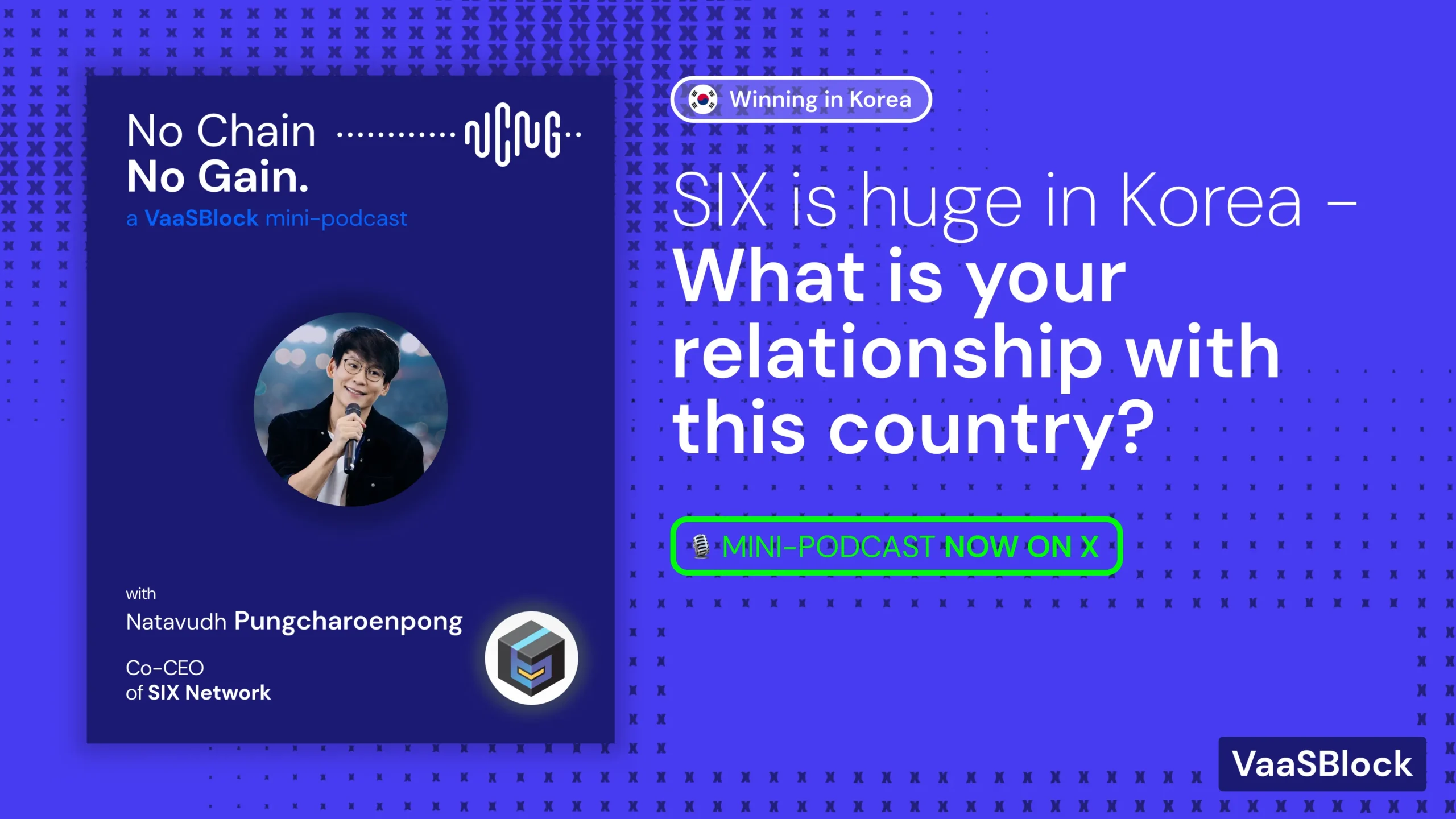
  • SharkTank host and tokenized properties with Nattavudh “Moo” Pungcharoenpong, co-founder of SIX Network

    SharkTank host and tokenized properties with Nattavudh “Moo” Pungcharoenpong, co-founder of SIX Network

    TL;DR: In this episode, NCNG host Raphael Rocher speaks with N. “Moo” Pungcharoenpong, co-founder and co-CEO at SIX Network, a Thailand-born Web3 infrastructure player focused on building its own chain and accelerating real-world asset (RWA) tokenization. Moo shares how SIX began seven years ago during the ICO era, initially inspired by the opportunity to register and protect intellectual property (IP) on-chain, leveraging his experience as a tech entrepreneur and operator of a major Thai platform (UPI) with millions of monthly active users. He explains how the market evolved from a mostly investor-driven environment to today’s wave of real-world use cases, and why Thai regulation has become increasingly supportive through licensed exchanges, OTC rails, and the “ICO Portal” framework that helps legitimize public offerings. Moo then walks through how SIX works with asset owners, from closed-loop tokenization (private/fractional ownership) to public-market-ready structures requiring regulated partners, illustrating it with examples like fractional yacht ownership and ultra-fine-grained real estate tokenization down to “square-inch” units. Looking ahead, SIX aims to expand tokenization beyond luxury assets into everyday categories (memberships, consumer use cases), and expects to launch 5–10 showcase projects in 2025 to help mainstream RWA adoption. The conversation also covers SIX’s long-standing Korea strategy (local presence, early Korea partnerships, and cultural collaborations), Moo’s investor mindset via “500 Tuk Tuk” (tech adoption + ability to attract smart teams), and his view that Web3 must drastically simplify UX to bring Web2 users on-chain. Moo closes with a call for asset owners and partners to reach out to SIX via its official channels.

    Context

    NCN Host Raph Rocher welcomes N. “Moo” Pungcharoenpong, co-founder and co-CEO at SIX Network, to discuss how tokenization is moving from hype to real-world adoption, especially through real-world assets (RWA) in Thailand and beyond.

    Moo shares SIX Network’s origin story from the ICO era, how Thailand’s regulatory environment and “ICO Portal” framework supports safer public tokenization models, and how SIX works with asset owners, from closed-loop tokenization to public-market-ready structures.

    The conversation dives into concrete examples of fractional ownership (including luxury assets and real estate), what’s next for SIX in 2025, why SIX has a strong Korean community, and Moo’s broader perspective as an investor and Shark Tank jury member on what it will take to make Web3 truly mainstream: simpler UX, clearer value, and better bridges to Web2.


    Conversation Transcript

    Introduction

    Raphael Rocher (Host, NCNG): To start, can you introduce yourself very shortly? Explain a bit to us what you are doing for SIX.

    N. “Moo” Pungcharoenpong (Co-founder & Co-CEO, SIX Network): My name is Moo. I’m the co-CEO at SIX Network.

    Raphael Rocher (Host, NCNG): Perfect. Thank you. Regarding SIX, can you tell us a bit the story, like the epic story of SIX Network.


    How SIX Started (ICO Era Origin)

    Raphael Rocher (Host, NCNG): How did it start? How did you get the idea, why you decided to do this seven years ago?

    N. “Moo” Pungcharoenpong (Co-founder & Co-CEO, SIX Network): SIX started seven years ago, back in the ICO days. My background is as a tech entrepreneur, and I was also an investor in several blockchain projects back then. One project was Omifit Go, and that helped me learn how blockchain works. We realized there were many business opportunities we could transform into blockchain businesses.

    At the beginning, we were “uploading” the IP business, my traditional business that I still run today. I run a platform called UPI in Thailand, which is quite popular. We have over 7 million monthly active users, and there is a lot of IP uploading on the platform. So SIX started as registering that IP on the blockchain.


    What Changed in Web3 Over the past 7 Years

    Raphael Rocher (Host, NCNG): You started seven years ago, what changed in the past seven years? How did you see the whole Web3 ecosystem evolve?

    N. “Moo” Pungcharoenpong (Co-founder & Co-CEO, SIX Network): Many things changed. First, on the user front: back then there weren’t many users, most people were crypto investors. They invested in projects, received tokens, and tried to profit. That still happens, but what’s different now is we see many more real use cases in Web3.

    SIX is focusing on building our own chain, and on RWA we are tokenizing assets, especially in Thailand, onto blockchain. A second major change is local regulation. Thailand has become more friendly: the government offers exchange licenses, OTC, and there is also the ICO Portal framework where projects can work with regulators and list on local exchanges. That makes it much easier today for partners and traditional asset owners to tokenize assets and work with us.

    And of course the market is bigger, more liquidity and traders than before.


    How SIX Works With Asset Owners (Closed Loop vs Public)

    Raphael Rocher (Host, NCNG): Let’s say I’m interested in tokenizing some of my assets and I want to work with the network. How would it work? Can you run me through the process?

    N. “Moo” Pungcharoenpong (Co-founder & Co-CEO, SIX Network): There are two kinds of projects. If you want to tokenize an asset in a closed loop, meaning you don’t plan to sell it publicly, our platform can work with anyone.

    For example, if I own a yacht and want to tokenize it: maybe it costs one million USD and I tokenize it into 20 “tickets” of 50,000 USD each. People can buy a ticket and become partial owners, like a timeshare. If the asset is sold later, they can be reimbursed. Trading the whole yacht is hard, but trading fractions is easier.

    This can be done legally by creating an entity to hold the yacht and issuing tokens or NFTs, like 20 NFTs, tradable on our platform. When NFTs/tokens are traded, the legal entity helps transfer ownership. The token/NFT can also track usage and value remaining per ticket.

    But if the asset size is bigger, 10 million, or even 50 million, then it’s hard to sell among friends. If you want public liquidity, you need to work with legal entities and government agencies. In Thailand that’s done through an “ICO Portal” that has a license from the local SEC and works with the project owner so public customers feel safer. In that model, SIX comes in as the technical partner, working with the project owner and the regulated agency to make everything smooth.


    Making Tokenization Mainstream (Beyond Luxury)

    Raphael Rocher (Host, NCNG): How do you see this evolving in the future? What’s the next step, how do we make sure more people use it and it becomes more recognized, cleaner, safer?

    N. “Moo” Pungcharoenpong (Co-founder & Co-CEO, SIX Network): Right now, many tokenized projects are luxury things, assets people don’t want to own 100%, so they tokenize fractions. But long term, to make tokenization popular, we have to tokenize normal daily-life things. A club membership can be tokenized, for example.

    One interesting project in Thailand tokenized a whole condominium building, but instead of selling by units, the fraction is as small as one square inch. People can invest by buying small pieces. When the project earns income, dividends can be paid by “square inch” owned. If someone accumulates enough square inches to equal a whole room, they can convert it back to a full room.

    Raphael Rocher (Host, NCNG): I love that ownership model, because for many people, the minimum to invest in real estate is still too big.

    N. “Moo” Pungcharoenpong (Co-founder & Co-CEO, SIX Network): Exactly. If the ticket size per token/NFT is small enough, it becomes accessible for smaller investors, and that’s how it becomes popular in the long run.


    What’s Next for SIX (2025 and Beyond)

    Raphael Rocher (Host, NCNG): If these are the next steps, what’s next for SIX? Where are you moving in 2025 and in the future?

    N. “Moo” Pungcharoenpong (Co-founder & Co-CEO, SIX Network): Two things. First, more use cases have to come up and become showcases so people understand what we’re doing. We’re trying to find a good showcase in each industry and bring in leaders to pilot projects.

    Most tokenized projects today are in real estate, but there are also other use cases like memberships or club cards. We expect at least 5 to 10 interesting projects in 2025, then we can showcase them to more project owners and customers to join RWA tokenization.

    This is real business: we try to bridge the investor, the project owner, and the technology provider, and link them together to create real-world outcomes. Hopefully in the next few years it becomes normal, everyone should do it.


    Why SIX Has a Strong Korean Community

    Raphael Rocher (Host, NCNG): You actually have a massive Korean community. Why do you think you have so many fans in Korea, and why should Koreans be interested in SIX?

    N. “Moo” Pungcharoenpong (Co-founder & Co-CEO, SIX Network): From the origin of SIX Network: Korea has been a very big crypto market and crypto popularity is very high. From day one, we knew we had to start with Korean partnerships. Our ICO launched in both markets at the same time, Thailand and Korea.

    We have our own local team in Korea to talk to customers, do marketing, and develop projects. In the past we also worked with some K-pop collaborations, tokenization and NFTs, so over seven years we built a strong local Korean fan base, and we hope it continues.


    Moo as an Investor (500 Tuk Tuk) — What He Looks For

    Raphael Rocher (Host, NCNG): On top of SIX Network, you’re also an investor. I think you founded 500 Tuk Tuk. If you give me the three things you look at first to decide whether you want to invest, what are they?

    N. “Moo” Pungcharoenpong (Co-founder & Co-CEO, SIX Network): The first thing: are they willing to use technology? Today it can be any business, F&B, cosmetics, anything, as long as the owner is willing to sell online first. Social platforms let scalability jump even if it’s not a “tech company.”

    The second thing: can they find smart people to work with them? Vision matters, but also the ability to attract talented people who can execute. If we have those two, we invest small first, track progress, and then invest more over time.

    And of course diversification: investing is risky, so I invest in many companies each year. Many fail, but one big winner can cover the losses.


    How Web3 Becomes More Open to “Smart People” (UX & Web2 Bridges)

    Raphael Rocher (Host, NCNG): You’re also known for being on the Shark Tank jury in Thailand. How can we make smart people more open to Web3, so that tomorrow we see more Web3 projects, more blockchain ideas?

    N. “Moo” Pungcharoenpong (Co-founder & Co-CEO, SIX Network): The technology gap is still big, and Web3 isn’t easy to use. Even trading tokens, DeFi, using MetaMask to swap coins, is harder than centralized exchanges. The experience must be much easier and easier to understand.

    Web3 people have to be open-minded and improve UX to convert Web2 users. Web2 already works well for most people. The key pain is centralization and abuse, but many other things are “fine.” So Web3 should work with Web2, build on top of it and add decentralization where it matters, making adoption faster.


    Closing & Call to Action

    Raphael Rocher (Host, NCNG): I think we’re at the end of the time, do you have one last thing you want to add, maybe a small call to action for people to start using SIX?

    N. “Moo” Pungcharoenpong (Co-founder & Co-CEO, SIX Network): Thank you, and thank you VaaSBlock for this podcast. SIX is focused on RWA and we are one of the leaders in Thailand, one of the biggest in terms of tokenized projects and AUM. If you have a project you want to tokenize or want to partner with us, feel free to contact us on any of our social media.

    Raphael Rocher (Host, NCNG): Thank you very much for this interview.


    About SIX Network

    SIX Network is a Thailand-born Web3 infrastructure project focused on building its own chain and accelerating real-world asset (RWA) tokenization. Founded during the ICO era, SIX began by exploring how blockchain could register and protect intellectual property (IP) at scale, then evolved toward enabling compliant tokenization models for traditional assets. Today, SIX supports both closed-loop tokenization (private fractional ownership) and public-market-ready tokenization workflows that can require regulated partners, working alongside licensed entities such as Thailand’s ICO Portal framework to help ensure legitimacy and user confidence. SIX also maintains an active international footprint, including a long-running presence in Korea through local partnerships, market development, and community-building initiatives.

  • AI agents that off-board your talents with Dan Thomson, Founder of Sensay

    AI agents that off-board your talents with Dan Thomson, Founder of Sensay

    TL;DR: In this episode, NCNG host Raphael Rocher speaks with Dan Thomson, founder and CEO of Sensay, about the long arc from early crypto adoption to building autonomous digital replicas. Dan shares how his experience across hospitality entrepreneurship, a 2017-era crypto index fund, and DeFi insurance informed Sensay’s mission: creating verified personal replicas that can act on your behalf—today as assistants, and long-term as a form of digital legacy. They discuss the shift from “LLM wrappers” to agentic assistants, the importance of identity and authorization as replicas become more capable, and what Sensay is shipping next (Telegram autopilot, interactive video replicas, Discord and email tools), along with its token/NFT-based replica economy.

    Context

    Raphael Rocher welcomes Dan Thomson, founder and CEO of Sensay, to explore the ideas and experiences that led to building autonomous digital replicas.

    Dan explains his path through early Bitcoin discovery, launching a crypto index fund, and working in DeFi insurance—then connects that to Sensay’s goal of creating a replica that feels like the real person while remaining verifiable and permissioned.

    They also discuss where AI is heading as systems become more agentic, and the practical product milestones Sensay is releasing to make replicas useful in everyday workflows.


    Conversation Transcript

    Introduction

    Dan Thomson (Founder & CEO, Sensay): My name is Dan Thomson. I'm the CEO and founder at Sensay, which is a platform designed to create autonomous, digital replicas that are, indistinguishable from a real parts of the. My background is overall a mixture of, finance, hospitality and the last four years, five years now, working, full time in Web three.

    And I hadn't the time, really, so they kind of gave me a quick crash course on it, and I said, that sounds fantastic. Love it. And that, kind of let me down the. The inevitable rabbit hole of crypto. So I started off by looking into it as a form of payment, but realized the potential of it. So I was very lucky enough to buy some Bitcoin back then. And then even more lucky to essentially lock it away from myself, because I probably would have sold it a lot. Quite a few times. Since then, I started getting more into sort of. But at the time, I still had a chain of restaurants and bars to run, so my focus was really on that and not really in the sort of finance world. Ventured a bit more into web3 space, even though it was more sort of on the retail side, as, as I set up one of Europe's first index funds for crypto in 2017, based out of Gibraltar. And so that was a private fund, which essentially ran as an index fund based out of Galter, as a, as a co founder and partner on the business development side.

    Quite a sad, sad time, which. But at the same time, it freed me up in a way that I hadn't really been free since I was 18, 19, I guess. And so I found myself suddenly with this, like, newfound freedom. Not that not much money, but enough to sort of get me to Latin America. And I started traveling in a way that I should have done when I was a lot younger. And during the pandemic, it was amazing because it was kind of this opportunity to travel when, you know, no one else is really traveling. And during that time, you know, I enjoyed the first sort of six. 6 months really before my mind sort of needed something to do. And this was around. This was, At this point, it was defi summer. So defi really started kicking off. And defi was, you know, essentially things like when I've been encrypted before. Decentralized exchanges, for example, hadn't really existed in a. So suddenly this whole new layer to web3 and crypto just exploded into the space. And so I was participating and essentially, making back some of the money that I'd lost while traveling and, from the previous company before I. Got offered a job to come on as the, head of marketing and cmo and head of business development at, Insure Ace, which is a, defi insurance protocol based out of Singapore.

    I started there, and that's where I worked for the last, four years up until I decided to. Would have been, what was four years. Get my years confused where I'd worked as insurance for, two and a half years, before I decided to, start, Sensay. Because Sensay was this idea that I'd had for. So even before I got into crypto, properly in 2017, I'd written these books around digital immortality and mind uploading. Both based on my own personal philosophy and based on personal experiences. But, you know, I always like the idea of creating, some form of everlasting version of ourselves, something that transcends even. Our own selves and definitely gets away from the, sad fact that most of us will be forgotten after two or three generations. So I went through this bit of a existential crisis when I was, let's say, 24, 25. Very young to be having that. But, you know, I studied philosophy at university, so probably quite old for that. And I ended up writing these books. So the. The first one is called. Immortality in a digital age. And, you can find it on Amazon. And the second one is called the Digital Afterlife.

    The first one is about this exploration of the philosophical side of whether or not, if it were possible, should we create digital copies of ourselves that could live essentially forever. And even when I wrote that, I understood that when you can create one digital replica of yourself, there's nothing stopping you creating multiple digital replicas of yourself. And so even then, and this is before DEFI really exploded, even back then, I understood that technology like blockchain technology would be vital to creating some kind of verification that your digital replica is acting on your behalf. So as soon as you give them any kind of autonomy, as soon as they can actually start doing things for you, anything that you can do online that your replica can do, you know, you need some way of verifying that it is your official replica. And the concept of having a, a unique wallet tied to every person with some kind of proof humanity in kyc, which then has any of the actions that your replica can perform all on chain. And those actions themselves can essentially be verified by the, by the, whoever they're interacting with and hire back to the person who they are authorized to work on behalf of. So even back then, you know, I had this, this, this tie into web3 without even realizing it when I wrote these books.

    So it was inevitable that when the explosion in AI came around two years ago with chat GPT 3 and 3.5, it triggered it in my own mind that I was, like, okay, now, now I actually have to build out this technology that I wrote about all these years ago. I have to actually do this thing. And I was really enjoying working for another project. I wasn't, definitely wasn't ready to go back in, especially after how, you know, tough it had been to wrap up the previous businesses after all the time building them. But this felt bigger, this felt more important. And this. Was unavoidable. Otherwise, I know I would have sat back and watched someone else do, exactly the same thing and would be, you know, very sad about that. So Sensay was started by myself and a few co and then I brought on the co founders to build out this incredible technology where we are literally building this form of digital immortality by creating perfect, indistinguishable, autonomous digital replicas of ourselves that can interact with the world around us, saving us huge amount of time, day to day, but also will exist long after we're, we unfortunately leave this planet. So it's, it's a life lifelong story that combines. My philosophy from university, my personal experiences. And, there's plenty of stories there about, my own brushes with, mortality.

    I live a quite adventurous life and lots of extreme, sports in there, so definitely had a few close calls along the way.

    Combined, with the books I wrote, combined with my experience in, in web3 and tech over the last few years and and then the desire to share my, my knowledge, my stories, my, my adventures, and with, you know, not just the people around me now and, and build a really useful tool for people to use now, but also for generations to come. Like, if I. If my great, great grandkids want to have a conversation with me and get to know me, who I am, and they want to learn about what I did in my life, you know, that will be possible for their generation. Whereas I, unfortunately can't do the same with my great great grandparents. So it's a really incredible tool for transcending generations, but also, you know, in terms of the applications of the technology here and now, and, you know, that all becomes possible because of AI and Web3. Precisely on this, on this matter. AI plays a big role in the development and in the creation of your products and the evolution of your business. Now, AI is also a thing that we hear a bit everywhere, these days, especially in Web3, especially like in tech in general, but specifically in Web3, is used and overused a bit for any kind of, usage.


    From Hospitality to Web3

    Dan Thomson (Founder & CEO, Sensay): My actual sort of earliest ventures into, Web three was. Probably around 2015. When I. Across bitcoin for the first time because I had a chain of restaurants in London, and, I was getting more and more fed up with payment systems. And so someone came along and said, have you heard about this digital currency called bitcoin?

    And so that was a couple of years doing that, at the same time as. Running the restaurants and bars then? Pretty much. I actually kind of come out of that. Just before the pandemic hit. And the pandemic then subsequently also closed all the restaurants and bars I had, which was, quite a.


    Early Crypto & Index Fund Journey

    Dan Thomson (Founder & CEO, Sensay): I think we're still. We're getting there. Don't get me wrong, it's getting. Much better. And the ability of how we can apply the technology to our day to day lives is incredible already. I mean, I think everyone at this point, especially anyone probably listening to this, has used AI for everything from content creating to simple.

    So we've just launched interactive replicas. So you can actually have a live conversation with a, talking video, Dan Bot, and can interact with, danbot Live and talk to it, and it will talk back to you, which is incredible. So coming to a Google Meet near you very soon. We've launched, our autopilot on Telegram so you can have your replicas interact with people on your behalf on Telegram. We've got our discord, bot coming out very soon and we've got our email, drafter coming out very, very soon for public as well, which is super exciting. For our next big updates, keep an eye out for middle of November at Web Summit.

    We've got something really, really huge coming out, to demo and launch at Web Summit. So we're super excited for that. And yeah, for anyone else who wants to get involved with Sensay, we did our fundraising through Sensay Token earlier in the year. All that's been vested out now. Sensay Token forms a part of our ecosystem as each replica will be minted as an NFT and will be able to be traded using the Sensay Token on the platform in the not too distant future. Yeah. The main thing really is just get involved in the conversation. Our website is Sensay IO that's S E N S A Y. And you can find any of our social media at, with Sensay or myself on most social media. Sensay Dan. It's a really incredible time. I mean, the next. Two years, three years in terms of, like, AI and development in general and Sensay's development on the whole, you know, specifically, it's going to be a really fascinating time to. Be around this kind of technology and see how fast things develop and grow, in this incredible sort of space that we're in.


    Insurance & DeFi Insurance

    Dan Thomson (Founder & CEO, Sensay): It's a timesaver, but the reality is it's still a little bit limited. And there's lots of AI developers out there and lots of software companies that are really finding a hard, product to sell that, justifies the cost of actually operating the AI, which in itself is not necessarily cheap at scale.

    Raphael Rocher (Host, NCNG): So the real wow moment, I think is going to come when there's some agency to it, right? When you can say something like, I don't know, the equivalent of asking Siri to order your pizza. And it would know the pizzas that you want and how many, and they would go away, order them all, and have it delivered to your door.


    Why Sensay Exists

    Raphael Rocher (Host, NCNG): explain to me and give me a bit of context regarding. The way you basically evolved in the Web three, ecosystem. Where you're coming from, who you are, and what you're doing for Sensay.

    With AI You've also got the other half, who are using a lot of AI to, weaponize it against. Against other people. And that's where we as a species are. Quite short sighted and very unfortunate that we live in, in that kind of world where that's even, even a consideration where faced with this incredible technology, the, the only thing we can think of is how do we stop people using it to blow us up and how do we use it to blow other people up?

    With toxins and bad reactions. And in your case, more specifically related to Sensay. Can you maybe, simplify a bit? The way you guys use AI and how, it's integrated, within the product, basically. Yeah, of course.

    Dan Thomson (Founder & CEO, Sensay): Yeah. Sorry, I went off with a bit of a tangent there. Yeah, so, how Sensay helps us in that next generation is exactly that. So when with the AI really expanding, Into everyday use and the common sort of use of these agents. Having your own personal replica becomes like having a personal assistant, that is. Knows exactly what you're looking for, that it knows exactly who you are and can answer things for you. So all of the mundane tasks, all of the things that you wish you didn't have to do, but, kind of have to do, are happy to do it can do for you. So, for example, even now, The tech is getting there. It's an early stage, but it works. So even now, my replica is already good enough that it can reply as if it were me, to telegram messages. And it drafts my emails for me. So we've got this as early versions of our tech and it's will be available to the public in the next month or so. But my replica trained on my knowledge, my understanding, my documentation, basically, you know, everything that is me online. Can reply as if it is me. And, to direct telegram messages and will also. Draft all my email responses every day. So it means that no longer do I have to spend time, like, reading and writing them out. I can just edit, edit them, before they get sent out. And it means while I'm on a call or an interview or something like this, my team isn't blocked because they don't have the relevant information from me to be able to operate efficiently. How we, you know, see ourselves in the future, where everyone has their own replica going forward is just this amazing tool that they. That anyone can use anytime. To actually, React on their behalf. Everything from matchmaking to job hunting to. Basic emails and messaging to simple replies that, you know, you might. We get asked a lot of stuff every day that's the same questions by different people or from the same people. So by quickly giving them access to that information without having to. Spend time reading and digesting every single message. Where we live in a world where there's just rounded messages all day long, every day. So by enabling a version of us to answer for us as if it is your own perfect personal assistant makes a lot of sense. And personal, assistants were always the tool of. Senior executives in big companies. And they're there for a good reason, because they save time and they let you work on the things that are most important to you. And replicas act in the exact same way, based off of your own sort of knowledge and experience and skills that you train it on.

    Dan Thomson (Founder & CEO, Sensay): To exactly explain who, you know, who should, And. And that's why it keeps going around and around in circles, right, in these kind of conversations. So when the. When the AI generates new messages based off of training data that comes from individuals. Throughout sort of history or any kind of open source data. There is an ego element from certain individuals where they think, oh, my data's been used to, you know, train these replicas on, and that, that data is valuable to me. And it's, it's personal data. And they're, they're not wrong. That is their ip. And if it is out on the Internet and open source or it's been scraped, you know, illegally, then that becomes very difficult. But it also becomes extremely difficult to. Find out exactly whether or not it was scraped in the same or taken illegally, and then based on that information to then generate new knowledge and new. New content. New content, whether it's images, whether it's text, whether or not it's based off of an artist or a writer or some. Somewhat. Some individuals out there. To say that it is. The ownership should translate to the individual is based off of is very, very difficult because it's taking into account a lot of different things and the processes of, A lot of context that goes into the outputs. Not just that one writer or that one person. Sometimes it can be forced down a rabbit hole by, you know, saying, act as a certain person. And then you get into this whole issue of, identity and privacy, and then suddenly acting as someone. And that's something we deal with a lot because, you know, that's, a lot. A lot of what we had to face. But in terms of generated content belonging to anyone, I don't think it should. I think that generate. When it comes to AI, you're taking essentially pattern recognition from human humanity. And, sure, there are certain people who are more distinguishable than others. I mean, if you take, you know, Trump's tweets, for example, it's a very distinguishable way of reading someone. Opposed to, I don't know, let's, say a Morgan Freeman who is recognizable by his voice, but not necessarily by the way he writes. Likewise Gordon Ramsay, who you could probably recognize by, you know, the, the language he uses. But again, in those sort of situations, you know, you, you see their, their sort of television personalities and their personality put out on social media.


    AI Revolution & Agentic Assistants

    Raphael Rocher (Host, NCNG): In your case, what do you see? How do you see it evolve? Like, what do you think is the limits? What is the actual AI revolution going to look like, where is it going to happen, etc. And in a second time? More like apply to your project. How are you going to use AI? How are you using AI, and how are you prepared for the evolution linked to the AI? Where are you? AI ecosystem, basically. That's a great question. AI, in general does get thrown around far too much. But itself in its own language, is quite broad.

    Dan Thomson (Founder & CEO, Sensay): AI does get used by a lot of companies that are using AI now and argue, and to be fair, probably were before, but I think now that AI has, become the buzzword. Everyone has to be using AI in some form or another, otherwise they're falling behind whether or not they were already integrating with it or not. I think it does get used in a lot of ways that are, simply rappers on other tech. And so the applications of it could easily be wiped out. And I think we're moving faster and faster towards a, day and age where, you know, an entire application of software could be built through one simple prompt to, a sufficiently good LLM.

    Raphael Rocher (Host, NCNG): And LLMs are themselves are fantastic tools, but they're not necessarily the way we achieve AGI or asi. Moment of artificial intelligence and how, how we're going to get there. What's going to happen? I mean, we're still quite far away from where AI has the same capabilities of a human brain.

    Dan Thomson (Founder & CEO, Sensay): And so you wouldn't actually have to do anything else. It's literally just a case of, you know, one. One stop command. Unfortunately, we do live in an age where, you know, while on the one hand, we have lots of people creating incredible things, art, drone displays. Fascinating tools.

    Raphael Rocher (Host, NCNG): Makes sense. One more question. Related to AI the way we talk about it these days, most, of the time is. Mainly associated with the question of, intellectual property and data protection. I mean, data management in general. How. What is your take on this? How do you see that evolve? I know most of the question these days relies and talks about and focuses on generative AI, which is not specifically what we're talking about here. But in general. Something that is generated by an AI or something that is, improved or enhanced by an AI. Who owns the data? Where is the data going? What do we do with the data protection? And, same with the paternity of the art pieces or of the things that are done by AI. What do you think? Yeah. So, It is extremely difficult to quantify.


    Identity, IP, Privacy & Authorization

    Dan Thomson (Founder & CEO, Sensay): And that's, that's, you know, that's, that's the true tragedy of all of this. We have never been closer to this incredible self sufficiency and incredible age where this technology provides for us like, like never before. Provides for us in a way that we couldn't even imagine. Five years ago, let alone, you know, before that. But having a. Having, you know, a tool that can figure out some of life, life's biggest questions and problems. Having a tool that can find efficiencies in everything we do, especially in key industries, agriculture, you know, mining and shipping, so that we have available to us everything we could ever need to survive as a, as a, As a human race. Having AI that can serve as medical assistance. That, you know, combined with your wearables, can give you specific medical advice to you as an individual so that you we can all live longer, healthier, while understanding our own bodies better and not having to go to pharmacists and doctors who are paid off by, you know, pharmaceutical companies. Recommend products that they're paid to recommend. All of this combines into this just incredible, you know, advancement that we unfortunately might never get to see because of our own. Our own lack of imagination. But, yeah, I think the wow moment is. Is a few of those, actually, that I've mentioned. The biggest one I think will actually probably be the. You know, it's, either going to be somewhere between literally fixing world hunger and, AI Doctors. AI Doctors that are, personal can, you know, constantly monitor your blood and, liquid levels and any hormones, any other spikes in brain activity and. Oxygen levels, everything in your body that indicates health and reaction to certain things means we're going to, you know, identify issues on an individual level much, much faster, so that we're much in, much better in tune with our own bodies and, Will enable us to essentially live, like, much healthier, happier lives because we'll be able to order the food that we still enjoy, but know that it's going to be good for us and not, you know, fill our body with.

    Raphael Rocher (Host, NCNG): But if. Do you think that they are really like that in, in person? Probably not. It's probably more of a Persona they put on. So when it comes to the actual generation of the text or images or videos based off of those training models, the IP becomes extremely blurry because do you count the generative model as its own entity?

    Dan Thomson (Founder & CEO, Sensay): Do you count it as. Based off of the individual and even the concept of individual sort of IP and writing style. We are ourselves combinations of the lessons we've learned along the way, the teachers we've had, the, the styles we've read and the, the adaption from that. So, you know, in ourselves our own sort of IP and ownership just because we were the ones who happen to write it without crediting the people we learned from. In my mind and I see this. As a kind of a creator, but not a creative in that sense. For me. I don't think it's any different from us learning for ourselves and adapting. Historical texts and, and learnings and knowledge into our own style. And so in the same way that we do that, if AI is doing basically exactly the same thing, I think if that's taken into account, then the AI itself should be the owner. But if the AI itself is an owner, then you know that it should be treated as its own kind of entity, not the, individuals. And at the end of the day, it all kind of boils down to the fact that we, we all sacrifice convenience for. We sacrifice our own privacy and IP for convenience and publicity. Right. So a lot of the reason these people are famous because they put themselves out there, they put themselves on camera, they did all the interviews, they did all the stuff that becomes open source data. That's. Suddenly becomes scrapable for these large language models and therefore can generate it from them. And sure, there are a couple of examples that have been found where it's referencing specific books or specific works, and that becomes a bit easier to say that's not okay. But for the vast majority of. Regenerated tax is based off of things that are, publicly available anyway.


    What’s Next & Closing

    Raphael Rocher (Host, NCNG): Educational aspects or, just day to day sort of referencing translation? Pretty much you anything you can think of online. So there's been so many different applications of it already. I think the really wow moment will probably become in the next stage of it because at the moment it's a fun, fun gimmick and it's.

    Raphael Rocher (Host, NCNG): Anyone could adapt for themselves. If I asked a. AI to draw mona, lisa from. The Mona Lisa. How would that be any different from me taking a photo of it and printing it out for myself on my own wall? I mean, or even trying. Or even trying to draw it. I say taking a photo because my. My art skills are terrible. But, I think if I were to, you know, try and paint it myself, if it were to be remotely half decent, then, you know, what's to say that's any different from an AI generating it from something, someone else's work? Yeah, that's very true. Maybe to finish very, very briefly, can you. Is there anything that you want to highlight in terms of the news that we can expect from, from us and say, what are the next updates? Any hot topics, any teasing you want to make? Yeah, so we, you know, last month we actually launched, we did a demo day where we, we showcased some of our latest, latest developments.

    Raphael Rocher (Host, NCNG): Perfect. Thank you very much.


    About Sensay

    Sensay (sensay.io) builds autonomous digital replicas—personal agents trained on an individual’s knowledge, content, and communication style. Replicas can help with real-world tasks (e.g., messaging and drafting) and are designed with a long-term focus on identity verification and authorization as AI agents gain autonomy. Sensay was founded by Dan Thomson.

  • Crypto marketing agency with TEO, head of BD & GTM at INFCL

    Crypto marketing agency with TEO, head of BD & GTM at INFCL

    TL;DR: In this episode, NCNG host Raphael Rocher speaks with TEO, Head of GTM at INF CryptoLab (INFCL). TEO shares how INFCL operates as the exclusive Web3 subsidiary of a major Korean IT infrastructure group, and how the team creates value by bridging lessons and execution across both Web2 and Web3. He explains INFCL’s approach to building trust with clients by deeply understanding demands at each stage, delivering actionable insights from both B2C and B2B angles, and proving results. As a concrete example, TEO highlights how a leading Korean streaming platform expanded global user acquisition by combining Web2 group synergy with Web3-style community and narrative-driven go-to-market. The conversation then tackles what Web3 still needs to improve for broader adoption: prioritizing real-world usage and especially “paying end users,” not only builders and investors. Finally, TEO teases INFCL’s upcoming “bridge business” to help Korean AI startups access GPUs at significantly lower costs, plus a public-service initiative supporting GPU access for university AI research labs, alongside INFCL’s free research and weekly market reports on Substack.

    Context

    Raphael Rocher welcomes TEO, Head of GTM at INF CryptoLab (INFCL), to discuss how INFCL helps projects and companies navigate the Korean market through a unique, “360-degree” view spanning both Web2 and Web3.

    They explore INFCL’s mission and what differentiates the team, including the credibility INFCL builds by delivering stage-specific insights and results. The conversation includes a real-world case study from a major Korean streaming platform, then zooms out to what Web3 needs to strengthen for mass adoption—especially securing paying end users. The episode closes with INFCL’s upcoming GPU initiatives for Korean AI startups and research labs, plus the team’s free research and weekly market reporting.


    Conversation Transcript

    Introduction

    TEO (Head of GTM, INF CryptoLab): So this is TEO from INF Crypto Lab. I’m leading the head of GTM division and I’m currently advising 10 plus projects to make a successful entry into the Korean market.

    Raphael Rocher (Host, NCNG): Can you tell us what is the main mission of the company? What are you guys doing and how are you guys doing it?


    What Makes INFCL Unique

    Raphael Rocher (Host, NCNG): What is it that is so unique with you that you have all these great companies that want to work with you?

    TEO (Head of GTM, INF CryptoLab): So we are the exclusive Web3 subsidiary company of its end group, one of the largest IT infra group company in Korea which generates 2 billion revenue, period.

    And INF Crypto Lab team is unique in a sense that we discover and add value to the blockchain space from both the Web2 and Web3 space simultaneously. The Web3 and Web2 industry each have its own perks, such as the Web2 industries, professionalism and past references that are worthy of note taking for the Web3 projects to benchmark.

    While the Web3 industries, community driven approach and decentralized structures provides valuable lessons for the Web2 companies.


    Case Study: Web2 x Web3 Synergy in Global Expansion

    Raphael Rocher (Host, NCNG): Do you have maybe an example in mind of a very successful Web3 project that you guys worked on and how maybe the whole education or the whole understanding of the markets has been helpful for you guys to lead this project to this success, and maybe a comparison or just like an opening on how it would have been different in more traditional projects.

    TEO (Head of GTM, INF CryptoLab): So I think it has to be of course gaining the client’s trust first in before we begin any type of project, whether it be in the traditional sector or in the Web3 sector.

    So remaining credible against both the Web2 and Web3 clients is very simple. We just have to figure out and deep dive into their demand at different stages.

    So continuously providing insights from both the B2C and B2B side while proving that we are the team that is able to deliver results based on those insights is the main narrative we always stick to.

    So some successful cases that we would like to share would definitely be a use case from the traditional side because that is much more interesting for the users.

    So Africa TV, which is the Korean version of Twitch in Korea, a streaming platform, was having a huge difficulty in securing global users.

    But they quickly entered the global market by creating synergy with their parent company and utilizing elements of Web3 and successfully secured overseas users while receiving active support from the entire parent company and group ecosystem companies as well.

    So combining the community driven approach and not narrative drive in the global market from us, the new user acquisition has increased substantially than before.

    So yeah, I guess we can say that’s a really successful case combining both the Web2 and Web3 elements in this space.


    What Web3 Still Needs: Real-World Usage & Paying End Users

    Raphael Rocher (Host, NCNG): With your profile that is a bit halfway between Web2 and Web3—and that we call in marketing like 360 or 360 degrees—what do you think? Or what do you see an area in Web3 that could be, that is still missing? Basically like where do you think that the blockchain ecosystem can still improve to become more credible and more secure for more traditional entities and bigger entities.

    TEO (Head of GTM, INF CryptoLab): So actually in order to drive a really successful blockchain adoption for all these 360 degree view on the industry, there really needs to be a stronger emphasis on securing real world usage across a diverse spectrum of participants.

    So blockchain projects really have to focus on engaging three types of typical or critical users. So it would definitely be builders, investors and service users.

    So I think the blockchain projects currently have made and are making significant efforts dedicated to attracting investors or even builders to their platform. But there seems to be less effort being placed on securing service users, the end users.

    However, we believe that the role of the end users, particularly those who are willing to pay for the services, will become increasingly critical in the future.

    So prioritizing this group will be essential in driving mass adoption and establishing a sustainable scalable business model for blockchain projects.

    Raphael Rocher (Host, NCNG): So we definitely have a huge hurdle to cross which is to secure those paying users in the Web2 space and also in the Web3 space. Very good answer. Thank you.


    What’s Next at INFCL: GPU Bridge Business & Public-Service Initiative

    Raphael Rocher (Host, NCNG): Maybe talking more about INF Crypto Lab. We know that there are some cool things happening. Anything that you can maybe tell us, any teasing you can make? Any interesting or exciting news, coming up for you guys?

    TEO (Head of GTM, INF CryptoLab): Yeah, sure. We are actually developing a bridge, business aimed at connecting deep tech projects with startups. This is to really enable the multiple Korean AI startups to access GPU at significantly lower costs.

    And additionally we are spearheading a public service initiative to provide GPU resources to AI research labs at Korean universities or even other research centers. To actually support their advanced research and innovation efforts.

    Raphael Rocher (Host, NCNG): Perfect. Do you have any links you want to add to this, specific product?

    TEO (Head of GTM, INF CryptoLab): Yes. We are actually publishing an engaging research report and weekly market report on our Substack, and it’s completely free. So I highly advise you guys come and check it out.

    Raphael Rocher (Host, NCNG): Perfect. Anything else you want to mention? Anything, upcoming? Anything else that you want to highlight, maybe related to INF Crypto Lab?

    TEO (Head of GTM, INF CryptoLab): No, not really. I think that would be all.

    Raphael Rocher (Host, NCNG): Perfect.


    About INF CryptoLab (INFCL)

    INFCL (INF CryptoLab) is a Korea-based Web3 organization operating as the exclusive Web3 subsidiary of a major Korean IT infrastructure group. INFCL supports projects and companies with go-to-market execution and market intelligence, leveraging a “Web2 x Web3” advantage: the professionalism and proven references common in Web2, and the community-driven, decentralized operating models learned from Web3. INFCL focuses on delivering results by deeply understanding client needs at each stage and providing insights that translate into measurable outcomes.

  • Web3 mini-games on TON with Mindy Suh, Founder of Nifty Nerds Network

    Web3 mini-games on TON with Mindy Suh, Founder of Nifty Nerds Network

    TL;DR: In this episode, NCNG host Raphael Rocher speaks with Mindy Suh, founder of Nifty Nerds Network (NNN) (by Fananas), a blockchain gaming ecosystem focused on meme-coin and game-based projects—built primarily for the Telegram Mini Apps environment and prioritizing TON for distribution and scale. Mindy shares her background in investment banking and private equity, explains why NNN was created to lower the barriers for gamers and creators entering Web3, and outlines NNN’s “Game + MemeFi” approach that blends meme culture, community, and gameplay. The conversation covers why reward-only play-to-earn models struggle with long-term sustainability, why Telegram’s 1B+ user base changes the mass-adoption equation, and how NNN helps indie developers launch: onboarding, smart-contract templates, NFT integrations, economy models, SDK support for Unity/web projects, plus marketing and community-building support. Mindy’s top advice: start small, leverage existing tools, and build community early. She closes by teasing upcoming (NDA) game launches, an airdrop season, and a new app release with upgraded UI/UX.

    Context

    Raphael Rocher welcomes Mindy Suh, founder of Nifty Nerds Network (NNN) (by Fananas), to discuss where Web3 gaming is heading—and how Telegram Mini Apps can become a major distribution channel for game creators. Mindy introduces NNN as a blockchain gaming ecosystem that blends meme culture, gaming, and Web3, with a mission to make building and launching games more accessible.

    They explore the limits of reward-only play-to-earn mechanics, NNN’s exclusive focus on Telegram Mini Apps (while prioritizing TON as the core infrastructure), and how the platform supports indie developers from concept to launch through tooling, SDKs, and community-building. The conversation ends with Mindy’s practical advice for new builders and a teaser of NNN’s upcoming UI/UX release and an airdrop season.


    Conversation Transcript

    Introduction

    Raphael Rocher (Host, NCNG): You can introduce yourself and tell us what you do—who you are—in three or four sentences.

    Mindy Suh (Founder, Nifty Nerds Network): Hi, I’m Mindy, and I lead Nifty Nerds Network—NNN. We’re a blockchain ecosystem focused on meme coins and game-based projects. Prior to Web3, I ran my own private equity firm named Oasis Equity Partners, after eight years in investment banking.

    My mission is to bridge the gap between traditional gaming and blockchain Web3, bringing innovative game content and launchpad services to creators and developers—particularly through Telegram Mini Apps and TON.


    Why NNN Exists

    Raphael Rocher (Host, NCNG): Is there a reason why you decided to start NNN? What was your thinking, and why did you pivot from your previous career?

    Mindy Suh (Founder, Nifty Nerds Network): NNN was born from the realization that gamers and creators need a more accessible way to enter the blockchain space without the high barriers typically associated with it.

    Our platform is designed to democratize game creation, giving developers a launchpad to bring their games to life—while ensuring players have fun and rewarding experiences through our unique “Game + MemeFi” model. By merging meme culture, gaming, and Web3, we’re changing how creators and consumers interact, making it easier and more rewarding for everyone involved.


    The Future of Web3 Gaming & Play-to-Earn

    Raphael Rocher (Host, NCNG): GameFi and Web3 gaming have been major drivers for blockchain adoption. What do you think will be the future of gaming? And do you think the play-to-earn model still has a future, or will it evolve?

    Mindy Suh (Founder, Nifty Nerds Network): Since 2019, play-to-earn has been hyped, and reward-based models have been effective at creating momentum. But we all know the lack of sustainability in the long run.

    We believe the future of gaming will rely on deeper engagement beyond rewards. Building in the Telegram ecosystem, we see parallels with what Kakao Games and WeChat achieved—massive user bases and platform-native experiences. That gives us a clear view into a potential future where community-driven content and richer gaming experiences will dominate.


    Why Telegram Mini Apps & TON

    Raphael Rocher (Host, NCNG): Is that the reason why you decided to work mainly with TON and Telegram? Are you exclusive with TON, or do you integrate other infrastructures?

    Mindy Suh (Founder, Nifty Nerds Network): We are exclusive on Telegram Mini Apps, but not exclusive on TON—though we obviously prioritize our apps and games building on TON.

    When we first started building in TON, the price was around one to two dollars and there was hardly any attention. TON was overshadowed by regulatory concerns, and its technology being different from EVM made many people hesitant to join the ecosystem.

    We saw it as an opportunity to create a technical edge by being early builders. More importantly, Telegram’s massive user base—over one billion people—offers a unique chance for mass adoption. As the Telegram Mini App SDK evolves and expands, the scalability and opportunities are huge, aligning with our vision.


    How Developers Launch with NNN

    Raphael Rocher (Host, NCNG): How does it work for game makers to start working with you? Let’s say I have a game I’d like to publish—what steps do I go through?

    Mindy Suh (Founder, Nifty Nerds Network): Indie game developers are a core focus for us, so the process is simple. After onboarding, developers gain access to our tools and resources—including smart contract templates, NFT integration options, and game-economy models.

    We also provide SDKs for Unity and web-based projects to onboard games, plus social features. We guide teams through the entire launch process—from initial concept to games launched on Telegram and other platforms—while helping them build a community around their game through the NNN ecosystem. We also offer marketing and strategic support to ensure games reach the right audience.


    Three Pieces of Advice for New Game Builders

    Raphael Rocher (Host, NCNG): Many developers have strong ideas but feel unsure about how to make them happen. If you had three pieces of advice for a young game maker who doesn’t know where to start, what would they be?

    Mindy Suh (Founder, Nifty Nerds Network): First, start small—don’t aim to build the perfect game right away. Focus on the core mechanic and the “core fun” features.

    Second, leverage existing Web3 tools so you don’t need to reinvent the wheel. Platforms like us provide resources and templates that reduce complexity.

    Third, focus on building a community early. Gaming and Web3 thrive on strong, engaged communities that can offer feedback and support as you develop your project. And if it still feels overwhelming, we can connect developers with game studios and project planners.


    What’s Next

    Raphael Rocher (Host, NCNG): Before we close, any big updates coming for NNN—any games we should pay attention to, or anything you want to highlight?

    Mindy Suh (Founder, Nifty Nerds Network): We’ve got some exciting new games coming soon. Due to NDA, we can’t reveal details yet, but it’s really big.

    Along with that, we have an upcoming airdrop season—so definitely stay tuned. Plus, our new version of the app with a completely upgraded UI/UX is launching next week, bringing a smoother and more intuitive experience for our users. It’s going to be a big moment for our community—so please stay tuned for NNN.

    Raphael Rocher (Host, NCNG): Perfect. Thank you very much. Anything else you would like to add?

    Mindy Suh (Founder, Nifty Nerds Network): No, thank you. Thank you for your time today.


    About Nifty Nerds Network (NNN)

    Nifty Nerds Network (NNN) (by Fananas) is a blockchain gaming ecosystem focused on meme-coin and game-based projects, built for Telegram Mini Apps and prioritizing TON to tap into Telegram’s distribution and platform-native experiences. NNN aims to democratize Web3 game creation by offering indie developers launchpad services, tools and templates (smart contracts, NFT integration options, and game-economy models), SDK support for Unity and web-based games, plus strategic, marketing, and community-building support through the NNN ecosystem.

  • Real-time pen-testing technology for crypto projects with Jeff Liu, co-founder of Fuzzland

    Real-time pen-testing technology for crypto projects with Jeff Liu, co-founder of Fuzzland

    TL;DR: In this episode, NCNG host Raphael Rocher speaks with Jeff Liu, Co-founder of Fuzzland, a Web3 security company building “always-on” smart-contract security using snapshot-based real-time fuzzing. Jeff explains Fuzzland’s core innovation: a hybrid approach that combines fuzzing and formal techniques to continuously test deployed protocols in real time—addressing the industry gap where most security checks happen only pre-deploy. He breaks down fuzzing in simple terms, then shares how Fuzzland uses large language models to generate fuzzing test cases and protocol-specific invariants (with ~60% of test cases generated by LLMs today). Finally, he gives three practical security recommendations for builders—open-source testing, multiple independent audits, and 24/7 monitoring—before previewing upcoming appearances (including Thailand events), a real-world detection story (UniBTC), and public-facing security partnership work.

    Context

    Raphael Rocher welcomes Jeff Liu, Co-founder ofFuzzland, to discuss why Web3 security needs to evolve beyond one-time, pre-deploy audits—especially as smart contracts become dynamic once deployed and exposed to real-world state changes.

    Jeff introduces Fuzzland’s snapshot-based real-time fuzzing approach (built around ItyFuzz), explains fuzzing in simple terms, and details how the team uses large language models to automate and scale 24/7 penetration testing. The conversation closes with practical advice for first-time builders and updates on where to meet the Fuzzland team next.


    Conversation Transcript

    Introduction & What Fuzzland Does

    Raphael Rocher (Host, NCNG): You can start by introducing yourself and describe a bit what Fuzzland does and what is the heart of the business.

    Jeff Liu (Co-founder, Fuzzland): The co-founder and CEO of Fuzzland. Fuzzland is a technology innovation company. We specialize in security, smart contract and digital asset through a very unique technology.

    We call it snapshot based real time fuzzing, which is our primary innovation. With this advanced technology combined fuzzing and formal verifications, we’ll be able to secure Web3 projects. Its solution is highly combined with AI and with the help of AI large language models, we will be able to offer this continuous 24/7 penetration test in real time to figure out vulnerabilities for DeFi protocols and blockchain applications on-chain.

    So the goal is for us to deliver enterprise solutions with unique technology innovations to transform the cybersecurity landscape for Web3.


    What Makes Fuzzland Unique

    Raphael Rocher (Host, NCNG): Can you get back more in details regarding what makes Fuzzland so unique versus the competitors, and why this aspect is needed for the market?

    Jeff Liu (Co-founder, Fuzzland): When we actually started Fuzzland, we asked the question: what is exactly the key issue with Web3 security? We believe we identified the key problem which hasn’t been addressed: smart contracts after they deploy.

    Smart contracts are dynamic once deployed. Even if you did a thorough audit before deploy—because it was on an empty smart contract state—once deployed, all the complexity is introduced. As well as new vulnerabilities.

    That’s why we spent a lot of effort doing PoCs and creative technology innovations. Last year we introduced a technology codename called ItyFuzz, which is snapshot-based real time fuzzing. It combines fuzzing and formal methods in one—academically, people call it hybrid fuzzing.

    This is the only fuzzing technology on the market that can do real-time analysis to figure out real-world vulnerabilities on-chain, 24/7. And it can do this analysis across multiple contracts at the same time.


    What “Fuzzing” Means in simple words

    Raphael Rocher (Host, NCNG): Before we move forward, can you explain in 30 seconds and in very simplistic terms what exactly fuzzing means?

    Jeff Liu (Co-founder, Fuzzland): Fuzzing is one method in program analysis. Academically, it executes a program with all the possible values or invariants to find if the program has potential vulnerabilities.

    There’s another method called formal verification which mathematically proves a program might have vulnerabilities. But fuzzing is unique because we actually execute the program—so you know what value triggers the vulnerability, and you can be 100% sure it’s real and exists.


    How Fuzzland Uses AI

    Raphael Rocher (Host, NCNG): You mentioned earlier that you were planning on integrating some AI in your process. What is specifically the way you are thinking or already using any AI models?

    Jeff Liu (Co-founder, Fuzzland): At day one, we are heavily utilizing AI large language models. One objective of this solution is automation—because it’s on-chain, so if you need a human involved, it’s not going to work.

    We train our large language model on previous hacking data and smart contract audit reports to understand historical vulnerabilities and exploit patterns. It helps us dynamically generate fuzzing test cases when we execute real-time penetration tests.

    As of today, around 60% of test cases are generated by the large language model. Furthermore, the model helps generate customized invariants on the fly for customer contracts based on historical data understanding.


    Three Security Tips for First-Time Builders

    Raphael Rocher (Host, NCNG): What are the three key advices that you would give from a security standpoint for beginners who are about to make their first smart contracts?

    Jeff Liu (Co-founder, Fuzzland): First, I would highly recommend using the product we created— ItyFuzz— to test your smart contract before you deploy it. It’s open source, free, and easy to use.

    Second, I recommend having more than one well-known auditor in the industry audit your contract.

    Third, always have a real-time penetration testing solution to monitor the contract for new vulnerabilities introduced in the future.


    What’s Next (Events & Recent Updates)

    Raphael Rocher (Host, NCNG): Is there anything else you want to add? Any updates coming for Fuzzland?

    Jeff Liu (Co-founder, Fuzzland): We will be in Thailand for DefCon and the DeFi Security Summit. We’re also a sponsor for DeFi Security Summit and DeFi World, which happens in between.

    Just last week we detected the UniBTC issue. That hack was a perfect example for our technology because it was introduced by a smart contract upgrade. If UniBTC is our client, we would be able to figure out the issue after two seconds once they deploy.

    UniBTC is talking with us and doing a trial with our product. More and more people are realizing the benefits of deploying a 24/7 penetration test on their smart contracts.

    Another thing: we are honored and happy to become a solution provider for President Trump’s crypto project World Liberty Financial. We’re going to continue to support the project and make sure it’s secure, with real-time solutions there to counterattack hackers.

    Raphael Rocher (Host, NCNG): Much. Thank you for your time.


    About Fuzzland

    Fuzzland is a Web3 security company focused on “always-on” smart contract security, including snapshot-based hybrid fuzzing designed to uncover real-world vulnerabilities both off-chain and on-chain. Its open-source tool ItyFuzz combines fuzzing with symbolic/formal techniques to discover bugs efficiently and can be used for continuous security workflows.

    Fuzzland is also part of broader ecosystem security efforts through partnerships and integrations (including Immunefi’s Magnus partner program), aligning automated analysis with live onchain threat monitoring.

  • Real-time security and risk-management with Anoop Nannra, founder of Trugard

    Real-time security and risk-management with Anoop Nannra, founder of Trugard

    TL;DR: In this episode, NCNG host Raphael Rocher speaks with Anoop Nannra, Co‑Founder & CEO of Trugard, a real‑time smart‑contract risk and threat‑intelligence data platform. Anoop shares his decade-long journey in blockchain and security: from building a Layer‑1 at Cisco and helping launch the Enterprise Ethereum Alliance, to running AWS’s blockchain partner business—and explains how those experiences shaped Trugard’s mission: advocating for safer Web3 and better cybersecurity practices. He breaks down how Trugard scales with a small team by relying on automation and rigorous engineering, indexing millions of contracts across multiple networks and continuously identifying high‑risk contracts and malicious deployers. The conversation also explores Trugard’s hiring philosophy (a “three pillar” skill framework), Anoop’s view on “redemocratizing” Web3 by celebrating builders over whales, and why Trugard focuses specifically on smart contracts rather than being an audit firm or transaction monitor. Finally, Anoop highlights the Web3 Security Coalition, a minimal‑viable ecosystem of partners spanning discovery to recovery, designed to help users feel confident throughout their digital‑assets journey.


    Context

    Raphael Rocher welcomes Anoop Nannra, Co‑Founder & CEO of Trugard, to discuss why smart‑contract risk intelligence is becoming essential to user safety in Web3. Anoop introduces Trugard as a real‑time smart‑contract risk and threat‑intelligence data platform, explains the company’s cybersecurity‑first thesis, and shares how Trugard has scaled rapidly with a small team through automation and rigorous engineering practices.

    They explore Anoop’s background (Cisco, AWS, early enterprise Ethereum efforts), how Trugard approaches talent and technical excellence, and his broader vision for “redemocratizing” Web3 by focusing attention back on builders and real-world socioeconomic enablement. The discussion wraps with Trugard’s “minimal viable ecosystem” approach through the Web3 Security Coalition, designed to support users from discovery to recovery.


    Conversation Transcript

    Introduction

    Raphael Rocher (Host, NCNG): Let’s go. Maybe to start you can introduce yourself and describe your business in a few sentences.

    Anoop Nannra (Co‑Founder & CEO, Trugard): I’m Anoop Nannra. I’m the co founder CEO of Trugard. We are a real time smart contract risk and intelligence data platform.


    Background: Cisco, AWS, and Early Enterprise Web3

    Anoop Nannra (Co‑Founder & CEO, Trugard): I have been in the blockchain space almost 10 years now. Started my journey at Cisco where we built our own layer one, deployed that around the world.

    We looked at blockchain technology and fundamentally realized that it was a networking technology that has some really interesting intersection with cryptography and storage.

    Then also went to AWS to run the blockchain partner business. Did that for a few years.

    While I was at Cisco I launched and ran the world’s first Blockchain and IoT Industry Group… And I also helped start the enterprise Ethereum alliance… that was the start of enterprise Ethereum alliance.

    I’ve been a long time critic of the lack of cybersecurity, threat intelligence, and adherence to improving safety and security and advocating for users in Web3. That was the primary motivation for starting Trugard, almost two and a half years ago.


    Scaling Fast with a Small Team

    Raphael Rocher (Host, NCNG): You’ve been growing very fast with a very small team. Can you tell us how it happens? What’s the secret ingredient?

    Anoop Nannra (Co‑Founder & CEO, Trugard): Our business is fundamentally driven by technology. You need to be thinking about how do you scale with technology as opposed to people.

    For us it’s very important that we bring a degree of rigor from an engineering and technical and research mindset, and build the platform so it is ready for enterprise grade or enterprise scale use cases.

    We’re a very small team… barely pushing double digits. But we can onboard and index over 21 million smart contracts across seven networks, identify over a million contracts with some degree of risk, and identify over 65,000 wallets that are constantly deploying malicious smart contracts.

    We can take our entire technology stack—which scales beautifully in the cloud—and run it on two Raspberry PIs. That matters because it opens the door to what I call a decentralized secops model in a fully perimeterless operational model.


    Hiring for Deep Technical Excellence

    Raphael Rocher (Host, NCNG): How do you end up with such a good tech? How do you find the right profiles and keep them with you?

    Anoop Nannra (Co‑Founder & CEO, Trugard): At Cisco we had to figure out how to find the right kind of talent. In 2015–2017, you couldn’t go and hire a blockchain engineer— it didn’t exist.

    We dissected the skills we needed into three buckets: (1) engineers who understand how data is validated between multiple writers and readers (and how databases manage conflict), (2) people who truly understand cryptography, and (3) people who understand distributed computing and how nodes synchronize reads and writes across distance.

    If we could find someone with two out of those three pillars, we could bring them up on the third. That same mindset is how we build for Web3 security today.

    This is a fast moving space. People are always looking at something new—and the new and novel thing usually has gaps from a cybersecurity perspective. That helps us retain the team, because they’re always solving new problems.


    “Redemocratizing” Web3

    Raphael Rocher (Host, NCNG): Can you explain your concept of democratizing—or redemocratizing—Web3?

    Anoop Nannra (Co‑Founder & CEO, Trugard): I viewed the technology from a socioeconomic perspective. Decentralization was democratizing innovation itself: many people innovating at the same time, learning off of each other, with no central organization leading the charge.

    But the top news cycle in Web3 is often about the movement of whales. I would love for everyone to become a crypto whale, that’s part of the promise, but we need to celebrate builders more, and pay less attention to what whales are doing.

    From a Trugard perspective, we want to enable the next 8 billion people to come onboard into this digital assets landscape and deliver the original vision, going back to the Bitcoin white paper, in a way that’s applicable and accessible to everyone.


    What Trugard Does (and Doesn’t) Do

    Raphael Rocher (Host, NCNG): Anything else you want to cover or highlight about the business?

    Anoop Nannra (Co‑Founder & CEO, Trugard): One thing that’s important is that we’re making the proactive decision to not do everything on our own. We believe in building minimal viable ecosystems.

    Trugard is not an audit firm. Trugard does not monitor transactions. We focus, actually we are laser focused on smart contracts.


    The Web3 Security Coalition: Discovery to Recovery

    Anoop Nannra (Co‑Founder & CEO, Trugard): We created a Web3 Security Coalition. If projects need audits—or if we identify that a contract could be improved—we have audit partners we can bring in.

    And because cybersecurity is a continuous cat and mouse game, for things that fall through the cracks we have a coalition member that is one of the world’s best in crypto cybercrime investigations and asset recovery.

    Now we have a minimum viable ecosystem that has users covered from discovery to recovery: discover good projects, understand whether the software is good, detect threats and risk, and if something goes wrong, have support for investigation and recovery.

    Raphael Rocher (Host, NCNG): Is it okay if I use the name Web3 Security Coalition?

    Anoop Nannra (Co‑Founder & CEO, Trugard): Yeah, that’s exactly what it’s called.

    Raphael Rocher (Host, NCNG): Thank you very much.


    About Trugard

    Trugard is a real‑time Web3 intelligence and security platform focused on smart‑contract risk. It helps ecosystem stakeholders make informed, real‑time decisions by providing up‑to‑date smart‑contract intelligence coverage across supported networks, built to scale for enterprise-grade use cases while remaining lightweight and automation-first.

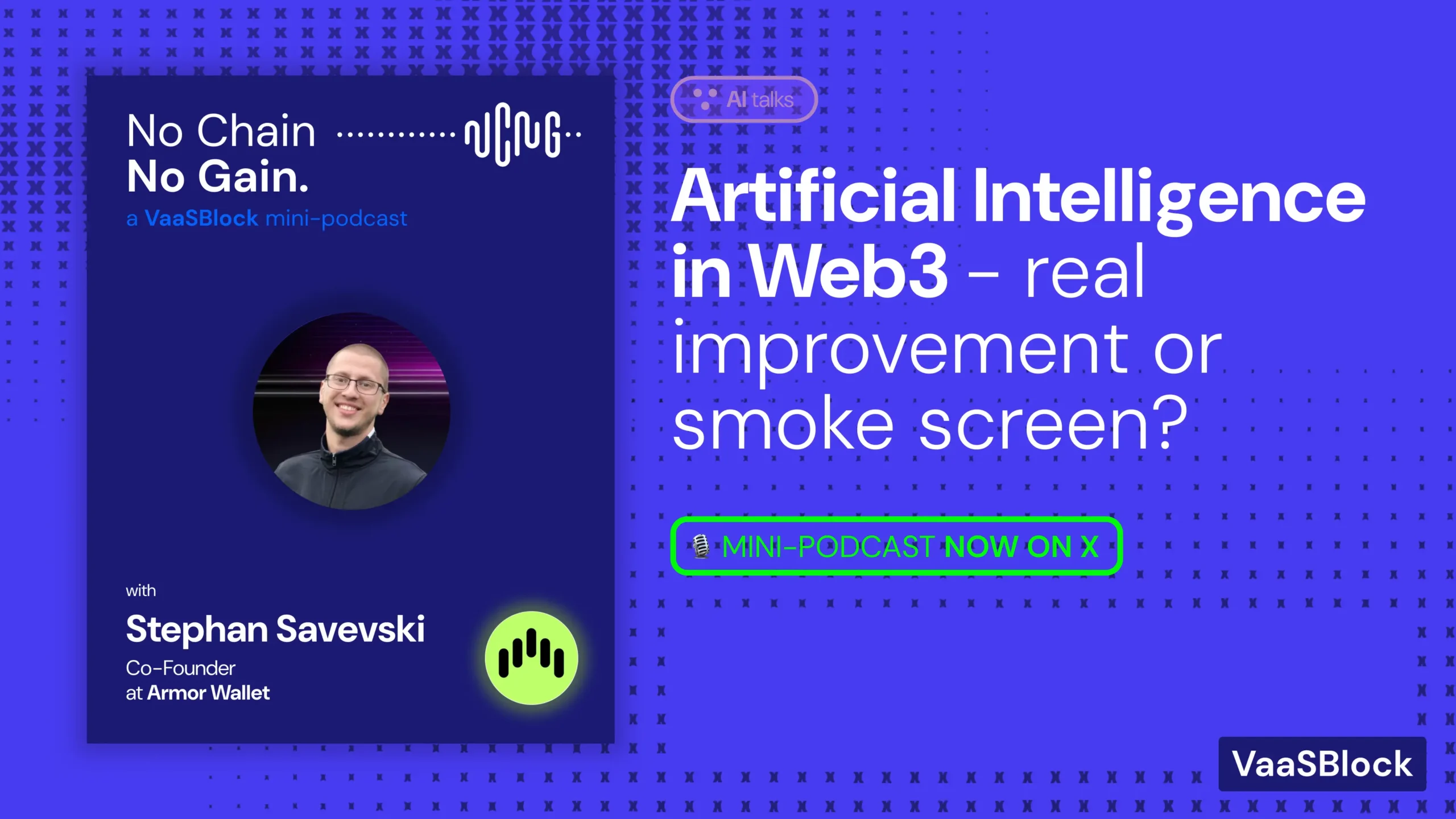
  • AI-powered crypto wallet for trading with Stefan Savevski, Founder/CEO of ARMOR

    AI-powered crypto wallet for trading with Stefan Savevski, Founder/CEO of ARMOR

    TL;DR: In this episode, NCNG host Raphael Rocher speaks with Stefan Savevski, co-founder of Armor Wallet, an AI-powered, self-custody Web3 wallet designed to execute crypto actions through natural-language prompts. Stefan shares his unconventional path from electrical engineering and robotics into copywriting (including cybersecurity-related work), then Web3 gaming and growth roles, before building Armor after repeatedly seeing how complex, unintuitive, and spreadsheet-driven wallet UX is for everyday users. He explains Armor’s core concept as “ChatGPT + MetaMask + Unibot,” powered by specialized AI agents for portfolio management, trading, and research, with an emphasis on safe execution and user control. The conversation dives into security: reducing hallucinations by constraining actions, using non-custodial wallets, separating portfolio vs. trading vs. gaming wallets, and adding limits, confirmations, and 2FA for sensitive actions. Stefan also outlines how Armor is being built by a lean, senior team, shares near-term roadmap updates (beta milestones), and discusses monetization via a 1% trading fee plus a community incentive layer around the Armor Codex NFT (fee-sharing and referral mechanics).

    Context

    Raphael Rocher welcomes Stefan Savevski, co-founder of Armor Wallet, to unpack why wallets remain one of the most painful UX layers in crypto, and how Armor aims to change that using AI agents and a chat-first interface.

    Stefan walks through the product’s core idea (“ChatGPT + MetaMask + Unibot”), the real-world friction that inspired it (onboarding a friend into Web3), and how Armor approaches security and user control with non-custodial architecture, separated wallet compartments, guardrails, limits, confirmations, and 2FA.

    The conversation closes with Armor’s team philosophy, roadmap updates, and the business model: a 1% trading fee plus community incentive mechanics around the Armor Codex NFT.


    Conversation Transcript

    Introduction & Background

    Raphael Rocher (Host, NCNG): Maybe to start things off, you can start and introduce yourself: what you did before, your background, and a bit of your business of course.

    Stefan Savevski (Co-Founder, Armor Wallet): So I am Stefan. I am the co-founder of Armor Wallet. And in terms of my background, my education is in electrical engineering, robotics, and computer systems automation.

    After studying, I transitioned into copywriting and content writing for big brands like NordVPN, ClickFunnels, QGP Ltd., Yardist. I did that for about seven and a half years. I dabbled with YouTube videos for a while. In the meantime, I discovered crypto through my writing for other clients.

    Eventually I stumbled upon play-to-earn gaming, which is when me and a couple of friends created a guild. We had about 150 gamers. We went to a Techstars startup event trying to create a startup, we got an award there. Then we went to a longest business pitch marathon. We helped break a Guinness world record. After that we received an investment, we started a startup.

    I was also during that time the head of growth of a Web3 game similar to League of Legends and Dota 2. Then the project ran out of funding. With my own startup we joined a business reality TV show for about six months. We had a mentor from New York who had four successful companies. We got to the finals and we could not get funding. So that’s when I started Armor Wallet, which is an AI-powered wallet, and I can explain it relatively quickly.


    Why Armor Wallet Exists & What It Does

    Raphael Rocher (Host, NCNG): Wow, that’s impressive. Can you get a bit in depth regarding the story of Armor Wallet: what were you thinking, what’s the problem in the ecosystem, and what is so unique about it?

    Stefan Savevski (Co-Founder, Armor Wallet): First of all, Armor Wallet is an AI-powered wallet. You can think of it like ChatGPT plus MetaMask plus Unibot. You can talk to it with prompts, and AI agents have the power to execute commands on your behalf.

    An example would be: you could talk to Armor and say, “Hey, take me to Ethereum. On Base, DCA into Solana for the next week only if the price doesn’t go up by 6%,” and it can go out and do that, you’re not going to have to use spreadsheets.


    The UX Problem (Real User Story)

    Stefan Savevski (Co-Founder, Armor Wallet): One of my friends wanted to start getting into crypto. He wanted to play a game, he needed an NFT, and he asked me for help. I said, of course: I’ve been in the space for about four years. So he came to my house, and I told him: you need to create a Binance account, complete KYC, send funds over to MetaMask, learn MetaMask, use the same seed phrase to log into a different wallet, bridge assets, and pay gas fees.

    He completed the process in about two hours, give or take. And when he was about to start playing the Web3 game, because the process was super complex, he turned to me and said: “You do realize this is insanely complicated, and everybody thinks that you crypto people are super weird.”

    That thought stuck with me. Most wallets are pretty boring. The user experience sucks. They’re not intuitive. You have no idea what’s happening unless you’ve been in the space for a while.

    In MetaMask you don’t see all the incoming transactions, you need to go to Etherscan or OKX Explorer to see what’s happening. You cannot see your entry prices. I have spreadsheets from 2020 and 2021 in Excel and Google Sheets. When I want to calculate how much money I have, I need to go back to those spreadsheets, enter new prices, and get an estimate.

    With Armor Wallet, it’s simple: “Hey, how much money do I have? How much profits do I have?” You ask a question and it gives you the answer. There’s no reason to keep things so complicated. Every single aspect of crypto has progressed except for wallets.


    Security, Compliance & Safe Execution

    Raphael Rocher (Host, NCNG): Let’s shift to security. How do you secure this and make it competitive? We were impressed with your security setup: data, compliance, and tech. Can you give us the temperature on this?

    Stefan Savevski (Co-Founder, Armor Wallet): I’ve been dealing with NordVPN and phishing scams and writing about VPNs and cybersecurity for about three years. Cybersecurity is a major issue that a lot of people don’t pay attention to. When it comes to Armor Wallet, we’re dealing with people’s finances, so it’s really important you do not make mistakes, because AI can make mistakes.

    First, we need to stop hallucinations. AI’s initial thought is to keep people satisfied, so we’re trying to remove hallucinations and keep it super bare-bones. There are only six trades that you can do. It’s very limited. We’ll use OpenAI at the start, then we’ll use our own LLM to do computations.

    On security: the user needs to be in charge of their finances. All wallets inside Armor are non-custodial. There’s a portfolio wallet, a trading wallet, and a gaming wallet.

    The portfolio wallet is the main thing that only you control: Armor Wallet will never be able to access it. You can send money and coins into it, and it functions like MetaMask, Rainbow, and similar wallets.

    The trading wallet is where AI agents have the power to execute. Think of it as a Telegram bot on steroids, you can say a couple of commands and it can go out and execute trades for you.

    Then there is a gaming wallet that compartmentalizes gaming assets: crystals, gold, potions, swords… you don’t want that mixing with Ethereum.

    We’ll have limits. You can tell the AI your daily trading limit: if it’s 500 a day, it goes up to 500. If it wants to go over, it sends you a notification, and you need 2FA to confirm. Same for portfolio rebalancing. If you want the wallet to execute a command, it repeats everything you said (highly specific) and you confirm it. It’s not going to go out on its own and do crazy things.

    To be super clear: Armor Wallet cannot “make you money.” You can’t type “here’s a hundred bucks, make me a million.” It can do super specific trades. For example: “rebalance my portfolio into 10% of each of the top 10 coins and tell me how much gas that’s going to cost.” That’s a good command.


    AI Hype vs. Real AI (Agents)

    Raphael Rocher (Host, NCNG): AI is everywhere in Web3. Can you share your perception: what is real AI versus just the label?

    Stefan Savevski (Co-Founder, Armor Wallet): Everybody can staple the AI term. For me, when ChatGPT happened it was revolutionary: you ask a question and it gives you steps. But you still have to go do them. It doesn’t have autonomy.

    When AI agents happened, I think of that as AI 2.0: the next step over LLMs. They have autonomy to execute commands. Example: “Hey Armor, list me all the tokens on Base in the past 30 days that have the name AI in them,” it returns the list, then you say “invest $100 into each.” A human intern might take seven days; the AI can do that in one click.

    Armor is your crypto assistant. We’ll have three agents: one for portfolio management (protect the portfolio), one for trading (responsible for execution), and one for research. They communicate with each other. If one agent does everything, it can go haywire; specialized agents per task is more powerful, like running a company.

    We also want a marketplace inside Armor Wallet where other people can build on top, third-party applications and tools people can use when they want.


    Team, Culture & Product Build

    Raphael Rocher (Host, NCNG): What does it mean to work at Armor: how do you build a team, who is on board, and how do you see it evolve?

    Stefan Savevski (Co-Founder, Armor Wallet): We have a pretty good idea of the type of people we want. We already had a POC built out that we didn’t like (it was janky) so we have more people working on it now. Armor is a super lean team. Most people have been around for four years or more.

    One developer has 15 years of experience, a cybersecurity expert. When you’re working with people, they need to be smarter than you. Hire people smarter than you in every area for the task, and you’ll have a good product.

    The mission is personal. You experience physical pain dealing with the bad UX of current wallets. Example: to send money, instead of writing “Raphael,” you write “0x90453…” With websites you don’t type an IP address: you type “Facebook.” We’re fixing that: making it human-readable and intuitive.


    Roadmap, Beta & Business Model

    Raphael Rocher (Host, NCNG): What’s next for Armor: where do you stand on the roadmap? Any good news upcoming?

    Stefan Savevski (Co-Founder, Armor Wallet): The beta version of the research part of Armor will be complete in about four weeks, early to mid October. If anybody wants to try it out, feel free to DM me: Stefan Savevski with an underscore on X, or join our community and follow us for updates. We already built one, it was janky, now we’re improving it.

    The structure of Armor and how it makes money is important. Using Armor comes with a 1% transaction fee, like trading bots. We’re going to share half of that 1% with our NFT holders.

    We’re about to have an NFT campaign about the Codex. People who have a Codex will have a referral code, and the only way to use Armor will be through a referral code. Anytime you refer somebody, you get 25% of that trading fee from their trading volume. The other 25% of the trading fee is distributed among all Codex holders. That’s the utility we’re trying to bring in.

    Raphael Rocher (Host, NCNG): We’ll have to have another call, episode number two in the making.

    Stefan Savevski (Co-Founder, Armor Wallet): Thanks, man.


    About Armor Wallet

    Armor Wallet is an AI-powered, self-custody Web3 wallet designed to execute crypto actions through natural-language prompts, using a multi-agent approach across functions like trading, portfolio management, and research.

    The project emphasizes user control and safety (self-custody architecture and guardrails around execution), and is building toward a broader ecosystem that can support additional tools and integrations.

    Armor’s monetization model includes a 1% trading fee, and an incentive layer around the Armor Codex NFT collection (fee-sharing and referral mechanics, with benefits varying by NFT characteristics).

    Stefan Savevski is the co-founder and CEO of Armor Wallet, an RMA-verified company.

  • WeFi Bank ($WFI) ha vissuto un grande anno, durerà?

    WeFi Bank ($WFI) ha vissuto un grande anno, durerà?


    TL;DR

    In un anno in cui gran parte del Web3 ha faticato a produrre risultati concreti, schiacciato da un’economia crypto debole e da persistenti pressioni macroeconomiche, WeFi Bank si è affermata come un’eccezione inattesa. La performance del token e la crescente visibilità del progetto contrastano nettamente con un settore segnato da roadmap bloccate e narrazioni frammentate. Tuttavia, interesse non equivale automaticamente a credibilità. Questo articolo propone un’analisi equilibrata e basata su evidenze verificabili del progetto dietro il prezzo: cosa WeFi dichiara di costruire, cosa è effettivamente dimostrabile oggi, dove si concentrano i principali rischi e se questo apparente successo rappresenti un progresso strutturale o semplicemente una narrazione non ancora messa alla prova.


    WeFi Bank: il “Deobank” poco visibile che va contro un difficile anno 2025 per il Web3… per ora

    In un periodo in cui molte narrazioni Web3 non hanno superato la prova della consegna, WeFi è stata descritta come un’eccezione controcorrente.

    Come leggere questo: questa analisi approfondita mira a distinguere i fatti verificabili dalle affermazioni di marketing e a mantenere lo scetticismo al centro.


    Disclosure: si tratta di un’analisi editoriale basata su copertura pubblicamente disponibile, documentazione del progetto, materiali di codice/audit quando disponibili e dati di mercato di terze parti. Un elenco consolidato delle fonti è disponibile in Sources & Notes alla fine.

    Scritto da: VaaSBlock Research


    WeFi ha battuto il mercato web3 nel 2025, chiudendo più forte che mai. Un evento da unicorno.


    In un 2025 turbolento, in cui Bitcoin ha faticato in diversi momenti anche mentre i principali indici azionari raggiungevano nuovi massimi e l’inflazione restava una pressione persistente in molte economie, il settore Web3 è tornato a essere affollato da storie di vendita eccessivamente ottimistiche: progetti ricchi di promesse e poveri di risultati. In questo contesto, WeFi Bank (commercializzata come banca decentralizzata on-chain o “Deobank”) è emersa come un’eccezione controcorrente. Coperture recenti e tracker di dati di mercato riportano una forte rivalutazione del token WFI nel corso dell’anno, mentre l’azienda e diverse testate parlano anche di una rapida adozione in decine di Paesi.

    Con un sentiment crypto rimasto disomogeneo e un’incertezza normativa che continua a influenzare il mercato, WFI sarebbe passata dalla fascia di pochi centesimi/pochi dollari a inizio anno alla fascia intorno ai 2 $ verso la fine di dicembre 2025, con stime di capitalizzazione attorno ai ~200 milioni di dollari a seconda della piattaforma e della metodologia. Questi dati vanno considerati come stime di mercato, non come “fondamentali”.

    Questa performance contrasta con un settore che spesso premia la narrazione più dell’eccellenza operativa, un tema che abbiamo già descritto come “amateur hour” nelle operazioni Web3. WeFi potrebbe essere un’eccezione, per ora, ma lo scetticismo resta l’approccio corretto: si tratta di una creazione di valore sostenibile o solo di un’altra narrazione che non ha ancora superato le prove di stress che spesso interrompono i “vincitori” crypto?

    Questa analisi approfondita esamina i fondamentali del progetto WeFi, il team, il codice, la traiettoria del token nei momenti chiave del 2025 e le prospettive per il 2026, basandosi su fonti verificate e segnalando le affermazioni non confermate come “riportate”. Se sei qui soprattutto per capire promesse, rischi e posizionamento del progetto, la nostra analisi bancaria WeFi offre un punto di partenza dedicato. Integreremo statistiche, citazioni di esperti e prospettive bilanciate, tenendo presenti i casi che ricordano come anche iniziative promettenti possano fallire.


    La rivoluzione dei Deobank: cos’è WeFi e qual è la sua innovazione centrale?

    WeFi si presenta come il “primo Deobank al mondo”, ripensando i servizi bancari portando funzioni tradizionali su infrastrutture blockchain e dando priorità alla conformità normativa. Lanciata all’inizio del 2025 dopo una beta chiusa a fine 2024 (come descritto nei materiali del progetto e in diversi profili di terze parti), WeFi afferma di operare su “WeChain”, descritta in alcune coperture come una stack basata su Cosmos o adiacente a Cosmos, con ambizioni cross-chain. Per gli utenti, la questione non è il branding, ma se la chain e i bridge reggono in condizioni avverse reali.

    Gli utenti accedono a un’interfaccia unificata per la gestione di valute fiat e crypto: i depositi possono essere convertiti in stablecoin, abilitando pagamenti globali e rendimenti (l’azienda e alcune coperture citano valori “fino a” ~18% sulle stablecoin, ma condizioni, durata e sostenibilità possono variare), prelievi ATM tramite carte di pagamento (l’accettazione delle carte è in genere mediata da partner di programma e circuiti, quindi le affermazioni sul “numero di esercenti” vanno lette come scorciatoie di marketing) e servizi automatizzati come prestiti, finanziamenti e pagamenti di bollette, con regolamento in WFI per un’utilità effettiva.

    Nota importante sui rendimenti: rendimenti elevati dichiarati non sono una caratteristica neutra nel mondo crypto. Sono un segnale di rischio. I tassi possono cambiare senza preavviso, possono dipendere da periodi promozionali e includere rischi di controparte e di smart contract. Nei casi peggiori, possono assomigliare alle dinamiche iniziali di fallimenti guidati dal rendimento. Purtroppo, nei cicli precedenti non mancano esempi di persone che hanno perso fondi inseguendo rendimenti. Ogni valore “fino a” va considerato non garantito e l’esposizione va gestita di conseguenza.

    Questo approccio affronta alcune delle frizioni più persistenti della DeFi, come i bridge fiat-crypto e la complessità per gli utenti, in linea con idee come quelle espresse da Andreas Antonopoulos in “The Internet of Money”, che evidenzia il potenziale della blockchain per una finanza senza confini e più inclusiva. La crescita degli utenti riportata sarebbe aumentata in modo marcato nel terzo trimestre del 2025, con il 30% proveniente da mercati emergenti come Nigeria, Filippine e Argentina, dove la crypto viene usata per coprirsi dall’inflazione e per inviare rimesse.

    Il modello di custodia distribuita di WeFi divide le chiavi tra utenti, piattaforma e terze parti, includendo meccanismi di recupero sociale per ridurre il rischio di perdita delle chiavi senza una centralizzazione completa. Il cofondatore e CEO Maksym Sakharov riassume così la visione: “Non stiamo solo costruendo una banca; stiamo costruendo un movimento. La nostra piattaforma di banking decentralizzato propone una visione del futuro — una banca senza confini, inclusiva e davvero centrata sull’utente”.

    Premi e record (inclusa la menzione “Most Innovative Web3 Project” e traguardi in stile Guinness citati in alcune coperture) vanno letti come segnali culturali, non come sostituti di una due diligence. Restano dubbi: siti che attirano spesso traffico negativo valutano la trasparenza a 6 su 100, citando audit incompleti e licenze non verificate. BrokerChooser la considera “not safe” e consiglia di evitarla per la mancanza di supervisione da parte di un regolatore di primo livello. Alcuni commentatori indipendenti su YouTube e sui social hanno sollevato dubbi su sostenibilità e trasparenza, soprattutto sulle promesse di rendimento in evidenza. Si tratta di opinioni, non di riscontri verificati, e vanno valutate come tali.


    Il team: veterani o legami discutibili?

    La leadership di WeFi combina competenze fintech e blockchain, suggerendo l’intenzione di costruire infrastrutture durature più che schemi rapidi. Sakharov, ex fondatore dell’exchange crypto Exflow, porta esperienza in infrastrutture conformi nei mercati emergenti. Il presidente Reeve Collins, cofondatore di Tether (USDT), ha una storia che in alcuni racconti attira attenzione per le controversie legate all’era Tether; quando le affermazioni vanno oltre i registri pubblici, vanno considerate non verificate e qui non vengono usate come base. Il Chief Product Officer Roman Rossov, in passato in Wise (TransferWise), è specializzato nei pagamenti transfrontalieri.

    Tra le aggiunte più recenti figura l’ex dirigente Visa Michael Batuev come Global Head of Payments, che alcuni osservatori interpretano come un segnale di credibilità: oltre 18 anni di esperienza fintech, inclusi ruoli di leadership nei pagamenti mobili e in soluzioni di carte in self-custody presso Tangem. Nelle comunicazioni del progetto (e in alcune coperture riprese in syndication), la nomina viene inserita in una narrazione di espansione istituzionale: “Il settore dei pagamenti è a un punto di svolta. I sistemi legacy faticano a stare al passo con la natura fluida e senza confini della finanza digitale. Il modello WeFi unisce la fiducia della banca con la libertà del Web3”.

    La COO Alice Tärk e profili come Adrian Liddiard (ex BlueWater Communications, venduta a Presidio) e John Schmidt (ex Castle Pines Capital, venduta a Wells Fargo) completano un team con exit riuscite. Tuttavia, alcune biografie sono poco dettagliate e i legami di Collins invitano a un esame attento, ricordando che anche team di alto profilo in progetti passati non hanno evitato il collasso quando le condizioni di mercato sono cambiate.

    L’analista professionista John Lee di PiggyCell aggiunge una prospettiva: “I migliori progetti risolvono problemi quotidiani”, un’idea che si allinea all’impostazione pratica con cui WeFi dichiara di colmare reali lacune nell’infrastruttura finanziaria.


    Codice e architettura tecnica: la trasparenza incontra la sicurezza?

    Il GitHub di WeFi mostra attività di sviluppo, con repository come il WFI Token Distribution Contract su Binance Smart Chain (Solidity 0.8.20, framework Foundry) che includono ricompense di mining con halving (8 → 4 → 2 → 1 WFI per blocco), vesting lineare per referral e staking su due anni e misure di sicurezza tramite OpenZeppelin (ReentrancyGuard), controlli Ownable, firme ECDSA e funzioni di pausa.

    Audit di SolidProof, Cyberscope, Peckshield e Quillhash hanno individuato problemi minori, senza falle critiche, e citano revisioni di codice di routine. Tuttavia, “auditato” non significa “sicuro” e il perimetro dell’audit può essere limitato o legato a un periodo specifico. Non tutto il codice e non tutti i sistemi operativi sono completamente aperti. In alcune discussioni compaiono affermazioni tecniche dal taglio marketing (per esempio l’espressione “quantum-grade”), difficili da verificare in modo indipendente e da non trattare come prova di sicurezza. In un anno con oltre 3 miliardi di dollari in hack DeFi, questa trasparenza parziale richiede cautela.

    Più in generale, gli incidenti di sicurezza nel mondo crypto restano frequenti, sia a livello di protocollo sia di wallet degli utenti. Questo contesto è importante quando si valuta un’app che combina pagamenti, rendimenti e meccaniche on-chain.

    L’architettura di custodia distribuita della piattaforma divide le chiavi crittografiche tra tre parti — utenti, WeFi e fornitori di servizi terzi indipendenti — implementando anche meccanismi di recupero sociale che riducono i punti singoli di fallimento. Questo affronta una delle sfide di esperienza utente più persistenti della crypto: il rischio di perdere fondi per una gestione errata delle chiavi private.


    Performance del token: momenti chiave del 2025 e dinamiche di mercato

    La crescita del 1,100% di WFI sfida l’inverno crypto del 2025 attraverso fasi distinte che aiutano a leggere i meccanismi dietro la rivalutazione. Partendo da 0,22 $, avrebbe raggiunto 2,68 $ a dicembre, con una capitalizzazione di 203 milioni di dollari, un volume su 24 ore di 2,36 milioni di dollari, 76 milioni in circolazione (massimo 1 miliardo) e una fully diluted valuation di 2,68 miliardi di dollari.


    Il grafico CMC del 2025 di WeFi mostra aumenti di prezzo superiori al 700% per $wfi


    Lancio T1 (gennaio-marzo): +200% fino a 0,50 $ durante il rollout del Deobank, mentre BTC scendeva del 15% in un contesto di incertezza più ampia.

    Rally di metà anno (aprile-giugno): +400% fino a 1,50 $ dopo annunci di licenze in Asia, andando contro la stagnazione di BTC durante pressioni regolatorie.

    Adozione T3 (luglio-settembre): +30% fino a 2,00 $ grazie all’adozione nei mercati emergenti, con la TVL DeFi che raggiungeva 200 miliardi di dollari a livello di settore.

    Picco T4 (ottobre-dicembre): Premi e partnership avrebbero spinto fino a 2,68 $, con +90% nel solo mese di novembre, mentre dirigenti della finanza tradizionale entravano nel progetto.

    Alcune coperture di mercato hanno descritto il movimento di WFI come un’anomalia rispetto ai periodi più irregolari di Bitcoin. Tuttavia, attribuire l’andamento del prezzo all’“utilità invece che alla speculazione” è intrinsecamente incerto nei mercati crypto.

    In ogni caso, lo scarto tra capitalizzazione attuale e fully diluted valuation segnala rischi di diluizione rilevanti man mano che più token entrano in circolazione tramite ricompense di mining e distribuzioni di staking.


    Strategia regolatoria ed espansione globale

    WeFi e diversi profili di terze parti descrivono un approccio “multi-jurisdictional” alla compliance, spesso elencando registrazioni o autorizzazioni come la registrazione MSB in Canada presso FINTRAC e ulteriori permessi in altre regioni. Il punto chiave è che questi termini vengono spesso usati con molta elasticità nel marketing crypto. Per esempio, la registrazione MSB presso FINTRAC è un requisito legale per alcune attività in Canada, ma non implica approvazione, una licenza bancaria prudenziale o protezioni di primo livello per i consumatori. Ogni formulazione ampia del tipo “licensed everywhere” va trattata come un’affermazione da verificare giurisdizione per giurisdizione.

    L’azienda punta a espandersi a Singapore, negli Emirati Arabi Uniti e negli Stati Uniti, usando KYC guidato dall’IA e zero-knowledge proofs per una compliance che tutela la privacy. Questo approccio “regulatory-first” comporta costi operativi significativi, ma può posizionare la piattaforma in modo favorevole mentre le regole sulle criptovalute evolvono a livello globale.

    Contesto macro: i principali organismi di policy e di stabilità finanziaria hanno avvertito più volte che forme ibride di “crypto-banking” o conversione crypto-pagamenti possono creare rischi per opacità, leva, mismatch di scadenze e crescente interconnessione con la finanza tradizionale. Per una panoramica di qualità, si possono consultare il Financial Stability Review della Banca Centrale Europea (inclusa l’analisi sul mondo crypto) e il framework prudenziale del Comitato di Basilea sulle esposizioni in cryptoasset delle banche.

    Tuttavia, valutatori di sicurezza di terze parti hanno sollevato dubbi sulla solidità della supervisione. Per esempio, BrokerChooser sostiene che WeFi non sia regolata da un regolatore di primo livello e consiglia di evitarla su questa base. Anche se si contesta l’impostazione di BrokerChooser (valuta “broker” e potrebbe non sovrapporsi perfettamente a un modello deobank), il punto di fondo resta rilevante: la qualità della regolazione conta e non tutte le registrazioni offrono un reale ricorso per i consumatori.


    Perché andare controcorrente? Analisi competitiva e posizionamento di mercato

    Il vantaggio competitivo di WeFi sta nel provare a risolvere fallimenti reali del mercato che la finanza tradizionale e la DeFi “pura” non hanno risolto. La piattaforma punta a 1,4 miliardi di persone non bancarizzate nel mondo e, allo stesso tempo, a lavoratori transfrontalieri, freelance e aziende che hanno bisogno di funzionalità multivaluta.

    Come ha osservato l’analista Valerio Attilio Rossi: “Chi crea valore, riceve valore” — un principio che sembra guidare il focus di WeFi sull’utilità pratica più che su funzioni speculative. L’integrazione con la rete Visa, che dichiara accesso a oltre 140 milioni di esercenti, crea un’utilità immediata nel mondo reale che molti protocolli DeFi non hanno.

    Competitor come Coinbase, Binance, Revolut e N26 offrono parti della proposta di WeFi, ma non la stessa integrazione tra componenti DeFi e interfacce tradizionali. Le banche tradizionali faticano a integrare la crypto per via di infrastrutture legacy, mentre gli exchange crypto di solito non offrono servizi bancari completi e compliance su più giurisdizioni.

    Questo posizionamento, però, crea anche vulnerabilità. Istituzioni finanziarie tradizionali con risorse maggiori potrebbero replicare il modello, mentre cambiamenti regolatori potrebbero incidere sull’approccio multi-giurisdizionale. Il successo del progetto ha attirato attenzione, ma un vantaggio competitivo sostenibile richiede innovazione e investimenti continui.


    Rischi, criticità e prospettive per il 2026

    Nonostante risultati notevoli, WeFi affronta criticità importanti che potrebbero interrompere la traiettoria. La preoccupazione più immediata riguarda la sostenibilità dei rendimenti dichiarati: ritorni del 18% su depositi in stablecoin appaiono ottimistici in un contesto di bassi rendimenti nella finanza tradizionale.

    Tra i rischi tecnici ci sono vulnerabilità degli smart contract, in un contesto in cui molte analisi di settore hanno documentato perdite per miliardi di dollari dovute a exploit e truffe DeFi negli ultimi anni. Anche se gli audit di WeFi non indicano falle critiche, la trasparenza parziale attorno ad alcune affermazioni “quantum-grade” solleva dubbi su dichiarazioni tecnologiche non verificate.

    I rischi regolatori restano rilevanti: l’approccio multi-giurisdizionale espone a regole in evoluzione in numerosi mercati. Un singolo intervento regolatorio in una giurisdizione chiave potrebbe influenzare le operazioni globali, mentre i costi di compliance continuano ad aumentare con l’espansione.

    La tokenomics è un’altra criticità: il rilascio graduale del massimo di 1 miliardo di token crea una pressione di vendita strutturale, che deve essere compensata da crescita continua degli utenti ed espansione dell’utilità. Lo scarto tra market cap attuale e fully diluted valuation suggerisce un rischio di diluizione significativo man mano che più token entrano in circolazione.

    Le previsioni di mercato per il 2026 variano molto: CoinCodex vede 2,18 $ a fine anno, Coindataflow proietta fino a 3,23 $, mentre alcune stime di lungo periodo arrivano a 13,61 $ nel 2040. Queste proiezioni dipendono in larga misura da crescita stabile degli utenti, chiarezza regolatoria e capacità della piattaforma di mantenere vantaggi competitivi mentre entrano in gioco attori più grandi.

    Il caso, spesso citato come monito, di Kadena e la sua rapida ascesa e caduta ricorda che anche progetti con basi tecniche solide e team esperti possono inciampare quando cambiano le condizioni di mercato o quando l’utilità promessa non si materializza su larga scala.


    Conclusione: eccezione o segnale anticipatore?

    WeFi è un caso di studio interessante per capire se i progetti crypto possano maturare oltre la speculazione e diventare infrastrutture finanziarie concrete. La rivalutazione del token del 1,100%, la rapida adozione e l’approccio regolatorio descritto indicano che l’utilità nel mondo reale può contribuire a creare valore anche in condizioni di mercato sfavorevoli.

    Il progetto si concentra su problemi pratici: pagamenti transfrontalieri, copertura dall’inflazione e inclusione finanziaria, e prova a rispondere a fallimenti che la finanza tradizionale non ha risolto. L’approccio “regulatory-first” e il team con esperienza possono fornire basi per una crescita più solida, mentre la nomina di figure come Michael Batuev segnala ambizioni istituzionali.

    Restano però rischi importanti. Affermazioni tecnologiche non verificate, dubbi sulla sostenibilità di rendimenti elevati, esposizione regolatoria su più giurisdizioni e le difficoltà di scalare infrastrutture finanziarie complesse creano incertezza. Il track record è ancora breve, quindi le prove di tenuta nel lungo periodo sono limitate. Inoltre, la concorrenza di istituzioni più capitalizzate potrebbe ridurre i vantaggi attuali.

    Per l’industria crypto più ampia, il percorso di WeFi può offrire un modello per progetti che vogliono collegare finanza tradizionale e sistemi decentralizzati. La piattaforma mostra che la compliance non deve per forza bloccare l’innovazione e che l’utilità nel mondo reale può sostenere la rivalutazione del token in modo più stabile rispetto alla sola speculazione.

    Resta da capire se WeFi sia l’eccezione che conferma la tendenza del settore verso l’hype più che verso la sostanza, oppure un segnale di una fase più matura. La prossima fase — crescere a livello globale mantenendo la compliance, generare ricavi sostenibili e preservare il valore del token — determinerà se il progetto rientrerà tra le innovazioni finanziarie concrete o diventerà un altro caso di monito.

    Per ora, WeFi appare come un esempio raro di progetto Web3 che offre valore misurabile agli utenti e, allo stesso tempo, genera ritorni per gli investitori. La domanda per chi valuta di partecipare è se questa performance rappresenti un’innovazione sostenibile o solo una narrazione ben costruita che poi non regge alla realtà economica. In un contesto in cui molti progetti faticano a consegnare funzionalità di base, i risultati di WeFi attirano l’attenzione, anche se resta sensato mantenere uno scetticismo sano sulla sostenibilità nel lungo periodo.


    FAQ: WeFi Bank, “Deobank” e token WFI

    WeFi Bank è una banca regolata? WeFi e diversi profili di terze parti descrivono registrazioni o autorizzazioni in più giurisdizioni. Tuttavia, non vanno considerate equivalenti a una licenza bancaria prudenziale o a un’approvazione del regolatore. Protezioni per i consumatori e possibilità di ricorso variano in modo significativo in base al Paese e alla specifica entità legale che eroga il servizio.

    I rendimenti dichiarati da WeFi sono garantiti? No. I valori di rendimento “fino a” citati nei materiali dell’azienda o in alcune coperture non sono garantiti e possono cambiare senza preavviso. I ritorni possono dipendere da periodi promozionali, incentivi, controparti e rischi legati a smart contract o custodia. I rendimenti vanno letti come un segnale di rischio e l’esposizione va dimensionata di conseguenza.

    Cosa significa “Deobank” nella pratica? “Deobank” non è una categoria regolatoria standard. Nella pratica, indica spesso un modello ibrido che combina infrastrutture crypto (wallet, incentivi in token, componenti on-chain) con interfacce della finanza tradizionale (carte, pagamenti, rampe fiat in entrata e in uscita). Il design preciso — e dove si concentra il rischio — dipende da custodia, controparti e struttura per giurisdizione.

    La performance del token WFI prova valore di lungo periodo? Non da sola. Il prezzo del token può riflettere condizioni di liquidità, narrazioni di mercato, incentivi e speculazione tanto quanto l’utilità. Una valutazione più solida considera dinamiche di diluizione, driver di utilizzo e ricavi (se presenti), governance e controllo, perimetro degli audit e se le affermazioni chiave restano valide sotto stress.


    Sources & Notes

    Tutti i dati e le affermazioni in questa analisi vanno letti insieme alle fonti originali. Quando vengono citati numeri specifici, le fonti dovrebbero essere indicate come link diretti o citazioni formali qui sotto.


    Nota sullo standard delle evidenze e sulle fonti

    Questo articolo separa intenzionalmente (1) materiali primari o ufficiali (regolatori, registri, repository di codice, portali di audit), (2) reportage secondari considerati affidabili e (3) fonti promozionali o a credibilità più bassa. Quando per un’affermazione erano disponibili solo fonti di categoria (2) o (3) (per esempio: numero di utenti, rendimenti “fino a”, formulazioni ampie sulle licenze o premi), il testo usa espressioni come “riportato” o “l’azienda afferma” e l’affermazione non viene trattata come verificata. È ragionevole assumere che condizioni, rendimenti, disponibilità dei programmi e postura regolatoria possano cambiare rapidamente nei prodotti di crypto-banking e che sia sempre opportuno verificare i termini aggiornati e le informazioni specifiche per la propria giurisdizione prima di basarsi su qualsiasi dichiarazione.

    Questo articolo non costituisce un consiglio di investimento.

  • Fractional CFO for Web3 startups with Christian Corrigan, CFO Partner of BlockOffice

    Fractional CFO for Web3 startups with Christian Corrigan, CFO Partner of BlockOffice

    TL;DR: In this episode, NCNG host Raphael Rocher speaks with Christian Corrigan, CFO Partner at BlockOffice, a strategic back-office and fractional CFO/COO partner for both Web2 and Web3 startups. Christian explains that BlockOffice covers everything from incorporation, banking, and bookkeeping to high-level fundraising support, budgeting, forecasting, and token listing preparation, and has recently expanded into product studio services through an in-house tech team. He shares the company’s origin story through founder Jay’s VC/angel background and the recurring need for stronger finance operations inside early-stage startups, paired with a long-term vision of building an automated FinOps platform for founders. The conversation highlights BlockOffice’s white-glove, embedded-team approach: they start by identifying a client’s top priorities, then operate as part of the startup rather than hourly consultants, often owning the full financial department and operational execution through key moments like TGE. Christian’s top advice for founders is to stop trying to do everything themselves, focus on fundraising, go-to-market, and product, and outsource FinOps to specialists to preserve bandwidth. Finally, he outlines BlockOffice’s organic growth model built on events, network-driven deal flow, and referrals, while teasing upcoming Token2049 side-events ranging from a founders/VC fitness session to a practical workshop on corporate structuring and SAFTs.

    Context

    Raphael Rocher welcomes Christian, Partner at BlockOffice, to discuss the role of strategic back-office support for early-stage Web2 and Web3 startups. Christian introduces BlockOffice’s fractional CFO/COO model, covering both foundational FinOps and high-impact strategic support such as fundraising, forecasting, and token-related operations.

    They explore why BlockOffice was created, what makes its embedded, white-glove approach different from classic consulting, and the most common founder mistakes the team sees when startups begin scaling. The discussion wraps with BlockOffice’s organic go-to-market strategy and a preview of the team’s Token2049 presence and side events.


    Conversation Transcript

    Recording Consent & Introduction

    Raphael Rocher (Host, NCNG):Alright, maybe to start you can introduce yourself, talk a bit about your business very briefly and what you guys do.

    Christian (CFO Partner, BlockOffice): Sure. My name is Christian. I’m a CFO partner at BlockOffice. Essentially, BlockOffice is a strategic back office for startups, Web2 and Web3. We sit under a fractional CFO/COO umbrella, from basics like incorporation, corporate structuring, bank accounts, and bookkeeping, to strategic support like fundraising, budgeting, planning, forecasting, investor memos, and white papers. For Web3, that includes token listing support.

    We also have a tech development team. They started by building our internal platform, then we acquired and expanded them. Since many clients need product help, we now offer product studio capabilities too.


    Origin Story & Long-Term Vision

    Raphael Rocher (Host, NCNG): Is there a story behind how BlockOffice started? Why was it needed, and what’s the long-term vision?

    Christian (CFO Partner, BlockOffice): BlockOffice started with Jay, our founder. He has a deep VC and angel background and saw a recurring problem in his portfolio: startups lacked strong finance departments, didn’t know how to manage financial ops, and couldn’t produce reporting that helped them raise follow-on rounds.

    The bigger vision was to go beyond fractional CFO services and build a platform that automates common startup pain points, like organized data rooms and automated fundraising-ready financial reporting, potentially expanding into things like “AngelList 2.0.” I met Jay early on; I was already doing fractional CFO/COO work with 16 years in investment banking. We aligned immediately, and the partnership snowballed from Jay’s early portfolio network into broader demand.


    How BlockOffice Works (Client Example)

    Raphael Rocher (Host, NCNG): Can you share a concrete example of how you work end-to-end with a client?

    Christian (CFO Partner, BlockOffice): We don’t operate like traditional consultants. Our goal is to provide maximum support without adding unnecessary burn. We start by understanding the startup’s real problems and identifying two or three core priorities. We’re a high-touch, white-glove, bespoke service.

    Once engaged, we operate as part of the team. Not hourly billing. We attend weekly and strategic meetings and try to optimize internal processes so we can add more strategic value.

    One example: we supported a client moving toward their TGE after a successful fundraise. We became their outsourced financial department, building models, improving their commercial plan, handling AP/AR, payroll, treasury management, and then project-managing the TGE. That meant evaluating market makers, structuring proposals for the CEO, coordinating listing requirements, and helping decide where to list first — essentially acting as the operational “arms and legs” for finance and ops.


    Top Advice for Early-Stage Founders

    Raphael Rocher (Host, NCNG): What’s your number-one piece of advice for early-stage founders?

    Christian (CFO Partner, BlockOffice): Founders often try to do everything themselves because they feel accountable for every part of the business. That quickly turns into too many priorities with not enough bandwidth. The biggest mistake is misallocating attention.

    Founders should focus almost entirely on fundraising, go-to-market, and product scope/build — the highest-ROI areas. FinOps and other operational necessities should be outsourced to specialists who can move at founder speed. That’s where we help: we take on the FinOps load so founders keep headspace and execution focus for what matters most.


    Deal Flow, Growth & Token2049 Teaser

    Raphael Rocher (Host, NCNG): You’ve had great results without big marketing. How have you driven business so far, and what’s next?

    Christian (CFO Partner, BlockOffice): We’ve barely invested in marketing. Our website isn’t built for inbound. Instead, we went to lots of events, listened to startup problems, and refined our offering. For pre-seed startups, incorporation and structuring are often the first need, so we start there and naturally expand into deeper FinOps support.

    Growth has been organic through Jay’s network, continuous event presence, and a strong referral engine from satisfied clients. We’re now beginning to test a more structured funnel with A/B messaging to attract the right clients.

    Raphael Rocher (Host, NCNG): You’ll be at Token2049, anything you want to tease?

    Christian (CFO Partner, BlockOffice): We’re running two side events. One is a lunchtime gym/fitness session for founders and VCs who want a break from the party circuit, followed by lunch. The other is a practical session on corporate structuring and SAFT/fundraising documentation. People can find details on LinkedIn and reach out through the site or directly.

    Raphael Rocher (Host, NCNG): Perfect. Thank you very much.


    About BlockOffice

    BlockOffice is a strategic back-office and fractional CFO/COO partner for Web2 and Web3 startups. The team supports founders across the full finance and operations stack: from incorporation, corporate structuring, banking setup, and bookkeeping, to strategic fundraising support, budgeting, planning, forecasting, investor materials, and token listing preparation. BlockOffice operates as a white-glove, embedded extension of client teams, prioritizing speed, efficiency, and measurable outcomes. The company is also building an internal tech platform and product studio capabilities to automate common startup FinOps pain points and support product development needs.

    Since 2024, Blockoffice is RMA-verified and fully transparent.

  • Korean web3 research company founder with Daniel Kim, CEO of Tiger Research

    Korean web3 research company founder with Daniel Kim, CEO of Tiger Research

    TL;DR: In this episode, Raphael Rocher talks with Daniel Kim, founder and CEO of Tiger Research, an Asia-based Web3 research and consulting firm operating from Seoul, Vietnam, and Indonesia. Daniel explains Tiger Research’s mission: helping enterprises and Web3 projects adopt blockchain through a mix of market research, business/technology development, and hands-on project management. He shares how his background at Microsoft, AWS, and as a hedge fund tech analyst shaped his belief that major technology waves always need trusted local partners to drive real adoption. Daniel breaks down TR’s methodology: relentless daily research, narrative-driven top-down analysis paired with bottom-up networking and problem discovery with clients. The conversation closes with a rapid-fire pitch for why global Web3 companies should build in Asia, especially Korea: massive user base, strong talent, relatively clear regulation, high retail investor appetite, and an unusually aligned ecosystem of enterprises, developers, investors, and regulators. Finally, Daniel teases Tiger’s open-source Korea Blockchain Week report, designed to help visitors enter the market fully informed and ready for deeper collaboration.

    Context

    Raphael Rocher welcomes Daniel Kim to the show for a deep dive into Tiger Research and the realities of Web3 adoption in Asia. Daniel introduces Tiger Research as a Seoul-headquartered consulting and research firm with teams across Korea, Vietnam, and Indonesia, focused on helping enterprises and projects leverage blockchain in practical, scalable ways.

    The discussion explores Tiger’s scope of work, the personal motivations behind launching the firm, and how trust and research discipline shape their culture. Daniel then gives a concise but compelling case for why Asia, and Korea in particular, represents one of the strongest regions for Web3 market entry. The episode ends with a teaser of Tiger Research’s Korea Blockchain Week report, published to equip global visitors with an open-source market primer.


    Conversation Transcript

    Introduction & What Tiger Research Does

    Raphael Rocher (Host, NCNG): Before we start, can you confirm that you agree with me recording this call?

    Daniel Kim (Founder & CEO, Tiger Research): Yes, I agree.

    Raphael Rocher (Host, NCNG): Perfect. The first question, just to start things off: who you are, what you do, and a quick description of Tiger Research and what your business is in a few lines.

    Daniel Kim (Founder & CEO, Tiger Research): Hi everyone, my name is Daniel Kim and I’m the founder and CEO of Tiger Research. Tiger Research is an Asian Web3 research and consulting firm based out of Seoul, South Korea, Vietnam, and Indonesia.

    Raphael Rocher (Host, NCNG): Can you talk a bit more about what you do — your core business and the reports you deliver?

    Daniel Kim (Founder & CEO, Tiger Research): Tiger Research helps enterprises leverage Web3 technology and combine blockchain with their existing business. We do three things: market research (both private research for clients and public research for audiences), business and technology development, and recently project management for the toughest blockchain-related workloads enterprises face.

    For example, we work with Animoca Brands on their Korea business, Forte on expanding their blockchain gaming platform from the US to Asia, and Klaytn Foundation on their real-world asset business. We also work closely with foundations like Solana, The Graph Foundation, and Everyworld.


    Why Daniel Started Tiger Research

    Raphael Rocher (Host, NCNG): What made you decide to start Tiger Research? Was it a specific need you saw, or linked to your past experience?

    Daniel Kim (Founder & CEO, Tiger Research): I started my career in 2010 and worked at large tech companies like Microsoft and Amazon Web Services, and also at a hedge fund as a technology analyst. A theme across my career was how technology impacts the world.

    I realized that when a technology becomes widely adopted, there are always local supporters and partners who help drive the last mile of adoption. SoftBank began as a Microsoft software reseller; Accenture and system integrators bridged enterprise tech gaps; and even AWS relies heavily on partners — 50–60% of cloud business goes through regional partners.

    Around 2020–2021, I believed blockchain would change how we interact with the internet and solve hard workloads. So I founded Tiger Research to be a research-driven local partner helping enterprises realize the value of blockchain long term. The name comes from my time at a Tiger Cub hedge fund, plus a commitment to staying research-first.


    Tiger Research Methodology & What Makes It Unique

    Raphael Rocher (Host, NCNG): Your methodology impressed us. Without going too deep, what’s your process and what makes Tiger Research unique?

    Daniel Kim (Founder & CEO, Tiger Research): The most important thing for us is building and maintaining trust. Even though blockchain aims to create trustless systems, the industry still has many untrustworthy actors and scams. We’re here for the long term (10 to 20 years) and want to be a reliable partner.

    Being trustworthy means: we’re present, we understand what’s happening, we have the networks, and we focus on delivering real results rather than just numbers or assumptions. That culture differentiates us.

    On research specifically, we work hard to stay ahead of trends. Most of us spend at least an hour per day reading official research, white papers, Telegram chats, Twitter, and using tools like Kaito and ChatGPT to speed up study.

    We also use both top-down and bottom-up methods. Top-down: tracking major narratives driving Web3 in each period. Bottom-up: deep one-on-one networking sessions to understand the real problems and motivations of Web2 companies entering Web3 or Web3 companies launching new initiatives.


    Elevator Pitch: Why Asia & Why Korea?

    Raphael Rocher (Host, NCNG): If you had 30 seconds to convince a foreign company to invest time and resources into Asia — and Korea specifically — what would you say?

    Daniel Kim (Founder & CEO, Tiger Research): Asia is the place to be for Web3 builders and communities. It has at least 50% of the world’s population, strong talent on both user and builder sides, and some of the most regulatory certainty, especially in places like Singapore. I believe first mass adoption will spark from Asia, particularly in the application layer, because of sophisticated users and strong tech infrastructure.

    For Korea specifically, I look at four factors: builders, developers, investors, and regulation. Korea is above average on all four. More than half of Korean enterprises are interested or already working in Web3: LG has a Web3 research team, SK runs a blockchain wallet/marketing project, and major gaming companies like Nexon, Netmarble (Marblex), and Krafton have initiatives.

    Retail investment appetite is huge. Exchanges like Upbit, Bithumb, and Coin.One rank top five globally by spot volume. Korea also has strong developer density, with many transitioning into blockchain and university clubs actively researching ecosystems. Regulators are strict on VASPs but understand the tech well and focus on investor protection. Overall, Korea is one of the top three environments where enterprises, developers, investors, and regulators align.


    Teasing the Korea Blockchain Week Report

    Raphael Rocher (Host, NCNG): Lastly, can you tell us about the research report you published before KBW, without saying too much, to tease people into reading it?

    Daniel Kim (Founder & CEO, Tiger Research): Web3 has a festival culture, but for the industry to grow, we need to be more intellectual and informed. We wanted to open-source what we know about the Korean market to everyone attending Korea Blockchain Week.

    We worked with FactBlock and Hashed, KBW’s hosts, to publish a free research report explaining Korean regulations, key players, thriving L1/L2 ecosystems, wallets, and games. Our goal is to get 10–20,000 participants onto the same starting point so meetings and discussions can go deeper than basic market questions. It’s available free on our Tiger Research site — about 50 pages, plus a TL;DR.

    Raphael Rocher (Host, NCNG): Very good. Thank you very much.


    About Tiger Research

    Tiger Research is an Asia-focused Web3 research and consulting firm founded by Daniel Kim, with teams based in Seoul, Vietnam, and Indonesia. The company helps enterprises and blockchain projects adopt Web3 through three core services: market research (public and private), business and technology development, and project management for complex enterprise blockchain workloads. Tiger Research positions itself as a long-term, trust-driven partner in the region, combining narrative analysis, deep field research, and close client collaboration to support sustainable Web3 adoption across Asia.