
The April 2024 Bitcoin halving reduced the block subsidy from 6.25 BTC to 3.125 BTC per block. That single event — which Bitcoin’s protocol executes automatically every 210,000 blocks — cut miners’ primary revenue source in half overnight. Price appreciated significantly around the halving, as it had done in previous cycles, but appreciation alone does not resolve the structural economics of mining. The 2024 halving did not just reduce revenue; it accelerated a consolidation process that was already underway and permanently changed which operators can survive in the post-halving environment.
Two years later, the results of that restructuring are visible in hash rate distribution, publicly traded miner financial results, and the energy procurement patterns of the largest operators. The picture is not one of industrial collapse — Bitcoin mining is healthier at the infrastructure level than many predicted — but it is one of permanent bifurcation. A relatively small number of well-capitalised operators with cheap power and efficient hardware are capturing most of the economics. The rest are marginal participants whose survival depends on BTC price staying above their all-in cost of production.
How Mining Economics Work Post-Halving
Before the halving, block rewards accounted for the substantial majority of miner revenue. Transaction fees, which depend on on-chain activity and user willingness to pay for block space, were a smaller and variable component. The halving’s immediate effect was to invert the relative importance of price in determining miner profitability. With block rewards halved, price must either double (or sustain from a higher prior level) to hold miner revenue constant, assuming hash rate and efficiency are unchanged.
Hash rate did not contract meaningfully after the 2024 halving, which surprised some analysts who expected the revenue shock to drive inefficient miners offline at scale. Instead, hash rate continued to grow — driven by new-generation ASIC deployments (Antminer S21, Whatsminer M66S) that dramatically improved joules per terahash efficiency, and by well-capitalised public miners who used the halving as an opportunity to capture market share from smaller operators who could not finance the hardware upgrade cycle.
The all-in cost of production varies enormously across the mining sector. The largest, most efficient operators — with $0.03 to $0.04 per kWh power costs, latest-generation hardware, and institutional balance sheets — can remain profitable with BTC well below current market prices. Smaller operators with $0.07 to $0.10 power costs and older hardware are essentially in a leveraged BTC price bet: they profit handsomely in rallies and approach breakeven or losses during drawdowns. The halving widened the distance between those two populations and made the economics of the middle ground nearly untenable.
The ASIC Arms Race and Its Winners
Bitcoin mining is a hardware-intensive industry where the efficiency of your mining machines directly determines your competitive position. The ASIC arms race — the continuous cycle of new chip generations offering better hash rate per watt — has accelerated since the halving. The reason is simple: when block rewards are halved, the operator with the most efficient hardware can survive on thinner margins. The operator with older hardware cannot.
Bitmain (Antminer) and MicroBT (Whatsminer) remain the dominant ASIC manufacturers, with Intel’s Blockcale initiative and several smaller entrants as competition. The latest generation machines operate at roughly 20 to 25 joules per terahash — a dramatic improvement over the 30 to 40 J/TH machines from two to three generations prior. For large-scale operators, upgrading to current-generation hardware is not optional; it is the difference between operating at a meaningful cost advantage and being outcompeted.
The hardware upgrade cycle has effectively become a capital barrier. A large-scale mining operation needs tens of thousands of machines to be competitive. At $2,000 to $3,000 per machine, a 100,000-machine operation represents $200 to $300 million in hardware capital. That level of capital access is available to the publicly listed miners — Marathon Digital, CleanSpark, Riot Platforms, Iris Energy — and to well-funded private operators. It is not available to the smaller operators that were common in the 2017 to 2021 era. The halving accelerated the transition from a relatively distributed mining landscape to an increasingly institutionalised one.
Energy: The Permanent Competitive Advantage
In a post-halving world with compressed margins, energy cost is the single most important operational variable. The difference between $0.03 and $0.07 per kWh — which sounds modest in isolation — translates directly to the all-in cost of producing one Bitcoin. At current network difficulty, a 1 exahash/second mining operation running at $0.03/kWh produces Bitcoin at roughly $20,000 to $25,000 all-in cost. The same operation at $0.07/kWh is closer to $45,000 to $55,000 all-in cost. With BTC in the $90,000 to $110,000 range through most of 2025 and 2026, both are profitable — but the margin difference is enormous, and the lower-cost operator survives bear markets that eliminate the higher-cost one.
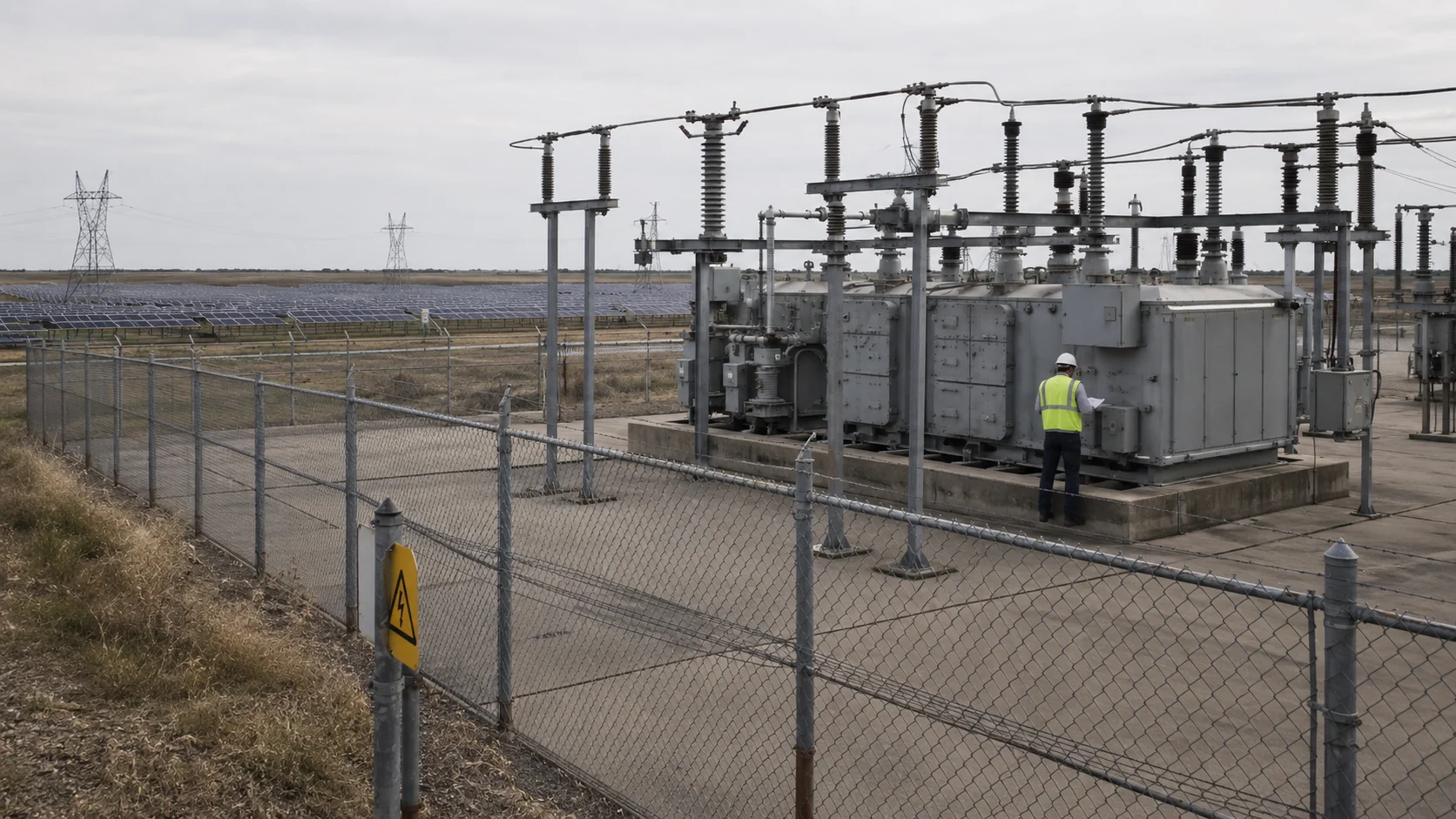
This dynamic has driven mining operators toward energy market structures that would have seemed unusual for technology companies a decade ago. The largest miners have become meaningful participants in power markets: signing long-term PPAs (power purchase agreements) with renewable energy producers, building demand response relationships with grid operators, locating facilities in regions with structural power surplus, and in some cases acquiring power generation assets directly.
The intersection of Bitcoin mining and renewable energy is more nuanced than either advocates or critics typically present. Mining operations have financed renewable power projects that would not have been built without the demand anchor — particularly in regions with high renewable resource but limited transmission capacity or demand. They have also attracted criticism for consuming power in grids with capacity constraints and contributing to fossil fuel demand during peak periods. The honest assessment is that it depends heavily on the specific energy sourcing arrangements and grid context of each operation.
Transaction Fees: The Long-Term Revenue Question
Bitcoin’s design assumes that as the block subsidy decays toward zero through successive halvings, transaction fees will grow to replace it as the primary miner revenue source. That transition is critical to Bitcoin’s long-term security model: if transaction fees are not sufficient to compensate miners for their work, the economic incentive to secure the network weakens.
The evidence on fee revenue growth is mixed. Ordinals and inscriptions (NFTs on Bitcoin) created a significant fee revenue spike in 2023 and 2024 as users competed for block space to record data on-chain. That spike generated brief periods where transaction fees exceeded block rewards — a milestone that Bitcoin advocates pointed to as evidence of the fee market maturing. It also demonstrated that fee revenue is extremely volatile and depends on speculative demand for block space rather than a stable payment use case.
Bitcoin’s relationship to broader market dynamics affects fee revenue too: on-chain activity, and therefore fee pressure, correlates with BTC price and broader crypto market sentiment. In bear markets, transaction volumes fall, fee revenue falls, and miner economics worsen across all three variables simultaneously — lower BTC price, lower block rewards (post-halving), and lower fee revenue. The combination creates a genuinely challenging environment for marginal operators.
The fee market thesis — that growing Bitcoin utility as a payment network will generate sustainable transaction fee revenue — remains unproven at meaningful scale. Lightning Network provides a second-layer payment option that routes small payments off-chain, which reduces on-chain fee demand rather than increasing it. Layer 2 solutions that increase Bitcoin’s utility may paradoxically reduce the on-chain fee revenue that secures the base layer. This is a recognised long-term tension in Bitcoin’s economic design that has not been resolved.
The Public Miner Landscape Two Years Post-Halving
The publicly traded Bitcoin miner cohort has experienced significant divergence since the 2024 halving. Operators that raised capital efficiently before the halving, locked in favourable power contracts, and upgraded hardware to current-generation machines have performed well. Operators that entered the post-halving period with high debt loads, expensive power, or aging hardware have restructured, been acquired, or materially reduced their mining capacity.
Marathon Digital has grown into one of the largest hash rate contributors among public miners, using a combination of self-mining and a portfolio of hosted and equity-stake mining operations. CleanSpark has focused aggressively on low-cost renewable power in the US Southeast. Riot Platforms has benefited from demand response revenue in Texas, where grid operators pay large industrial electricity consumers to curtail usage during peak demand periods — a revenue stream that partially decouples Riot’s economics from BTC price during certain periods.
The institutional structure of public mining companies also increasingly includes BTC treasury holdings — buying and holding the Bitcoin they mine rather than selling it immediately to cover operating costs. This creates an exposure profile that combines operating company economics with directional BTC price exposure, making these stocks some of the highest-beta instruments in the crypto-adjacent equity space. The Bitcoin hedge narrative applies in a different way here: miner stocks are leveraged BTC exposure, not a hedge against it, and investors should understand which one they are buying.
What the 2028 Halving Will Look Like
The next halving — which will reduce the block subsidy to 1.5625 BTC — occurs approximately in April 2028. The economics of that event will follow the same structural logic as 2024, but from a more consolidated starting position. By 2028, the marginal miners who survived 2024 will have had four years to improve their cost structures or exit. The industrial structure will be more concentrated.
The critical variable for the 2028 halving is whether BTC price has approximately doubled from pre-halving levels, as it did historically in the 2016, 2020, and 2024 cycles. If that pattern holds, the 2028 halving is economically manageable for well-positioned operators. If the pattern breaks — if market structure, institutional ownership, and macro conditions produce a different price trajectory — the economics of the 2028 halving will be significantly more challenging.
The trajectory of mining is toward further institutionalisation, further energy infrastructure integration, and further concentration among operators with the capital and operational sophistication to navigate each halving cycle. That is not inherently bad for the network’s security — large, well-capitalised miners have strong incentives to maintain the protocol’s integrity. But it is a different model from the distributed, individual-miner vision that Bitcoin’s early advocates imagined, and understanding that distinction matters for evaluating both the asset and the companies built around securing it.
The Concentration Problem That Bitcoin’s Advocates Do Not Want to Name
Let the record show what the post-halving restructuring has actually produced: a Bitcoin mining industry that is now substantially controlled by a small number of well-capitalised institutional operators. Marathon Digital, CleanSpark, Riot Platforms, and a handful of private entities with comparable scale account for a growing share of total network hash rate. The small, individual miners — the people Bitcoin was designed to empower — have been systematically priced out.
This is not a conspiracy. It is arithmetic. When the block reward halves and energy costs remain the primary competitive variable, the operators with access to institutional capital, sub-$0.04 power contracts, and current-generation ASIC fleets survive. The operators without those advantages do not. The result is predictable and visible in the hash rate distribution data: the top ten mining pools control more than 90 percent of the network’s hash rate. That concentration has increased, not decreased, since the 2024 halving.
The question that the mining industry’s institutional boosters do not want asked directly is this: who is running those pools, who controls the block template construction, and what are the actual incentive structures when a small number of entities can exert disproportionate influence over transaction ordering? Flashbots and the MEV research community have spent years documenting the consequences of concentrated block production in Ethereum. The Bitcoin community’s response to equivalent concentration has been less rigorous examination and more confident assertion that miners are economically rational and therefore trustworthy by definition.
Economic rationality is a constraint on behaviour, not a guarantee of outcomes. Accountability failures in crypto are rarely attributable to irrational actors. They are attributable to concentrated interests acting rationally in their own favour at the expense of the broader network. The post-halving mining consolidation deserves the same adversarial scrutiny that any concentration of power over critical financial infrastructure would receive. The fact that it operates through an open protocol does not make the concentration less real or its implications less significant.
The Capital Cycle Template Applied to Bitcoin Mining: Why the Compression Is Never the End
Ray Dalio’s capital cycle template describes a recurring pattern across every capital-intensive industry: high returns attract investment; investment overshoots; excess capacity compresses margins; forced deleveraging concentrates the industry among survivors; asset prices fall until the cycle resets. The template does not require actors to behave irrationally. It only requires that the forward-looking investment horizon is shorter than the actual market cycle — a condition that is structurally true of Bitcoin mining.
The 2021–2023 mining expansion followed the template’s first phase with unusual fidelity. New machines ordered at peak price assumptions, power purchase agreements signed at capacity that made sense above $50,000 BTC, equity raises at revenue multiples that required continued price appreciation. The logic was not wrong on its own terms: at the time of each capital commitment, the forward return was positive. The error was a timing one — each miner’s individual forecast horizon was disconnected from the four-year halving cycle and the macro rate cycle that was already turning.
When the 2022 bear market hit, the second phase activated. The capital cycle mechanism does not distinguish between a narrative change and a fundamental change — it responds to cash flow. Miners with high-cost power agreements and debt-funded ASIC fleets encountered the same arithmetic: revenue declined faster than fixed costs, the financing was callable, and the hardware collateral depreciated in real time. The result was forced hardware sales, public miner equities trading below book value, and the beginning of the consolidation phase that the template predicts.
The 2024 halving was the triggering event for the current compression phase, but the halving itself is not the driver. The driver is the capital cycle dynamic operating on a four-year cadence: the cohort of miners who built capacity in 2023–2024 using assumptions about transaction fee revenue and BTC price growth that are now being stress-tested. The publicly traded survivors — Core Scientific, Marathon, Riot — have stronger balance sheets than their 2022 predecessors, but they are not immune to the same mechanism when the cycle turns again.
The structural point that the capital cycle framework illuminates is this: post-halving compression is not the resolution of the cycle. It is the consolidation phase that precedes the next expansion bet. When BTC prices move materially higher, the economic case for adding capacity returns, new entrants and recapitalized incumbents begin placing orders, and the cycle restarts. The 18-month ASIC payback period at target BTC price will never align with the four-year halving interval — the timing mismatch is inherent to the structure, not a correctable error in individual miner decision-making.
The evidence that Bitcoin is increasingly behaving as a macro asset rather than an isolated capital cycle matters for this analysis in one specific direction: if BTC prices correlate more closely with the macro rate environment than in previous cycles, the timing of the next expansion phase depends partly on the trajectory of Treasury yields and sovereign borrowing costs that determine capital availability for mining infrastructure financing. A rate cycle that keeps long-term borrowing expensive extends the consolidation phase. A rate environment that reverses accelerates it.
The parallel with AI infrastructure buildout and its effect on S&P 500 earnings tensions is instructive. In both cases, capital-intensive infrastructure investment cycles require synchronization between the investment horizon and the revenue environment. When those timelines mismatch, the capital cycle template predicts excess capacity claims, efficiency arguments from incumbents, and a market structure that appears consolidated until the next price signal reactivates marginal entrants. The shape of the yield curve in 2026 is as relevant to mining industry structure as it is to any capital-intensive sector — cheap debt funded the expansion, and its replacement cost is now the key variable. The capital cycle does not end with the consolidation. It resets there. Semiconductor-intensive hardware markets follow the same mechanism — the capital cycle in compute equipment is the same template, operating on a slightly different timeline.
The Number Bitcoin Mining Economics Coverage Undersells
Michael Burry’s method is to distrust any industry’s own framing of its unit economics and rebuild the number from primary inputs — hashrate, energy cost, hardware depreciation schedule — rather than accepting the margin figure a mining company reports. Post-halving mining economics coverage tends to report breakeven cost as a static number, when the actual breakeven is a moving target that shifts with every network difficulty adjustment, and difficulty has historically adjusted upward precisely when miners with the deepest capital reserves are best positioned to absorb the squeeze that forces marginal producers out.
The mining companies whose economics this article evaluates most favorably are not necessarily the ones with the lowest current breakeven cost — they are the ones whose balance sheet can survive several consecutive difficulty adjustments without needing to sell bitcoin reserves at a loss to fund operations. That is a solvency question, not a margin question, and Burry’s whole career case is that the two get conflated right up until the moment they stop being conflatable.