COIN$159.77▼ 0.41%LEO$9.59▲ 1.09%XRP$1.14▲ 2.50%ADA$0.1736▲ 5.39%AAPL$291.29▼ 1.47%XAG$67.86▲ 6.22%BRENT$107.14▼ 8.65%TRX$0.3140▼ 0.24%MSTR$124.44▲ 3.57%GOOGL$362.31▲ 1.27%NVDA$204.91▲ 0.02%XAU$4,240.10▲ 3.66%SOL$67.96▲ 4.25%DOGE$0.0887▲ 4.87%TSLA$401.51▲ 0.59%ZEC$419.68▲ 1.21%MSFT$387.89▼ 0.63%META$569.62▲ 0.21%BNB$607.71▲ 1.71%USDS$0.9999▲ 0.02%HYPE$61.64▲ 9.92%ETH$1,672.43▲ 2.23%NATGAS$2.94▲ 6.14%XMR$364.22▲ 1.91%NFLX$80.91▼ 0.44%WTI$102.13▲ 1.80%FIGR_HELOC$1.03▼ 0.27%AMZN$237.11▼ 1.82%BTC$63,888.00▲ 2.38%RAIN$0.0131▲ 0.17%COIN$159.77▼ 0.41%LEO$9.59▲ 1.09%XRP$1.14▲ 2.50%ADA$0.1736▲ 5.39%AAPL$291.29▼ 1.47%XAG$67.86▲ 6.22%BRENT$107.14▼ 8.65%TRX$0.3140▼ 0.24%MSTR$124.44▲ 3.57%GOOGL$362.31▲ 1.27%NVDA$204.91▲ 0.02%XAU$4,240.10▲ 3.66%SOL$67.96▲ 4.25%DOGE$0.0887▲ 4.87%TSLA$401.51▲ 0.59%ZEC$419.68▲ 1.21%MSFT$387.89▼ 0.63%META$569.62▲ 0.21%BNB$607.71▲ 1.71%USDS$0.9999▲ 0.02%HYPE$61.64▲ 9.92%ETH$1,672.43▲ 2.23%NATGAS$2.94▲ 6.14%XMR$364.22▲ 1.91%NFLX$80.91▼ 0.44%WTI$102.13▲ 1.80%FIGR_HELOC$1.03▼ 0.27%AMZN$237.11▼ 1.82%BTC$63,888.00▲ 2.38%RAIN$0.0131▲ 0.17%
Prices as of 17:15 UTC

Author: Ben Rogers

  • Comparing VaaSBlock’s RMA™ and ISO 27001: Complementary Standards for Blockchain Credibility and Information Security

    Comparing VaaSBlock’s RMA™ and ISO 27001: Complementary Standards for Blockchain Credibility and Information Security

    ISO 27001 and VaaSBlock’s Risk Management Authentication (RMA™) work together to strengthen security and credibility for blockchain organisations. ISO 27001 provides a globally recognised framework for managing information security, while RMA™ evaluates blockchain-specific risks such as governance, operational integrity and technical robustness. When a crypto platform holds both, it sends a clear signal to investors, partners and regulators that security and credibility are treated as core disciplines.


    Introduction

    As blockchain technology matures, crypto platforms, custodians and tokenisation projects are being asked tougher questions about security and governance. Institutional investors and regulated counterparties often look for ISO 27001 certification for crypto platforms, because it is a familiar standard in traditional finance. At the same time, they also want assurance about blockchain-specific risks such as smart contract behaviour, token design, team integrity and governance.

    VaaSBlock’s Risk Management Authentication (RMA™) is designed to complement, not replace, ISO 27001. ISO 27001 focuses on information security management systems. RMA™ looks more broadly at how a Web3 organisation behaves, discloses risk and runs its operations. Organisations that achieve both can demonstrate that they manage information security through a formal framework and that their wider business practices have been independently reviewed.


    Understanding ISO 27001 and Related ISO Standards

    ISO 27001 is one of the best known international standards for information security management. In many financial institutions, cloud providers and large enterprises it is treated as a baseline expectation rather than a “nice to have”. For blockchain organisations, ISO 27001 can be the first serious step toward aligning security practices with the expectations of traditional finance and regulators.


    What is ISO 27001?

    ISO 27001 is published by the International Organization for Standardization (ISO) and the International Electrotechnical Commission (IEC). It sets out how to establish, implement, maintain and continually improve an Information Security Management System (ISMS). An ISMS is a structured way of managing sensitive information so that confidentiality, integrity and availability are protected over time.


    Key Objectives of ISO 27001

    • Confidentiality: Make sure information is accessible only to authorised people.
    • Integrity: Keep information accurate, complete and reliable.
    • Availability: Ensure authorised users can access information and systems when needed.


    Practical Applications Across Industries

    ISO 27001 is widely used outside blockchain and is already familiar to many of the counterparties that crypto platforms want to work with:

    • Financial institutions: Protect customer data, trading systems and payment flows.
    • Healthcare providers: Safeguard patient records and meet privacy obligations.
    • Technology companies: Secure cloud platforms, APIs and user information.
    • Government agencies: Protect citizen data and sensitive internal systems.


    Core Components

    • Risk assessment: Identify information security risks and evaluate how serious they are.
    • Security controls: Put policies, procedures and technical measures in place to reduce those risks.
    • Continuous improvement: Review incidents, audits and changes so the ISMS is kept up to date.

    ISO 27001 is valued because it provides a structured and repeatable way to manage information security. For crypto and digital asset custody platforms, it helps answer questions such as “how are private keys protected?”, “how are incidents handled?” and “how are security risks reviewed over time?”.


    Understanding VaaSBlock’s RMA™

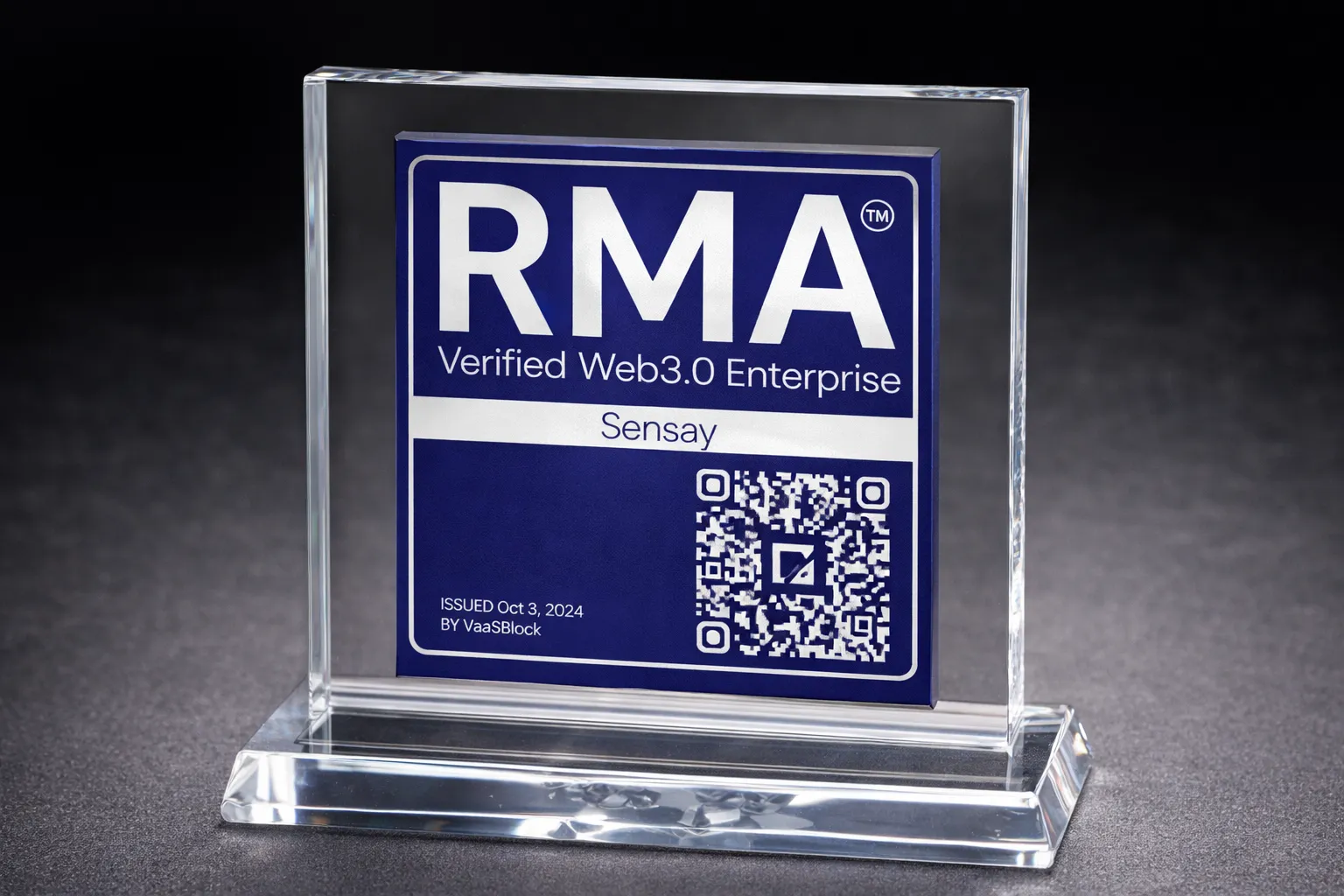
    The Risk Management Authentication (RMA™) is VaaSBlock’s independent review framework for Web3 and digital asset organisations. The RMA™ badge is a tokenised credential that signals a project has been assessed for governance, operational integrity, transparency and technical security, not just code-level issues.

    RMA™ fills the gap between narrow smart contract audits and broad but non-specialised certifications. It is relevant for wallets, custodians, token issuers and also for service firms such as marketing agencies, legal advisors and technology providers that work with blockchain clients.

    The framework was built by a team with experience in Web3, insurance and international risk. It brings together lessons from traditional assurance practices and the practical realities of decentralised markets. Rather than focusing on one narrow dimension, RMA™ sets minimum expectations across multiple categories so that weak projects find it hard to pass.

    RMA™ is not positioned as “better than” ISO 27001. Instead, it sits alongside ISO 27001 and other standards. ISO 27001 focuses on information security management. RMA™ focuses on blockchain-specific credibility and business conduct. Together, they provide a more complete picture for stakeholders.


    Key Objectives of RMA™

    • Enhance credibility: Help investors and communities distinguish serious projects from unreliable ones.
    • Promote transparency: Encourage clear explanation of structures, risks and dependencies.
    • Foster trust: Provide an independent view of how a project manages security, governance and operations.


    Core Components

    • Comprehensive verification: Structured questionnaires and workshops covering technical design, legal position, governance, operations and market behaviour.
    • Technical reviews: Assessment of smart contract architecture, cybersecurity posture and supporting infrastructure, which may include specialist audits.
    • Business evaluation: Review of compliance, governance arrangements, crisis planning and evidence of responsible decision-making.


    Comparing RMA™ and ISO 27001


    Scope and Focus


    ISO 27001

    • Information security: Focuses on policies, procedures and controls to manage information security risks.
    • Cross-industry use: Designed for organisations in any sector that handle sensitive information.
    • Formal risk process: Requires documented risk assessment, treatment and review.
    • Internal practice: Concentrates on how the organisation manages its own systems and data.


    RMA™

    • Blockchain-specific credibility: Built for decentralised and token-based business models.
    • Holistic evaluation: Combines technical, legal, governance and reputation considerations.
    • Trust in Web3: Helps address scepticism by showing how an organisation behaves in practice.
    • External reputation: Considers how the organisation is perceived by users, partners and regulators.


    Certification Process


    ISO 27001

    1. ISMS implementation: Design and implement an information security management system.
    2. External audit: Undergo an audit by an accredited certification body.
    3. Ongoing monitoring: Maintain compliance through surveillance audits and internal reviews.


    RMA™

    1. Questionnaire and workshops: Provide detailed information and participate in review sessions.
    2. Rigorous examination: Assessment of controls, governance, legal posture, team reliability and market risks.
    3. Badge issuance: If standards are met, a tokenised RMA™ badge with a verifiable QR code is issued.
    4. Optional communication support: VaaSBlock may assist with communicating the result, without promising specific marketing outcomes.


    Benefits


    ISO 27001 Benefits

    • Recognised security baseline: Familiar to banks, institutional investors and regulators.
    • Supports compliance: Helps align with data protection and security obligations.
    • Clear governance structure: Encourages well-defined roles, processes and documentation.
    • Improved resilience: Reduces the likelihood and impact of security incidents.


    RMA™ Benefits

    • Web3-relevant credibility: Addresses concerns specific to crypto, such as scams and weak governance.
    • On-chain verification: Tokenised badges and QR codes make verification straightforward.
    • Broader scope: Looks beyond security to behaviour, communication and team integrity.
    • Network effects: Connects verified organisations within the RMA™ ecosystem.


    Diving Deeper: Differences and Synergies


    Technical vs. Business Focus

    • ISO 27001: Concentrates on information security management inside the organisation.
    • RMA™: Covers both technical security and how the organisation runs and presents itself to the market.


    Industry Challenges Addressed


    ISO 27001

    • General information security risks: Suitable for any organisation that stores or processes sensitive data.


    RMA™

    • Blockchain’s credibility gap: Responds to concerns about scams, poor governance and limited disclosure.
    • Regulatory uncertainty: Encourages proactive compliance and clear explanations of risk.
    • Smart contract and token risks: Promotes thoughtful design and scenario planning.


    Tokenization and Verification


    RMA™ Badge Tokenization

    • Tokenised certification: Each RMA™ badge is represented on-chain and linked to a unique QR code.
    • Simple verification: Third parties can confirm the status of a badge without relying on screenshots or static PDFs.
    • Aligned with blockchain principles: Uses verifiable, tamper-resistant infrastructure.


    ISO 27001 Certification

    • Traditional certification: Issued as a formal certificate by an accredited body.
    • Verification: Usually confirmed through the certifying body or the organisation’s compliance team.


    Cost and Time Investment


    ISO 27001

    • Resource heavy: Requires significant time and effort to implement and maintain an ISMS.
    • Ongoing commitment: Needs internal audits, management reviews and periodic external audits.


    RMA™

    • Focused but detailed: Designed to be practical for blockchain teams while still thorough.
    • Variable duration: Time depends on project complexity and how quickly information is supplied.


    Which Certification is Right for You?

    Many blockchain organisations will benefit from pursuing both ISO 27001 and RMA™. ISO 27001 demonstrates that information security risks are handled through a formal management system. RMA™ shows that blockchain-specific risks, governance and communication have been independently reviewed. Together, they support stronger conversations with exchanges, institutional investors and regulators.


    Consider Pursuing ISO 27001 if:

    • Your organisation handles sensitive customer or transaction data across multiple systems.
    • You work with banks, funds or institutions that already use ISO 27001 as a benchmark.
    • Regulators or counterparties ask for documented information security controls.
    • You are ready to invest in a long-term security management framework.


    Consider Pursuing RMA™ if:

    • Your organisation operates in the blockchain or Web3 space.
    • You want independent validation of credibility, governance and operational integrity.
    • Your users, investors or partners are concerned about scams, weak governance or limited transparency.
    • You want to be visible within a network of projects that have passed an external review.


    Consider Pursuing Both if:

    • You want to demonstrate that information security and broader business conduct are both taken seriously.
    • You work with stakeholders in both traditional finance and Web3 communities.
    • You plan to scale digital asset products that must satisfy multiple layers of scrutiny.

    For organisations that handle both internal data and on-chain value, ISO 27001 and RMA™ together provide a more complete picture than either in isolation. ISO 27001 addresses information security management. RMA™ extends that foundation into blockchain-specific credibility and risk.


    Benefits of Dual Certification

    • Stronger trust signal: Combines a familiar global standard with a blockchain-specific review.
    • Better positioning with institutions: Helps bridge the gap between Web3 projects and traditional financial stakeholders.
    • Regulatory readiness: Supports future regulatory engagement by showing proactive risk management.
    • Broader risk coverage: Addresses both information security and industry-specific vulnerabilities.


    Conclusion

    ISO 27001 and VaaSBlock’s RMA™ address different but complementary aspects of trust. ISO 27001 provides a structured approach to information security management that is recognised across many industries. RMA™ focuses on the realities of operating a blockchain or Web3 organisation, including governance, communication, technical risk and team integrity.

    By combining ISO 27001 certification with an RMA™ badge, a project can offer stakeholders a clearer view of how it manages risk. This dual approach supports more confident decisions by investors, exchanges, partners and regulators.


    Final Thoughts

    VaaSBlock’s RMA™ was designed to sit alongside existing standards, not to compete with them. When used together, ISO 27001 and RMA™ help blockchain organisations move beyond simple claims about security and trust and show independent evidence instead. For teams that plan to operate at scale and work with regulated counterparties, that evidence is becoming less of a differentiator and more of a basic requirement.

    Organisations that invest early in structured security and credibility frameworks are better prepared for the next phase of digital asset adoption, where scrutiny will be higher and expectations clearer.


    The Jobs-To-Be-Done Diagnosis: Why RMA And ISO 27001 Compete For Different Customer Jobs

    The standard comparison between RMA and ISO 27001 treats them as overlapping frameworks that a company should pick between based on cost, time to certify, and industry preference. The jobs-to-be-done lens produces a different and more useful framing: the two frameworks compete for fundamentally different customer jobs, and the “which one should we get” question only resolves cleanly once the customer’s underlying job is named accurately.

    ISO 27001 is hired for one job most reliably: signalling baseline information-security maturity to enterprise procurement teams who use the certification as a gating criterion. The job is, in practice, “let me through the procurement firewall.” ISO 27001 does this well. It also does some other things, including establishing internal governance discipline, formalising risk-management practice, and producing audit-able documentation. But the procurement-signalling job is the one customers consistently report as the primary reason for getting certified, and it is the job that determines whether the certification is worth its considerable cost.

    RMA is hired for a different job — establishing credibility in markets where conventional certifications either do not apply or do not yet carry the signal. The job is, in practice, “let me operate where my Web3 counterparties want operating-discipline evidence and ISO 27001 does not translate.” For a Web3-native business selling to other Web3-native counterparties, ISO 27001 does not consistently move the conversation; the framework was designed for an enterprise environment that crypto’s customer base often is not. RMA fills the gap not by being a better certification in any abstract sense, but by being a certification calibrated to a customer job that the existing certification market does not serve cleanly.

    The implication of the JTBD framing is that “which should we get” is a poorly-posed question. The right question is “which customer job is load-bearing for our growth, and which framework is calibrated to that job.” A Web3 business selling primarily to traditional enterprises through traditional procurement should pursue ISO 27001 because the procurement-signalling job is the binding constraint. A Web3 business selling to Web3-native counterparties whose evaluation criteria are different should pursue RMA because the credibility-establishment job in that customer base is what RMA was designed for. A business selling to both — increasingly common — has a more complex decision, and the JTBD framing helps it pick which framework to pursue first based on which customer segment is more urgent rather than on which framework is “better.”

    This is also a useful frame for evaluating the broader question of whether the certification landscape will consolidate. The standard prediction is that one framework eventually dominates and the others fade. The JTBD reading suggests the opposite — frameworks calibrated to genuinely different customer jobs tend to coexist indefinitely, because each one is the right answer for its specific job. ISO 27001 and SOC 2 have coexisted for two decades for exactly this reason: they were designed to do different jobs, and the markets that hire one rarely hire the other interchangeably. RMA is positioned to coexist with ISO 27001 in the same way, in the customer segments where the Web3 evaluation criteria differ structurally from the enterprise procurement criteria.

    The connection to the broader operating-standards conversation in Web3 is that frameworks are tools, not destinations. The professional Web3 protocols will be the ones who picked the framework that matched the customer job they were trying to serve, ran it competently, and renewed it. The amateur Web3 protocols will be the ones who picked the framework that sounded most impressive, ran it as a checkbox exercise, and discovered the customer job was somewhere else.

  • Deep Due Diligence Report (ORM-DDR)

    Deep Due Diligence Report (ORM-DDR)

    We are excited to introduce the Operational Risk Management – Deep Due Diligence Report (ORM-DDR), a comprehensive 360° risk assessment report for Web3 projects. This new ORM-DDR is designed to elevate trust and transparency in the crypto industry by rigorously evaluating projects far beyond surface-level checks. In an environment where credibility is often the most significant challenge, ORM-DDR helps legitimate teams stand out and demonstrate their trustworthiness. Below, we outline what ORM-DDR is, who it’s for, and why it’s needed in today’s Web3 landscape.


    What is the ORM-DDR?

    The Operational Risk Management – Deep Due Diligence Report (ORM-DDR) is an in-depth due diligence and audit report that examines a blockchain project across all critical risk vectors before its market launch. In plain terms, it’s a full-scale “trust report” for crypto projects:

      • Holistic 360° Assessment: Unlike typical crypto due diligence that leaves dangerous gaps, ORM-DDR provides a blind-spot-proof evaluation covering six core criteria – ensuring robustness, transparency, and long-term viability in every project we review. This means we dig into team credibility, security practices, governance, product viability, compliance, and more to paint a complete picture of a project’s health.
      • Independent Verification: The report is produced by VaaSBlock’s research team, using our proprietary Deep Due Diligence framework. Our methodology thoroughly examines every risk vector (from code security to founder track records) to ensure that nothing important is overlooked. The result is an unbiased, third-party validation of a project’s credibility.
      • Actionable Insights: Beyond a pass/fail audit, ORM-DDR provides detailed findings and recommendations. Projects receive a clear breakdown of their strengths, weaknesses, and any red flags that have been uncovered. This helps teams address issues proactively and improve their project’s trust profile.
    • Credibility Badge Integration: Projects that meet the high standards of the ORM-DDR process become eligible for the Risk Management Authentication (RMA™) Badge, the crypto world’s largest mark of credibility. The RMA badge, issued on-chain, is recognized as the leading Web3 trust standard and signals to investors and partners that a project has passed rigorous risk checks.
     

    Who Is It For?

    ORM-DDR is designed for serious Web3 builders and stakeholders who value trust:

      • Blockchain Project Teams: Founders and developers can use the ORM-DDR to showcase their project’s integrity. Passing our deep due diligence is a powerful way to prove to the community, exchanges, and venture capitalists that your team is transparent, secure, and here for the long haul.
      • Investors and VC Firms: For investors, the ORM-DDR serves as an authoritative vetting tool. It provides confidence that a project has been thoroughly vetted across technical, operational, and business dimensions, reducing the guesswork and risk when backing new ventures.
      • Exchanges and Launchpads: Listing platforms and launchpads can require an ORM-DDR as part of their listing due diligence. This helps protect their user base by filtering for projects that have cleared an extensive credibility audit, making Web3 a safer space for traders.
    • Partners and Institutions: Businesses, protocols, or institutions considering partnerships or integrations with a project can request its ORM-DDR to verify the project’s credentials quickly. It’s an easy way to verify that the project meets high standards of security, compliance, and reliability before collaboration.

    In short, ORM-DDR is for any stakeholder who refuses to take project claims at face value. It’s for those who want real proof of credibility in an industry that badly needs it. 


    Why Was ORM-DDR Created?

    The ORM-DDR was born out of necessity. The explosive growth of Web3 has been accompanied by high-profile scams, hacks, and project failures that erode trust. 2024 alone saw worldwide crypto losses estimated at over $10 billion – an astonishing figure that highlights a crisis of confidence. Here’s why we set out to create a deeper due diligence standard:

      • Limitations of Traditional Checks: Many projects that passed basic checks like KYC identity verification or smart contract audits still ended up failing or defrauding users. In fact, a shocking amount of the billions lost went to projects that appeared compliant on the surface (e.g. they had doxxed teams or code audits). Clearly, surface-level checks aren’t enough. A team might complete a KYC form, and a contract might pass a one-time audit, yet investors can still be misled about the project’s true risks. We identified a huge gap: no one was examining the full picture – the people, the tech, the business model, and the on-chain behavior – all together.
      • Demand for Accountability: As Web3 matures, the community and regulators alike are demanding greater accountability and transparency. The space has a reputation problem – the perception that “Web3 is a scam” is standard on the street. Legitimate projects need a way to distinguish themselves from the bad actors. Likewise, investors want assurances beyond hype and marketing. There is a growing call for a standardized, trustworthy vetting process that projects can undergo to demonstrate they meet high standards of security and governance. In traditional finance, due diligence is a given; Web3 shouldn’t be the Wild West.
    • Gap in Providers & Solutions: Before ORM-DDR, projects had to patch together credibility signals – maybe a CertiK code audit here, a rug-pull rating there, some team social media posts – with no unified standard or provider to cover everything. No existing service provided a single, comprehensive risk certification bridging both on-chain and off-chain factors. This lack of holistic solutions left even well-meaning investors flying blind and honest teams struggling to prove themselves. We saw an opportunity (and responsibility) to fill this gap by creating a “gold standard” due diligence report that would become synonymous with trust in Web3.

    How Does ORM-DDR Fill the Gap?

    ORM-DDR addresses these issues head-on by delivering unprecedented depth and breadth in project evaluation:

      • Beyond KYC: Full Team Vetting – We don’t stop at verifying identities. Our analysts perform deep team analysis: Are the founders and key members qualified and experienced? What is their track record in the industry? Is the team structure transparent with DeFined accountability? We check for real-world reputations and public presence, not just anonymous avatars. This “trust but verify” approach ensures the people behind the project are capable and accountable.
      • Beyond Code Audits: Ongoing Security and Operations Audit – A one-time code audit is a snapshot; ORM-DDR is more expansive. We assess security practices, audit results, and whether the team has robust processes for continuous improvement. We look at operational risks too – for example, treasury management, key management procedures, and any history of incidents. By covering operational resilience, we catch issues that pure code audits miss.
      • Business Model and Viability – A project might be technically sound but economically or logically flawed. ORM-DDR evaluates the business fundamentals: Is there a real use-case and market demand? Does the token economy make sense long-term, or is it a Ponzi scheme in disguise? We analyze whitepapers, roadmaps, tokenomics, and competitive landscape to gauge if the project is built on solid ground. This focus on long-term viability is crucial for filtering out short-lived hype projects.
      • Legal and Compliance Check – We include checks for regulatory compliance and legal structure. This means reviewing if the project has a transparent corporate entity, proper terms of service, and whether it navigates securities laws, data privacy, or other relevant regulations. In an age of increasing regulatory scrutiny, this aspect cannot be ignored in due diligence.
    • Community Trust and Ecosystem Impact – A truly healthy project will have an engaged community and reputable partners. ORM-DDR looks at community metrics, sentiment, and whether follower counts are organic or inflated. We also verify any major partnerships or backing investors, adding another layer of confidence if those check out. Essentially, we consider the project’s credibility in the wider ecosystem – an often-overlooked risk factor.

    By compiling all these dimensions into one report, ORM-DDR provides a complete risk profile that no single-audit or KYC provider could offer alone. It is both broad and deep: broad in covering every major category of risk, and deep in investigative rigor within each category.


    Backed by the RMA™ Standard of Trust

    Importantly, the ORM-DDR is built on the same philosophy as our Risk Management Authentication (RMA™) certification, which has quickly become a de facto standard for trust in Web3. The RMA badge is known as the crypto world’s “mark of credibility” – less than 3% of organizations achieve an Alpha-grade RMA on their first attempt, underscoring how stringent it is. ORM-DDR is the comprehensive report that underpins this certification process. When a project earns an RMA badge, it means our analysts have produced an ORM-DDR and the project met the high bar across all categories.

    RMA-certified projects have collectively raised over $120 million to date, proving that credibility accelerates growth. We’ve seen exchanges like ProBit and platforms like Travala publicly celebrate earning the RMA™ as a testament to their transparency and trustworthiness. This momentum shows that the industry craves a reliable trust benchmark. With ORM-DDR and RMA, we are answering that call by setting a new standard for due diligence and making trust measurable.


    Raising the Bar for Web3 Trust

    In summary, ORM-DDR is more than just a report – it’s a commitment to raising the bar for trust in crypto. By explaining what it is, who it’s for, and why it’s needed, we hope to spark a shift in how the community approaches project evaluation. No longer should anyone have to invest on hype or blind faith. With ORM-DDR, credible projects can prove themselves and investors or partners can verify those claims through an independent, expert lens.

    With the growing demand from Web2 companies for modern payment options and on-chain transparency, VaaSBlock is increasingly positioning itself as a leader in innovation, and a bridge between traditional industries and the blockchain world. By offering advanced solutions in reporting, certification, and payments, the company helps organizations modernize without disrupting their core operations.

    The recent partnership announcement with Swift Cargo marks an important milestone in VaaSBlock’s journey, opening a new chapter of collaboration between Web2 and Web3. Together, they’re enabling traditional businesses to innovate faster, simplify global operations, and deliver seamless, borderless services to customers everywhere.

    If you’re a Web3 founder, ask yourself: How will you convince the world you’re not just another risk? With an ORM-DDR in hand, you’ll have the answer – a seal of thorough scrutiny and approval that speaks louder than any tweet or promise. If you’re an investor or platform, demand deeper due diligence. The tools are finally here to separate the signal from the noise.

    Together, by embracing rigorous standards like ORM-DDR and RMA, we can build a safer, more transparent blockchain ecosystem – one where trust isn’t a buzzword, but a verified reality. Welcome to the new standard of Web3 credibility.


    Ready to strengthen your project’s credibility? Contact our team to book an ORM‑DDR assessment.

    ⚭ This article has been co-created by VaaSBlock Consulting Team and irmaAI agent.

    Reconstructing What An ORM-DDR Actually Catches That Standard Due Diligence Misses

    The standard crypto due diligence packet has been documented enough that its limits are now visible from outside. Token economics review, team background checks, smart contract audit, treasury verification, and a few pages of regulatory commentary. Most diligence teams produce a document that hits these categories without varying meaningfully across deals, because the categories themselves have become the checklist that defines diligence in the industry. The Deep Due Diligence Report (ORM-DDR) was structured to do the work the standard packet has stopped doing.

    Working through actual ORM-DDR engagements from the past eighteen months, three categories of finding appear consistently that would have been missed by standard diligence. The first is operational: the gap between what a project’s communications describe and what its internal systems actually do. ORM-DDR processes include reviewing real internal documentation — board minutes, runway communications, partnership filings that were not press releases — against the public narrative. The gap is often substantial. Standard diligence does not look for this gap because it does not have access to the underlying documents and does not ask for them.

    The second category is counterparty: who the project’s actual operational relationships are with, on what terms, and whether those relationships would survive a stress event. ORM-DDR engagements have caught projects whose biggest disclosed counterparty was a paper relationship, with actual operations depending on a smaller, less-disclosed counterparty that the project did not want to highlight. The reason for the non-disclosure is not always malicious — sometimes the smaller counterparty is simply less brand-impressive — but the gap matters when the smaller counterparty turns out to be the load-bearing one and the larger counterparty exits cleanly because the actual exposure was somewhere else.

    The third category is regulatory exposure modelled forward. ORM-DDR processes treat regulatory posture as a moving target — what is the project’s exposure in 24 months given current rule-making cadences in its principal jurisdictions, not just what is the exposure today. Standard diligence reports current-state regulatory commentary that becomes obsolete on a six-month cadence and is often obsolete by the time the deal closes. The forward-modelled view changes the deal terms in ways the current-state view does not, which is the entire point of doing it.

    The pattern that connects these three categories is that they all require the diligence team to ask questions the project would prefer not to be asked. Standard diligence has converged on a checklist precisely because the checklist can be completed without asking those questions — the standard packet looks comprehensive while leaving the load-bearing risks unexamined. ORM-DDR processes are not comprehensive in the same way; they are selective, focused on the risks that diligence is supposed to catch and that the current industry standard has structurally stopped catching. The trade-off is that ORM-DDR engagements take longer, cost more, and produce findings that are less convenient for the deal timeline. They also produce findings that survive the eighteen-month post-close window in a way the standard packet does not.

    What this means for any investor reading an existing diligence report is that the report’s structure is itself a signal. A report that hits the standard checklist without surfacing operational gaps, counterparty asymmetries, or forward-modelled regulatory exposure has done the comfortable work and skipped the uncomfortable work. The investor relying on it is making a bet that the uncomfortable work was not actually needed for this specific deal. That bet has not paid off in the cycle just past. Whether it pays off in the next cycle depends on whether the industry recognises that the same pattern that produces inflated user numbers in adoption reporting also produces incomplete diligence packets — and whether the next cycle’s investors price that pattern in before deals close rather than after.

  • VaaSBlock Announces Licensed RMA™ Reseller Program

    VaaSBlock Announces Licensed RMA™ Reseller Program


    Bangkok, 14 May 2025 — VaaSBlock today unveiled its Licensed RMA™ Reseller Program, giving forward‑thinking Web3 companies a proven way to generate revenue while raising industry standards for transparency and trust.


    Why This Matters

    The RMA™ (Risk Management Assessment) badge has become Web3’s premier mark of credibility, helping projects signal responsible governance, strong security, and transparent business practices. By joining the reseller program, partners can unlock four immediate advantages:

    • Open a new revenue stream through commission or flat‑rate options.

    • Fast‑track their clients with priority audits and VIP turnaround times.

    • Leverage VaaSBlock marketing muscle for joint press releases, podcast spots, and case studies.

    • Strengthen every pitch with a free Transparency Score preview.

    Program Highlights

    Below are the key partner benefits at a glance:

    • Lucrative Payouts: Choose commission per deal or a predictable flat‑rate model, creating a reliable new revenue stream.

    • Immediate Earnings from the First Deal: There’s no ramp‑up period—your very first successful referral triggers payment.

    • Priority Audits & Fast Turnarounds: Skip the queue so your clients earn their RMA badge sooner and you close deals faster.

    • VIP Treatment & Early Access: Referred projects receive priority site‑crawling and data collection, and you get first access to new platform features.

    • Dedicated Profile Page: Showcase your reseller status on a branded VaaSBlock page you can share with prospects.

    • Flexible Sales Support: Receive hands‑on help from our team during demos, technical Q&A, and deal‑closing.

    • Value‑Add Transparency Score: Offer prospects a complimentary RMA profile and preliminary transparency score to highlight their credibility gap.

    • Public Recognition: VaaSBlock announces your partnership across our News hub and social channels.

    • Joint Announcements for Client Certifications: Every time a client earns the RMA badge, we co‑announce the achievement—boosting both brands.

    • Early‑Access Tools: Be first to test upcoming features on our Corporate Due Diligence platform.

    • Full Marketing Support: Gain podcast invitations on No Chain No Gain™ and featured success stories highlighting your wins.

    • Referral Discounts: Offer reduced RMA rates to clients who become resellers themselves, making your pitch even more compelling.

    Who Should Apply?

    The program is perfect for:

    • Venture Capital Firms looking to de‑risk portfolios and earn referral revenue.

    • Web3 Directories & Platforms is eager to list only the most credible projects.

    • Security Auditors & Providers that want to pair technical audits with a business‑integrity seal.

    • Marketing & PR Agencies seeking a newsworthy trust story for clients.

    • Consultants & Advisors who guide projects toward investment readiness.

    Suggested partner‑type visual: Icons of a financial chart (VCs), network graphic (directories), shield (security), megaphone (marketing), and handshake (consultants).

    Get Started Today

    Ready to elevate your services and lead the charge for a safer blockchain ecosystem? Book a discovery call and view full program details on our official page:

    ➡️ vaasblock.com/reseller


    Questions? Explore our FAQs or learn more About VaaSBlock and the value of RMA™ badges.

    Take the first step toward redefining trust in Web3—schedule your call today and partner with VaaSBlock to build a more transparent future.


    VaaSBlock is a global standards organization for Web3 credibility, providing holistic due diligence solutions that help projects, investors, and institutions confidently navigate blockchain.


  • VaaSBlock Launches New Transparency Score and Ranking System for Web3 Projects

    VaaSBlock Launches New Transparency Score and Ranking System for Web3 Projects

    VaaSBlock is proud to rollout of three powerful trust metrics on every project profile: Transparency Score (0–100), Category Rank, and Site-Wide Rank. These new indicators give a quick, objective snapshot of a Web3 project’s credibility and standing. Starting today, anyone can visit a project’s profile on vaasblock.com to instantly gauge its level of transparency, how it ranks within its sector, and how it stacks up across the entire VaaSBlock platform. This launch represents a major step in making due diligence easier and more data-driven for investors, exchanges, project teams, and regulators alike. By surfacing these at-a-glance scores, VaaSBlock is turning trust and transparency into a competitive advantage for the Web3 industry.


    Introducing the Transparency Score, Category Rank, and Site-Wide Rank

    To empower stakeholders with actionable insight, each VaaSBlock project profile now prominently displays the following metrics:


    • Transparency Score (0–100): A numerical score indicating the project’s overall transparency and credibility, with 0 meaning opaque or unverified and 100 meaning exceptionally transparent. This score distills governance practices, security disclosures, audit verifications, and public transparency into a single benchmark figure. It is neutral and merit-based, reflecting how well the project has proven itself through disclosures and audits – not popularity or hype. (In practice, scores will generally range above 0 and below a perfect 100, as the system balances inputs to avoid extreme values.)


    • Category Rank: The project’s standing relative to others in its category (for example, DeFi, Gaming , Infrastructure, etc.). This rank shows where the project falls among its peers in terms of transparency score. We express this as a percentile (e.g. “Top 10% in DeFi”) or a rank out of the total in that category. It lets you quickly see if a project is a leader or laggard within its niche.


    • Site-Wide Rank: The project’s standing across all Web3 projects listed on VaaSBlock. This global rank (again often given as a percentile like “Top 25% of all projects”) indicates how the project compares to the wider Web3 ecosystem in transparency and trustworthiness. A high site-wide rank means the project is among the most transparent on the entire platform.


    These metrics put critical information at the reader’s fingertips. Instead of wading through pages of reports, you can glean in seconds whether a project is well-audited and transparent, or if caution is warranted. For example, a project with a Transparency Score of 85/100 that’s in the top 5% of its category signals strong commitment to openness, whereas a project scoring 20/100 in the bottom tier of its peers may raise red flags. By condensing multifaceted due diligence into clear scores and ranks, VaaSBlock’s profiles function as a “trust report card” for each project.


    How Are These Scores Calculated?

    The Transparency Score isn’t a simplistic rating – it’s derived from a rich blend of data sources and rigorous algorithms. VaaSBlock’s AI engine, IRMA, continuously collects and analyzes data on each project, including:


    • Publicly available information: This covers everything from open-source code repositories and technical documentation, to team profiles, governance frameworks, and community engagement. If a project publishes regular development updates or financial reports, IRMA takes note. If the project’s smart contracts or code are open for review, that transparency boosts the score. Essentially, any evidence of honesty and openness in how the project operates will positively impact the Transparency.


    • Verified audit and compliance data: VaaSBlock gives significant weight to third-party audits and certifications. When a project undergoes VaaSBlock’s own RMA™ (Risk Management Assessment) audit and earns an RMA badge, that achievement feeds directly into a higher Transparency Score. But even for non-RMA projects, verified credentials like a SOC 2 report, ISO/IEC 27001 certification, security audits by reputable firms, or documented Proof of Reserves can all contribute. The scoring algorithm aggregates these signals of trust – whether they come from VaaSBlock or external independent auditors – to reward projects that take security and compliance seriously.


    • IRMA AI analysis: VaaSBlock’s Intelligent Risk Management Assistant (IRMA) uses artificial intelligence to synthesize the above data and detect patterns. IRMA is trained on what a “credible” vs. “risky” project looks like across dozens of factors. It flags inconsistencies or gaps (for example, a claimed partnership that isn’t publicly verifiable, or a discrepancy between what a project says and what on-chain data shows). It also keeps scores up-to-date in real time by scanning news, social media, and on-chain events. If a project improves its disclosures or if new risks emerge, the Transparency Score will adjust accordingly. As VaaSBlock noted in its public updates, “All projects listed on vaasblock are scored out of 100 based on public information and audit results. The algorithm will iterate as more data is collected. In short, the scoring model learns and evolves as the project and the industry evolve.


    Critically, unbiased automation is paired with expert oversight. VaaSBlock’s compliance consulting team cross-verifies important inputs to ensure accuracy. This combination of AI-driven breadth and human-driven depth produces a score that stakeholders can trust. As CoinGecko’s team observed when creating their exchange Trust Score, the best results come from examining multiple facets (technical, operational, security, etc.) and packaging them into an actionable metric at a glance. VaaSBlock follows a similar philosophy for Web3 projects: the Transparency Score distills many dimensions of risk and reliability into a single easy-to-understand number.


    Each project’s profile also lists the date of its latest score update, reinforcing that this is a living metric. A Transparency Score isn’t “set and forget” – just like a credit score or a Moody’s rating, it can change over time with new information. This dynamic approach ensures the metric remains relevant and fair as projects mature or conditions change. Notably, the scoring algorithm is calibrated to avoid ever giving a 0 or a 100 outright. No project is entirely untrustworthy or completely without room for improvement. By preventing extreme scores, VaaSBlock ensures nuance – even the top-ranked project is reminded to keep raising the bar, and struggling projects have the opportunity to improve rather than being condemned with a zero. (Think of how Google’s PageRank uses damping factors to avoid infinite scores, or how credit scores seldom hit the absolute maximum; similarly, VaaSBlock’s algorithm balances inputs so that scores remain meaningful and tempered.)


    The Role of RMA™ Audits – And Succeeding Without One

    One of VaaSBlock’s core services is the RMA™ certification, a comprehensive audit that evaluates a project’s governance, transparency, security, and results. Naturally, projects that have undergone an RMA audit and earned a VaaSBlock Badge will have a detailed profile and a robust foundation for their Transparency Score. Passing the RMA audit effectively means a project has met or exceeded benchmarks in corporate governance, team proficiency, technology and security, revenue model, and planning & transparency – all of which are directly relevant to trust. In practice, an RMA-certified project will often exhibit a higher Transparency Score thanks to the depth of verification it has completed. VaaSBlock has created a merit-based, multi-layer verification platform, where RMA badge holders get a “full profile” showcasing their achievements. In contrast, unverified projects display only the information that can be gathered publicly. This means RMA projects have more data points feeding into their score, giving stakeholders greater confidence in those numbers.

    However, the Transparency Score is not reserved only for RMA-audited projects. A key philosophy behind VaaSBlock’s platform is inclusivity – to raise trust standards across the entire Web3 space, including those who have not yet done an RMA audit. Non-RMA projects are still analyzed and scored based on the public data and verifications they do have. In fact, a project can achieve a relatively high Transparency Score through strong self-governance and third-party certifications even without the RMA. For example, a project that:


    • Publishes regular transparency reports (financial statements, development updates, treasury disclosures),
    • Has undergone smart contract audits by reputable security firms (and publicly shares the results),
    • Maintains open-source code repositories and a public commit history,
    • Obtained industry certifications like SOC 2 Type II (security and data integrity) or ISO 27001 (information security management),
    • Engages actively with its community and addresses concerns openly,


    will earn a healthier score than a project that stays mostly opaque. VaaSBlock’s scoring algorithm gives credit where it’s due. As one industry analysis put it, transparency “allows investors to assess security practices, growth potential, and perform thorough due diligence”, all of which build trust. We have already seen projects with no RMA badge still land in respectable percentile ranks because they have robust public documentation and independent audits on record. In short, there are many paths to proving one’s trustworthiness – VaaSBlock’s system recognizes both the gold standard (RMA) and other legitimate efforts to bolster credibility.


    For projects considering an RMA audit, these scores offer a tangible incentive. The Transparency Score and ranks will visibly improve as a project undergoes deeper verification. (Indeed, VaaSBlock has openly noted that holding the RMA badge – as well as even the entry-level VB1 verification – “can improve your score.”au.linkedin.com) It’s a clear way to signal to the market that you’ve gone above and beyond to prove yourself. Conversely, if a project’s score is lagging, it’s a prompt to take action – perhaps by engaging an audit, enhancing disclosures, or partnering with VaaSBlock to address weak spots. This dynamic creates a positive feedback loop in the ecosystem: projects have motivation to become more transparent, which in turn boosts their scores and appeals to investors, which then rewards the project with more opportunities.

    Why These Metrics Matter for Investors, Exchanges, Teams, and Regulators


    Trust is the lifeblood of any financial ecosystem, and especially so in the relatively young and oft-scrutinized crypto industry. By providing an objective trust score and rankings, VaaSBlock is delivering a valuable tool to all stakeholders:


    • Investors & Traders: Whether you’re a retail crypto trader or a venture capitalist, due diligence is time-consuming and complex. The Transparency Score gives a quick risk gauge – a high score suggests the project is forthcoming and vetted, while a low score urges caution. This helps investors compare projects on an apples-to-apples basis. In traditional finance, metrics like credit ratings or ESG scores guide investors toward credible opportunities; now crypto investors finally have a similar compass. As an example, an investor can favor projects in the top quartile of transparency (perhaps requiring a score above, say, 75/100) as a first filter before diving into deeper research. Transparency fosters trust, and trust attracts investment: projects that actively embrace openness “become more attractive to potential investors,” whereas those shrouded in secrecy “quickly lose public trust” and value. Sadly, we’ve seen dramatic proofs of this: from Mt. Gox in 2014 to FTX in 2022, lack of transparency has erased billions in investor assets and confidence. VaaSBlock’s scores aim to prevent the next such case by spotlighting transparency (or the lack thereof) before disaster strikes.


    • Exchanges & Listing Platforms: Crypto exchanges and launchpads face the challenge of vetting projects for listing. Listing a fraudulent or unstable project can damage an exchange’s reputation or even expose users to losses. These new metrics serve as an early warning system and a quality benchmark. An exchange can, for instance, use the Site-Wide Rank to ensure they list only projects in, say, the top 50% of transparency, or require a minimum score as part of their listing criteria. It’s a way to bolster their own due diligence processes. Already, industry leaders have begun moving in this direction – CoinGecko’s “Trust Score” algorithm ranks exchanges themselves based on reliability factors like liquidity, cybersecurity, and team track record blog.coingecko.com, and Forbes and others produce rankings of “most trustworthy exchanges.” Now, exchanges can similarly leverage VaaSBlock’s project trust scores to maintain listing quality. Ultimately, this reduces risk for the exchange’s user base and aligns with regulators’ calls for greater scrutiny. For the many exchanges that partner with VaaSBlock or recognize the RMA badge, these scores add another layer of insight into project quality, making listing decisions more data-driven and defensible.


    • Project Teams: For blockchain project founders and teams, the Transparency Score is both a report card and a marketing asset. It provides an external validation of the work you’ve put into good governance, security, and community trust. A strong score and high rank can be showcased in pitch decks, on websites, or in negotiations with partners to assert, “Look, we’re among the most transparent projects in our category.” It’s analogous to a Glassdoor rating for a company’s culture – while internal, it affects external perception; here, a public trust score can differentiate a project in a crowded market. Moreover, the detailed subcomponents behind the score (governance, tech audits, etc.) give teams a roadmap for improvement. If your score isn’t where you want it, the profile’s breakdown (and VaaSBlock’s feedback) will highlight areas to improve – perhaps you need to publish that overdue audit report, or tighten up security practices, or be more communicative with users. In this way, project teams can use the score as constructive feedback on their operational excellence corpgov.law.harvard.edu. We’ve designed the system so that earning a higher score is achievable through concrete actions that also make your project fundamentally stronger. In other words, focusing on boosting your Transparency Score will inherently mean boosting your project’s robustness and reputation. It’s a win-win.


    • Regulators & Compliance Officers: Around the world, regulators have been calling for the crypto industry to step up transparency and self-regulation. As U.S. Senator Sherrod Brown noted, the lack of reliable disclosures in crypto has enabled scams and fraud to proliferate, whereas “comprehensive and regular disclosures must be a cornerstone” to protect investors banking.senate.govbanking.senate.gov. VaaSBlock’s scoring system directly contributes to this goal by standardizing and incentivizing transparency. While not a replacement for formal regulatory disclosure requirements, it complements them: an independent, objective score that regulators (or institutional compliance teams) can glance at when assessing a project’s risk profile. For instance, a compliance officer at a fund might use the Transparency Score as one input to decide if a token meets their investment standards. Over time, we anticipate that high VaaSBlock scores could correlate with lower incidence of fraud or failures, essentially acting as a crypto equivalent of a “bond rating” for project trustworthiness. By making good behavior visible and quantifiable, we help align the industry with the expectations of regulators without stifling innovation. Moreover, regulators can monitor the aggregate data – for example, if an entire category of projects has very low average scores, that might indicate an area of concern that needs attention. On the flip side, when projects know they are being scored in public, it creates a deterrent against cutting corners. The result is a healthier ecosystem, which benefits everyone from lawmakers to end-users.


    Context and Comparisons: The Value of an Objective Trust Score


    VaaSBlock’s Transparency Score initiative is part of a broader trend: across industries, objective scoring systems have proven invaluable in establishing trust and guiding decisions. A few analogous examples illustrate why we believe this approach is so significant:


    • Domain Rating (SEO) – In the web world, Ahrefs’ Domain Rating (DR) condenses a website’s backlink profile quality into a score out of 100. Marketers and SEO professionals heavily rely on it to judge site authority at a glance. In fact, 44% of SEO professionals use Domain Rating as their SEO metric of choice, because it’s a quick proxy for trustworthiness and popularity of a site. Just as DR transformed how websites are evaluated, Transparency Score is poised to transform how blockchain projects are evaluated – providing a single trusted metric to compare what were previously incomparable attributes.


    • Klout Score (Social Influence) – In the early 2010s, the Klout platform gave everyone on social media an “influence score” (1–100) based on their reach and engagement. While Klout is no more, it demonstrated the appetite for a unified reputation metric. Companies even used Klout Scores to identify key influencers for campaigns. Similarly, projects with a high Transparency Score could become magnets for partnership and investment, as that score signals credibility the way a high Klout signaled influence.


    • ESG Ratings (Corporate Sustainability) – Major firms like MSCI and S&P provide ESG ratings for companies, evaluating their performance on Environmental, Social, and Governance factors. These ratings sift through masses of data to extract insights on a company’s non-financial risks. Investors rely on ESG scores to make decisions aligned with their values and risk appetite, and companies use them to get third-party feedback and demonstrate responsibility. In the same vein, VaaSBlock’s scores evaluate crypto projects on criteria beyond just market cap or usage – essentially the “governance and transparency” dimension of projects, which has been hard to quantify until now. Just as a strong ESG score can attract ESG-focused capital, a strong Transparency Score can attract risk-conscious capital.


    • Glassdoor Ratings (Workplace Trust) – Glassdoor offers a 5-star rating system based on employee reviews, which has become a de facto measure of a company’s internal trust and culture. It’s common for job candidates, partners, even investors to check a company’s Glassdoor as a credibility signal. This underscores how an aggregated trust metric can influence behavior: companies have started caring about their Glassdoor scores, improving practices to boost them. We anticipate a similar effect in Web3: projects will strive to improve transparency and governance to raise their VaaSBlock scores, creating a virtuous cycle.


    • Google’s E-E-A-T (Content Quality) – In Google’s search quality guidelines, Experience, Expertise, Authoritativeness, and Trustworthiness (E-E-A-T) are key factors for evaluating content creators. While not a numeric score, it’s a framework that strongly influences which content ranks higher. The takeaway is that trust and transparency are being systematically rewarded. VaaSBlock’s ranking system is very much in spirit with Google’s approach – projects that demonstrate expertise (through audits), authority (through proven track record), and trustworthiness (through transparency) will “rank” higher via Category and Site-Wide Rank. Much like high E-E-A-T content gains visibility on Google, high-transparency projects gain visibility on VaaSBlock.


    • Credit Ratings (Moody’s, S&P) – For decades, credit rating agencies have summed up a borrower’s creditworthiness into a grade (AAA, AA, … down to D). These ratings are integral to global capital markets, affecting how trillions of dollars are allocated. They show that complex risk assessment can indeed be boiled down to a simple scale that everyone understands. VaaSBlock’s scores aspire to be a similar backbone for the Web3 capital markets – a standardized trust indicator that could eventually be as familiar as a credit score. As Moody’s itself notes, their ratings offer “rigorous, transparent, and unbiased views of risk [to] support informed decisions”moodys.com. We have the same mission for our trust metrics.


    • Blockchain Analytics and Security Scores – Within crypto specifically, there are related efforts that reinforce the need for comprehensive scoring. Chainalysis, for example, provides real-time risk scores on blockchain addresses and transactions to flag suspicious activity for exchanges and law enforcement. This helps tackle financial crime by quantifying risk. On the security front, firms like CertiK have introduced automated Skynet Trust Scores, which assess smart contract security and on-chain health of projects. In fact, platforms like CER.live compile security ratings for hundreds of crypto projects and exchanges to promote trust and transparency in Web3. VaaSBlock’s Transparency Score distinguishes itself by covering not just code security or on-chain metrics, but the full spectrum of operational integrity – from legal compliance to team quality to community trust. It’s a broader umbrella, under which smart contract security is a critical component among many. In essence, we’re uniting the insights of blockchain analytics (on-chain data), cybersecurity audits (technical robustness), and corporate governance reviews (off-chain operations) into one holistic metric.


    By looking at these parallels, one thing is clear: having an objective, third-party score boosts confidence and accountability. Whether it’s a user checking a dApp, an exchange evaluating a token, or a regulator scanning the market, the presence of VaaSBlock’s scores means there is a common reference point for trust. It’s no longer purely subjective or reliant on a project’s own claims. Much like a FICO score changed consumer lending (“What’s your credit score?” became a standard question), we foresee “What’s its Transparency Score?” becoming a common question in crypto investment discussions. Our goal is for these metrics to become a universal language of trust in Web3.


    A Balanced, Evolving Scoring System (No Extremes)


    It’s worth noting some design principles behind the Transparency Score algorithm. We specifically engineered the system to be fair, resistant to manipulation, and continuously improving:


    • Avoiding Perfect Scores: You will rarely (if ever) see a project with a full 100/100 Transparency Score or a 0/100. This is by design. In reality, no project is perfect, and even the most secretive project usually shares something with the public. Instead of clustering projects at the extremes, the algorithm is tuned to spread them out in a way that truly differentiates the degrees of transparency. The very top projects might score in the 90s but not 100 – indicating excellence, yet leaving a signal that there’s always room to stay vigilant and keep improving. Similarly, a project that is doing very poorly might score in the teens or single-digits, but a flat zero is avoided unless there’s essentially no data at all. This mirrors approaches in other rating systems; for example, credit scores rarely hit the maximum 850, and Google’s PageRank system (and its SEO derivatives like Domain Rating) use logarithmic scales and damping factors so that scores don’t skew unrealistically high. The benefit is nuance: stakeholders can distinguish a “good” project from a “truly elite” project, and we don’t prematurely crown anyone as beyond scrutiny.


    • Preventing Negative Spirals: By not issuing 0 or 100, we also avoid demotivating teams or giving a false sense of security. A project with a low-but-not-zero score knows it can climb out of the basement by taking action – the score is a push to course-correct, not a death sentence. Conversely, a project near the top knows it must maintain diligence to keep its score, since it can’t rest on a perfect laurels. This balancing act was intentional to foster continuous improvement.


    • Algorithmic Balancing: The Transparency Score is a composite of multiple sub-scores (for governance, security, transparency, etc.). We ensure that no single factor can single-handedly push the score to an extreme. For instance, even if a project excels technically but has zero community transparency, the score will reflect both realities (tempering the technical excellence with a penalty for poor transparency). This prevents scenarios where a project might try to “game” the score by focusing on one aspect and neglecting others. The algorithm also uses benchmarking and percentiles so that as the entire industry progresses, the scoring criteria can gradually elevate. In other words, if every project starts doing something (say, everyone gets a basic security audit), that factor might carry a bit less weight over time (since it’s no longer a differentiator) and new factors might be introduced (like more emphasis on real-world compliance or on-chain proof of reserves, etc.). The LinkedIn announcement from our team captured it well: “The algorithm will iterate as more data is collected.”. It’s a living system.


    • Transparency of the Metric Itself: In the spirit of trust, we plan to publish more details about how the score is calculated, in a way that doesn’t enable cheating but does allow projects to understand the general weighting. We believe a transparent Transparency Score (pardon the pun) is important for community buy-in. Over time, expect whitepapers or methodology reports from VaaSBlock that detail the evaluation criteria – similar to how CER.live publishes its rating methodology and Moody’s publishes its rating methodologies.


    In summary, the scores are intentionally kept realistic and dynamic. Stakeholders can trust that a high score truly means strong transparency (not just a fluke), and that the system will keep adapting to reflect the reality of the Web3 landscape. No score is ever “final”; continuous good practice is rewarded, and negligence is quickly penalized in the next update. This keeps everyone on their toes – exactly what a trust framework should do.


    Why VaaSBlock’s Trust Metrics Are Unique in Web3


    While a few other platforms have attempted to quantify trust or security in the blockchain space, VaaSBlock’s approach is the most comprehensive and aligned with today’s Web3 needs. Here’s what sets it apart:


    • Holistic Scope: Most crypto rating tools focus on a single dimension. For example, some security audit platforms provide a score based on code vulnerabilities and on-chain activity, but they ignore governance and off-chain factors. On the flip side, some “trust” websites rely on user reviews or community voting, which can be shallow or biased. VaaSBlock’s Transparency Score covers technical, financial, governance, and social aspects all at once. It is neither purely code-driven nor purely opinion-driven – it’s data-driven across the full spectrum of project attributes. As noted earlier, the platform compiles “multiple layers of verification” and data sources. This means a project’s legal compliance, team credentials, security track record, and openness to the community all feed into one result. In an era where a project’s biggest risk might be a governance failure as much as a hack, this breadth is essential.


    • Verified Data Emphasis: Uniquely, VaaSBlock integrates verified audit data (RMA and others) directly into the scoring. Other platforms might note if a project was audited, but we actually parse the quality of that audit (was it comprehensive? who performed it? were issues found and fixed?). Moreover, by issuing our own RMA certifications, we’re not just a passive observer but an active auditor – that insight flows back into the scoring algorithm. Our scores carry weight because they are backed by real assessments, not just self-reported info. This closes the loop between auditing and rating. It’s similar to how financial credit scores incorporate verified loan repayment data, whereas an informal score might just scrape self-disclosures.


    • Operational Excellence, not Hype: VaaSBlock’s ranking system is intentionally “impacted by operational excellence, and not just on-chain data”. This is a critical differentiator. In crypto, it’s easy to get blinded by on-chain metrics like total value locked (TVL) or token price performance. Those show usage and market sentiment but not necessarily fundamental trustworthiness (a project could have high TVL and still be a ticking time bomb of poor governance). Our scores instead elevate the behind-the-scenes excellence – things like solid internal controls, transparency in leadership, proper risk management. This focus on operations and integrity is more aligned with long-term success. It’s a mindset shift for Web3, but one that echoes how traditional industries evaluate companies. A high-flying stock can still be rated low by credit agencies if its fundamentals are shaky; likewise a DeFi project with sky-high TVL but no audits and anonymous management will likely score poorly on our scale. This makes VaaSBlock’s score qualitatively different from, say, a popularity ranking on CoinMarketCap.


    • Constant Monitoring and AI Integration: Many existing trust or rating services provide a one-time score or report (for example, a one-off security audit certificate). VaaSBlock’s scores are continuous – updated regularly through AI monitoring. Our IRMA engine is always ingesting new information. If a project’s GitHub has been inactive for months or a major exploit was just reported on Twitter, the score can reflect that promptly. Competing services without such AI-driven updates might be lagging, potentially giving outdated assurances. In a fast-moving industry, our approach ensures the score today reflects today’s reality, not last quarter’s.


    • User-Friendly and Accessible: We’ve made these metrics easy to understand (0–100 score, simple ranks) and accessible for free on our website. In contrast, some data providers put detailed risk analytics behind paywalls for institutional clients. VaaSBlock is bringing an enterprise-grade analysis to the public, in an open way. This democratization of risk insight is akin to how sites like Glassdoor or TripAdvisor made what used to be private HR or travel agency knowledge available to everyone. By doing so, we hope to elevate the baseline of understanding across the community.


    • Aligned with Web3’s Transparency Ethos: Finally, unlike some “black box” scoring algorithms, VaaSBlock operates with the ethos of Web3 – transparency about process. We don’t just slap a score; we show supporting info on profiles (audit reports, key metrics) and will continue to open up about how scoring works. This not only builds trust in the score itself, but also invites community input. We view the scoring system as part of the Web3 trust infrastructure, which benefits from being open and collaborative. Our aim is not to be an all-powerful arbiter, but rather a catalyst for better practices. In fact, by sharing what goes into a good Transparency Score, we essentially share a checklist for project success: things like “do a security audit,” “publish your team info,” “get a legal opinion,” etc., become the de facto advice for projects aiming to improve. This thought leadership aspect sets us apart from any simple rating site – we’re establishing what good looks like in Web3 operations.


    Insight from VaaSBlock’s Leadership


    Building this scoring system was a journey in itself. Ben Rogers, the Co-Founder and CEO of VaaSBlock, shared his vision and the challenges overcome during development:


    “Our mission with the Transparency Score and ranks is to bring clarity and confidence to an industry that’s often seen as opaque. We envisioned a single, reliable measure that can stand out amid all the noise – much like Google’s PageRank did for web content. Designing it wasn’t easy; we had to marry blockchain data with off-chain reality. We drew lessons from SEO and AdTech – industries that have fought gaming and fraud for years. For example, ad tech taught us about detecting bots and fake engagement, which inspired how our AI flags wash trading or astroturfing in communities. SEO taught us about algorithmic fairness – avoiding over-weighting any one factor so people wouldn’t just game that one thing. One of the hardest challenges was ensuring no one could “chase” a perfect score by ticking boxes; the score had to reflect genuine, holistic trust, which meant constantly tweaking weights and reviewing edge cases. There were moments we had to scrap a model because it gave false positives – like scoring a project high just for having long whitepapers. We realized quality matters more than quantity in disclosures, so IRMA had to learn context, not just count documents. Ultimately, every design decision was guided by our vision of an objective, yet attainable trust benchmark. I believe this system will help the best projects shine and set a new standard for what it means to be credible in Web3.”

    – Ben Rogers, CEO of VaaSBlock.


    (In Ben’s words, the team refused to settle for a simplistic formula. They leveraged their experiences in fields like search engine algorithms and digital advertising transparency to build a scoring model that is robust against manipulation and truly reflective of a project’s trustworthiness.)


    As Rogers highlights, a lot of thought was given to balancing the science and art of trust scoring. The result is a system that rewards real effort and integrity, not superficial fixes. It also underscores VaaSBlock’s belief that transparency can be a marketing asset when done right – a philosophy akin to how brands in other sectors tout their certifications or high ratings.


    Looking Ahead: Integrating with Aergo W3DB and the Future of Trust Networks


    The launch of the Transparency Score, Category Rank, and Site-Wide Rank is not the finish line for VaaSBlock’s trust framework – it’s the foundation. Going forward, we are building even more connectivity and utility around these metrics. One exciting development on the horizon is integration with the Aergo blockchain’s W3DB (Web3 Database) and other trust networks.


    VaaSBlock is collaborating with Aergo, an enterprise-grade hybrid blockchain platform, to anchor and distribute trust data through Aergo’s W3DB. This integration will essentially put VaaSBlock’s trust scores on-chain, creating an immutable, decentralized registry of project credibility. By writing the Transparency Scores and relevant attestations to Aergo’s W3DB, we achieve several things:


    • Tamper-proof publishing: Once recorded on the blockchain, a project’s score and key transparency facts become tamper-evident. Projects cannot selectively hide or alter their historical records – which adds another layer of assurance for investors looking at the data. It’s one thing for us to say a project scored 82 last quarter; it’s another to prove that record on an open chain cryptographically.


    • Interoperability: Other platforms and dApps will be able to query and use VaaSBlock’s trust data permissionlessly (subject to privacy settings) thanks to this on-chain integration. Imagine a crypto exchange smart contract that, before listing a token, pings the W3DB to retrieve the project’s latest transparency score. Or a lending protocol that adjusts interest rates based on the borrower project’s trust rank. By making our data machine-readable on Aergo, we open the door for countless composability opportunities in DeFi and Web3 services. It’s analogous to how credit scores are pulled by banks, landlords, even employers – we foresee trust scores being pulled by protocols to inform their operations.


    • Joining a Network of Trust: Aergo’s W3DB is positioning to be a decentralized data hub for verifications, and VaaSBlock’s metrics will be a key piece of that puzzle. We’re not alone in this effort – there are other initiatives (often referred to as “trust webs” or reputation networks) that aim to share information about entity credibility across platforms. By integrating early with W3DB, VaaSBlock ensures its scores can flow into these broader trust networks. In the future, your project’s Transparency Score might be referenced alongside, say, its DID (decentralized identity) credentials or its compliance certifications in a unified trust profile that spans multiple networks.


    Additionally, VaaSBlock is exploring partnerships to embed these scores into exchange dashboards, portfolio trackers, and research portals. Our ultimate vision is that whenever someone encounters a Web3 project – be it on a listing site, a data aggregator, or a wallet app – they’ll see a VaaSBlock trust badge or score right there, informing their next step. We are essentially building the Web3 trust layer, and integration with Aergo’s ecosystem is one big step in that direction.


    The Aergo partnership also means leveraging AI and blockchain together in innovative ways. Aergo’s recent developments emphasize AI-driven contract verification and infrastructure, which aligns with our AI-driven scoring. In time, we can imagine a scenario where smart contracts themselves might carry a trust score or where autonomous agents consult VaaSBlock’s data to decide if they should interact with a given contract. This is speculative, but it shows how far the influence of a trust metric can extend.


    In summary, the new Transparency Score, Category Rank, and Site-Wide Rank are just the beginning. VaaSBlock is committed to continuously enhancing and integrating these metrics to ensure they deliver maximum value to the community. In the coming months, look out for:


    • More Data Sources: We will incorporate even more public data feeds and partner data (for example, insights from partners like ProtoKols for KOL (Key Opinion Leader) data as hinted in our Alpha launch) to enrich the scoring model.


    • Refined Algorithms: As we gather feedback and more training data, IRMA will get smarter. We’ll be fine-tuning the algorithm to ensure scores remain fair and predictive of project success or issues. If we find certain factors correlate strongly with good outcomes (or bad outcomes), those will influence future score calculations.


    • Community Feedback Loops: We plan to roll out features for projects to formally appeal or provide additional info if they feel their score doesn’t fully reflect their status. This will help us correct any blind spots and also educate projects on best practices. The score will thus become an interactive tool, not just a static number.


    • Education and Research: VaaSBlock will continue publishing research and case studies (through our Master Reports and Research Articles divisions) to highlight the importance of transparency and risk management. By sharing success stories (projects that improved their rank dramatically, for instance) and cautionary tales, we aim to raise awareness and standards. Academic and industry research already underscores that strong governance and audit practices lead to more resilient organizations, we will build on that body of knowledge with specific insights from our scoring data.


    Ultimately, VaaSBlock’s new transparency and ranking features are more than a product launch – they are a call to action for the Web3 industry. We invite all projects to claim your profile, review your Transparency Score, and take steps to improve it. In doing so, you not only benefit your own project’s prospects but also contribute to a more credible blockchain ecosystem where trust is the norm, not the exception.


    With objective trust metrics now in place, Web3 entrepreneurs have a fresh opportunity to differentiate on integrity and execution, not just innovation alone. Investors and partners, in turn, gain a clearer lens through which to evaluate opportunities. VaaSBlock is thrilled to facilitate this shift towards greater transparency. The scores are live, explore them on vaasblock.com – and join us in building a more trustworthy, accountable, and mature Web3 industry.


    The Seven-Powers Read On Launching A Transparency Score

    A scoring system is not, by itself, a strategic position. The score is the visible artefact. The strategic position is the combination of capabilities underneath the score that make it expensive for a competitor to produce an equivalent one, and the network of users whose adoption of the score makes alternative scores progressively less useful even if they are technically equivalent.

    On the seven-powers framework, the Transparency Score launch is a deliberate move toward two of the seven: process power, which is the operating discipline that produces the score consistently at the quality bar required, and network economies, which would emerge as the score becomes the reference that ecosystem participants cite when describing their counterparty diligence. Neither power is fully present at launch. Both have to be built through the operating period that follows.

    Process power is the more straightforward of the two. It is built by running the score across enough projects, in enough categories, under enough scrutiny, that the methodology stabilises into a thing that auditors and operators can defend without re-deriving from first principles. The first hundred scores produced are the ones that determine whether the methodology survives scrutiny. The next thousand are the ones that establish whether it scales without quality drift. The process power is real once both have happened and not before, and the period in between is the period during which competing scores still have an entry window.

    Network economies are the larger prize and the slower build. They emerge when citing the Transparency Score in a counterparty-diligence file is more useful than citing an alternative, because the recipient of the file is more likely to recognise the score, and the recognition compounds with each new file in which it appears. The RMA framework’s adoption pattern is the closest precedent: process power was earned in the first two years, network economies began to compound in the third, and the strategic position became defensible somewhere in the fourth. The Transparency Score is on year zero of the same arc. The strategic question worth tracking is whether the operating discipline holds long enough for the network economies to start compounding, because the launch announcement is the easy part and the next four years are where the position is actually built.

  • Gains

    Your path to the RMA™ starts here

    Turn transparency and operational excellence into your unfair advantage.

    *Required
    *Required

    Contact Details

    We only require your details for communicating with you. They are secure and will never be shared outside of VaaSBlock.

    *Required
    *Required

    % complete

    Submitting

  • Demonstrating Accountability and Transparency in DeFi

    Demonstrating Accountability and Transparency in DeFi

    Squid Game Dalgona Candy Challenge

    VaaSBlock partnered with Izumi to conduct an independent audit of their new DeFi exchange, KaiaSwap. Upon successful completion of the audit, KaiaSwap earned the prestigious RMA™ badge, proving that accountability is possible even in the often-criticized world of decentralized finance (DeFi).

    The Challenge: DeFi’s Tarnished Reputation

    Old dreams, Young wolves.

    DeFi was initially heralded as an accountable alternative to traditional finance, offering the tantalizing possibility of one day replacing the traditional banking system. This vision quickly captured the imagination of Web3 users and builders, leading to a surge of projects aimed at making this dream a reality. However, the rapid growth of the space also attracted bad actors, resulting in a proliferation of scams that overshadowed legitimate initiatives.

    Bad publicity

    Several high-profile incidents contributed to DeFi’s tarnished reputation. The 2021 Poly Network hack, which resulted in over $600 million being stolen before the hacker surprisingly returned the funds, exposed significant vulnerabilities in DeFi platforms. The same year, the collapse of the Iron Finance protocol, which led to the infamous “DeFi bank run” and the loss of billions in value, further demonstrated the instability and risks inherent in the space.

    In 2022, the Terra-Luna collapse shook the entire crypto ecosystem. The algorithmic stablecoin Terra (UST) depegged from the US dollar, causing a $60 billion wipeout of value and sparking a broader crypto market downturn . These events, among others, eroded trust in DeFi, turning it into a hotbed for scams and instability.

    The promise of collective accountability turned into a nightmare, with scammers seizing the opportunity to steal vast sums of money without fear of consequences. Each time a trader lost funds to a scam, a vocal detractor emerged, eager to share their negative experience and warn others away from DeFi.

    Some healthy examples

    Although the initial DeFi bubble has burst, many legitimate players have survived the storms and proven their resilience. With the 2024 bull market in full swing, these projects are beginning to see the fruits of their labor as funds flow back into the space and trust is gradually rebuilt. Izumi, a company with a strong track record of successfully operating multiple DeFi exchanges across different chains, is one such example of resilience and longevity.

    The Opportunity: Building KaiaSwap’s Credibility

    Group Of Workers Wearing Vest With Kaia Swap Logo

    When the Kaia Foundation announced its collaboration and the upcoming launch of the Kaia Chain, it was only a matter of time before DeFi platforms sought to establish exchanges to support the new tokens. Izumi, with its wealth of experience, was quick to seize this opportunity, leading to the creation of Kaiaswap.

    With the platform ready to launch, Izumi turned its attention to building credibility among potential traders and token projects. In addition to standard marketing activities, the Kaiaswap team approached VaaSBlock, seeking to undergo a rigorous audit with the goal of earning an RMA™ badge. The hope was that this badge would not only accelerate the platform’s growth by attracting partnerships and users but also position Kaiaswap as the leading DeFi exchange on the Kaia Chain.

    The Solution: Verifying a DeFi Platform

    The initial question VaaSBlock faced was whether a DeFi platform could even be verified, given the inherent challenges of decentralization and user anonymity. Traditional verification methods seemed ill-suited to the unique nature of DeFi. However, during the audit process, it quickly became clear how professional the Izumi team was and how meticulously planned the Kaiaswap exchange had been. Considering the ISO27001 and SOC2 can be issued simply on a technology setup we saw no reason why the DeFi exchange couldn’t get the same treatment.

    Any initial concerns were quickly dispelled as VaaSBlock conducted a thorough audit, ensuring that Kaiaswap met the minimum standards across all six audited criteria. VaaSBlock was able to adapt its processes without compromising the integrity of the audit, ultimately awarding Kaiaswap the RMA™ badge.

    The Outcome: A New Standard for DeFi

    Gentlemen Shaking Hands Awarding RMA Badge

    By earning the RMA™ badge, Kaiaswap has solidified its reputation as a trustworthy and accountable platform in the DeFi space. This achievement not only sets Kaiaswap apart from less reputable exchanges but also positions it alongside well-established brands with proven track records. As Kaiaswap continues to grow and attract new users, its commitment to accountability and transparency serves as a powerful example of what is possible in DeFi when projects are built on a foundation of integrity.

    In a space where trust is hard to come by and accountability is often questioned, earning a credible audit badge like the RMA™ can be the difference between success and failure. If your DeFi project is ready to stand out from the crowd and build lasting trust with users and partners, VaaSBlock is here to help. Contact us today to learn how we can work together to establish your project as a leader in the DeFi space, just as we did with Kaiaswap.

  • VaaSBlock helps projects earn Wikipedia links

    VaaSBlock helps projects earn Wikipedia links


    TL;DR

    Wikipedia does not formally “recognize” certifications such as RMA™. What it recognizes is policy compliance: significant coverage in reliable, independent secondary sources, neutral writing, and transparent editing. In 2026, the honest SEO answer is also less magical than many agencies imply: Wikipedia links can still help discovery, credibility, and entity understanding, but they are not a clean backlink shortcut because external links are typically nofollow and paid editing disclosure rules are strict.


    Updated March 21, 2026.


    Disclosure: This page is editorial analysis based on Wikipedia policy pages, Wikimedia Foundation guidance, Google documentation, and VaaSBlock’s own perspective on trust and verification. A consolidated list of references appears in Sources & Notes near the end.


    Jump to:


    Does Wikipedia Recognize RMA™? What Wikipedia Actually Requires in 2026

    The blunt answer is no, not in the way marketers often imply. Wikipedia does not have a process that “approves” commercial certifications, nor does it grant official status to a company because a framework exists.

    What Wikipedia does recognize is something narrower and harder: independent evidence. Editors care about whether a company has been covered in reliable secondary sources, whether the article can be written neutrally, and whether the people touching the page are following disclosure and conflict-of-interest rules.

    That matters because many companies still ask the wrong question. They ask, “How do we get a Wikipedia page?” when the more useful question is, “Have we built enough public, independently sourced evidence that a Wikipedia page could survive?”

    What Wikipedia Actually Requires

    Wikipedia’s company notability guidance is more demanding than many founders expect. The platform’s organizations-and-companies guideline says an organization is generally considered notable only if it has received significant coverage in reliable, independent, secondary sources Wikipedia: Notability (organizations and companies). The same guidance is explicit that notability is not the same as importance, and that routine announcements, minor mentions, certifications, product listings, and company-controlled materials do not by themselves establish notability.

    That last point is where a lot of confusion starts. A company can be legitimate, useful, regulated, and even impressive, and still fail Wikipedia’s notability test. Editors are not asking whether the company matters to itself, its investors, or its customers. They are asking whether there is enough independent coverage to justify encyclopedic treatment.

    So if someone says “Wikipedia recognizes RMA™,” the defensible version of that statement is much narrower: Wikipedia can include publicly documented information about a company or framework when that information is relevant, well-sourced, and fits a neutral article. That is very different from an endorsement.

    Do Wikipedia Links Help SEO?

    This is the second place where the internet keeps overpromising. If your search is really about Wikipedia for SEO, the honest answer is that Wikipedia can still matter, but not in the simplistic “high-authority backlink” way that outreach sellers advertise.

    Google’s own documentation says links marked with attributes such as rel="nofollow" will generally not be followed Google Search Central: Qualify outbound links. That is why the common question “are Wikipedia links nofollow?” matters. If you are expecting a Wikipedia citation to behave like a conventional editorial follow link, you are already starting from the wrong model.

    That does not mean Wikipedia is useless for SEO. A real Wikipedia presence can still support branded search behavior, entity understanding, trust perception, and referral discovery. But those benefits come from visibility and credibility effects around the page, not from a magical link-equity hack. This is one reason we keep arguing that trust signals need to be judged in context, not as standalone trophies.

    The cleaner mental model is simple: Wikipedia is a reputational consequence, not a shortcut. If a company becomes notable enough to be covered neutrally and independently, the SEO upside is often a side effect of that public footprint. Trying to reverse-engineer the footprint from the page itself is where people get into trouble.

    What RMA™ Can and Cannot Do

    RMA™ can help a company become easier to evaluate. It can strengthen governance discipline, improve documentation, sharpen disclosure quality, and make a business more legible to outsiders. For VaaSBlock, that is the real point of verification: reduce ambiguity, not manufacture prestige.

    But RMA™ cannot substitute for independent coverage. A certification, however rigorous, is still closer to a first-party or affiliated trust artifact than to the independent media coverage Wikipedia requires. That is the same broader distinction we make in our 2026 work on what verification should actually cover and why bounded assurance artifacts need context.

    So the useful version of the claim is this: RMA™ can help a company become more credible and more documentable, which may improve the quality of the public evidence around it over time. It cannot bypass Wikipedia’s sourcing rules, and it should not be sold as doing so.

    That distinction is commercially inconvenient, but it is the only serious one. Wikipedia is not a badge marketplace. It is an encyclopedia maintained by editors who are trained to treat self-serving claims with skepticism.

    The Wikimedia Foundation’s own guidance is plain: paid editing must be disclosed, and undisclosed paid advocacy can lead to bans and deleted material Wikimedia Foundation: Should I pay for a Wikipedia article?. English Wikipedia’s paid-contribution disclosure page is even more explicit: editors who are paid or expect to be paid must disclose their employer, client, and affiliation on their user page, the talk page, or in edit summaries Wikipedia: Paid-contribution disclosure.

    That matters because a lot of the agency market around Wikipedia still behaves like a black box. The pitch is often some variation of: we know the right editors, we know how to keep the page alive, we know how to get the link in. But if the underlying evidence is weak and the editing behavior is opaque, the client is not buying trust. The client is renting fragility.

    And the reputational risk is real. When covert editing gets exposed, the coverage is usually worse than never having had a page at all. In a market already full of manufactured traction signals and optics-first behavior, that kind of shortcut tends to confirm the worst interpretation.

    A Practical Checklist: Does Your Company Actually Qualify?

    If your real query is how to get a Wikipedia page for your company, start with the harder checklist below. It is more useful than shopping for an editor too early.

    1. Check for independent source depth. Do multiple reliable secondary sources discuss the company itself in meaningful depth, not just mention it in passing?
    2. Separate coverage from promotion. Press releases, sponsor posts, founder interviews arranged by the company, and company-controlled materials do not solve the notability problem.
    3. Check whether the company, not just a founder or product, is covered. Wikipedia’s guidance is clear that coverage of a CEO or a single event is not automatically transferable to the organization.
    4. Check if the article could be written neutrally. If most of the available material reads like marketing, the page is structurally weak.
    5. Check disclosure risk. If anyone paid to edit or propose edits is involved, disclosure is mandatory.
    6. Check whether the benefit is strategic. A Wikipedia page is not automatically the best use of resources for every company, especially if the public evidence base is still thin.
    7. Check your broader credibility stack. Governance, accountability, verification, and clean documentation still matter because they shape whether outsiders will cover you seriously in the first place.

    That last point is where RMA™ fits best. Not as a trick to “get on Wikipedia,” but as part of the slower work of becoming easier to trust, easier to evaluate, and easier to cover responsibly.

    FAQ

    Does Wikipedia recognize RMA™?

    Not as a formal endorsement. Wikipedia does not approve commercial certifications. It can include sourced information about them when relevant, but editors still judge pages by notability, sourcing, neutrality, and policy compliance.

    Do Wikipedia links help SEO?

    They can still help discovery, entity understanding, and trust perception, but they are not a clean backlink shortcut. External Wikipedia links are generally treated as nofollow, so the value is more indirect than many SEO sellers imply.

    Are Wikipedia links nofollow?

    In practice, that is the standard expectation, and Google says links marked with rel="nofollow" will generally not be followed. That is why Wikipedia link building is usually oversold when framed as direct ranking leverage.

    Can a certification help a company get a Wikipedia page?

    Only indirectly. A certification may improve credibility and documentation, but Wikipedia still needs significant coverage in reliable, independent secondary sources. Certification is not a substitute for notability.

    Can you pay someone to create or edit a Wikipedia page?

    Paid editing is not automatically forbidden, but it must be disclosed, and undisclosed advocacy can lead to bans or deletions. The safer route is always to build real public evidence first and treat Wikipedia as an outcome, not a hack.

    Sources & Notes

    Disclaimer

    This page is for general information and editorial analysis only. It does not constitute legal, SEO, reputation-management, or business advice. Wikipedia policies and search behavior can change, so readers should verify current facts directly with official and primary sources.

    What If The Whole Point Of Wikipedia Links Is That They Cannot Be Optimised?

    Here is a question worth sitting with. What is the actual property that makes a Wikipedia citation valuable to a project, and why does that property keep resisting every attempt to acquire it through optimisation? The standard answer is that Wikipedia links pass authority because Wikipedia itself has authority. That answer is technically correct and misses the more interesting point. The deeper property is that Wikipedia links cannot be acquired without becoming the kind of project that deserves them. The link is the byproduct of the work, not a goal that can be pursued directly.

    This is the same property that makes certain other markers of credibility persistent — a citation in a serious academic paper, a positive write-up in a publication whose editor cannot be reached, a referral from a counterparty who has nothing to gain from the referral. All of these share the structure that they cannot be purchased, cannot be lobbied for, and cannot be optimised through any of the techniques that work elsewhere in the marketing toolkit. They can only be earned by becoming the kind of entity that those credibility markers naturally attach to. The market for these markers is therefore not a market in the usual sense; it is more like a filtration process that runs on its own timeline.

    What does this tell us about the projects that get Wikipedia links? Almost nothing about their marketing teams. A great deal about whether they have produced something other people independently find worth citing. The marketing team’s job, if they have understood the property correctly, is not to acquire links but to make the project’s underlying work as legible to outside observers as possible. The link follows from the legibility. The legibility cannot be faked at scale, because the Wikipedia editor reading the project’s website is, by occupation, suspicious of legibility that has been engineered for them.

    The companion observation is that most Web3 marketing budgets are spent in the opposite direction — on activities that produce immediate, measurable, ephemeral results rather than on the unglamorous infrastructure of being a citable entity. Documentation that holds up under scrutiny. Operational reports that show real performance over time. Public disclosures that a skeptical reader can verify. Each of these is a small piece of citability that compounds slowly. None of them moves a token price on the day they are published, which is why most teams under-invest in them. The teams that invest in them anyway accumulate the property other teams cannot acquire — the kind of credibility that produces Wikipedia citations as a byproduct rather than a target.

    The implication for any project trying to be Wikipedia-worthy is that the question to ask is not “how do we earn this link” but “what would we have to be doing differently for this link to be the obvious correct outcome.” The first question generates a marketing brief. The second question generates a multi-year operating change. The link, when it comes, is the receipt for the operating change. It is not the work itself.

  • VaaSBlock and Semoto forge Strategic Partnership to accelerate Web3 Growth.

    VaaSBlock and Semoto forge Strategic Partnership to accelerate Web3 Growth.

    London, United Kingdom – February 7, 2025 – VaaSBlock, a global leader in blockchain security and compliance, is excited to announce a strategic partnership with Semoto, the leading Web3 intelligence platform dedicated to highlighting credible blockchain projects. Semoto has earned the prestigious RMA™ (Risk Management Authentication) certification from VaaSBlock, establishing it as one of the most trusted organizations in the Web3 ecosystem. Notably, Semoto is the first organization in the UK — and the first with a dedicated focus on Web3 service providers — to become an authorized distributor of the RMA™ certification.

    Empowering Growth and Delivering Enhanced Value

    This collaboration is designed to accelerate growth for both organizations and provide additional value to their customers. Key elements of the partnership include:

    • UK-first Reseller Focus: Semoto’s role as the first reseller in the UK targeting Web3 service providers uniquely positions it to drive adoption of the RMA™ certification, expanding market reach and reinforcing industry trust.
    • RMA™ Certification Achievement: By earning the RMA™, Semoto has demonstrated its commitment to the highest standards of governance, security, data integrity, and transparency, further cementing its reputation as a trusted authority in the blockchain space.
    • Enhanced Membership Benefits: All organizations that achieve the RMA™ certification will now receive a higher-tier membership on the Semoto platform as part of the expanding VaaSBlock Network, providing them with exclusive access to advanced resources and community benefits.
    • Joint Marketing and Digital Integration: Both VaaSBlock and Semoto will collaborate on coordinated marketing initiatives, co-branded digital assets, and shared events. This integrated approach will not only promote best practices across the industry but also accelerate mutual growth and expand the reach of innovative Web3 solutions.
    • Resource Sharing and Technological Integration: The partnership includes access to a dedicated landing page for referrals, API integration for seamless data sharing, and opportunities for collaboration on future product and service developments that enhance the overall Web3 experience.

    Leadership Perspectives

    “Partnering with Semoto marks a significant milestone for VaaSBlock,” said Ben Rogers, CEO of VaaSBlock. “Semoto’s recent achievement in earning the RMA™ certification speaks volumes about their commitment to excellence. This collaboration will not only extend our reach in the UK market but will also accelerate growth and provide enhanced value to all stakeholders in the blockchain ecosystem.”

    Marco Morazzoni, CEO of Semoto, added: “We are proud to join forces with VaaSBlock and become the first reseller in the UK focused on Web3 service providers. Earning the RMA™ certification has positioned us among the most trusted organizations in the space. Through this partnership, we’re excited to unlock new growth opportunities and deliver additional benefits to our customers, driving innovation and transparency across the industry.”


    About VaaSBlock

    VaaSBlock is at the forefront of blockchain security and compliance, offering the RMA™ certification to organizations that meet its rigorous standards of risk management and authentication. With a mission to bolster trust and credibility across the Web3 landscape, VaaSBlock empowers businesses through innovative solutions and strategic partnerships.


    About Semoto

    Semoto is a pioneering Web3 intelligence platform dedicated to enhancing the visibility and credibility of high-caliber blockchain projects. By leveraging advanced analytics and community-driven insights, Semoto connects investors, developers, and service providers, enabling them to navigate the rapidly evolving blockchain space with confidence and clarity.


    For more information on this strategic partnership, please visit vaasblock.com and semoto.io.

    🔗 View Semoto’s Public Audit 

  • How to secure Institutional Trust as a Data Infrastructure builder?

    How to secure Institutional Trust as a Data Infrastructure builder?

    Creating A Humanoid Robot

    In August 2024, BISONAI – a financial data analytics firm in South Korea – has been awarded the prestigious RMA™ (Risk Management Assessment) certification by VaaSBlock.


    Building data infrastructures for Decentralized industries often poses significant core challenges, particularly in securing trust from Institutional Stakeholders. Specifically, Blockchain environments tend to lack standardized frameworks, raising concerns around compliance and reliability. For organizations managing blockchain and financial data, delivering seamless accuracy, robust security, and governance is essential to meet the stringent expectations of institutional clients. As institutions increasingly explore decentralized technologies, providers must prioritize transparency and operational integrity. Successfully addressing these challenges requires not only advanced technical capabilities but also a demonstrated commitment to upholding the rigorous standards demanded by institutional partners in a rapidly advancing digital landscape.


    Raising the bar for Web3 Builders.

    BISONAI is a forward-thinking company specializing in blockchain and financial data services, catering to organizations seeking robust infrastructure and actionable insights in Web3. As a builder of data infrastructures, they support their clients by delivering high-performance solutions that optimize data management, ensure security, and drive operational efficiency. Their offerings range from blockchain integrations to financial data analytics, empowering businesses to adopt decentralized technologies with confidence.

    Unlike many Web3-native companies, BISONAI’s roots lie in traditional technology industries, where stringent benchmarks for reliability, security, and scalability are the norm. This background provides them with a unique perspective and elevated standards that distinguish them from their blockchain-focused competitors. With a reputation built on precision and technical excellence, BISONAI has consistently delivered enterprise-grade solutions tailored to meet the demands of institutional clients.

    However, in the decentralized space, where skepticism remains high among institutional stakeholders, BISONAI faced an additional challenge: proving its credibility in a market that often lacks standardized accountability. To establish itself as a trusted partner for institutional clients, BISONAI recognized the need to go beyond technical excellence, demonstrating its operational integrity and long-term commitment to governance, transparency, and compliance. This quest for trust became a cornerstone of their growth strategy.

    Three Pure Gold Bars


    Overcoming Trust Challenges in Decentralized Industries.

    Data Ownership Concerns

    In the Web3 ecosystem, data ownership is a delicate and often contentious issue, particularly for traditional Web2 companies entering this space. The question of “Who owns the data?” looms large. While Web3 promotes decentralization, its core user base still skews heavily toward crypto-native participants, leaving traditional enterprises questioning whether these systems can truly serve their broader needs. This ambiguity creates hesitancy, especially when institutional clients require clear data ownership frameworks.

    Unregulated Innovation

    The rapid pace of blockchain innovation often outstrips the ability of regulators to keep up. Traditional corporations venturing into this environment frequently find themselves partnering with unregulated companies, exposing them to risks they may not fully understand. Without standardized compliance structures, navigating the Web3 landscape becomes a high-stakes challenge, requiring trust in partners who may not yet operate under established oversight.

    Limited Case Studies and Proven Track Records

    Web3 is still a young industry, and many companies lack extensive case studies or proven track records to reassure potential clients. For businesses accustomed to working with legacy systems, the absence of a robust history makes it difficult to gauge a partner’s reliability. This lack of benchmarks leaves institutions wary, highlighting the critical need for external validation to establish trust in new collaborations.

    In such an opaque ecosystem, the question remains: How do you prove you are trustworthy?


    Bison Running

    The RMA™ Badge – A catalyst for Credibility.

    Addressing trust challenges in decentralized industries requires a robust and verifiable framework. For BISONAI, obtaining the RMA™ (Risk Management Authentication) Badge was a pivotal step in demonstrating credibility to institutional clients navigating the Web3 landscape.

    Credibility through Independent Validation.

    The RMA™ Badge provides rigorous third-party verification of governance, security, and operational integrity, giving institutional stakeholders confidence in certified organizations. For BISONAI, achieving this badge underscored its commitment to meeting the highest standards of transparency and reliability. This certification reassures potential partners and clients, validating their ability to operate with accountability in an industry often criticized for its opacity.

    A Certification built for Web3 actors.

    Unlike traditional certifications, the RMA™ Badge is tailored specifically for decentralized environments. It evaluates both conventional metrics, such as governance and compliance, and blockchain-specific aspects like smart contract audits and data transparency. For infrastructure builders like BISONAI, this nuanced assessment bridges the gap between the expectations of institutional clients and the innovative realities of Web3 systems.

    Establishing a new Standard.

    In an ecosystem where few companies have an extensive track record, the RMA™ Badge is a powerful differentiator. For Bisonai, it solidified its position as a reliable partner by setting a benchmark for operational excellence and trustworthiness. It also highlighted BISONAI’s readiness to meet the unique demands of institutions exploring blockchain solutions.

    By earning the RMA™ Badge, BISONAI not only validated its capabilities but also positioned itself as an innovative leader within the decentralized ecosystem.

    RMA Awarded To Bisonai


    First Results – Institutional Trust unlocked!

    The acquisition of the RMA™ Badge marked a turning point for BISONAI in its journey to build credibility among institutional stakeholders. This recognition provided a tangible testament to the company’s commitment to transparency, operational excellence, and security, which resonated strongly with its existing and potential partners.

    New levels of Engagement

    With the RMA™ Badge, BISONAI experienced a surge in interest from Institutional clients who had previously hesitated to venture into the decentralized space. The certification acted as a trust accelerator, demonstrating that BISONAI operates with the rigor and reliability expected by traditional corporations. This has helped the company bridge the gap between Web3 innovation and Web2 expectations.

    Enhanced Reputation

    BISONAI’s standing in the industry significantly improved following the certification. Communications around their successful RMA™ Audit elevated its profile as a data infrastructure provider that meets rigorous compliance and governance standards. This independent validation also served as a competitive edge, enabling BISONAI to distinguish itself in an increasingly crowded market.


    Future Directions: Scaling Trust in the Data Economy

    The RMA™ Badge, as well as the other products developed by VaaSBlock, is rapidly becoming a cornerstone for driving transparency and reliability across the blockchain and data economy. By setting rigorous standards for governance, operational integrity, and security, the RMA™ Badge empowers organizations to prove their credibility, fostering trust in an industry where accountability is often questioned. This certification is not just a milestone for companies like BISONAI but a benchmark for the entire ecosystem.

    As the VaaSBlock Network grows, it is transforming how institutions evaluate and engage with blockchain projects. The structured validation it provides reassures stakeholders, enabling smoother collaboration between traditional finance and decentralized technologies. By offering a transparent and standardized way to assess organizations, the RMA™ Badge is shaping the foundation for a more robust and credible data economy.

    VaaSBlock’s vision extends beyond individual certifications, aiming to create a network of trusted entities that collectively raise industry standards. With data playing an increasingly central role in decision-making across sectors, the ability to validate and verify data infrastructure is critical. The RMA™ Badge’s influence ensures that as blockchain adoption scales, it does so on a bedrock of trust and compliance.

    By leading this shift, VaaSBlock is not only enabling companies like BISONAI to expand confidently but also charting the path for a sustainable and transparent future for the data-driven industries of Web3. This alignment between innovation and trust ensures the ecosystem evolves in a way that benefits all participants.

    Giant Arc Reactor Wirings


    Conclusions

    The journey to secure institutional trust in the decentralized ecosystem is both challenging and rewarding. As the blockchain industry continues to evolve, organizations like BISONAI exemplify how companies can bridge the gap between innovation and credibility. By leveraging certifications like the RMA™ Badge, they have successfully demonstrated that transparency, operational integrity, and governance can coexist with cutting-edge technology.

    However, the impact of these advancements extends beyond individual organizations. VaaSBlock’s RMA™ Badge is setting a new standard for how institutions engage with Web3 projects, ensuring that trust and accountability remain at the forefront of blockchain adoption. This structured validation not only fosters collaboration between traditional industries and decentralized platforms but also paves the way for a more sustainable and reliable data economy.

    As the ecosystem grows, the lessons from BISONAI’s success story highlight the critical importance of building trust as a foundation for scalability. With robust frameworks and a commitment to excellence, the decentralized industry is well-positioned to redefine global standards, offering a future where innovation and trust work hand in hand to unlock new possibilities.


    For more information on how the RMA™ certification can enhance your project’s credibility, visit VaaSBlock’s RMA™ badge program.

    ℹ️ Learn more on BISONAI by visiting their RMA Profile.

  • GATH3R earns RMA™ Certification from VaaSBlock.

    GATH3R earns RMA™ Certification from VaaSBlock.

    Bangkok, Thailand – December 26, 2024GATH3R, a groundbreaking Web3 search engine designed to simplify access to decentralized information, has been awarded the prestigious RMA™ (Risk Management Assessment) badge from VaaSBlock. This certification highlights GATH3R’s dedication to providing secure, transparent, and reliable search solutions for the decentralized ecosystem.

    The RMA™ certification results from a meticulous evaluation process, during which the GATH3R team demonstrated their commitment to meeting the highest standards of Corporate Governance, Technology and Security, and Planning and Transparency. The team actively collaborated with VaaSBlock throughout the process, incorporating feedback to refine and enhance their operations.

    Pichapen Prateepavanich, Founder and CEO of GATH3R, expressed her pride in the accomplishment: “At GATH3R, our mission has always been to empower users with seamless access to decentralized information while maintaining the highest standards of trust and security. Achieving the RMA™ badge is a testament to the dedication of our team and a reflection of the trust we aim to build with our users.”

    Ben Rogers, Contributor to VaaSBlock, shared his thoughts on the collaboration: “We’re excited to welcome GATH3R into the RMA™ certified family. Pichapen and her team have redefined how users interact with Web3 through their innovative search engine. Their commitment to quality, responsiveness, and innovation positions them as a leader in shaping the future of decentralized access to information.”

    As one of the early adopters of VaaSBlock’s RMA™ certification, GATH3R is poised to set a new benchmark for Web3 projects by ensuring their platform prioritizes user trust and security. In addition, GATH3R will be one of the first data partners integrated into VaaSBlock’s upcoming project verification platform, further solidifying its role as a critical player in the Web3 space.


    About GATH3R

    GATH3R is a cutting-edge Web3 search engine designed to simplify access to decentralized information and resources. By leveraging advanced blockchain indexing and AI-powered algorithms, GATH3R provides users with a seamless and secure way to explore the Web3 ecosystem. The platform is dedicated to promoting transparency, reliability, and innovation, empowering individuals and organizations to navigate the complexities of decentralized technologies with ease. Founded by Pichapen Prateepavanich, GATH3R is on a mission to redefine how users interact with and access decentralized information in a rapidly evolving digital landscape.

    About VaaSBlock

    VaaSBlock is a leading provider of blockchain security and compliance solutions, offering the RMA™ certification to organizations that meet rigorous standards of risk management and authentication. Their mission is to promote security and trust within the blockchain industry.