
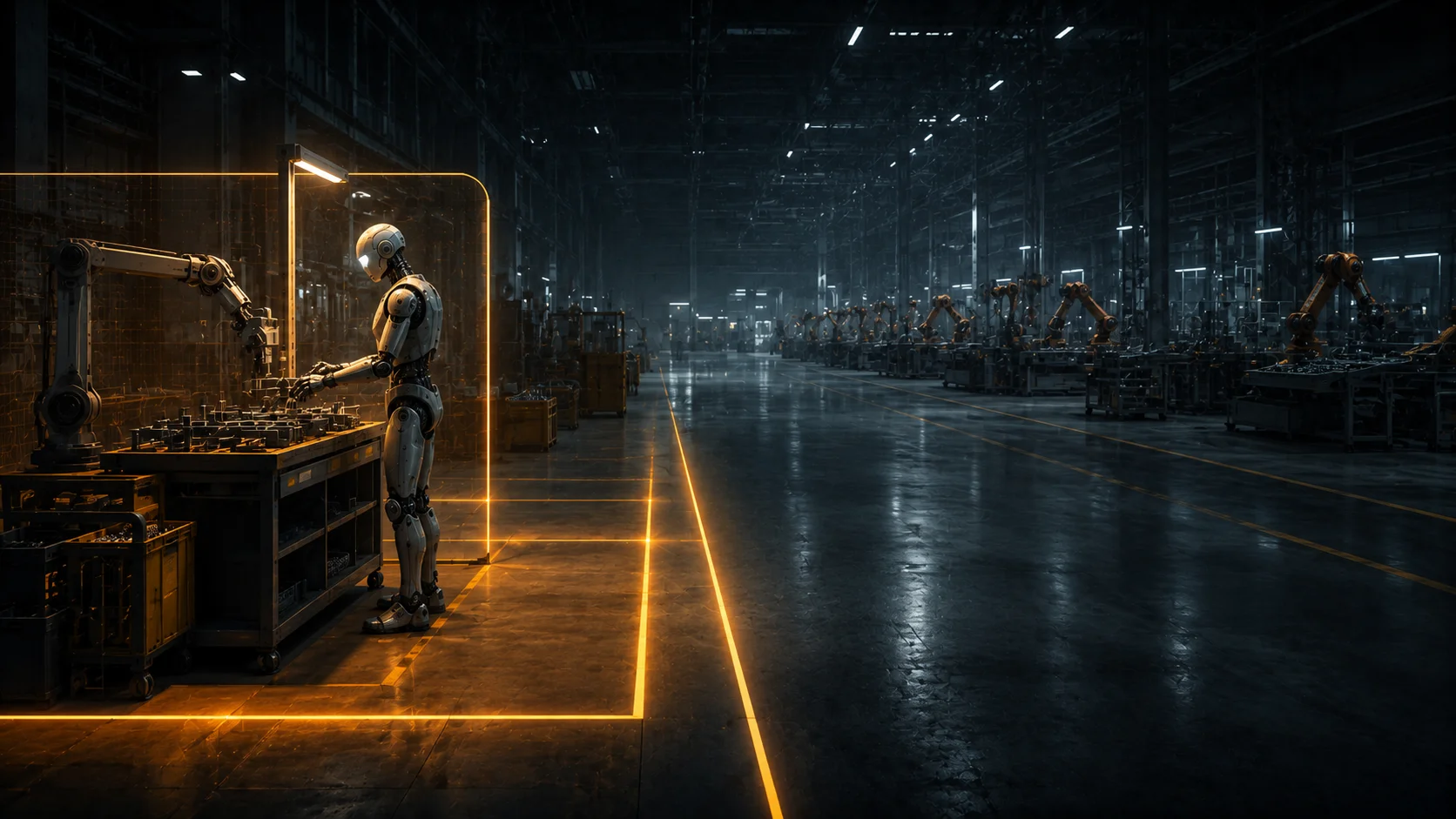
Humanoid robotics in 2026 has moved out of the perpetual research-demonstration phase into early commercial deployment, and the gap between the highlight-reel videos that have driven public attention and the operational reality of deployed units is substantial enough to warrant closer scrutiny than the venture capital narrative typically provides. Figure AI, 1X Technologies, Apptronik, Agility Robotics, and Tesla have all moved units into customer pilots at major manufacturing and logistics operations. The pilots are real. The capability of the robots in production conditions is genuinely improved over what was possible three years ago. And the gap between current capability and the autonomous, general-purpose humanoid worker that the marketing narrative implies remains significant.
Understanding what is actually happening in humanoid robotics requires separating the technology readiness from the commercial readiness, the controlled demonstrations from the production deployments, and the marketing claims from the operational data that the deploying customers are accumulating. The category has graduated from a research curiosity to a real industry, but the pace at which it scales to economically meaningful deployments will be determined by execution variables that the current investment narrative does not always foreground.
What the Robots Actually Do in Production
The humanoid robots deployed in 2026 production environments operate in highly constrained roles within larger manual workflows. A Figure 02 unit deployed in a BMW manufacturing facility performs specific tasks — sheet metal handling, parts placement at a designated station — within a workstation that has been engineered to accommodate the robot’s specific capabilities and limitations. A 1X NEO unit deployed in a logistics environment performs item picking and placement tasks in zones that have been adapted to the robot’s working envelope and reliability profile. Apptronik’s Apollo robots operate in similar constrained roles at manufacturing customers including Mercedes-Benz and several others.
The constraints in these deployments are not failures — they are the natural starting point for any industrial automation deployment, where the value proposition is to replace specific manual tasks rather than to replicate general human capability. The pattern is similar to the deployment trajectory of industrial robotics over the past forty years: start with the most repetitive, most predictable tasks where the robot’s reliability advantage is clearest, and gradually expand to more variable tasks as capability and reliability improve.
The 2026 deployment data shows humanoid robots performing their specific deployed tasks with operational reliability that is approaching but not yet matching the established industrial robotics platforms (Kuka, ABB, FANUC) that they would compete with for fixed-task automation. The case for humanoid form factor over fixed industrial robotics is that humanoids can work in environments that were designed for human workers without requiring environment reconfiguration, and that the same humanoid platform can in principle be redeployed across different tasks as production needs change. These advantages are real but require the humanoid robots to actually achieve the reliability and capability levels that justify their substantially higher per-unit cost.
The Cost Structure and Why Unit Economics Are Still Difficult
The current generation of humanoid robots has per-unit hardware costs that are substantial but declining rapidly. Reported unit costs for the leading platforms in 2026 range from approximately $50,000 to $200,000 depending on the configuration, with the trajectory of cost declines suggesting that sub-$30,000 units may be achievable within several years as production volumes increase and supply chains develop. The cost decline trajectory mirrors the pattern of every successful hardware category in the past — initial high costs, declining as volume scales and supply chains mature, eventually reaching levels that enable broad commercial deployment.
The unit economics for customers deploying humanoid robots are determined by the comparison to the cost of human labour for the task being automated. A robot that costs $100,000 to deploy with annual operating costs of $20,000 (energy, maintenance, software updates) needs to displace approximately one human worker’s annual cost (varying by geography and role) to be cost-positive over a reasonable payback period. In high-cost labour markets like the US and Western Europe, this calculation can work for specific roles even at current hardware costs. In lower-cost labour markets, the unit economics do not work until hardware costs decline substantially or until specific role advantages (24/7 operation, hazardous environments) justify the deployment.
The operational realities that complicate this calculation include the engineering investment required to integrate the robot into existing production flows, the safety considerations that constrain how robots can be deployed alongside human workers, the maintenance and downtime overhead that reduces the robot’s effective working hours below the theoretical maximum, and the management overhead of operating fleet hardware that is more complex than traditional industrial automation.
The Software and Autonomy Gap
The hardware capability of leading humanoid robots in 2026 is genuinely impressive, and the marketing demonstrations of robots performing varied tasks reflect real engineering progress. The software autonomy capability, however, lags the hardware capability by a significant margin, and this gap is the primary constraint on broader deployment.
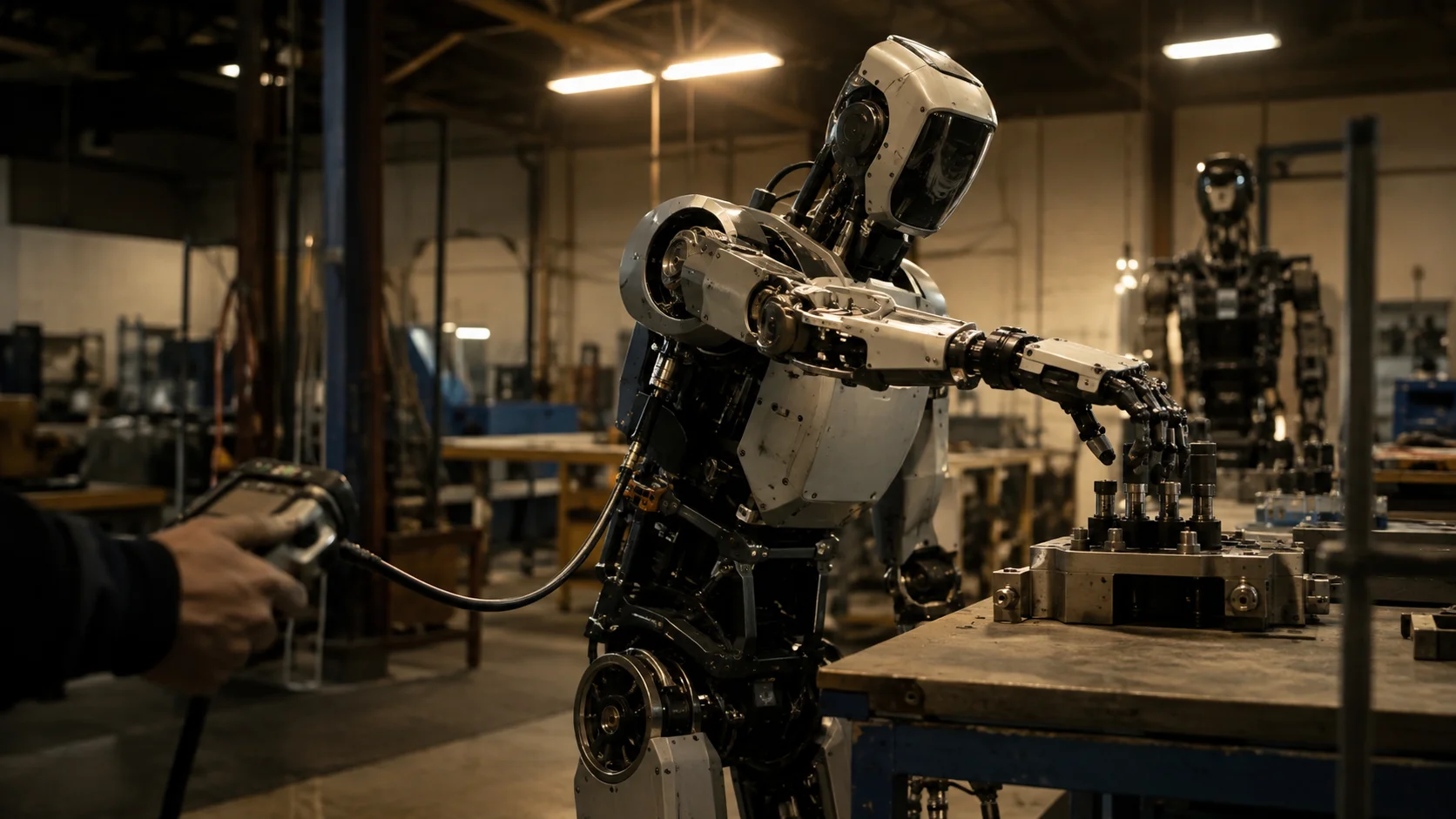
Robots performing tasks in production environments today rely on combinations of pre-programmed behaviour, teleoperation by human operators, and increasingly sophisticated neural network policies that handle specific task categories with growing autonomy. A robot performing manufacturing tasks at a Mercedes plant may be operating with varying degrees of autonomy depending on the specific task, with the most variable and unstructured portions of the work still requiring human oversight or teleoperation.
The progression toward broader autonomy depends on two compounding developments: the scaling of neural network policies trained on robot interaction data (the “foundation model for robotics” thesis that several research labs are pursuing), and the accumulation of operational data from deployed robots that provides the training signal for improved policies. The broader AI infrastructure scaling is directly relevant here because robotics policy training is itself a significant compute consumer, and the same compute infrastructure that enables large language model training enables robotics foundation model training.
The realistic timeline for general-purpose humanoid autonomy — robots that can take an arbitrary task description and execute it in an unfamiliar environment — is significantly longer than the most optimistic projections suggest. Specific task autonomy is improving rapidly; general autonomy across the broad distribution of tasks a human worker handles requires capability levels that current systems do not approach.
The Manufacturers and Their Strategic Positions
Humanoid robotics has consolidated around several manufacturers with genuinely differentiated technical approaches and strategic positions. Figure AI has positioned itself as the AI-first humanoid platform, with significant investment from major hyperscalers and a focus on the software autonomy stack. 1X Technologies (formerly Halodi) emphasises the safety profile of its NEO design and has positioned for both industrial and eventually consumer applications. Apptronik’s Apollo platform has the most production-deployed automotive customers and emphasises operational reliability. Agility Robotics’s Digit operates in logistics environments and has been deployed at Amazon and other large logistics operators.
Tesla’s Optimus has substantial public profile but more limited public deployment data than the dedicated humanoid robotics manufacturers. Tesla’s structural advantages — automotive supply chain integration, manufacturing scale, Dojo training compute — could support a competitive humanoid platform if Tesla’s execution matches the projections, but the same execution-versus-projection gap that affects Tesla’s autonomous vehicle commercialisation applies here. The current deployed evidence for Optimus is limited compared to the dedicated humanoid robotics platforms.
The Chinese humanoid robotics manufacturers — Unitree, Fourier Intelligence, AGIBOT, and several others — represent a separate competitive cohort with substantial Chinese government industrial policy support and rapid product iteration. Their export potential is constrained by geopolitical factors but their domestic deployment in Chinese manufacturing represents a competitive case study for what scale humanoid robotics deployment might look like in environments without the US labour cost dynamics that drive Western deployment economics.
The Investment Implications and the Risk Assessment
For investors evaluating humanoid robotics as an investment category in 2026, the analysis splits along several distinct dimensions. The dedicated humanoid robotics manufacturers (Figure, 1X, Apptronik, Agility) are still private and primarily accessible through venture capital. The technology component suppliers — actuator manufacturers, sensor providers, semiconductor companies producing robotics-targeted chips — are partly public and provide a more accessible exposure to the deployment trend.
The end customer category — automotive manufacturers, logistics operators, and other large industrial customers — provides exposure to the cost savings if humanoid robotics deployments deliver the productivity improvements the manufacturers project. This exposure is diluted by the broader business performance of these customers, but companies that are at the leading edge of humanoid deployment may benefit disproportionately from cost advantages if the technology delivers.
The risks that should temper the investment thesis include the possibility that the autonomy timeline takes significantly longer than the marketing narrative implies (delaying broad commercial deployment), the possibility that specific manufacturers fail in the competitive shakeout that will inevitably reduce the current field, the possibility that labour market dynamics shift in ways that reduce the cost advantage of humanoid deployment, and the regulatory risk that humanoid robots deployed in environments alongside human workers face safety requirements more stringent than current deployments assume.
Humanoid robotics is a real and developing industrial category with credible long-term commercial potential. The current deployment data is genuine evidence of capability progress, but the gap between current capability and the autonomous general-purpose worker vision is large enough that investors should price significant timing risk into their expectations. The category will be commercially important; predicting precisely when and through which specific manufacturers requires execution forecasts that are inherently uncertain.
The Gap Between the Press Release and the Factory Floor
There is a pattern in humanoid robotics coverage that should be familiar to anyone who has followed the history of technology companies that promise to change the physical world. The announcement comes first: a collaboration agreement, a pilot program at a named customer, a video of a robot performing a task under carefully controlled conditions. The camera angle is chosen well. The lighting is excellent. The robot completes the task without incident, and the timestamp suggests this took about fifteen seconds. What the video does not show is the twelve minutes of setup, the two failures that happened before the successful take, or the team of engineers stationed just outside the frame ready to intervene.
This is not dishonesty exactly. It is the promotional logic that every technology company uses when the distance between current reality and future ambition is large and needs to be bridged by narrative. The investors providing capital at current valuations are betting on the future ambition. The marketing needs to make the future ambition feel imminent enough to justify the bet. The people who suffer from this logic are the enterprise customers who read the coverage and the press releases and form reasonable but incorrect expectations about what deploying a humanoid robot in their facility will actually involve.
The real story of humanoid robotics in 2026 is the story happening in the parts of BMW’s Spartanburg facility and Amazon’s warehouses where the robots are not performing for cameras. It is the story of the integration engineers who spent three months mapping the working envelope before a single robot task was enabled. It is the story of the reliability rate that gets tracked internally and differs from the performance quoted in investor presentations. It is the story of the workers who have learned which tasks the robot can be trusted with today and which require a human backup positioned nearby. That story is more interesting than the highlight reel and more useful for anyone trying to predict how this technology actually scales.
The connection to the broader AI infrastructure buildout matters here. Nvidia’s AI infrastructure valuation rests partly on the thesis that the compute required for agentic and embodied AI will continue to grow at the rate that generative AI training established. Robotics foundation models — the neural network policies that power robot autonomy — are genuine compute consumers, and the relationship between TSMC’s production capacity, Nvidia’s chip output, and the robotics companies’ ability to train better autonomous behaviour policies is a real constraint on the sector’s development timeline. The hardware story and the software story are intertwined in ways that the separated technology coverage does not always capture. The real investor question is not whether the robots work — they do, within limits — but whether the full system from silicon to autonomous deployment can compound at the rate the market is pricing in.
Zero to One in Physical Intelligence: Which Humanoid Robot Companies Are Actually Building Something New
The framing problem with humanoid robotics is that most of what gets called breakthrough innovation is actually competition at n+1: better grasping algorithms, faster locomotion, improved proprioception. These are genuine engineering achievements. They are not zero-to-one. Thiel’s distinction is not about technical difficulty — it is about whether the capability is the first of its kind or an improvement on something that already exists. A humanoid robot that walks more smoothly than last year’s model is n+1. A humanoid robot that executes an entire unstructured assembly task end-to-end without human supervision, faster than human labour at comparable cost — and does so reliably across shift changes — is zero-to-one.
None of the current deployments have demonstrated the second thing. Tesla Optimus is working on seat assembly in Fremont under controlled conditions with human supervision at the exception boundary. Figure AI is operating in BMW manufacturing in a similarly bounded environment. 1X Technologies has warehouse applications that are impressive but still structured. Every deployment has demonstrated something real — the hardware is functional, the software is improving, the cost trajectory is moving in the right direction. But the zero-to-one threshold — the deployment that doesn’t require a human to supervise the edge case in an unstructured environment — has not been crossed in any production setting with public verification.
This distinction matters enormously for how investors should think about the capital cycle. S&P 500 AI capex pressure on earnings growth reflects the same dynamic Thiel would apply here: capital is being deployed on the expectation that capability thresholds will be crossed, before the thresholds are crossed. When that capital goes across many n+1 competitors simultaneously — all racing to build a better version of existing capability — the typical outcome is commoditisation of the improvement, not monopoly capture of a new category. The entity that crosses zero-to-one first in humanoid robotics will have a window to establish a monopoly in a specific application domain. The entities that finish second through fifth will be building into a market already priced by the winner’s economics.
Thiel’s monopoly framework identifies four characteristics of durable competitive advantage: proprietary technology, network effects, economies of scale, and branding. Applied to humanoid robotics: proprietary technology is the one that matters most at this stage, and the relevant technology is not hardware — it is the policy learned from real deployment data. Every hour of unstructured real-world operation produces training signal that simulated environments cannot replicate. The company that accumulates the most real-world operational hours in the most complex environments first has a compounding proprietary technology advantage that late entrants cannot close by spending more on simulation.
This is why semiconductor supply constraints shaping AI hardware deployment are so consequential for humanoid robotics specifically. The AI chips required to train control policies are the same chips required by every AI application. Robotics companies that cannot access sufficient compute to train on real-world data at scale are not just slower — they are accumulating less proprietary technology per year than their best-resourced competitors. The compute constraint is simultaneously the policy advantage constraint.
The investment implication is counter-intuitive by standard venture metrics. US equity valuation compression at record levels has pushed capital toward high-narrative, pre-revenue stories. Humanoid robotics is one of the highest-narrative categories available. This has the paradoxical effect of funding n+1 competition heavily while the companies most likely to cross zero-to-one are those with the best access to real-world deployment environments — a function of enterprise relationships, not funding rounds. A well-funded startup with impressive demos and no production deployments is further from zero-to-one than a less-funded company with three years of real factory floor data.
GLP-1 drugs followed the same deployment-friction pattern before becoming a genuine category. The technology worked in clinical trials; the commercial reality was constrained by manufacturing capacity, distribution infrastructure, and payer coverage decisions that took years to resolve. Humanoid robotics has an equivalent: the hardware works in controlled conditions; the commercial reality is constrained by real-world reliability standards, enterprise integration timelines, and liability frameworks that do not yet exist at scale.
OpenAI’s revenue model as a template for AI monetisation shows what happens when a capability crosses the deployment-friction threshold — revenue scales faster than headcount, margins expand as the model improves, and early commercial relationships become the distribution network for the next capability layer. Humanoid robotics will follow this pattern, in a specific domain, for the first company that actually crosses zero-to-one. The current noise around which robot has the best demo is the wrong question. The right question is which company has the most unstructured real-world operational hours in the most complex environments, and what that data advantage compounds into over the next four years.
What Would Actually Falsify the Humanoid Robotics Thesis
Richard Feynman’s standard for any claim, including his own, was to specify in advance what observation would prove it wrong — a thesis that cannot be falsified is not yet a scientific claim, whatever its plausibility. Applied to Figure and Tesla Optimus’s commercial readiness claims, the useful discipline is not asking whether the demonstrations are impressive, which they often genuinely are, but asking what specific commercial deployment metric — unsupervised uptime in a real facility, cost per unit of completed task versus a human worker, deployment count outside a controlled demo environment — would have to fail to fail for the “years away” skeptics to be right.
Feynman’s other standard, from his own experience investigating engineering failures, was that the gap between a demonstration and a deployed system is usually where the real difficulty lives, and it is systematically underestimated by people closest to the demonstration. Readers evaluating this article’s commercial-timeline claims should weight actual, named, ongoing commercial deployments far more heavily than any demo, controlled pilot, or forward-looking statement — not because the technology isn’t real, but because that specific gap is where humanoid robotics timelines have missed most consistently so far.