

WBT$72.66▲ 1.59%NATGAS$2.89▼ 8.25%NFLX$81.05▼ 0.82%FIGR_HELOC$1.00▸ 0.00%WTI$80.46▼ 5.13%XAU$4,479.20▲ 1.09%XRP$1.38▲ 2.05%NVDA$220.78▲ 1.48%HYPE$84.07▲ 4.28%BTC$78,865.00▲ 1.44%AAPL$316.85▼ 0.89%RAIN$0.0167▼ 1.77%BNB$692.45▲ 1.16%USDS$0.9999▲ 0.02%ETH$2,473.47▲ 2.10%LEO$9.38▼ 2.22%TSLA$367.95▲ 5.51%MSFT$507.29▼ 1.22%SOL$103.93▲ 2.21%META$572.34▼ 0.98%ZEC$855.88▲ 3.72%DOGE$0.0833▲ 1.27%TRX$0.3317▼ 1.39%MSTR$132.94▲ 4.42%COIN$188.12▲ 5.31%XAG$67.14▲ 1.38%XMR$515.64▲ 1.09%GOOGL$339.35▼ 2.09%AMZN$259.77▼ 2.50%BRENT$83.76▼ 1.92%WBT$72.66▲ 1.59%NATGAS$2.89▼ 8.25%NFLX$81.05▼ 0.82%FIGR_HELOC$1.00▸ 0.00%WTI$80.46▼ 5.13%XAU$4,479.20▲ 1.09%XRP$1.38▲ 2.05%NVDA$220.78▲ 1.48%HYPE$84.07▲ 4.28%BTC$78,865.00▲ 1.44%AAPL$316.85▼ 0.89%RAIN$0.0167▼ 1.77%BNB$692.45▲ 1.16%USDS$0.9999▲ 0.02%ETH$2,473.47▲ 2.10%LEO$9.38▼ 2.22%TSLA$367.95▲ 5.51%MSFT$507.29▼ 1.22%SOL$103.93▲ 2.21%META$572.34▼ 0.98%ZEC$855.88▲ 3.72%DOGE$0.0833▲ 1.27%TRX$0.3317▼ 1.39%MSTR$132.94▲ 4.42%COIN$188.12▲ 5.31%XAG$67.14▲ 1.38%XMR$515.64▲ 1.09%GOOGL$339.35▼ 2.09%AMZN$259.77▼ 2.50%BRENT$83.76▼ 1.92%
Delayed

Author: Lauren Mercer

  • Amazon, Microsoft, and Google Are Committing $250 Billion in Cloud CapEx This Year. The Economics Behind the Bet — and the Risk If It Doesn’t Pay Off.

    Amazon, Microsoft, and Google Are Committing $250 Billion in Cloud CapEx This Year. The Economics Behind the Bet — and the Risk If It Doesn’t Pay Off.

    Amazon Microsoft Google combined 250 billion cloud CapEx — hyperscaler AI infrastructure bet

    The Largest Infrastructure Bet in Commercial History

    The combined capital expenditure commitments of the three dominant hyperscale cloud providers in fiscal 2026 represent the largest peacetime infrastructure investment by commercial entities in recorded history. Amazon Web Services has guided to over $100 billion in CapEx for the fiscal year. Microsoft committed to $80 billion in data center investments in its fiscal year, which ends in June 2026. Google’s Q1 2026 capital expenditure alone was $17.2 billion, annualizing to approximately $70 billion. The combined number — roughly $250 billion in a single year, from three companies, directed primarily at the compute infrastructure needed to train and serve AI models — exceeds the annual infrastructure investment of most national governments.

    The scale creates a context problem for anyone trying to evaluate it: there is no historical precedent for this level of private sector infrastructure investment in a single technology category over a single year. The nearest analogs are the telecom buildout of the 1990s, the early internet backbone construction, and the electricity grid expansion of the mid-20th century — each of which represented multi-year, multi-decade commitments that produced infrastructure bottlenecks, significant overcapacity in some segments, and ultimately transformative economic value. The question the hyperscaler CapEx raises is not whether the AI infrastructure is being built — it clearly is — but whether the economics of the applications that will run on it justify the investment being made on the timelines the hyperscalers are committing to.

    What the Money Is Buying

    The $250 billion in annual CapEx is purchasing several distinct categories of infrastructure. The largest component is GPU servers — specifically Nvidia Blackwell GPUs at roughly $30,000-40,000 per unit, deployed in clusters of thousands for AI training workloads and in smaller configurations for inference serving. Each hyperscaler is building GPU capacity that serves both internal AI development (training the models they use for their own products) and external AI-as-a-service customers (providing GPU compute on demand through cloud APIs). Nvidia’s $75.2 billion in Q1 Data Center revenue is the single-company financial expression of this procurement wave.

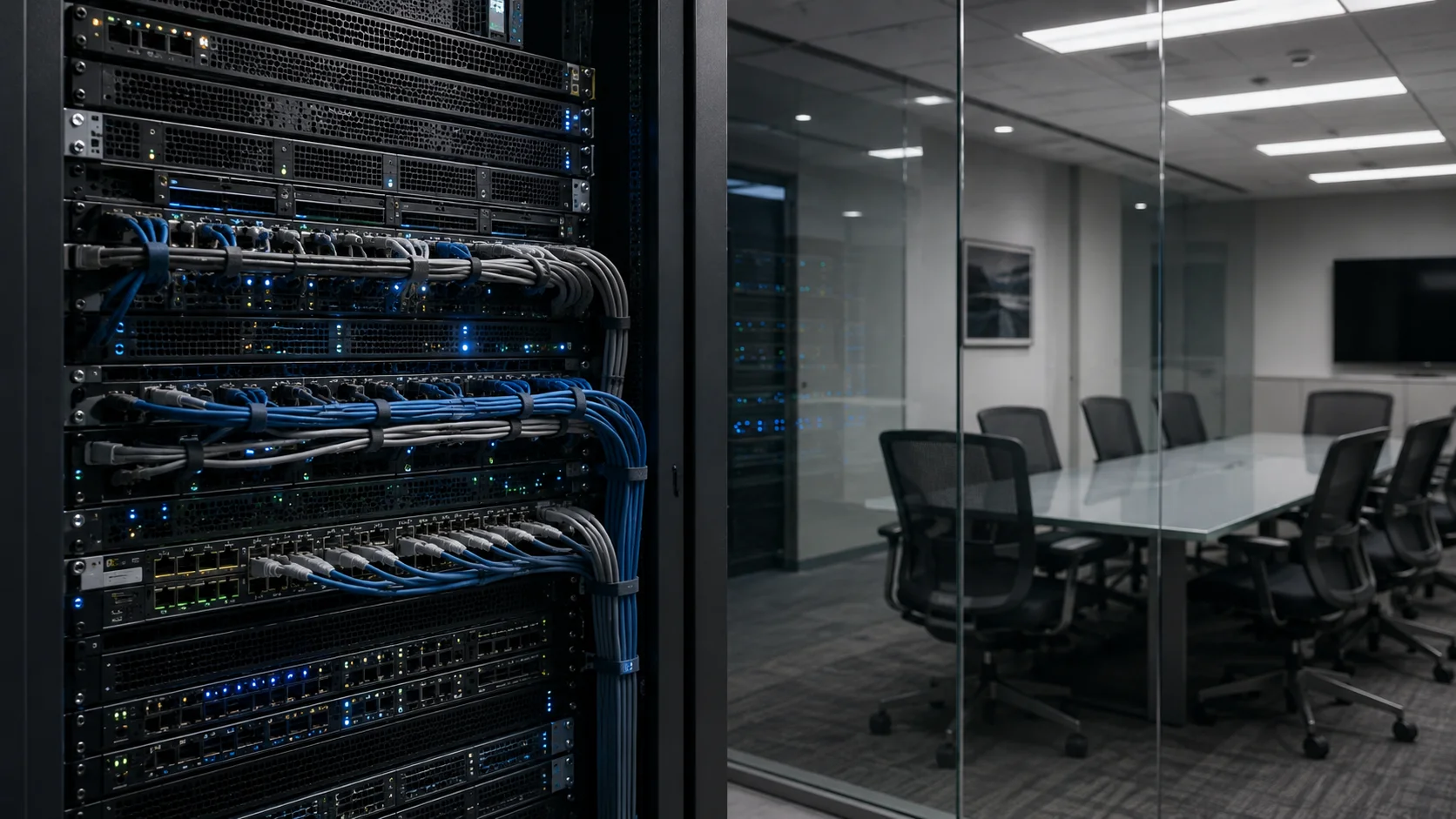
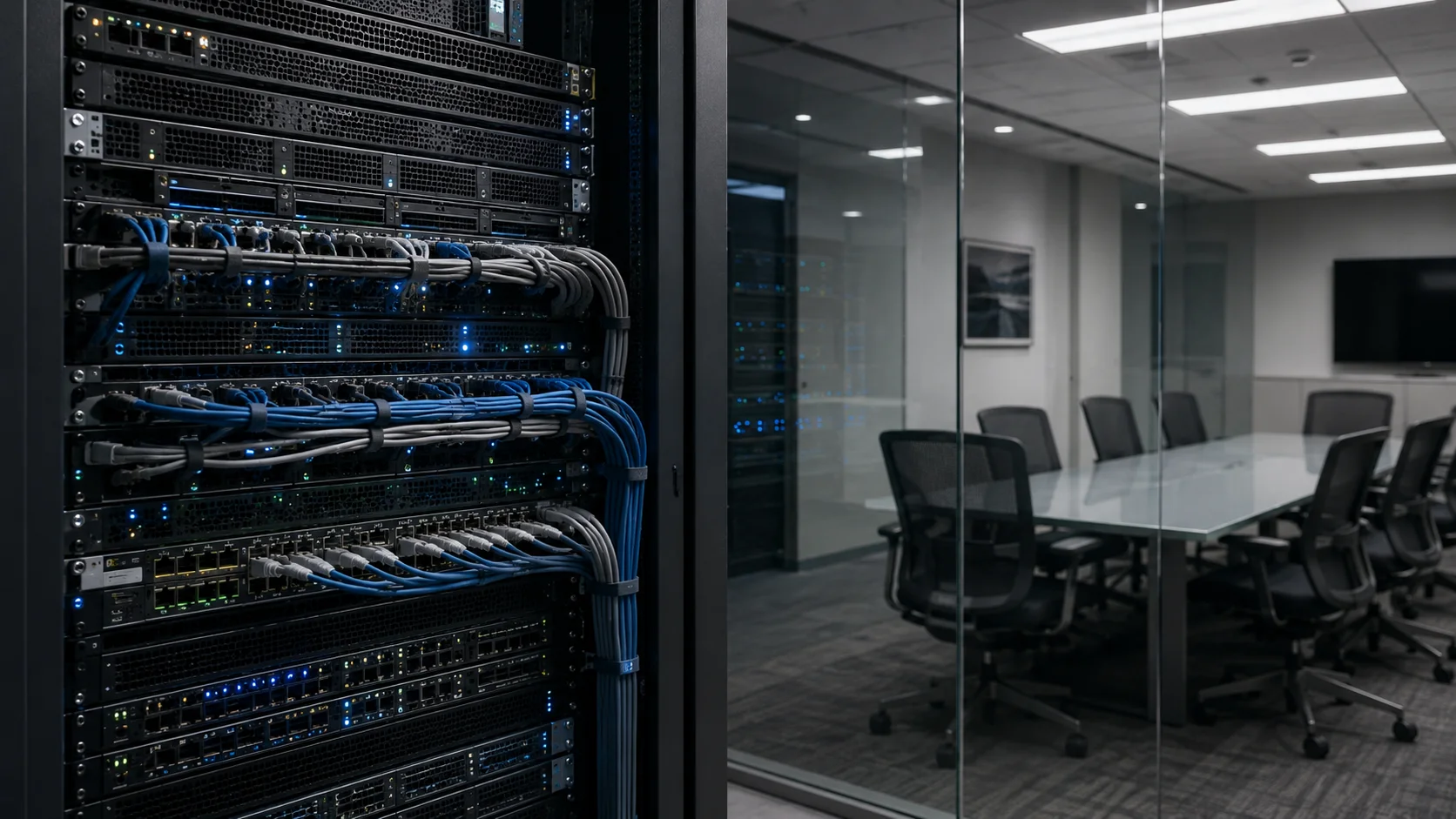
    The second component is data center construction — the physical buildings, power distribution, cooling systems, and networking infrastructure that houses the GPU servers. AI workloads are substantially more power-intensive than traditional cloud workloads: a rack of Blackwell GPUs consumes 20-30 kilowatts of power, versus 5-10 kilowatts for a comparable rack of CPU servers. The data center footprint required to deploy AI compute at hyperscale is larger and more power-hungry than the footprint of traditional cloud infrastructure, which is driving construction timelines, electricity procurement strategies, and in several cases, direct power generation investments by the hyperscalers.

    The third component is networking — the high-speed interconnects between GPUs, between servers, and between data centers that determine training efficiency for large models. GPU compute is only as useful as the bandwidth available to move data between GPUs during training, and the networking investments the hyperscalers are making — custom silicon, proprietary interconnect fabrics, fiber infrastructure between data centers — are as important as the GPU investments themselves for training performance at the scales required for frontier models.

    The Demand-Side Validation Required

    The financial logic of the $250 billion bet is straightforward: if AI applications generate enough enterprise value to drive cloud revenue growth that exceeds the cost of the infrastructure supporting it, the investment is rational. The hyperscalers are each projecting that AI-driven cloud revenue will grow at rates that justify the CapEx commitments, and the early evidence is consistent with that projection. Microsoft’s Azure revenue growth has accelerated alongside its Copilot AI product adoption. AWS’s AI services have become the fastest-growing segment of Amazon’s cloud business. Google Cloud’s AI products are driving customer acquisition and expansion. The demand-side data, through Q1 2026, supports the investment thesis.

    The risk scenario is one in which enterprise AI adoption, while real, proceeds more slowly than the hyperscalers’ planning models assumed. If the transition from “we are piloting AI” to “AI is embedded in our production workflows and we are scaling it” takes three years rather than one, the revenue that justifies the CapEx is deferred. Deferred revenue against committed capital expenditure means lower returns on the investment in the near term and the possibility of overcapacity in specific GPU generations if the next generation’s capabilities make current-generation infrastructure less competitive before current-generation demand has fully materialized.

    The Power Constraint That Nobody Solved

    The power requirement for the AI infrastructure buildout has emerged as the binding constraint that the industry underestimated. The data centers required to house the compute that Amazon, Microsoft, and Google are procuring need power at a scale that the electrical grid in most locations cannot immediately provide. This constraint is producing a set of behaviors that would have seemed unusual in any other infrastructure buildout context: hyperscalers are building their own power generation capacity (Microsoft and Google both have nuclear power agreements, Amazon has acquired wind and solar capacity), entering into long-term power purchase agreements that lock up available renewable capacity in priority markets, and in some cases selecting data center locations based primarily on available power rather than network latency or proximity to customers.

    The power constraint is the factor most likely to cause the $250 billion CapEx commitment to miss its theoretical potential. If the GPU servers are purchased but the power and cooling infrastructure to operate them at full utilization cannot be constructed fast enough, the effective compute capacity available is lower than the hardware investment suggests. The hyperscalers’ data center construction timelines — 18-36 months from site selection to full operation for large facilities — mean that the compute capacity being planned today will come online in 2027-2028. The timing mismatch between GPU procurement and data center readiness is one reason why hyperscaler CapEx numbers don’t translate directly into immediately available compute capacity.

    The Returns Question

    The fundamental returns question for the $250 billion AI infrastructure bet is one that won’t be answerable with confidence until 2028-2030. The AI applications being built on this infrastructure need to generate economic value — in productivity improvement, in revenue generation, in cost reduction — that justifies the capital costs of the infrastructure at reasonable discount rates. The enterprise AI adoption data through early 2026 is encouraging but not conclusive: KPMG deploying Claude to 276,000 employees, Goldman Sachs and JPMorgan integrating AI into investment banking workflows, and thousands of enterprise AI deployments suggest that the demand exists. Whether it exists at the scale and pace required to justify the infrastructure investment is the question that the next three years of enterprise adoption data will answer.

    The hyperscalers have made the bet. The infrastructure is being built. The $250 billion is committed or committing. Whether it was the right bet at the right time and scale is a question that will be answered by the enterprise applications that run on it, and by whether those applications generate the economic value that the investment requires. The largest infrastructure bet in commercial history is in progress. We’ll know whether it paid off by the end of the decade.

    The Clarity $250 Billion Demands

    William Zinsser’s central argument in “On Writing Well” is that clutter is the disease of American writing, and that every word should be doing work. The same principle applies to capital allocation. Every dollar should be doing work. And the $250 billion that Amazon, Microsoft, and Google are committing to AI infrastructure in 2026 is, at minimum, a test of whether the people spending it can explain — in clear, unhedged sentences — what they expect it to return.

    The clutter version appears in most earnings calls: “We continue to see strong signals of customer demand across our AI portfolio and remain committed to investing at the levels necessary to capture the secular growth opportunity in cloud and AI infrastructure.” That sentence says nothing. It contains no predicate that could be proven wrong.

    The numbers say something. Amazon is spending $100 billion. Microsoft is spending $80 billion. Google is spending $70 billion. Together they are building more data center capacity and buying more GPU servers than any commercial enterprise has committed to in a single year in history. The return on that investment depends entirely on whether enterprise customers use the compute they’re being offered at a price above the cost of providing it. That hasn’t been proven yet.

    The GPU server buildout is real. The data center construction is real. Nvidia’s $75.2 billion in data center revenue in Q1 FY2027 alone confirms that the hardware spending is genuine, not a paper commitment. But hardware deployment and economic return are different measurements. The hyperscalers are building ahead of demonstrated demand — which is correct strategy if demand materializes and catastrophic capital misallocation if it doesn’t.

    Zinsser would apply a simple editing rule: if you can’t write a clean sentence explaining what you expect to get back, you may not have thought it through clearly enough. The sentence the hyperscalers need to be able to write is something like: “We believe enterprise AI workloads will consume X exaflops of compute by Y year, generating Z in revenue at a W percent margin, producing a return above our cost of capital in N years.” Any version of that sentence is worth scrutinizing. The consistent absence of that sentence is the most important disclosure in every AI infrastructure earnings call this year.

    The largest infrastructure bet in commercial history has been made. The clutter will clear when the returns either justify it or don’t. Until then, read every investor day presentation the same way you’d edit a first draft: cut the adjectives, find the verb, and ask what the sentence actually commits to.

  • DuckDuckGo Installs Rose 30% After Google I/O 2026

    DuckDuckGo Installs Rose 30% After Google I/O 2026

    DuckDuckGo installs up 30% after Google I/O 2026 — users rejecting AI search

    The Search Backlash Nobody in the AI Industry Expected

    Google’s I/O 2026 keynote was, by almost every internal measure Google would use to evaluate it, a success. The company announced over 100 advancements in AI agents and models. It unveiled Gemini 3.5 Flash, Gemini Omni, and a redesigned Search experience that converts the familiar blue-link results page into a conversational AI interface — a “search box that expands for longer queries, anticipates user intent, and answers questions directly first.” The product vision is coherent, the technical capability is genuine, and the competitive logic of moving Google Search toward an AI-native interface is defensible against the threat from ChatGPT and Perplexity that has been eating at Google’s search utility share for two years.

    The users who did not want this made their preferences known in the week following I/O 2026. DuckDuckGo reported that US app installs increased an average of 18.1% week-over-week during May 20-25, peaking at 30.5% week-over-week growth on May 25 — the day after I/O. On iOS specifically, the growth was more dramatic: 33% average week-over-week, peaking at 69.9% in a single day. The privacy-focused search alternative that Google has consistently treated as a niche product for a small category of unusually privacy-conscious users just experienced its largest growth spike in years, driven by people who looked at Google’s AI search overhaul and decided they wanted something else.

    What Users Are Reacting To

    The specific features of Google’s AI search redesign that appear to be driving the backlash are not hard to identify from the public response. Google AI Overviews — the AI-generated summary that appears at the top of search results and directly answers queries rather than returning a list of source links — have been a source of user complaints since their introduction in 2024. The complaints cluster around two concerns: accuracy (AI Overviews have surfaced wrong information in ways that were both demonstrable and embarrassing) and control (users who want to find sources and evaluate them themselves are instead presented with a synthesized answer that obscures where the information came from and whether it is reliable).

    Google’s I/O 2026 announcement didn’t address the accuracy concerns — it accelerated the AI Overview rollout, making AI-generated answers more prominent and the traditional link-based results harder to access. The redesigned search box, described by Google as a “conversational engine that autocompletes searches and anticipates user intent,” extends the AI intervention earlier in the search process: before the user has even finished typing their query, Google’s AI is attempting to anticipate and complete it. For users who find this helpful, it’s a productivity feature. For users who experience it as a loss of agency — the sense that Google is deciding what they’re looking for rather than helping them find what they actually want — it’s a reason to look for alternatives.

    The “force-fed AI” characterization that appeared in the TechCrunch headline is doing real work: it captures the specific objection of users who don’t object to AI in principle but object to having no choice about whether to interact with it. A search engine that makes AI interaction optional — where you can use AI assistance if you want it and skip it if you don’t — produces less user resentment than one that makes AI the default layer through which all queries are processed. Google’s redesign moved firmly toward the latter, and the DuckDuckGo growth data suggests the users who wanted the former have a meaningful representation in Google’s user base.

    DuckDuckGo’s Positioning

    DuckDuckGo’s growth from this moment is not accidental. The company has spent two years building a product and a message positioned precisely against the trajectory Google has taken. DuckDuckGo offers AI features — the company has its own AI chat product — but with a specific architecture designed to address the privacy objections that Google’s approach raises: user IP addresses are stripped before requests reach model providers, conversations are deleted within 30 days, and chat data is not used for training. The product doesn’t require users to reject AI; it offers them AI on terms that don’t involve their data being retained and used to improve the model they’re talking to.

    The message — “we respect user choice and user privacy” — is a direct competitive positioning against a Google that, in the public perception shaped by I/O 2026’s announcements, is moving toward a more AI-mediated, less user-controlled experience. Whether Google’s redesign actually involves more data collection than the previous version is technically nuanced; the user perception that it does, and that the control being ceded to AI systems is control that was previously held by the user, is what’s driving installation behavior.

    DuckDuckGo’s market share remains small relative to Google’s — the 30% growth spike is growth from a small base, not a fundamental shift in the search market. Google’s market share in search is not meaningfully threatened by DuckDuckGo’s best week in recent memory. The significance of the data point is not competitive but diagnostic: it tells you something about the distribution of preferences within Google’s current user base, and about how many of those users were using Google’s search because there wasn’t a compelling alternative rather than because they actively preferred Google’s approach.

    The Open Web Concern

    Behind the individual user complaints about AI search is a structural concern that has been building in the publishing and content creation industries since Google introduced AI Overviews: the AI-generated synthesis that sits at the top of search results and directly answers queries reduces the need for users to click through to the source material. Publishers, news organizations, bloggers, and content creators whose businesses depend on organic search traffic driving visitors to their sites have been documenting traffic declines that they attribute, at least in part, to AI Overviews capturing the answer before the user follows the link.

    Google’s I/O 2026 announcements accelerating the AI search overhaul land in an industry that has already been dealing with this effect for more than a year. The concern — “it will kill the open web” — is the most dramatic version of a real and measurable phenomenon: when search engines answer queries directly, less traffic flows to the sources that provided the information those answers were synthesized from. The business model of the open web, built on the premise that search traffic is a public resource that flows to whoever produces the best content on a topic, is being disrupted by AI systems that extract value from that content without reliably returning traffic to its producers.

    DuckDuckGo’s growth benefits from both the individual user concern (loss of control over the search experience) and the structural concern (the open web being systematically defunded by AI-mediated search). Users who care about the health of the sites and creators they follow have a reason to prefer search engines that return links over search engines that synthesize answers — because the link-return model sustains the content ecosystem they depend on, while the answer-synthesis model does not.

    What This Means for Google’s AI Search Bet

    The DuckDuckGo growth data doesn’t change the outcome of Google’s AI search bet — the company has the market share, the infrastructure, and the financial resources to execute its strategy regardless of what a percentage of its user base does in a single week. What it does is provide a calibration point for the risk side of the bet Google is making.

    Google’s AI search redesign is a wager that the users who find AI assistance genuinely useful outnumber the users who find AI mediation unwanted. The company’s own research presumably supports this — Google does not make product decisions of this scale without extensive testing and user data. But user research conducted within an existing product doesn’t always predict behavior when the alternative is more compelling than the status quo. DuckDuckGo post-I/O is more compelling to more users than DuckDuckGo pre-I/O, because Google’s accelerated AI push has created a differentiation that wasn’t as sharp before.

    The week of growth that DuckDuckGo reported is not a crisis for Google. It is a signal that the segment of Google’s user base that values traditional search over AI-mediated search is larger than Google’s product strategy appears to have anticipated, and that those users are willing to act on their preferences when a viable alternative presents itself. Whether Google responds to that signal by offering more user control over AI integration — the opt-out-of-AI-overview functionality that many users have been requesting — or treats it as acceptable attrition from a segment it has decided to optimize against, will say something important about how Google thinks about the users who are leaving.

    The Mental Model Google Forgot

    Shane Parrish of Farnam Street spends a lot of time thinking about how people actually make decisions versus how they think they make decisions. The DuckDuckGo growth number — 30 percent more installs in the first six weeks after Google I/O — is useful data, but it’s most interesting when you apply the right mental model to it.

    The standard narrative is about privacy: users are tired of being surveilled. That’s real, but it’s incomplete. What the install spike actually reveals is a phenomenon Parrish calls “inversion” — sometimes the best way to understand what people want is to understand what they’re moving away from. People aren’t installing DuckDuckGo because DuckDuckGo is perfect. They’re installing it because something Google did crossed a threshold they’d been tolerating for years.

    That threshold is important. Google has been indexing user behavior, refining ad targeting, and degrading organic results for the better part of a decade. Users tolerated it because the switching cost felt high and the incremental degradation was slow enough to normalize. Google I/O’s AI overhaul changed the calculus in a specific way: it made the change visible. When a product degrades slowly, users adapt. When it changes conspicuously — when the thing you came for is replaced by something you didn’t ask for — adaptation fails and departure begins.

    There’s a second mental model worth applying here: the idea of second-order effects. Google’s primary goal with AI Overviews was to keep users on Google longer by answering queries directly. The second-order effect, which appears to have been underweighted, was that it also made the surveillance-for-search trade-off more legible. Users who had never thought about what they were giving up now had a visible demonstration: Google had decided to show them AI summaries, possibly trained on content they contributed to the web, to keep them in a closed loop. That made the trade-off concrete in a way it hadn’t been before.

    The 30 percent install growth is not a prediction that DuckDuckGo will become the dominant search engine. Parrish would be the first to note that behavior change is lumpy — people install alternatives in protest, then drift back when the friction becomes obvious. What it does predict is that the tolerance buffer Google has relied on is thinner than the company’s market share suggests. And Google’s AI search overhaul announced at Marketing Live may have just made that buffer thinner still.

    The question worth tracking isn’t whether DuckDuckGo sustains the growth. It’s whether Google notices the signal in it — and whether noticing it changes anything about how the company makes product decisions for the segment that’s leaving.


  • KPMG Deployed Claude to 276,000 Employees Across 138 Countries

    KPMG Deployed Claude to 276,000 Employees Across 138 Countries

    The Scale That Changes the Conversation

    KPMG’s deployment of Claude to 276,000 employees across 138 countries, announced May 19 and now operational, changes the measurement scale. It is an organization-wide integration of AI into the daily work of every KPMG professional globally — the largest announced enterprise AI deployment in the history of the technology. The number matters not just for what it says about KPMG’s commitment to AI but for what it signals about where the enterprise adoption curve is in 2026.

    What KPMG Actually Built

    The deployment is built around KPMG Digital Gateway, the firm’s core client delivery platform running on Microsoft Azure. Claude — through Claude Cowork and Managed Agents — is integrated directly into Digital Gateway rather than deployed as a separate standalone tool. This architectural choice is significant: it means that KPMG professionals are not using a separate AI application and then incorporating its outputs into their work, but that AI assistance is embedded in the platform through which client engagements are actually delivered.

    The distinction matters for adoption and for the quality of AI contribution to client work. Separate AI tools require a user behavior change — the professional must decide to consult the AI, frame the query appropriately, and then integrate the response into their actual work product. Integrated AI, embedded in the workflow system, can surface relevant analysis, flag inconsistencies, suggest additional considerations, and assist with documentation within the existing workflow rather than requiring a context switch. The integration architecture KPMG has built is the version that actually gets used versus the version that gets downloaded and abandoned.

    The Managed Agents component is the more technically sophisticated element. Claude Managed Agents — Anthropic’s framework for deploying AI agents that can take multi-step actions within defined systems — allows KPMG to configure AI agents that can perform specific tasks across KPMG’s systems autonomously: retrieving client engagement data, cross-referencing regulatory guidance, compiling status summaries, identifying inconsistencies in financial analyses. These are not chat interactions where a professional asks a question and reviews a response. They are automated workflows where the AI agent completes defined tasks as part of the engagement process.

    Professional Services as the Hardest Enterprise AI Problem

    The KPMG deployment is particularly significant because professional services — audit, tax, advisory, consulting — represents one of the hardest enterprise AI implementation contexts. Professional services firms produce work product that is materially relied upon by clients and third parties. An audit opinion that a public company’s financial statements are fairly stated is a legal representation. Tax advice that is wrong can create liability. Consulting strategy recommendations that fail can cost clients billions. The tolerance for AI error in these contexts is lower than in almost any commercial application, and the liability exposure for the firm that deploys AI is substantial if that AI contributes to a consequential mistake.

    Professional services firms also have specific data sensitivity challenges. Client engagements involve confidential information — financial data, M&A targets, regulatory exposures, personnel decisions — that cannot be shared with external systems in ways that violate confidentiality obligations. Deploying an AI that improves efficiency but inadvertently routes client information outside the firm’s controlled environment is a catastrophic outcome that audit and consulting firms have been explicitly managing against. KPMG’s choice to build on Microsoft Azure with an architecture that keeps client data within the firm’s controlled environment reflects exactly this constraint.

    The fact that KPMG — one of the four largest professional services firms in the world, operating under some of the most stringent quality and liability requirements of any industry — has concluded that the risk management framework is adequate to support full-scale deployment is a significant signal for the enterprise AI market. It represents the completion of a due diligence process that professional services firms conducted extremely carefully, and the conclusion that the benefits justify the risks under conditions where the stakes of getting it wrong are unusually high.

    What 276,000 Means for the AI Market

    The commercial implications of the KPMG deployment extend beyond the firm itself. KPMG is a channel to an enormous number of client organizations — the firm works with a large fraction of the Fortune 500, substantial portions of the global mid-market, and thousands of government entities across 138 countries. The AI tools that KPMG’s professionals use become the tools through which those clients experience AI-assisted professional services. When a KPMG audit partner uses Claude-powered analysis in a client engagement, the client’s experience of that audit is shaped by the AI capability embedded in it, even if the client never directly interacts with the AI system.

    This channel effect is the enterprise AI adoption dynamic that is often underappreciated in coverage that focuses on direct deployment numbers. The 276,000 KPMG employees are not just users — they are an influence pathway to an order of magnitude more decision-makers who will form their view of AI’s professional services utility based on the quality of work that KPMG produces with Claude. A positive experience compounds toward expanded AI adoption across the client organizations; a negative one does the reverse.

    For Anthropic, the KPMG deployment is validation at a scale that changes the competitive positioning of Claude in the enterprise market. Enterprise AI procurement decisions are partly driven by perception of capability and partly by risk assessment — the question of whether the AI provider’s systems can be trusted with sensitive work in high-stakes contexts. A full-scale deployment by one of the Big Four professional services firms, in client delivery workflows, for audit and advisory work, is the most demanding possible validation of enterprise readiness. Competitors seeking to displace Claude in KPMG’s workflow now have to compete against an AI that is embedded in the production system, trained on KPMG-specific configurations, and trusted by the organization’s quality and risk management leadership.

    The Managed Agents Precedent

    The deployment of Claude Managed Agents at KPMG scale is the element of this announcement that will have the most durable implications for how enterprise AI develops. Agentic AI — systems that take multi-step actions autonomously within enterprise software — has been the next frontier of enterprise AI deployment since the large language model wave demonstrated that AI could perform individual tasks at professional quality. The question has been whether organizations could design the governance frameworks, approval workflows, and error-checking systems that would allow AI agents to operate reliably within production enterprise systems.

    KPMG’s decision to deploy Managed Agents in client delivery — not just in internal administrative functions but in the core professional work that the firm produces — represents a governance framework judgment that the risk-management controls are adequate for agentic AI in high-stakes contexts. The specifics of that governance framework are not fully public, but the deployment decision itself signals that human-in-the-loop checkpoints, audit trails, and quality review processes have been configured in ways that satisfy KPMG’s quality leadership.

    Enterprise AI is no longer a pilot program. KPMG’s 276,000-employee deployment is the punctuation mark on a period in which enterprise adoption moved from careful experimentation to organizational commitment. The professional services industry that built its competitive advantage on human expertise, institutional knowledge, and judgment is now building AI into the delivery infrastructure through which all of those capabilities flow. What comes out the other side — the quality of work, the efficiency gains, the error rates, the client outcomes — will be the dataset that determines how the next wave of enterprise AI deployment proceeds.

    The Jobs That Just Changed

    The deployment question that matters most for KPMG isn’t whether Claude improves professional productivity — the productivity gains are already visible in the data and were the basis for the investment decision. The question is what happens to the structure of the work once the efficiency improvement compounds across 276,000 professionals over years rather than months.

    The jobs KPMG’s clients hire them to do — synthesising complex financial data, identifying regulatory risk, interpreting compliance requirements, translating technical findings into strategic recommendations — are exactly the categories where AI assistance accelerates the output production phase substantially. A professional who once needed eight hours to produce a risk synthesis document and now needs ninety minutes has not had their job eliminated. They have had their production cost restructured. Whether that benefit flows to the client (same deliverable, lower invoice), to the firm (same invoice, higher margin), or gets competed away in the professional services market depends on competitive dynamics that are still working themselves out.

    The disruption risk — the scenario that doesn’t show up in KPMG’s deployment announcement — is not that AI replaces KPMG’s professionals. It’s that the component of KPMG’s value that was always latent production work rather than genuine judgment gets priced accordingly. The clients who hired KPMG partly for analytical throughput that their own teams couldn’t sustain are now evaluating whether that throughput still requires a Big Four firm or whether their own Claude-equipped internal teams can handle it. That evaluation is happening in parallel to every major enterprise AI deployment, including this one.

    Anthropic’s path from safety-focused research lab to profitable enterprise AI company runs directly through deployments like this one. The $900 billion valuation reflects a market calculation that the KPMG deal confirms: enterprise AI is not a future revenue line for Anthropic, it is the present one, and at 276,000 seats across 138 countries it is scaling faster than most enterprise software categories in history.

  • Cloudflare Cut 1,100 Jobs While Posting Record Revenue

    Cloudflare Cut 1,100 Jobs While Posting Record Revenue

    Cloudflare layoffs record revenue restructuring 2026

    The First Mass Layoff in Sixteen Years. While Revenue Hit a Record.

    Cloudflare has operated for sixteen years without a mass layoff. That record ended on May 7, 2026, when CEO Matthew Prince announced cuts of more than 1,100 workers — approximately 20% of the global workforce — while simultaneously reporting the highest quarterly revenue in the company’s history. The restructuring is not a response to weak demand or financial difficulty. The company is growing. The jobs that are being eliminated are jobs that, according to Prince’s internal memo, AI agents have made obsolete.

    The memo is worth reading carefully. Internal AI usage at Cloudflare surged more than 600% in the past three months. Employees across engineering, finance, HR, and marketing are running thousands of AI agent sessions per day. The company’s position, stated explicitly, is that the work those 1,100 people were doing is now being done by AI systems — and that maintaining the headcount to perform work that AI performs is a choice the company isn’t making.

    Cloudflare is providing departing employees with full base salary through the end of 2026 and healthcare coverage through year-end for US employees. Accelerated equity vesting runs through August 15. The restructuring charges — $140 to $150 million, landing mostly in Q2 — are being presented as a one-time cost that positions the company for a more efficient operating structure going forward. The layoffs are, in the company’s framing, an investment in the AI-first operating model rather than a response to a business problem.

    What an AI-First Operating Model Actually Means

    Cloudflare’s internal description of the restructuring uses the phrase “agentic AI-first operating model.” The language matters. An agentic AI model isn’t simply deploying AI tools as assistants to human workers — it’s deploying AI agents that complete tasks autonomously, with humans in an oversight and exception-handling role rather than a primary execution role. The 600% surge in internal AI agent sessions represents a transition in how work is actually being done, not just how it’s being augmented.

    Engineering functions that previously required engineers to write, review, and document code are now running AI agents that handle significant portions of each function. Finance teams that previously required analysts to compile, reconcile, and report on financial data are running agents that do the same work with less human execution involvement. HR and marketing functions with well-defined outputs — job description drafting, campaign brief preparation, standard communications — are being handled at the agent layer before humans review and approve.

    The 20% workforce reduction is the organizational expression of that transition. If 600% more AI agent sessions are running and the headcount is falling by 20%, the productivity math implies that each remaining employee is either managing more AI agent output (oversight role) or doing work that AI agents can’t do yet (judgment-intensive and relationship-intensive work). The jobs that survived are the ones that require accountability, strategic decision-making, and the organizational authority that comes with being a named human responsible for an outcome.

    Why Record Revenue and Layoffs Co-Exist

    The combination of record revenue and mass layoffs is disorienting from the traditional frame of workforce reductions as responses to business distress. In Cloudflare’s case, the revenue growth is partly enabled by the same AI capabilities that are making the headcount reduction possible. The company’s AI networking and security products — Cloudflare is a major provider of infrastructure that AI applications run on — are growing faster than the company’s legacy products. The revenue that’s increasing is coming from customers who are themselves building AI systems. The workforce reduction is happening because the internal operations that support that revenue growth are themselves being AI-automated.

    The irony is complete: a company that sells infrastructure to AI applications is using AI to reduce the human cost of its own operations while its revenue from AI infrastructure customers grows. This is what the “AI dividend” looks like for a company that is both a provider and a beneficiary of AI infrastructure. The workforce pays the cost of the transition; the shareholders capture the efficiency improvement through higher operating margins.

    The restructuring charges of $140-150 million are the one-time cost of executing the transition — severance, legal costs, the operational friction of restructuring workflows around AI agents rather than human workers. After those charges clear, Cloudflare’s operating cost structure is substantially lower than it was before the restructuring, with revenue at record levels and growing. That math produces margin expansion that the market will value significantly.

    The Template Other Companies Are Watching

    Cloudflare’s announcement, in conjunction with the Microsoft and Uber AI cost revelations covered earlier this week, creates a more complete picture of what enterprise AI adoption looks like in its first mature phase. The companies that figure out how to deploy AI agents reliably and cheaply — solving the tokenmaxxing problem, building the right oversight structures, identifying the functions where agent autonomy produces real output versus the functions where it produces expensive noise — will have operational cost structures that their competitors who haven’t made the transition cannot match.

    For enterprises watching Cloudflare’s announcement, the relevant question is not whether AI will eventually affect their workforce — that’s now a settled question — but when and which functions first. Cloudflare’s pattern suggests the first functions affected are those with well-defined outputs that can be evaluated programmatically: code quality checks, financial data reconciliation, standard document generation, scheduled communications. The pattern of 600% agent session growth over three months suggests the transition can happen faster than organizational planning cycles typically anticipate.

    The 1,100 Cloudflare employees who are losing their jobs received generous terms relative to the standard severance package. That generosity is partly reputational — Cloudflare doesn’t want to be seen as treating people who built the company badly — and partly a reflection of the company’s financial position, which allows it to make the transition without economic distress forcing harder choices. Companies that attempt the same transition under financial pressure will make different choices about severance. The Cloudflare announcement sets one end of the range. The other end is already visible at companies where the AI transition is happening in the context of financial stress rather than record revenue.

    The Accountability Gap

    The structural tension in an AI-first operating model that replaces human workers with AI agents is accountability. When a human employee makes a decision that produces a bad outcome, there is an accountable party — the employee, their manager, the organizational structure that authorized the decision. When an AI agent makes a decision that produces a bad outcome, the accountability chain is more diffuse: the engineers who built the agent, the managers who deployed it, the executives who authorized the transition. Legal and regulatory frameworks have not caught up with the speed at which AI agents are being deployed into consequential business functions.

    This gap is more relevant for some industries than others. Cloudflare’s internal AI agents are handling functions where bad outcomes are recoverable: a poorly drafted job description can be revised, a financial report with errors can be corrected, a marketing campaign brief that misses the target can be updated. For industries where bad outcomes from AI agents are harder to reverse — financial advice, medical decisions, legal filings, infrastructure security — the accountability gap is a genuine constraint on how fast the transition can happen.

    Cloudflare operates in cybersecurity and networking infrastructure, where errors by AI agents have real security implications. The fact that the company is making the transition anyway suggests that Prince and the executive team have concluded that the AI agents are reliable enough for the functions being automated, and that the oversight structures being put in place are adequate for catching errors before they produce irreversible harm. Whether that assessment is correct will be demonstrated over the next several quarters as the restructured organization operates at full deployment of the AI-first model.

    Sixteen Years, 1,100 Jobs, and the Model That Follows

    Cloudflare’s first mass layoff in sixteen years is a milestone in the company’s history. It is also, more broadly, a data point in the question that the technology industry has been debating since large language models became commercially viable: when does AI’s impact on employment move from “augmentation story” to “replacement story” at organizational scale?

    The answer Cloudflare is providing is: when the AI agent sessions are 600% higher than three months ago, when the outputs meet the quality bar for production deployment, and when the CEO can credibly argue to a board, to investors, and to the employees being retained that the transition makes the company better positioned to compete. All three conditions are present at Cloudflare in May 2026.

    The template is being set. The companies watching are taking notes. The employees in functions where those three conditions are approaching are starting to understand that the question isn’t whether AI will affect their jobs but how much runway they have before it does. Cloudflare provided the first clear answer at scale: not much.

    Templates Spread Because They Work

    Cloudflare’s announcement is not, primarily, a Cloudflare story. It is a template — and templates spread faster than individual decisions do.

    The template has a specific shape: record revenue in the quarter the layoffs are announced, a CEO statement that names AI as the operational reason rather than the usual language about right-sizing or structural alignment, and a headcount reduction in functions that are genuinely being automated rather than in functions being reorganised for unrelated business reasons. The honesty is the unusual part. Most companies that cut headcount during profitable quarters reach for the softer language. Cloudflare named the mechanism. That naming is what makes this a template rather than an isolated event.

    Other companies are now watching. Not because Cloudflare did something remarkable, but because Cloudflare demonstrated that being explicit about AI automation during a profitable quarter does not produce the reputational or regulatory blowback that communications teams have been predicting since 2023. The stock did not collapse. The regulatory response has been muted. The press coverage has been largely analytical rather than hostile. That outcome is the information the watching companies needed, and now they have it.

    The employees in functions where the three conditions — measurable output, repeatable task structure, AI tools available at scale — are approaching will be watching too. The Cloudflare announcement is not a warning. It is a calendar. Big tech’s $725 billion AI bet created the economic pressure to find the productivity gains; Cloudflare is the first company at this scale to demonstrate publicly that those gains are available where the three conditions hold. The template will spread. The question for every employee and every organisation watching is not whether this pattern is coming but how much time remains before it arrives.

  • AI Is Costing Enterprise More Than the Employees It Replaced

    AI Is Costing Enterprise More Than the Employees It Replaced

    The Bill Arrived

    The promise of enterprise AI in 2024 was straightforward: replace expensive human labor with cheap tokens, improve productivity, reduce headcount. The pitch was clean enough that hundreds of organizations either ran pilots or fully deployed AI coding tools, customer service agents, and workflow automation across every function that looked automatable. The productivity gains were real in many cases. The cost projections were not.

    Fortune’s headline from May 22 lands hard: “Microsoft reports are exposing AI’s real cost problem: Using the tech is more expensive than paying human employees.” This isn’t a contrarian take or a tech pessimism piece. It’s a summary of what the internal reporting at Microsoft — one of the largest enterprise AI deployments in the world — is showing to the people responsible for managing the budgets. The AI tools are being used. They are not cheap. And in multiple documented cases, the cost of running the tools has exceeded the cost of the human labor they were positioned to replace or augment.

    Microsoft is canceling most of its direct Claude Code licenses and moving engineers back toward GitHub Copilot CLI. Uber burned through its entire 2026 AI coding tools budget in four months, having actively encouraged adoption through internal leaderboards that ranked teams by AI tool usage. These are not isolated edge cases. They are the leading indicators of a broader reckoning with the actual economics of AI deployment at scale.

    The Tokenmaxxing Problem

    The term “tokenmaxxing” has emerged from internal discussions at tech companies to describe the behavior pattern that makes the cost problem structural rather than marginal. When employees are incentivized to use AI tools — through leaderboards, efficiency mandates, or management pressure to demonstrate AI adoption — they maximize AI usage rather than maximizing productive output. Token consumption increases faster than output quality. The AI is being used because using the AI is the measurable behavior, not because each specific use of the AI produces proportional value.

    Uber’s leaderboard system created exactly this dynamic. Teams that ranked high on AI tool usage were visibly “doing AI.” Teams that used AI more selectively but produced better outcomes were less visible in the metric that management was tracking. The rational response to being evaluated on a usage metric rather than an outcome metric is to maximize usage, regardless of the marginal value of each additional AI interaction. Four months into the year, the budget was gone.

    The tokenmaxxing phenomenon is not unique to Uber. It is the predictable outcome of any enterprise rollout that measures adoption rather than value. The AI vendor’s incentive is to report high adoption numbers — more tokens consumed means more revenue. The internal champion’s incentive is to demonstrate that the AI initiative they sponsored is being used. The individual employee’s incentive is to use the tool that they’ve been told to use. Everyone in the chain has a reason to maximize token consumption, and nobody in the chain is directly responsible for whether the token consumption produced proportional business value.

    Agentic AI Makes This Worse by Orders of Magnitude

    The cost problem with standard AI coding assistants — chatbot-style interfaces where a developer asks a question and receives an answer — is manageable if usage discipline exists. The cost problem with agentic AI is structurally different. Tom’s Hardware reports that agentic AI consumes up to 1,000 times more tokens than standard AI for equivalent tasks. Goldman Sachs forecasts that agentic AI will drive a 24-fold increase in token consumption by 2030 as enterprises adopt AI agents, reaching 120 quadrillion tokens per month.

    An agentic system that executes a multi-step task — researching, drafting, reviewing, revising, and submitting a document, for instance — consumes tokens at every step, including the reasoning steps between actions. The model thinks out loud in tokens. It reads tool outputs in tokens. It writes intermediate plans in tokens. A task that a human completes in forty-five minutes might generate tens of thousands of tokens of intermediate reasoning and output that never reaches the end user, but all of which is billed by the model provider.

    For tasks where the agent completes the work successfully and the cost is less than the human equivalent, this is fine. For tasks where the agent fails, retries, or produces output that requires significant human correction, you have paid for the token consumption of a failed attempt and still need the human labor to finish the job. The failure cost is tokens plus human time, which is strictly worse than human time alone.

    Nvidia’s Bryan Catanzaro, speaking internally, said: “For my team, the cost of compute is far beyond the costs of the employees.” He was speaking about ML research, where compute costs are exceptionally high. But the direction of the ratio is the same across enterprise functions as agentic AI usage scales: compute costs grow faster than the productivity gains that justify them, until the organization reaches a deployment scale where the gains are large enough or the token costs are low enough that the economics invert.

    Microsoft’s Specific Situation

    Microsoft’s cancellation of most direct Claude Code licenses — moving engineers to GitHub Copilot CLI instead — is simultaneously a cost management decision and a strategic one. Copilot is Microsoft’s own product, powered by OpenAI models under the Microsoft-OpenAI partnership agreement. Claude Code is Anthropic’s product. When Microsoft licenses Claude Code for its engineers, it pays Anthropic for the tokens. When Microsoft uses GitHub Copilot CLI, the economics are internal — the compute costs are real but the payment structure is different.

    The engineers who had been using Claude Code were not using it incorrectly. They were using it the way the product is designed to be used: as a coding assistant that could handle complex, multi-step engineering tasks. The problem was that Claude Code’s power as an agentic coding tool meant high token consumption per session, and at the scale of thousands of Microsoft engineers using it, the cumulative cost exceeded what Microsoft had budgeted for external AI tool licenses.

    This is a case where the product worked as designed and the economics didn’t work at scale. That’s a different problem than the product being bad. It’s a problem with how enterprise AI tools are priced relative to the value they produce when deployed across large engineering organizations. Anthropic and other model providers will need to develop enterprise pricing structures that decouple cost from token volume for organizations that have both high usage and usage discipline — where the high consumption is producing proportional value but the bill is still unacceptable relative to the benchmark of human labor cost.

    What the Reckoning Produces

    The cost reckoning doesn’t mean AI tools don’t work or don’t produce value. It means the ROI calculation that enterprise buyers made in 2024 was based on token costs and productivity assumptions that didn’t survive contact with production deployment at scale. The revised calculation requires acknowledging that: AI tools produce uneven value across different task types; token costs at agentic scale are substantially higher than chat-mode costs; adoption incentives that measure usage rather than outcomes will generate wasteful token consumption; and the comparison to human labor cost needs to include the cost of the human labor still required to manage, review, and correct AI output.

    For AI model providers, the reckoning means pricing pressure. Enterprise customers who discovered their AI budgets were wrong are negotiating harder on renewal. They’re asking for usage-based caps, volume discounts that reflect enterprise deployment economics, and SLAs that tie costs to outcomes rather than token consumption. These are normal commercial pressures that the vendor market was going to face as the enterprise AI market matured. The Fortune headline and the Microsoft and Uber examples are the moment that maturity begins arriving.

    For enterprises, the reckoning means adoption will slow from “deploy everywhere and measure usage” to “deploy where the economics work and measure outcomes.” That’s a more sustainable approach. It’s also a less exciting narrative for AI vendors who were reporting adoption curves that looked like hockey sticks. The hockey stick was partly real productivity and partly tokenmaxxing. Separating them is the work the enterprise AI market is now doing.

    The bill arrived. Reading it carefully is how the market figures out what it actually bought.

    The Perceptual Gap Between What AI Was Sold As and What It Actually Bills

    The token bill arrived and it turns out to be larger than the productivity gain. This should not be surprising to anyone who has thought carefully about how organisations adopt new technologies — and yet it has surprised nearly every enterprise that adopted AI tooling in 2023-2024 at scale.

    The surprise is not an economic failure. It is a perceptual failure. The sales process for AI coding tools, and for enterprise AI more broadly, was conducted in the register of capability: what the tool can do, which tasks it handles, how many hours it saves. The billing cycle operates in a different register entirely: what the tool consumed, how many tokens were processed, what the compute actually cost per interaction. The two registers are not connected by any transparent conversion factor the buyer can evaluate before purchase. The gap between them is where the cost overrun lives.

    This is structurally identical to how subscription software has always been sold versus how it has always been used. The vendor demos the maximum-use case; the buyer budgets for the average-use case; the actual-use case, once employees discover the tool is useful and reach for it constantly, lands somewhere between the two and produces a bill that matches neither. The difference with AI tooling is that the scaling factor is not seats but interactions — and interactions are harder to predict because they are driven by use-case discovery, not headcount.

    The term tokenmaxxing — employees maximising their use of the token budget whether or not each use is cost-justified — is the correct description of what happens once the tool is available and the cost is invisible to the user. Visibility is the fix. The AI capex bet the large platforms made assumed the productivity gains would cover the compute cost; the tokenmaxxing data is the early evidence on whether that assumption holds at the enterprise level.

    The Token Bill Exposes a Mismatch in How Enterprise Sold AI Internally

    AI costs more than employees replaced 2026

    Rory Sutherland’s behavioral economics lens centers on the observation that value is subjective and that the problem is often not what it appears to be. The enterprise AI cost overrun is not primarily an economics problem. It is a framing problem that became an economics problem.

    Enterprise AI was sold internally as a headcount alternative. The ROI spreadsheet compared the tool cost to the salary being replaced. The tool looked cheap in that comparison. What the spreadsheet did not model is that agentic AI tools don’t have a fixed consumption cost — they have a variable token consumption that scales with usage in ways that don’t map to the headcount math. A developer who would have spent three hours on a problem now runs twenty agent loops to solve it in thirty minutes. The output is better. The token bill for those twenty loops was not in the procurement forecast.

    Microsoft’s investor communications show enterprise AI revenue growing strongly even as individual enterprise customers report cost overruns. The revenue growth and the customer cost complaints are the same phenomenon from different sides of the transaction. What Uber’s public statements on AI tooling costs add is that the overrun is not unique to one sector or one tool — it is a pattern across any enterprise where AI agents run at scale. This is part of the same structural shift that has redirected the $700 billion in AI infrastructure spending toward inference capacity rather than training compute. The reckoning is not that AI is too expensive. It is that the expectation, the one that got the budget approved, was formed for a different product than the one that arrived.

  • China’s Chip Self-Sufficiency Drive Is Outrunning Export Controls

    China’s Chip Self-Sufficiency Drive Is Outrunning Export Controls

    The Wafer Question Nobody in Washington Wants to Answer Honestly

    China’s semiconductor self-sufficiency target is 70% domestic wafer production. The number circulates in industry analysis and government briefings with enough regularity that it functions more as a strategic benchmark than a projection. Whether the timeline attached to it is 2030 or 2035 depends on which analyst you’re reading and what assumptions they’re making about SMIC’s yield rates and CXMT’s DRAM progress. The number itself is less important than what it implies: China has decided that semiconductor dependency is a strategic liability and is allocating national resources at a scale that makes the goal structurally achievable regardless of how long it takes.

    The United States’ response — progressively tightened export controls on advanced semiconductor manufacturing equipment, restrictions on EUV lithography access via ASML, entity list additions that cut off Chinese chipmakers from US technology — was designed to extend the capability gap long enough to maintain strategic advantage. The operational result so far is more complicated than either Washington or Beijing’s public communications acknowledge. The controls have slowed China’s progress on leading-edge nodes. They have not stopped it. And in the segments of semiconductor production that don’t require cutting-edge lithography — mature nodes, memory, packaging — the controls have arguably accelerated China’s domestic buildout by eliminating the option of purchasing capability abroad.

    Where China Is and Where It Isn’t

    The honest assessment of China’s semiconductor position in 2026 requires separating the headline from the nuance. SMIC is producing 7nm-equivalent chips using multi-patterning techniques that work around EUV restrictions. The yield rates are lower than TSMC’s. The volume is significantly smaller. The process is more expensive per wafer. On the absolute frontier — 3nm and below, where TSMC and Samsung are shipping to Apple and NVIDIA — China has no domestic capability and no realistic path to it under current export control regimes. The gap at the frontier is real and meaningful.

    In the middle and lower tiers of the market, the picture is different. Mature nodes — 28nm, 40nm, 65nm — are the chips that go into automobiles, industrial equipment, consumer appliances, and much of the infrastructure hardware that the global economy runs on. China has substantial mature-node capacity and is building more. CXMT has made progress on DRAM that closes the gap with Samsung and SK Hynix at older process nodes even as it remains well behind on HBM. YMTC’s NAND flash has been competitive in price in markets where it’s accessible. These are not the chips that power AI accelerators. They are the chips that power most of the world’s manufactured goods, and China’s position in that market is strengthening.

    The 70% wafer self-sufficiency target, read against this reality, is probably achievable in the mature-node and memory segments within the stated timeframe. It is not achievable at the leading edge under current conditions. Whether that split matters more to China’s strategic goals than the frontier gap does depends on what China is actually trying to accomplish — supply chain resilience in its domestic manufacturing base, or the ability to produce frontier AI chips.

    The HBM Bottleneck and Why It’s Relevant to AI

    The most acute semiconductor constraint affecting AI development globally in 2026 is not lithography — it’s High Bandwidth Memory and advanced packaging. HBM is the memory architecture that allows AI accelerators to move data fast enough to take advantage of their compute capacity. NVIDIA’s H100 and H200 use SK Hynix and Samsung HBM. The AI buildout’s current ceiling is often not GPU availability but HBM availability, because the packaging processes that stack HBM dies and connect them to GPU dies are themselves constrained by equipment and process complexity.

    China cannot currently produce competitive HBM for the same reason it cannot produce leading-edge logic — the equipment restrictions cut across both. CXMT’s memory progress is at older specifications. The gap on HBM specifically is larger than the gap on mature-node logic, because HBM requires both advanced DRAM technology and advanced packaging simultaneously. This is the semiconductor constraint most directly relevant to China’s ability to build domestic AI compute infrastructure, and it’s the constraint that export controls have been most effective at maintaining.

    The irony is that the AI infrastructure buildout in the United States and allied countries is also straining global HBM supply. Samsung, SK Hynix, and Micron are running their HBM production lines at capacity to serve the data center market. The capital expenditure requirements to expand HBM capacity are enormous. The packaging constraint — CoWoS-class interposer technology, 2.5D integration — is a genuine bottleneck that affects every AI hardware customer globally, not just China. The export controls protected a constraint that was already under pressure from demand.

    What the Self-Sufficiency Goal Means for Global Supply Chains

    The trajectory of China’s semiconductor investment program — variously described as several hundred billion dollars in cumulative commitments across government funds, subsidies, and directed investment — is reorganizing global supply chains in ways that will outlast any specific export control regime. Equipment manufacturers that previously sold primarily to Chinese fabs have lost that market. Some have redirected capacity to other buyers. Others have responded by developing less restricted variants of their tools that remain accessible to Chinese customers.

    The Dutch government’s restrictions on ASML’s DUV equipment exports to China — applied in 2024 under US pressure — created a scramble for existing DUV inventory inside China that inflated equipment prices globally. Chinese chipmakers accelerated purchases of any restricted equipment before restrictions took effect, creating a secondary market dynamic that temporarily benefited equipment manufacturers even as their long-term Chinese business was being restricted. The controls work with a lag that the target country can partially arbitrage.

    The longer-term supply chain reorganization is more durable. Semiconductor fabs in Japan, South Korea, Taiwan, the United States, Germany, and Israel have received substantial government support in the past three years precisely because governments have concluded that geographic concentration of semiconductor production — primarily in Taiwan — is a strategic vulnerability. The US CHIPS Act, the European Chips Act, and Japan’s semiconductor investment program are responses to the same strategic calculation that China is making from the opposite direction: semiconductor dependency is a strategic liability and domestic capacity is worth paying a premium to develop.

    What this produces globally is a semiconductor industry reorganizing toward redundancy. Every major economy wants domestic capacity. Every major economy is subsidizing it. The result will be more total capacity than a pure market logic would build, distributed across more geographies, with unit costs higher than a concentrated-production model. The efficiency loss is the strategic premium being paid for supply chain resilience. The question is whether the premium is worth what it buys — and whether “70% self-sufficiency” is the right benchmark for that calculation when the most strategically important chips are precisely the ones where the gap is largest.

    The Technology Transfer Problem

    The export control regime’s most significant structural weakness is technology transfer through talent and published research. Leading-edge semiconductor process knowledge lives in a relatively small number of engineers globally, and those engineers move. Chinese-American engineers who trained at TSMC, Intel, and Applied Materials are a resource that no export control can permanently restrict. The leading-edge process knowledge that SMIC needs to close the gap at 5nm and below exists in people, not just in equipment, and the equipment restrictions don’t prevent those people from being hired or from sharing knowledge through published research.

    This is not an argument that export controls are ineffective — they clearly slow progress by removing the fastest path to capability acquisition. It’s an argument that they work on a timeline, not permanently, and that the timeline for China to develop domestic semiconductor capability at any given node is lengthened but not indefinitely extended by the current regime. The 70% self-sufficiency goal may take longer than China’s public statements imply, and it may not include the leading-edge capability that AI hardware requires. But the direction of travel is clear, the investment is committed, and the strategic logic is not going to change regardless of who is in the White House or what the trade relationship looks like in five years.

    The semiconductor industry in 2026 is reorganizing around a structural reality: the technology that the next fifty years of economic and military capability will depend on is too important for any major power to remain dependent on another major power for its supply. The efficiency loss from that reorganization will show up in semiconductor prices, in product development timelines, and in the cost of AI infrastructure. It’s the price of the world that strategic competition has produced, and the 70% wafer question is how China is paying it.

    The Systems Read On China’s 70% Target

    The 70% semiconductor self-sufficiency target is best read as a systems-design announcement rather than a market forecast. China is declaring the shape of its compute infrastructure for the next decade, and the shape implies specific operational consequences that the trade-policy conversation tends to skip.

    The first consequence is that the demand curve for non-Chinese-sourced compute inside China is being deliberately bounded. Whatever proportion of the country’s AI buildout cannot yet be served domestically is the proportion the export-control regime will compete for. As domestic capacity rises to 70%, the contested portion shrinks, and the remaining 30% becomes the high-leverage segment where U.S. and Korean suppliers can still book revenue but with progressively worse terms.

    The second consequence is that the HBM bottleneck the article identifies becomes the actual constraint, and HBM does not scale linearly with general logic capacity. China can plausibly approach 70% on mature-node logic well before it can approach the same number on leading-edge memory. That gap is where the next five years of competitive policy play out, regardless of what the headline self-sufficiency percentage looks like.

    Anyone reading the announcement as a single number is reading it at the wrong resolution. The system has multiple layers, each with its own catch-up curve, and the curves are not synchronised.

    Follow the Licence Approvals, Not the Announcements

    Carl Bernstein’s working method — ignore what officials announce, trace what they actually sign — is the right instrument for checking this article’s thesis a month on. The announcements have continued on schedule: Beijing reaffirmed the 70% self-sufficiency target at the May planning conference, and Washington signalled another export-control tightening round. The signatures tell a different story. Licence approval data published by the Semiconductor Industry Association shows US equipment vendors continuing to receive China-sale approvals for trailing-edge tools at rates barely changed from 2025 — the controls bind at the leading edge and leak everywhere else, which is precisely the asymmetry that funds China’s mature-node build-out.

    The documentary trail also clarifies the wafer question this article raised. Import substitution is visible in customs data before it appears in any policy claim: Chinese imports of mature-node chips have declined for three consecutive quarters while domestic wafer starts rise, exactly the substitution curve the 70% target requires at the trailing edge. At the leading edge the paper trail runs the other way — the equipment China cannot import is the equipment its fabs cannot replicate, and CSIS’s export-control analysis documents the widening gap between China’s logic-node ambitions and its lithography access. Both sides of this article’s argument are confirmed by different drawers of the same filing cabinet.

    The competitive context sharpens the stakes. While China substitutes at the trailing edge, the leading edge is consolidating around the Intel 18A and TSMC contest, and the AI capacity race documented in the Magnificent Seven’s $700 billion commitment is pulling every advanced wafer toward Western hyperscalers. The export controls were designed to hold that line. The licence data says they are holding it — at the cost of accelerating exactly the trailing-edge self-sufficiency this article described. Both outcomes were predictable from the documents. Neither required believing a single announcement.

  • Meta Cut 8,000 Jobs in a Record Revenue Quarter

    Meta Cut 8,000 Jobs in a Record Revenue Quarter

    Meta will begin notifying approximately 8,000 employees of their layoffs on May 20, 2026 — tomorrow. The company posted $56 billion in quarterly revenue in Q1 2026. It is spending between $115 billion and $145 billion on AI infrastructure in 2026. It is simultaneously redeploying 7,000 employees into AI-focused roles.

    Meta Is Cutting 8,000 Jobs Tomorrow. It Just Posted $56 Billion in Quarterly Revenue. Zuckerberg Called It Inevitable.

    The juxtaposition has become familiar across the technology sector this year — record revenue, immediate job cuts, explicit pivot narrative. Meta is running a version of the same playbook that Cisco ran last week, that Microsoft ran in 2023, that Google ran in January 2023. What makes Meta’s execution different is its scale, its candour, and the specific organisational thesis Zuckerberg has been stating publicly for months.

    The thesis: a small number of talented people working alongside powerful AI systems can accomplish what previously required entire departments. If that thesis is correct, Meta does not need 78,865 employees to execute on the products it is building. If it is wrong, Meta has just eliminated institutional knowledge and management infrastructure at a moment when it is attempting the most ambitious technical transformation in its history.

    The Numbers

    The 8,000 job cuts represent approximately 10% of Meta’s workforce. The company is also cancelling 6,000 open requisitions, bringing the effective headcount reduction to 14,000 positions — roughly 18% of the total headcount that would otherwise exist at the end of 2026.

    Layoff notifications begin May 20. Second-half 2026 cuts are already planned — the 8,000 is not the final number. Meta’s stated intention is to complete its restructuring through the year in a phased approach, with the total eventual headcount reduction undisclosed but implied to be meaningful relative to where the company would otherwise be.

    The 7,000 employees being redeployed to AI roles is the other side of the equation. These are not the same people — redeployment and layoffs are separate workstreams. The people being laid off are primarily in managerial layers, non-AI engineering and product functions, and administrative roles that Meta has determined are redundant in an AI-augmented organisation. The people being redeployed are being moved into AI-specific pods that report into Chief AI Officer Alexandr Wang’s Superintelligence Labs organisation.

    Alexandr Wang and the Superintelligence Labs Structure

    The appointment of Alexandr Wang — Scale AI’s founder — as Meta’s first Chief AI Officer is the organisational signal that preceded the restructuring announcement. Wang is building a structure called Superintelligence Labs within Meta that consolidates the company’s frontier AI research, AI product development, and AI infrastructure under a single leadership hierarchy.

    The “pods” that employees are being redeployed into are small, cross-functional teams organised around specific AI capabilities or product areas rather than the traditional functional org structure (engineering, product, design, marketing as separate towers). Pod structure is designed to reduce coordination overhead — in a traditional hierarchy, a product decision requires sign-off through multiple functional layers. A pod with end-to-end ownership of an AI capability can ship faster because the decision authority is concentrated.

    The organisational implication of the pod structure is that Meta is flattening its management hierarchy significantly. The layoffs are disproportionately affecting managerial positions — the people who coordinated between functional teams, managed headcount, and reviewed work through traditional approval chains. In a pod structure, much of that coordination happens through AI-augmented tooling and peer decision-making rather than manager intermediation. This is not just a cost reduction — it is a genuine architectural change in how Meta operates.

    The $145 Billion Bet

    Meta’s AI infrastructure spending guidance for 2026 has been revised upward to $115–145 billion — a range that makes it, alongside Microsoft and Google, one of the three largest single-company AI infrastructure investments in any year in history. The capital is going into data centers, custom silicon (Meta’s MTIA AI accelerator chips), networking infrastructure, and the energy supply required to power the compute.

    What does $145 billion of AI infrastructure produce for Meta’s business? The investment thesis has three components. First, it trains and serves the Llama model family — Meta’s open-source foundation models that underpin every AI feature Meta ships and that are deployed by thousands of third-party developers who build on Meta’s platforms. Llama is Meta’s attempt to create an AI infrastructure standard that positions Meta at the centre of the developer ecosystem rather than at its edge.

    Second, it powers Meta AI — the AI assistant integrated across Facebook, Instagram, WhatsApp, and Messenger that Zuckerberg envisions as a “personal superintelligence” for Meta’s 3.3 billion daily active users. Meta AI is how the infrastructure investment monetises directly: an AI assistant that makes the apps more useful increases time spent, increases ad engagement, and creates potential for new monetisation surfaces including AI-native advertising formats.

    Third, it is an optionality bet on AI-native applications that do not yet exist. Meta’s stated goal is to build AI systems that are superhuman across a range of important tasks — coding, scientific reasoning, creative production, social interaction. If those systems arrive and Meta controls the infrastructure to deploy them at scale, the company’s competitive position shifts dramatically relative to platforms that are buying infrastructure from hyperscalers rather than owning it.

    The Revenue Context: Record Numbers at the Moment of Cuts

    The jarring quality of cutting 8,000 jobs while posting $56 billion in quarterly revenue requires engagement rather than dismissal. The scale of the revenue is important context: Meta is not cutting from a position of distress. It is cutting from a position of exceptional strength to fund an infrastructure bet that its current profitability can support.

    Q1 2026 revenue of $56 billion reflects the Advantage+ and Reels dynamics discussed above — Meta’s AI-driven ad platform improvements have been compounding for three years and are now producing revenue growth rates that exceed the company’s ability to productively employ all of the people it hired during the 2020–2021 growth surge.

    The 2022 “Year of Efficiency” — Zuckerberg’s term for the 20,000-person reduction that year — was driven by revenue contraction and investor pressure. The 2026 restructuring is different in character: it is driven by a positive thesis about what a smaller, AI-augmented team can accomplish, not by financial constraint. That distinction changes the tone of the cuts internally and changes how the market interprets them.

    Meta’s stock performance has reflected the market’s approval of the strategic direction. The combination of record revenue, margin expansion from the 2022 efficiency program, and the agentic AI roadmap has kept Meta at premium valuations. The 2026 restructuring announcement has not been met with investor alarm — it has been met with expectation that the next phase of margin expansion is beginning.

    What This Means for the People Being Let Go

    8,000 Meta employees receiving layoff notifications tomorrow are experiencing the human cost of a corporate strategy call. The severance packages Meta provides are historically above-market — generous by industry standard, reflecting the company’s financial position and its awareness of reputational stakes in a talent market it needs to continue attracting from.

    The demographic of the affected employees matters for the broader labour market picture. Meta’s layoffs in previous years disproportionately affected business and operations roles. This round is targeting management layers and non-AI technical functions. Senior managers with Meta backgrounds have generally found re-employment at premium levels — the Meta credential carries weight in the labour market. The more challenging re-employment prospects belong to the mid-level individual contributors in functions that are being eliminated across the entire technology sector simultaneously.

    The cumulative picture of 2026 tech sector restructurings — Cisco’s 4,000, Meta’s 8,000, the layoffs at Microsoft, Google, and others — represents a structural reduction in management-heavy technology employment that is not reversing. The functions being eliminated are not coming back when AI deployment matures — they are being replaced permanently by the AI tools that justified their elimination.

    The Zuckerberg Thesis and Its Test

    Zuckerberg has stated the small-team-plus-AI thesis explicitly enough that it constitutes a verifiable claim. The test will come in 12–18 months, when Meta’s product velocity either demonstrates or fails to demonstrate that a smaller, AI-augmented workforce can outperform the larger organisation it replaced.

    The historical evidence from previous tech restructurings is mixed. Amazon’s ruthless efficiency orientation produced results across its history. Microsoft’s 2023 restructuring was followed by its strongest period of product momentum in a decade — Copilot, Azure AI, the GitHub Copilot ecosystem. Meta’s own 2022 efficiency program improved margins without visibly degrading product quality.

    But those restructurings retained the core technical expertise that built the companies’ products. The 2026 round — at Meta, Cisco, and elsewhere — is going deeper into technical functions. The question is whether AI tools can genuinely replace the institutional knowledge and contextual judgment of the engineers and product managers being let go, or whether the replacements will be felt in slower problem-solving, more brittle systems, and missed product decisions that are invisible in quarterly reports but visible over years.

    Zuckerberg is betting the company on the answer being yes. The May 20 notifications are where that bet becomes irreversible.

    Reading The Meta Layoffs As Industry Signal Rather Than Company Story

    The Meta layoffs deserve to be read alongside the broader hyperscaler layoff pattern of the past twelve months, because individually they look like company-specific cost discipline and collectively they reveal something more structural about how the AI buildout is being financed. Meta is not solving a company-specific problem. It is responding to the same structural constraint every Mag7 firm is responding to, and the constraint is that the AI capex bills are too large to fund out of current operating leverage without compressing the existing workforce.

    The 8,000 number is a downstream artefact of the $145 billion bet, not an independent decision. Inside Meta, the cuts are concentrated in the divisions whose AI ROI is hardest to demonstrate to a CFO inside the planning horizon — middle-management roles, internal-tooling teams, the ancillary functions that scaled during the post-IPO growth era and now look expensive relative to the AI-product roles that need funding. The same cuts are happening at Google, Amazon, Microsoft. The same divisions are absorbing them.

    The structural critique is that this is not a sustainable financing model. The hyperscalers are funding the AI buildout by harvesting the cost base of the prior platform era, which works for two or three years until the harvested workforce is depleted. After that, the funding has to come from somewhere else — operating margin compression, new debt issuance, or the AI products actually producing revenue at the rate the capex assumes. The current quarter’s earnings calls suggest the third option is not yet on schedule. The next twelve months will reveal which of the remaining two options each firm chooses, and the choice will define the next five years of platform competition.

    FAQ

    How many people is Meta laying off?
    Approximately 8,000 employees (10% of the workforce), with notifications starting May 20. An additional 6,000 open requisitions are being cancelled, for an effective headcount impact of 14,000 positions. Further cuts are planned for the second half of 2026.

    Why is Meta cutting jobs while posting record revenue?
    The cuts are not driven by financial pressure — they reflect a strategic thesis that AI-augmented small teams can replace larger traditionally structured ones. The $145B AI infrastructure investment is the other side of the equation: headcount savings fund the infrastructure spending.

    Who is Alexandr Wang?
    The founder of Scale AI, now Meta’s first Chief AI Officer. He is building Superintelligence Labs — a new organisational structure within Meta that consolidates frontier AI research, AI product development, and AI infrastructure under a single hierarchy.

    What is the pod structure?
    Small, cross-functional teams organised around specific AI capabilities rather than traditional functional silos (engineering, product, design as separate towers). Pods have end-to-end ownership of their area and can ship faster because decision authority is concentrated rather than distributed across management layers.

    How does this compare to the 2022 Meta layoffs?
    The 2022 “Year of Efficiency” was driven by revenue contraction. The 2026 restructuring is different — it is happening during record revenue growth and is driven by a positive thesis about AI augmentation rather than financial distress. The tone, the pace, and the market reaction are all different.

    What will Meta do with the 7,000 redeployed employees?
    They are being moved into AI-focused pods under Alexandr Wang’s Superintelligence Labs structure — working on Llama model development, Meta AI product features, AI-native advertising formats, and the underlying AI infrastructure that supports all of the above.

    Meta’s Cuts Follow the Logic of Concentrated Bets

    The layoffs this article previewed executed on schedule, and the three weeks since have clarified what the simultaneous record revenue and workforce reduction actually meant. Roughly 7,000 of the affected roles were redeployments into AI infrastructure and Superintelligence Labs rather than pure exits — the cut was a reallocation dressed in restructuring language. Meta’s share price, which dipped 2% on the announcement day, recovered within six sessions and now trades above the pre-announcement level, consistent with how the market has rewarded every efficiency-era headcount action since 2023.

    Hamilton Helmer’s power framework reads the move as scale economics being deliberately re-concentrated. Meta’s advertising machine — the business that posted the $56 billion quarter — runs on a workforce that has barely grown since 2022, while the company’s $145 billion capex commitment flows into compute and the comparatively small research headcount that directs it. The strategic bet is that the next durable power source is not operational breadth but a capability monopoly in frontier AI capacity, the same logic visible in the Magnificent Seven’s $700 billion collective AI commitment. Headcount in the middle of the org chart is the resource being taxed to fund it.

    What the original article’s framing underweighted is how little resistance the move met. Zuckerberg called the cuts inevitable; the labour market treated them as routine. Three years of efficiency-era conditioning have normalised reallocation-by-layoff as the standard mechanism for strategy shifts at platform scale — a norm whose costs are deferred rather than absent. The employees redeployed into AI roles carry institutional knowledge inward; the 1,000 who exited carry it to competitors, including the AI labs Meta is racing. Whether concentrated bets plus normalised churn beats the ad-revenue dominance Meta already holds is the question the $145 billion will answer over a longer horizon than any quarterly print.

    Sources

  • Cisco Just Posted Record Revenue, Watched Its Stock Jump 15%, Then Cut 4,000 Jobs. The CFO Called It a Reallocation.

    Cisco Just Posted Record Revenue, Watched Its Stock Jump 15%, Then Cut 4,000 Jobs. The CFO Called It a Reallocation.

    Cisco reported record quarterly revenue on May 14, 2026. Its stock jumped 15%. Then it announced it was cutting nearly 4,000 jobs — less than 5% of its global workforce — effective immediately, with notifications beginning the same day.

    Cisco Just Posted Record Revenue, Watched Its Stock Jump 15%, Then Cut 4,000 Jobs. The CFO Called It a Reallocation.

    The CFO, Mark Patterson, was explicit about what this is. “This was really not a savings-driven restructure,” he said. It is a reallocation. The headcount is coming out of the parts of Cisco that serve legacy networking. The capital is going into silicon, optics, cybersecurity, and AI data center infrastructure. The company received $5.3 billion in AI-related infrastructure orders so far this fiscal year and expects that total to reach $9 billion by year end.

    Cisco joins a growing list of companies running the same playbook: strong results, rising AI demand, immediate headcount reduction, explicit pivot narrative. What makes Cisco different is that unlike Meta’s 2023 “year of efficiency” or Microsoft’s OpenAI-driven restructuring, Cisco is a network infrastructure company. It does not build AI models. It builds the pipes that AI runs through. The fact that it is doing this says something specific about where the AI infrastructure buildout is headed.

    What the $9 Billion AI Order Number Actually Means

    Cisco’s fiscal year AI infrastructure orders — $5.3 billion year-to-date, projected at $9 billion by year end — are for networking equipment, silicon, and optics that go inside AI data centers. Not the GPUs. Not the storage. The interconnect: the high-speed networking that allows thousands of GPUs to communicate with each other fast enough to function as a single training cluster.

    This is the part of data center infrastructure that is hardest to visualize but most critical to performance. A GPU cluster without adequate interconnect is like a ten-lane highway that feeds into a one-lane road. The compute sits idle waiting for data. The AI training run takes three times as long. The inference latency is unpredictable. The interconnect is what allows the cluster to perform as specified.

    Cisco’s networking equipment — specifically its high-speed Ethernet switching and its silicon products for AI data centers — is competing with InfiniBand from Nvidia in the high-performance interconnect market. The $9 billion order trajectory suggests Cisco is winning a meaningful share of that market, which has historically been InfiniBand-dominated for AI training workloads.

    The significance: if AI training is increasingly being deployed on Ethernet rather than InfiniBand, it changes the competitive dynamics of the entire AI infrastructure stack. Ethernet is more interoperable, more widely understood by data center operators, and cheaper at scale. Cisco is the dominant Ethernet switching vendor. A shift toward Ethernet interconnect for AI is structurally positive for Cisco in a way that the headline revenue numbers do not fully capture.

    Record Revenue, Immediate Layoffs: The Optics and the Logic

    The juxtaposition is designed to create headlines, but the logic is straightforward. Cisco’s record revenue is coming from a specific part of the business — AI data center networking — that is growing fast. The parts of Cisco that are not growing fast are the legacy enterprise networking business: traditional campus switches, WAN routers, and the on-premise infrastructure that serves companies that have not yet migrated significant workloads to the cloud.

    The 4,000 jobs being cut are concentrated in those legacy businesses. The company is not shrinking — it is changing shape. The headcount going out managed legacy product lines. The headcount coming in (through reallocation of payroll, not net new hiring) will work on silicon design, optics engineering, AI data center architecture, and cybersecurity product development.

    The 15% stock jump on the day confirms the market agrees with the strategic logic. A network equipment company that reoriented toward AI data centers three years ago and is now booking $9 billion in AI orders is not the same company it was. The market is repricing that transformation.

    The employees receiving notification letters are experiencing the other side of the same transaction. The CFO’s “reallocation, not savings” framing is accurate as a description of corporate intent. It does not change what the experience is for the 4,000 people in the affected roles.

    Silicon and Optics: The Bet Inside the Bet

    Patterson specifically named “silicon, optics, security and AI” as the investment destinations. Silicon and optics are worth unpacking.

    Silicon refers to Cisco’s custom chip design capability. Cisco has been building its own application-specific integrated circuits — ASICs — for switching and routing for over a decade. The move toward AI data centers creates a market for custom silicon that is specialized for AI interconnect workloads: very high bandwidth, very low latency, deterministic performance under heavy load. Cisco’s Silicon One architecture was designed with these requirements in mind.

    Optics refers to the high-speed optical transceiver market. Every high-bandwidth network connection in a data center runs over fiber, and every fiber connection requires optical transceivers at both ends. AI data centers are extremely dense fiber environments — the number of transceiver ports per rack is dramatically higher than in traditional enterprise networks. Cisco’s optics business is a direct beneficiary of that density increase.

    Both silicon and optics have significant lead times, supply chain complexity, and engineering specialization requirements. By investing now — before the data center buildout peaks — Cisco is positioning to be the preferred supplier when hyperscalers are expanding capacity most aggressively. The $720 billion in grid spending Goldman identified creates a corresponding demand surge for everything that goes inside data centers, including Cisco’s core products.

    The Cybersecurity Integration Story

    The fourth investment area Patterson named is cybersecurity. Cisco has been building a cybersecurity business through acquisition for the past several years — the $28 billion acquisition of Splunk in 2024 being the most significant — and is now positioning that business as integral to AI infrastructure rather than adjacent to it.

    The logic: as AI agents and automated systems take on more consequential tasks — financial decisions, code deployment, customer data handling — the security requirements around AI infrastructure become correspondingly more stringent. A network equipment vendor that can offer integrated security at the network layer, rather than requiring a separate security product bolted on top, has a structural advantage in the AI data center market.

    This positions Cisco against a different competitive set than its traditional networking rivals. In the AI security space, Cisco’s competition is companies like CrowdStrike, Palo Alto Networks, and the emerging AI-native security vendors — not Arista Networks or Juniper. The restructuring is designed to give Cisco the engineering and go-to-market resources to compete on that wider front.

    The Broader Restructuring Pattern

    Cisco is the latest in a pattern that is becoming readable across the enterprise technology sector. The pattern: strong AI-related demand creates the financial headroom to fund a restructuring that would otherwise require cost discipline. The restructuring reallocates resources from legacy businesses to AI-adjacent ones. The market rewards the strategic pivot with a stock premium that funds future M&A or R&D.

    Microsoft ran this playbook in 2023 when it cut 10,000 jobs while simultaneously announcing its expanded OpenAI partnership and Azure AI investment. Meta ran it with its “year of efficiency” — 20,000 job cuts that freed capital for the AI infrastructure spending that produced Llama and the Meta AI integration across its products. Google ran it with the 12,000-person cut in January 2023, followed by the Gemini push.

    Cisco is running the same playbook but from a different starting position. It is not a consumer-facing AI company. It is infrastructure. Its restructuring is a bet that the infrastructure layer of the AI buildout is as durable as the application layer — and that the companies that own the physical network through which AI runs will have pricing power for as long as data center construction continues at this pace.

    The timing is deliberate. Cisco is restructuring now, while its networking business is still generating record revenue from AI orders. A company that waits until revenue declines to restructure does so from a position of weakness. Cisco is restructuring from strength — using the AI order tailwind to fund the transformation rather than relying on balance sheet or debt capacity.

    What the Employees Are Getting

    The 4,000 affected employees — or “nearly 4,000,” as Cisco characterized it — will receive pro-rated fiscal year 2026 bonuses, severance support, and access to the company’s placement services program. Notifications began May 14 globally, with the process carried out in accordance with local laws and regulations in each jurisdiction.

    Cisco’s severance packages are historically above-market — a function of its union relationships in some jurisdictions and its culture of treating exits with more transparency than most tech companies. The $1 billion in restructuring charges, of which approximately $450 million will be recognized in the following quarter, includes severance and transition costs.

    The engineering and product roles being eliminated are primarily in legacy networking areas: campus switching, traditional WAN, and on-premise infrastructure management. These are roles for which there is still demand in the broader market — enterprise companies that are not migrating to cloud-native architectures still need networking engineers who understand traditional Cisco infrastructure. The displaced employees have transferable skills in a sector that, even in its legacy form, is not disappearing.

    What This Means for the Network Infrastructure Market

    Cisco’s restructuring signals a directional shift in where the enterprise networking market is heading. Legacy networking — the campus LAN, the enterprise WAN, the on-premise data center — is not growing. AI data center networking is growing faster than any other segment in the sector’s history.

    Arista Networks, which has been focused on data center networking longer than Cisco, is experiencing the same demand surge. Juniper, now part of HPE, is also repositioning. The network equipment market is converging on AI data centers as the primary growth driver, and the companies that can supply the high-speed, low-latency interconnect that AI clusters require will command premium margins.

    The $9 billion AI order trajectory puts Cisco in a strong position for the next two to three years of data center construction. The risk is that AI training workloads consolidate further on a smaller number of hyperscaler-operated data centers, each of which has enough scale to develop proprietary networking solutions. If Google, Microsoft, and Amazon all develop custom interconnect silicon — as each is exploring — the addressable market for third-party networking equipment shrinks.

    Cisco’s silicon investment is partly a hedge against that scenario. By owning silicon IP rather than just assembling commodity components, Cisco can compete in the custom chip market even if hyperscalers build their own networking ASICs. The bet is that the market remains large enough for a third-party networking vendor even in a world where the largest buyers have proprietary silicon.

    The Cisco Restructure In Platform-Strategy Terms

    Cisco’s record-revenue-plus-layoffs pattern is the canonical late-cycle platform move. The legacy revenue layer (networking hardware) is still strong enough to fund a multi-year reinvention, and the company is using that strength to fund a transition into the AI-infrastructure layer where the next decade of margin actually lives. The layoffs are not a contradiction of the record revenue. They are the operational tax that pays for the reinvention. Every prior platform transition in computing has worked the same way — the company that absorbs the labour cost upfront earns the right to ship the new platform; the company that defers it discovers the budget pressure landed anyway, just twelve months later and with worse optics.

    What makes this case interesting is the specific bet under the bet. Cisco has chosen to compete in silicon and optics rather than in pure-software AI infrastructure, which is a strategically different position from the obvious comparison set. It is closer to NVIDIA’s position than to Microsoft’s. The bet is that the AI buildout produces persistent demand for high-end networking and interconnect hardware, and that the customer who has paid Cisco for that hardware for thirty years will continue to be the most likely buyer of the next-generation version.

    The comparison set worth tracking is not other networking vendors. It is the other platform incumbents currently negotiating the same transition under different terms — Microsoft’s customer-squeeze cycle for the platform-monetisation extraction pattern, and the early bank-and-cloud partnerships like Anchorage Digital with Google Cloud for the infrastructure-stack repositioning pattern. Each is a different theory of how the AI buildout converts into durable per-customer margin. Cisco’s theory is the most hardware-direct of the three. The next four quarters of customer-AI-order conversion will tell whether the theory is correct.

    FAQ

    Why did Cisco cut jobs if it just posted record revenue?
    The record revenue is coming from AI data center networking. The layoffs are concentrated in legacy networking businesses (campus, enterprise WAN) that are not growing. The company is reallocating capital and headcount toward silicon, optics, and AI infrastructure — where demand is accelerating.

    How many AI orders has Cisco received?
    $5.3 billion in AI-related infrastructure orders so far this fiscal year, with an expected total of approximately $9 billion by fiscal year end.

    What is Silicon One?
    Cisco’s custom ASIC architecture designed for high-performance switching and routing. It is increasingly being marketed for AI data center interconnect — the high-speed networking that allows GPU clusters to communicate efficiently.

    Is Cisco competing with Nvidia in AI?
    Not directly. Cisco competes in the networking layer — specifically high-speed Ethernet switching — which is an alternative to Nvidia’s InfiniBand for AI cluster interconnect. The two companies serve different parts of the data center stack, but there is a market-level competition between Ethernet and InfiniBand for AI training workloads.

    What happened to Cisco’s stock on the earnings day?
    Cisco stock jumped approximately 15% on the combination of record quarterly revenue, the $9 billion AI order outlook, and the restructuring announcement — which the market interpreted as a strategic acceleration rather than a sign of weakness.

    How does this compare to other tech layoffs?
    It follows the same pattern as Microsoft (2023), Meta (2023), and Google (2023) — strong AI-related demand creating financial headroom to fund a restructuring that reorients the company toward AI. Cisco is unusual in that it is an infrastructure company rather than an AI application company, which signals that the restructuring wave has reached the physical network layer.

    Sources

  • Big Tech Is Cutting 100,000 Workers to Fund Its $725 Billion AI Bet. Zuckerberg Said the Quiet Part Out Loud.

    Big Tech Is Cutting 100,000 Workers to Fund Its $725 Billion AI Bet. Zuckerberg Said the Quiet Part Out Loud.

    Big Tech Is Cutting 100,000 Workers to Fund Its $725 Billion AI Bet. Zuckerberg Said the Quiet Part Out Loud.

    Mark Zuckerberg told Meta employees in April that the 8,000 job cuts effective May 20 are a “direct consequence” of the company’s AI infrastructure budget — they chose GPUs over payroll. He’s not alone. Amazon has cut 30,000 corporate roles since October, Microsoft has offered buyouts to 8,750 U.S. employees, and Alphabet is mid-way through 1,500 reductions. The combined total across Big Tech in 2026 exceeds 100,000 workers. Over the same period, Meta, Amazon, Microsoft, and Alphabet have committed a collective $725 billion in AI capital expenditure — up 77% year-over-year. The trade is explicit: human labor is the only balance-sheet cost flexible enough to partially offset a compute build-out of this scale, and the companies making it don’t appear to be apologizing for the arithmetic.

    The Numbers That Define the Trade

    Start with the scale of what’s being cut. According to Invezz’s analysis, 81,747 tech workers lost jobs in Q1 2026 alone — the highest quarterly figure in at least two years. April added another 83,387 announced cuts, up 38% from March’s 60,620. Layoff trackers now put the 2026 year-to-date figure above 100,000, with some estimates approaching 150,000 when counting voluntary departures.

    Now set against it what’s being bought. Microsoft’s calendar-year 2026 capex sits at $190 billion. Amazon committed $200 billion. Meta raised full-year guidance to $125–145 billion. Alphabet’s Q1 2026 capex print was $36 billion — up 107% year-over-year — against a Google Cloud backlog of $462 billion, nearly doubled sequentially. All of it is earmarked for data centers, GPUs, custom chips, and the power infrastructure required to run them.

    The arithmetic is stark. A senior software engineer at a U.S. tech company costs $200,000–$350,000 annually in total compensation. Even at the high end, cutting 100,000 engineers saves roughly $35 billion per year — less than 5% of the combined capex commitment. The layoffs don’t fund the AI build-out. What they do is demonstrate to capital markets that the companies making the largest infrastructure bets in corporate history are maintaining cost discipline on every controllable line item, even as fixed infrastructure costs explode.

    What Gets Cut, What Gets Hired

    The 100,000 cuts are not evenly distributed across job functions. CNBC’s analysis of the 2026 layoff data shows the roles being eliminated concentrate in customer support, quality assurance, content moderation, and middle management — the functions AI systems have made partially redundant or that organizational flattening has eliminated. The roles going unfilled or being backfilled at dramatically lower headcount with AI tooling include document processing, data labeling (now largely automated), first-line technical support, and repetitive coding tasks.

    Meanwhile, 275,000 AI-related job postings were sitting open in the United States at the same moment Q1’s record cuts were announced. Machine learning engineers, AI safety researchers, data infrastructure specialists, and MLOps practitioners are in acute shortage. The tech industry isn’t replacing workers with AI — it’s replacing certain types of workers while aggressively bidding for a different, much smaller cohort of workers whose output determines how well the AI systems function.

    Zuckerberg’s framing is the most candid version of this dynamic. Meta’s AI infrastructure spending required a trade-off between compute and headcount — the company chose compute. For Meta’s specific business model, where AI-driven ad targeting efficiency is the primary revenue driver, that trade makes sense: a better Advantage+ model generates more ad revenue per dollar than a larger content moderation team. The logic is harder to defend when the cuts hit people whose work isn’t being automated — it’s being eliminated because the GPU bill needs to be partially offset somewhere.

    Microsoft: 125,000 Departures and a $190 Billion Bet

    Microsoft’s situation is the most complex. The 8,750 voluntary buyout offers to U.S. employees are part of a broader pattern: Microsoft has overseen roughly 125,000 total departures through a combination of layoffs, voluntary exits, and performance-driven separations since early 2025. This is a company that employed approximately 221,000 people at its 2023 peak — it has reduced its workforce by more than half while committing $190 billion to AI infrastructure for 2026 alone.

    The stated plan is to increase total AI capacity by over 80% in 2026 and roughly double the data center footprint over the next two years. Azure’s commercial revenue backlog of $392 billion — up 51% year-over-year — provides the demand signal that justifies the infrastructure investment. The workforce reduction is the supply-side adjustment: Microsoft is rebuilding itself as a smaller, more AI-intensive organization where each remaining employee operates with dramatically higher AI leverage.

    The practical consequence is visible in product velocity. Microsoft Copilot has been integrated across the entire Microsoft 365 suite at a pace that would have required a much larger engineering team to sustain five years ago. The same AI tools being used to cut headcount are enabling the surviving engineers to ship faster — which is the intended flywheel, even if the transition is brutal for the workers caught in the middle.

    Amazon’s 30,000: The Corporate Function Contraction

    Amazon’s cuts are concentrated in corporate and technology roles rather than its warehouse and logistics workforce. The 30,000 corporate cuts since October represent roughly 10% of Amazon’s white-collar workforce — a significant contraction for a company that added hundreds of thousands of employees during the pandemic expansion.

    AWS’s $200 billion capex commitment sits alongside these cuts as the clearest illustration of where Amazon is allocating resources. The cloud infrastructure investment is a bet that enterprise AI demand will drive AWS revenue growth for years — and that the corporate functions being eliminated are less valuable than the data center capacity being added. Amazon CEO Andy Jassy has been direct that AI is changing what roles are needed inside the company, not just what services it offers externally.

    The Skills Mismatch and What It Means for Tech Labor Markets

    The 275,000 open AI job postings running alongside 100,000+ cuts defines the central problem in tech labor markets in 2026: the skills the industry is shedding don’t match the skills it needs. A content moderator, a mid-level program manager, or a first-line support engineer cannot retrain into an MLOps role or an AI safety researcher position in a year. The gap is structural, not bridgeable through upskilling programs at the scale and speed required.

    For workers caught in this mismatch, the options are limited. A subset will move into adjacent roles where AI augments rather than replaces — a content moderator who becomes a trust and safety policy analyst reviewing AI system outputs, for example. Others will move to smaller companies or industries where AI has not yet penetrated as deeply. The remainder face a genuinely difficult labor market transition that no amount of official optimism about AI creating new job categories changes on a five-year timeline.

    The Washington Post noted that layoffs at Amazon, Meta, and Microsoft aren’t all about AI — some reflect post-pandemic over-hiring corrections and organizational restructuring that would have happened regardless of AI. That’s true, but it doesn’t change the net outcome: the biggest technology companies in the world are simultaneously running the largest hiring sprees in AI-specific roles in history and the largest general headcount reductions in a decade.

    Crypto and Web3 Implications

    The mass displacement of tech workers from Big Tech is generating a wave of skilled engineers, product managers, and researchers who are available to Web3 and crypto-native organizations for the first time. Historically, the salary premium at Google, Meta, Amazon, and Microsoft priced most Web3 projects out of competing for these candidates. When those workers are on the market following involuntary exits, the competitive landscape changes.

    Decentralized compute is directly relevant to the AI infrastructure story. Akash Network, which provides decentralized GPU compute, and io.net, which aggregates distributed computing capacity for AI inference workloads, offer alternatives to the hyperscaler infrastructure being built with $725 billion in capex. As Big Tech’s compute build-out concentrates AI infrastructure power, on-chain alternatives to centralized GPU clusters become a more important part of the ecosystem for developers who don’t want to depend on AWS, Azure, or Google Cloud.

    Render Network (RNDR) similarly provides decentralized GPU rendering that overlaps with AI inference use cases. These aren’t direct competitors to hyperscaler infrastructure at enterprise scale today — but the displacement of 100,000 tech workers into an economy where AI compute is increasingly centralized creates both the talent pool and the ideological motivation for building decentralized alternatives. Crypto AI infrastructure investment is accelerating precisely because the centralization trend in foundation model compute is legible and concerning to crypto-native builders.

    DAOs and decentralized protocol teams are also absorbing some of the displaced talent — not at the volume to offset the numbers, but enough to meaningfully upgrade the technical quality of crypto-native development teams. The irony is that Big Tech’s AI-driven workforce contraction is, in part, staffing the decentralized alternatives to Big Tech’s AI infrastructure.

    The Disruptor’s Dilemma Hiding Inside The Layoff Trade

    The $725B-for-100,000-jobs trade looks, at first reading, like routine cost discipline. The Innovator’s Dilemma frame reveals something more uncomfortable. Each of the firms making these cuts is the incumbent of the prior platform era — the cloud era for Microsoft and Amazon, the search era for Google, the social era for Meta. The cuts are not random. They are concentrated in the corporate functions that supported the prior platform’s go-to-market motion, and the hiring (where it exists) is concentrated in the AI infrastructure and product roles that the new platform requires. This is the textbook pattern of an incumbent attempting to fund a discontinuous transition by harvesting the cost base of the predecessor business.

    The historical base rate on this is uncomfortable. Of the Fortune 50 incumbents that attempted similar mid-platform pivots in prior tech transitions, roughly 30% successfully reorganised around the new platform and earned its margins, 40% reorganised but lost meaningful market share to entrants that did not carry the same cost legacy, and 30% never successfully transitioned and ceded the new platform to entrants entirely. None of the current Mag7 firms know which third they will end up in. The capex commits buy them the option to compete; they do not guarantee the outcome.

    The category to watch is not the layoffs. It is the entrant companies whose cost base is native to the AI platform. Those entrants are not yet visible at scale because they are still in their early-stage funding cycle. They will be visible in five years, and the question is whether the incumbent reorganisations completed in time. The same dynamic is visible in the coordinated $700B capacity race — incumbents spending to avoid being outspent, while the structural threat sits in the still-unfunded entrants.

    FAQ

    How many tech workers have been laid off in 2026 so far?
    Layoff trackers put the 2026 year-to-date figure above 100,000 as of early May, with some estimates approaching 150,000 when including voluntary departures and quiet attrition. The largest contributors include Amazon (approximately 30,000 corporate cuts since October), Meta (8,000 cuts effective May 20), Microsoft (8,750 voluntary buyout offers plus prior layoffs totaling roughly 125,000 departures since 2025), and Alphabet (approximately 1,500 ongoing reductions). Q1 2026 alone saw 81,747 confirmed job losses — the highest quarterly figure in at least two years — and April added a further 83,387 announced cuts.

    Is AI directly responsible for the tech layoffs?
    AI is a contributing factor but not the sole cause. Some of the 2026 cuts are corrections to post-pandemic over-hiring that inflated headcount at companies like Amazon and Meta beyond sustainable levels. However, Zuckerberg explicitly stated that Meta’s May cuts are a “direct consequence” of the AI infrastructure budget — framing the trade as GPUs versus payroll. CNBC’s analysis shows the roles being cut — content moderation, QA, first-line support, middle management — are precisely those most displaced by AI automation. The honest answer is that AI automation and organizational restructuring are both operating simultaneously, and the workers most vulnerable to AI replacement are also the ones most exposed to headcount reduction.

    What roles are actually being hired in tech despite the layoffs?
    275,000 AI-specific job postings were open in the U.S. at the same time as Q1’s record cuts. The high-demand roles are machine learning engineers, AI safety researchers, data infrastructure specialists, MLOps practitioners, and AI product managers. These roles require deep technical expertise that cannot be quickly acquired through retraining, which is why the tech industry faces acute talent shortages in AI even as it cuts aggressively in other functions. The structural problem is that the supply of workers capable of filling AI specialist roles is far smaller than the 275,000 open positions, while the workers being laid off generally don’t have the profiles to fill them.

    What is the total AI capital expenditure commitment from Big Tech in 2026?
    Meta, Amazon, Microsoft, and Alphabet have collectively committed approximately $725 billion in capital expenditure for 2026, up roughly 77% year-over-year. Microsoft leads at $190 billion, Amazon committed $200 billion, Meta raised guidance to $125–145 billion, and Alphabet printed $36 billion in Q1 capex alone — up 107% year-over-year — against a Google Cloud backlog of $462 billion. This spending covers data center construction, GPU and custom chip procurement, networking infrastructure, and power systems. It represents the largest infrastructure investment in corporate history, executed simultaneously by multiple companies in a single calendar year.

    How are displaced tech workers connecting to crypto and Web3?
    The displacement of high-skill tech workers from Big Tech is creating a talent pipeline into Web3 and crypto-native organizations that historically couldn’t compete with Big Tech compensation packages. Decentralized compute networks like Akash Network, io.net, and Render Network are attracting developers and researchers who left Big Tech during layoffs and are ideologically motivated to build alternatives to the centralized AI infrastructure being funded by $725 billion in hyperscaler capex. DAOs and protocol teams are also recruiting from the displaced cohort. The numbers are small relative to total layoffs, but the quality of talent entering Web3 from Big Tech exits is meaningfully upgrading crypto-native development teams.

    Sources