ZEC$836.74▼ 0.54%MSTR$126.15▼ 5.11%DOGE$0.0821▼ 1.20%BRENT$83.76▼ 1.92%BTC$77,498.00▼ 1.59%LINK$11.35▲ 0.03%TSLA$357.10▼ 2.95%GOOGL$335.69▼ 1.08%META$581.15▲ 1.54%LEO$9.38▼ 2.75%XAU$4,395.80▼ 0.80%USDS$0.9999▼ 0.01%NATGAS$2.89▼ 8.25%SOL$100.83▼ 2.19%AMZN$254.79▼ 1.92%XAG$65.36▼ 1.31%NFLX$81.02▼ 0.04%BNB$683.62▼ 0.87%ETH$2,432.37▼ 1.58%AAPL$325.32▲ 2.67%TRX$0.3232▼ 2.96%COIN$178.15▼ 5.30%XMR$498.05▼ 3.86%NVDA$218.58▼ 1.00%FIGR_HELOC$1.01▼ 3.94%WTI$80.46▼ 5.13%MSFT$500.77▼ 1.29%HYPE$81.96▼ 2.40%XRP$1.37▼ 1.13%RAIN$0.0165▼ 2.93%ZEC$836.74▼ 0.54%MSTR$126.15▼ 5.11%DOGE$0.0821▼ 1.20%BRENT$83.76▼ 1.92%BTC$77,498.00▼ 1.59%LINK$11.35▲ 0.03%TSLA$357.10▼ 2.95%GOOGL$335.69▼ 1.08%META$581.15▲ 1.54%LEO$9.38▼ 2.75%XAU$4,395.80▼ 0.80%USDS$0.9999▼ 0.01%NATGAS$2.89▼ 8.25%SOL$100.83▼ 2.19%AMZN$254.79▼ 1.92%XAG$65.36▼ 1.31%NFLX$81.02▼ 0.04%BNB$683.62▼ 0.87%ETH$2,432.37▼ 1.58%AAPL$325.32▲ 2.67%TRX$0.3232▼ 2.96%COIN$178.15▼ 5.30%XMR$498.05▼ 3.86%NVDA$218.58▼ 1.00%FIGR_HELOC$1.01▼ 3.94%WTI$80.46▼ 5.13%MSFT$500.77▼ 1.29%HYPE$81.96▼ 2.40%XRP$1.37▼ 1.13%RAIN$0.0165▼ 2.93%
Prices as of 17:15 UTC

Author: Tyler Bianchi

  • Summer Game Fest 2026 Delivered Six Major Reveals

    Summer Game Fest 2026 Delivered Six Major Reveals

    Summer Game Fest 2026 recap reveals analysis Xbox PlayStation showcase

    Summer Game Fest 2026 Recap: Six Reveals That Mattered and What They Confirm About Gaming’s Direction

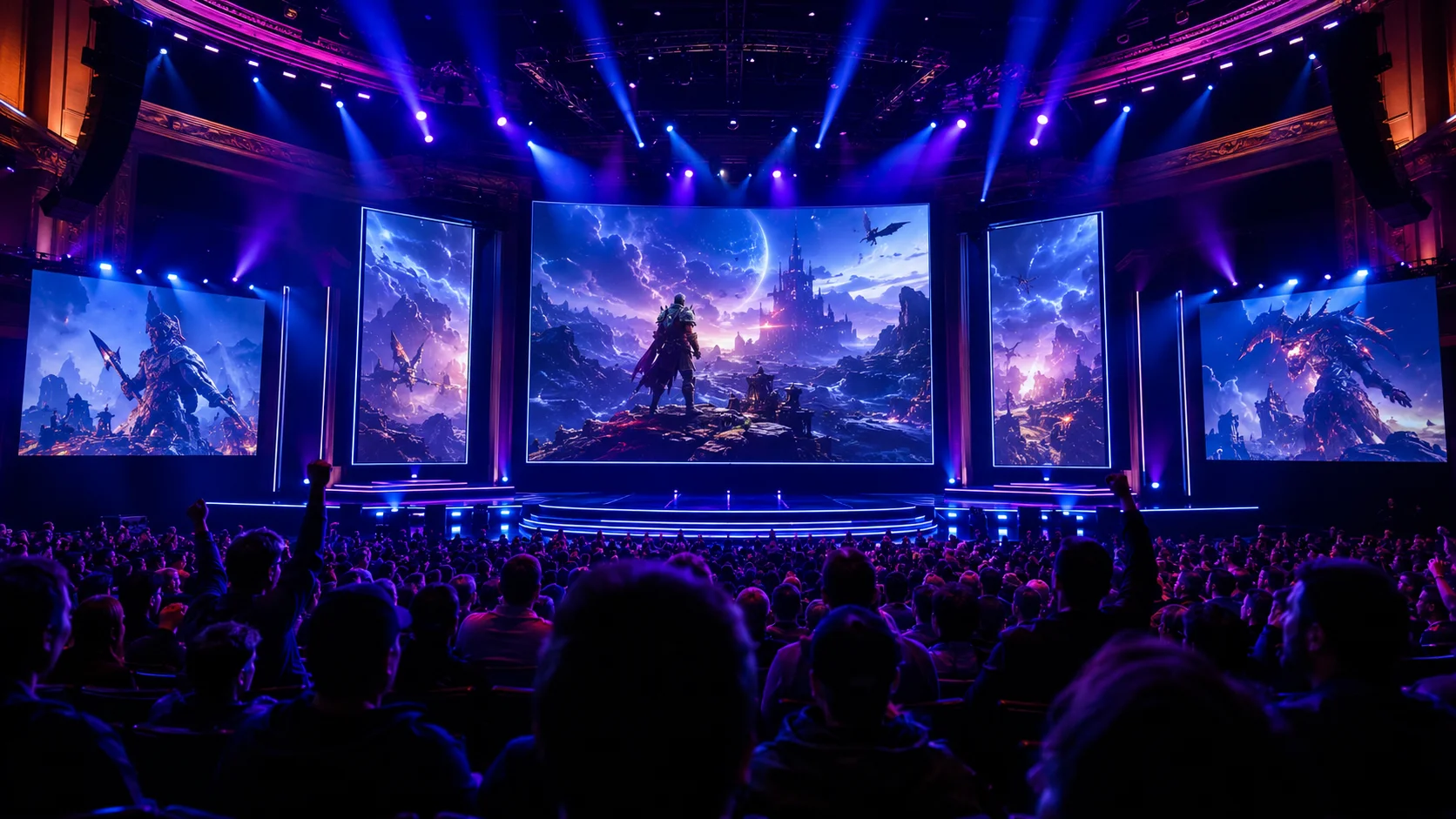
    Summer Game Fest 2026, hosted by Geoff Keighley on June 5 at the YouTube Theater in Los Angeles, ran for approximately three hours and produced six announcements that will shape the games industry’s commercial calendar through the rest of the year. The expectations heading in were high — first-party software from Sony and Xbox, a GTA VI update, and at least one major surprise from a Japanese publisher — and the show delivered on three of those four counts.

    What the show confirmed, collectively, is a pattern that has been building since 2023: the gaming calendar’s centre of gravity has permanently shifted toward the June preview window as the primary commercial event, with September-November launches following rather than leading the hype cycle. The reveals here will drive Q3 pre-orders, Q4 launch windows, and the subscriber acquisition spikes that gaming’s platform operators have built their H2 revenue models around.

    GTA VI’s November Window: Confirmed, With One Condition

    Rockstar Games appeared during SGF 2026 with a new trailer and a formal November 7, 2026 release date for GTA VI on PlayStation 5 and Xbox Series X|S. The PC version was confirmed for Spring 2027 — a six-month console exclusivity window that mirrors Red Dead Redemption 2’s platform sequencing.

    The condition: Rockstar simultaneously disclosed that the game requires a 175 GB install on current-generation consoles, will not support external USB drives as the primary installation location, and requires the latest system software update that includes Rockstar’s proprietary anti-cheat integration at the OS level. The anti-cheat requirement immediately generated community pushback, but it is consistent with Take-Two‘s decade-long effort to protect GTA Online’s revenue from cheating that has historically cost the company hundreds of millions in lost microtransaction revenue per year.

    The GTA VI November release date and the $70 standard / $100 Deluxe pre-order pricing structure were previously confirmed, but the SGF appearance serves as the signal to retailers that the commercial launch infrastructure should activate. Pre-order counts reported by major retailers jumped within hours of the show — industry analysts are tracking the GTA VI pre-order velocity against the Red Dead Redemption 2 and GTA V comparable windows to forecast launch revenue.

    Sony’s Bend Studio Open World

    Sony’s first-party contribution — a new IP from Bend Studio, the developer of Days Gone — was the genuine surprise of the show. The reveal trailer showed a Pacific Northwest open world with survival mechanics, structured around a winter setting that the trailer suggested would have dynamic weather affecting gameplay systems rather than serving as a visual backdrop. No gameplay footage, no release window, no title. Pure concept capture.

    The strategic logic of this reveal: Bend Studio has been in development on this project for approximately five years with minimal public communication. A concept reveal at SGF 2026, without release date pressure, builds community interest and tests audience reception before Sony commits to a marketing spend. If the trailer’s reception (15 million views within 24 hours of the show, per publicly available YouTube data) is sustained through the development period, Sony will escalate the marketing investment. If sentiment turns negative or the gameplay does not match the trailer’s promise, the project can be quietly delayed without having overcommitted a launch window.

    Xbox Game Pass and the Activision Integration Play

    Microsoft’s showing at SGF 2026 was structured almost entirely around Game Pass value rather than individual game reveals. The announcement that all Activision Blizzard King titles — Call of Duty, World of Warcraft, Overwatch 2, and the full Blizzard catalogue — are available in Game Pass Ultimate effective June 5 represents the fulfilment of the acquisition promise that regulators delayed for two years.

    The commercial implication is significant for Game Pass subscriber economics: Microsoft’s internal modelling suggested the Activision catalogue addition would drive a 15-20% subscriber acquisition rate improvement in the weeks following integration. Call of Duty alone has historically driven console and subscription acquisition events comparable to first-party exclusives — the franchise’s inclusion in the subscription is the most compelling single value proposition change to Game Pass since its inception.

    For Xbox hardware, the calculation is unchanged by the Game Pass news. Nintendo’s hardware model depends on exclusive first-party IP driving device sales; Microsoft’s model increasingly depends on subscription value driving Game Pass subscriptions independent of which hardware platform the subscriber uses. The SGF showing confirmed that Microsoft is not competing for console hardware sales — it is competing for monthly recurring subscription revenue on every platform including PlayStation, PC, and mobile.

    Capcom’s Monster Hunter Wilds DLC Expansion

    Capcom’s presentation of Monster Hunter Wilds’ first major expansion — announced for August 2026 — demonstrated the commercial model that has made Capcom one of the most consistently profitable game publishers in the industry. Monster Hunter Wilds launched in February 2026 as the franchise’s biggest launch ever (14.7 million units sold in the first month) and immediately established a live service community that Capcom is now monetising through the expansion cycle.

    The expansion pricing ($40 standard / $60 deluxe) follows Capcom’s established Monster Hunter World + Iceborne template: a substantial content addition that justifies premium pricing while also serving as a re-acquisition event for players who dropped off after the base game. The Iceborne expansion for Monster Hunter World sold 8.9 million units, representing 44% of the base game’s 20 million lifetime sales at the time of Iceborne’s launch. Analysts covering Capcom are projecting comparable ratios for Wilds’ first expansion, which would make it a $350-400 million gross revenue event from the expansion alone.

    Indie Spotlight: Three Announces Worth Watching

    SGF’s indie segment produced three announcements that the industry press flagged as meaningful beyond their individual commercial scale: a new title from Supergiant Games (the developer of Hades and Hades II), a puzzle-narrative game from a three-person studio backed by Annapurna Interactive, and a tactical RPG from a Brazilian studio that had previously released only mobile games. None had pricing or release windows.

    The Supergiant announcement is commercially significant independent of its specific content. Hades II reached 300,000 concurrent Steam players in early access; any new Supergiant game operates with a pre-qualified audience that generates minimum commercial returns regardless of critical reception. The Annapurna-backed title extends the label’s track record of commercially successful narrative games (What Remains of Edith Finch, Outer Wilds) into a new studio relationship. The Brazilian studio’s console debut signals the continued geographic expansion of the publisher-backed indie market into regions where mobile development economics have historically trapped talented developers.

    What SGF 2026 Tells the Industry

    Summer Game Fest’s 2026 edition was the third consecutive year in which the June showcase generated more pre-order activation, press coverage, and community engagement than any individual publisher’s standalone event. The consolidated format — one venue, one host, sequential publisher presentations — is outperforming the distributed showcase format that defined E3’s final years.

    For publishers, the concentration of audience attention in a single window creates a specific strategic problem: how to maximise exposure when the audience’s attention is being sequentially distributed across hours of content. The answer that Sony, Microsoft, Capcom, and Rockstar demonstrated today is differentiation rather than volume — one reveal per publisher, executed with high production quality, targeting a specific emotional reaction, and designed for the clip-and-share format that drives the 24-hour post-show social media cycle.

    The gaming calendar for the rest of 2026 now has its primary anchor: November 7 for GTA VI. Everything else will position relative to that launch — either releasing far enough ahead to have its own commercial window (September-October) or far enough behind to capture the post-GTA return audience (early 2027). SGF 2026 did its structural job.

    What Summer Game Fest 2026 Said and What It Actually Meant

    WilliamZinsser’s test: strip away every adjective and superlative. Remove “groundbreaking,” “revolutionary,” “epic,” “jaw-dropping.” What remains is the raw inventory of what was shown, what was confirmed, and what was conspicuously left unshown. Apply that test to Summer Game Fest 2026 and the picture is clearer than the marketing language suggests.

    What was shown: GTA VI’s release window confirmation with extended gameplay footage, the most commercially significant announcement of the showcase by any measurable metric. Xbox’s Games Showcase produced confirmed release dates for three exclusive titles and Day One Game Pass confirmation for two of them. PlayStation State of Play showed extended footage for Ghost of Tsushima’s sequel and confirmed a September release window. Several third-party publishers announced ports, remasters, and sequels with specific dates.

    What was confirmed but not shown: Activision Blizzard titles quietly noted on the Game Pass roadmap without dedicated showcase time. Several indie titles from the summer of 2025 revealed final release dates via sidebar announcements rather than stage moments.

    What was conspicuously absent: any word on the Microsoft-exclusive franchise whose delay was announced in March. Any PlayStation-exclusive narrative RPG for 2026. Nintendo, absent as always from multiplatform events, produced no surprise presence. The absences are as informative as the announcements — they tell you where the studios are in their development cycles more accurately than PR statements do.

    The format problem Zinsser would identify: Summer Game Fest’s opening-night show is optimised for generating clip-sized moments rather than delivering information efficiently. A 90-minute broadcast with 40 minutes of gameplay footage interrupted by 50 minutes of host segments, live reactions, and sponsor integration delivers less information per viewer-hour than a straightforward press release would. The viewer who watched the entire show and the viewer who read a 400-word recap the following morning have essentially the same informational state. The show exists to generate the clip, not to communicate the content.

    The pre-show analysis correctly identified subscriber acquisition as the real metric the showcases are optimising for — Day One Game Pass confirmations and PlayStation Plus additions are the commercial outcomes the platforms are trying to generate, not box-sales or download counts. That framing holds in the recap. The ratio of announced Game Pass Day One titles to standalone retail titles in the Xbox showcase was approximately 3-to-1, consistent with the acquisition-loop strategy.

    Zinsser would say the best writing about Summer Game Fest happens the week after, when the specific numbers are available: how many preorders did each announced title generate, what happened to Xbox Game Pass trial activations in the 72 hours following the showcase, and which announced titles drove the most conversion from casual viewer to paying subscriber. The show is a marketing event. The numbers are the story.
  • Summer Game Fest 2026 Preview: Schedule and Expected Reveals

    Summer Game Fest 2026 Preview: Schedule and Expected Reveals

    Summer Game Fest 2026 preview — June 5 Dolby Theatre Xbox PlayStation showcase

    The Week That Defines the Rest of the Year

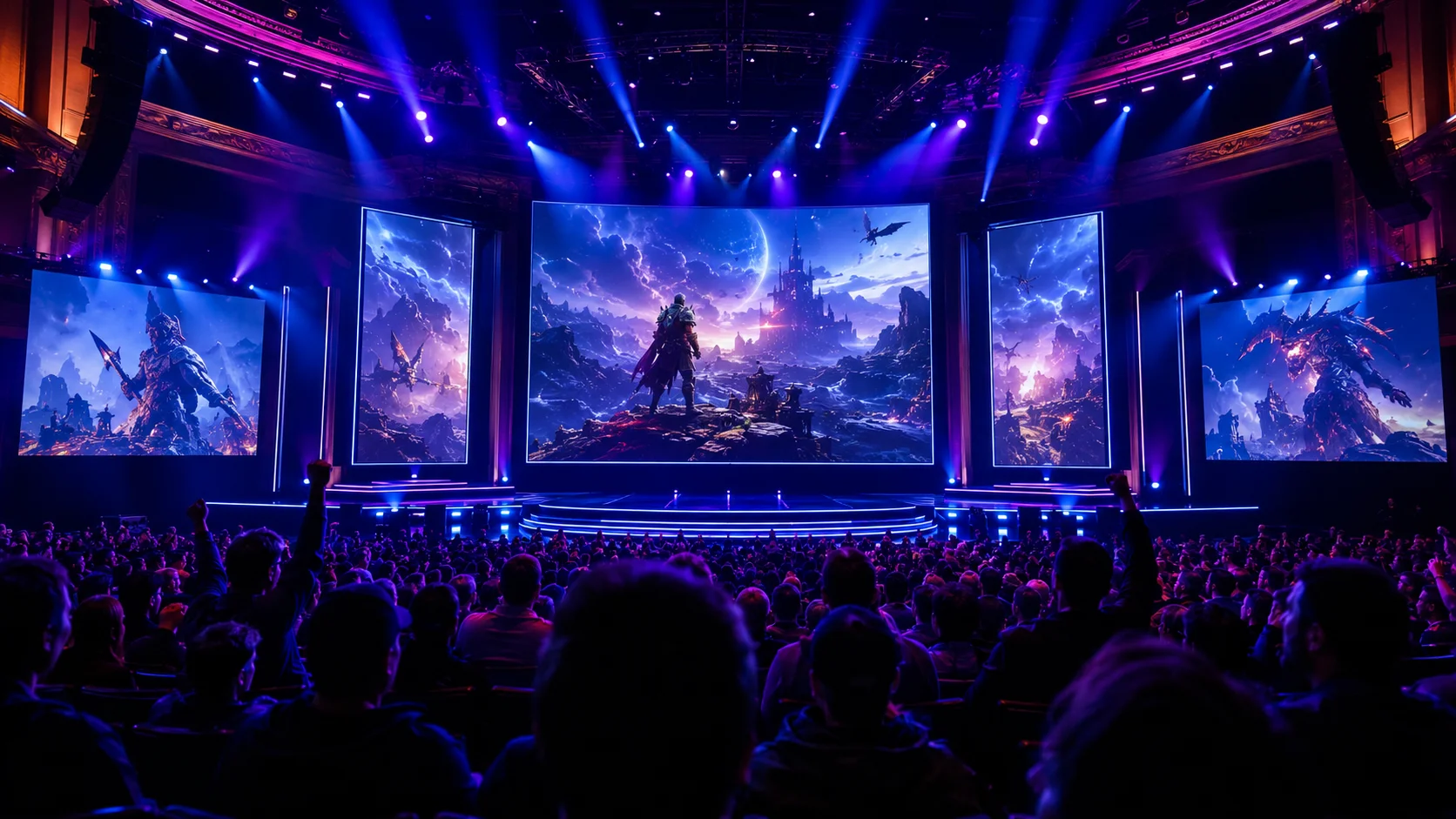
    The window between E3’s death and the present has been filled, imperfectly but effectively, by Summer Game Fest — the Geoff Keighley-produced showcase that has become the industry’s primary annual venue for major game reveals, release date announcements, and the concentrated attention of the gaming world in a single week. Summer Game Fest 2026 runs June 5-8, anchored by the main show at the Dolby Theatre in Los Angeles on June 5 at 2pm PT, with the Xbox Games Showcase following on June 7. It is the largest gaming announcement event of 2026, coming six days from now, and the pre-show anticipation is running higher than in recent years for reasons that go beyond the normal pre-SGF excitement cycle.

    The context matters. 2026 has already been a remarkable year for games: Forza Horizon 6, 007 First Light, and Mina the Hollower have each delivered at the highest level in their respective categories, and the year is only five months in. The games industry has momentum it hasn’t had since 2022, and Summer Game Fest 2026 is where that momentum either continues to accelerate with new announcements or hits a quieter patch while publishers prepare their fall lineups. Based on what is already confirmed and what is widely expected, the evidence points to acceleration.

    The Main SGF Show: June 5

    Summer Game Fest’s main broadcast on June 5 from the Dolby Theatre is the centerpiece — the two-hour Keighley-hosted live show where the largest announcements land and where the titles that will define the gaming conversation for the next six months get their introductions. Keighley has described the show as a “spectacular, cross-platform showcase of what’s next in video games,” which is his standard framing, but the breadth of “cross-platform” in 2026 encompasses something more interesting than it has in recent years: the Nintendo Switch 2 is eight months into its commercial life and its first-party pipeline is becoming clearer, the PlayStation 5 Pro is the active flagship PlayStation hardware, and the Xbox ecosystem spans console and PC in ways that make the traditional platform distinctions less meaningful than they were five years ago.

    The confirmed presences at SGF 2026 include every major publisher and a substantial independent developer contingent. Day of the Devs — the indie-focused showcase that runs after the main broadcast and has historically been one of the most reliably excellent parts of the week — returns on June 5. The Southeast Asian Games Showcase, Wholesome Direct, Story Rich Showcase, and Gayming Pride Parade are all scheduled within the June 5-8 window, collectively representing a breadth of gaming culture that the E3 format never attempted to include.

    PlayStation State of Play: Pre-Show

    A PlayStation State of Play is scheduled in the June 1 pre-show period before the main SGF event — the fifth consecutive year that Sony has chosen to run its own direct showcase in the week leading up to Summer Game Fest rather than relying on SGF placement for major PlayStation announcements. The State of Play format allows Sony to control the pacing and framing of its own reveals without competing for attention within the SGF main show, and the pre-week slot means PlayStation announcements land first and shape the conversation before Xbox’s showcase on June 7.

    Sony’s known slate for summer 2026 includes several games that have been announced but not dated — the PlayStation exclusives that typically anchor the summer State of Play with release window information. The presence of Ghost of Yotei’s multiplayer mode reveal in pre-SGF reporting suggests Sony has significant content waiting for the showcase week. Ghost of Yotei, the follow-up to Ghost of Tsushima, has been one of the most anticipated PlayStation exclusives of 2026; new gameplay and mode reveals ahead of a release date announcement would make the State of Play a significant event even without additional surprises.

    Xbox Games Showcase: June 7

    The Xbox Games Showcase on June 7 at 10am PT is the event that carries the most strategic weight of the week. Microsoft’s gaming strategy has been under more scrutiny than at any point in the Xbox brand’s history following the Activision Blizzard acquisition — the largest gaming acquisition ever, completed in 2023, promised a wave of content that would justify the $69 billion price tag and transform Xbox’s first-party lineup from a perennial weakness into a genuine strength. The June 7 showcase is where the post-acquisition content pipeline gets its 2026 showcase.

    The confirmed content in Xbox’s pipeline includes titles from Activision, Blizzard, and King studios that have been in development since or before the acquisition, as well as from the existing Xbox Game Studios stable. The Konami partnership content — a new Castlevania game and the Metal Gear Solid 4 port that was announced before SGF — is expected to receive more detail. Call of Duty’s 2026 entry is expected to be shown; it has been Xbox’s most reliably high-profile Activision asset since the acquisition and the showcase will likely be its major public reveal moment for the year.

    The Xbox Game Pass angle of the showcase will be as important as the individual title reveals. Microsoft’s strategy is built around Game Pass as the primary value proposition for the Xbox ecosystem, and every first-party title announced at the showcase is implicitly also a Game Pass announcement. The density of the Game Pass library is the argument Microsoft is making in the platform competition — not “our console is better” but “our subscription gives you more value.” The June 7 showcase is the most important annual moment for making that argument to the broadest possible audience.

    What’s Expected and What Would Surprise

    The gaming press’s pre-SGF expectations for 2026 center on a few specific categories. Grand Theft Auto 6 — the most anticipated game release in the industry’s history, with Rockstar maintaining near-total information silence since the initial trailer in 2023 — is consistently cited as the missing announcement that would make SGF 2026 historic. Rockstar’s communication strategy around GTA 6 has been deliberately minimalist, and there is no confirmed Rockstar presence at SGF. The community expectation that GTA 6 will somehow appear despite the absence of evidence for its appearance is an annual ritual that SGF 2026 will almost certainly not disrupt. GTA 6 will show when Rockstar decides GTA 6 will show.

    More realistic expectations include a Castlevania reveal with gameplay depth, further information on Marvel’s Wolverine from Insomniac Games, new Nintendo Switch 2 exclusive content, and potentially a surprise announcement in the indie space comparable to the reveals that have historically made SGF’s Day of the Devs the most talked-about part of the week. The surprise reveal — the game nobody knew was coming that generates the strongest reaction — is SGF’s most valuable cultural contribution, and it’s by definition not predictable from pre-show reporting.

    Why SGF Matters More in 2026

    Summer Game Fest matters more this year than in most recent editions for a reason that is both obvious and worth stating: the games industry needs the announcements. The critical successes of the first half of 2026 — Forza Horizon 6, 007 First Light, Mina the Hollower — have demonstrated that the quality is there. What the industry needs in the second half, to sustain the momentum and drive the hardware and subscription growth that platform holders are counting on, is a clear pipeline of upcoming releases that players can anticipate. SGF is where that pipeline becomes visible.

    The post-E3 anxiety that the games industry felt for several years after E3’s collapse — the sense that there was no central event where the full shape of the year’s coming releases became clear — has been substantially addressed by Summer Game Fest’s maturation into its anchor role. SGF 2026 won’t replace everything E3 represented; the multi-day physical trade show with manufacturer press conferences and extensive playable demos created an atmosphere that SGF’s primarily broadcast format doesn’t fully replicate. But as the venue where the gaming world comes together to see what’s coming, SGF has earned its place. Six days from now, we’ll know what the second half of 2026 looks like.

    What Xbox and PlayStation Are Really Selling at Summer Game Fest

    AndrewChen frames platforms through their growth loops. At Summer Game Fest — Xbox’s Games Showcase, PlayStation State of Play, the third-party announcements — the games on stage are acquisition hooks for subscription infrastructure. Game Pass’s model turns individual title announcements into subscriber cohort drivers. A Day One Game Pass title at a June showcase doesn’t generate box sales. It generates trial activations in July and August, the months when conversion data gets priced into the subscription economics.

    The economic logic is simpler than it appears. Every major gaming platform has the same retention problem: subscribers who install a library game, play for two weeks, and then run out of reasons to keep paying. The cure is either catalogue depth — enough games that the next thing is always waiting — or slate timing: new releases arriving frequently enough that the next reason to stay comes before the current one fades. Summer Game Fest addresses the slate-timing problem for both Xbox and PlayStation by concentrating announcement cycles into a single window that produces a predictable activation spike in the months that follow.

    What makes 2026’s showcase cycle different from prior years is the competitive structure of the announcement space itself. Three years ago, Nintendo Direct was the only reliably independent major showcase. Now the calendar includes Xbox Games Showcase, PlayStation State of Play, the Ubisoft Forward, the Capcom showcase, and Summer Game Fest’s own evening show — each calibrated to a specific subscriber or buyer cohort. AndrewChen’s term for this dynamic is audience segmentation by engagement intensity. Xbox pitches to the Game Pass subscriber who will play broadly. PlayStation pitches to the buyer who will pay $70 for a specific experience. Summer Game Fest pitches to both, but its opening-night format leans toward the breadth-over-depth consumer who wants to know what’s coming to the service, not just what’s available for purchase.

    The attach rate economics are already visible elsewhere in the market. Nintendo Switch 2’s first-year attach rate of 7.4 games per console shows what happens when a hardware launch pairs with a title slate that creates a purchase reason every quarter. Xbox and PlayStation can’t replicate the hardware-attached economics directly, but they can replicate the cadence — and the June showcase window is the mechanism through which they try.

    The specific tells from this year’s showcase: how many announced titles had Day One Game Pass dates versus standalone launch dates. That ratio is the clearest single signal of how aggressively each platform is using the showcase as a subscriber acquisition event versus a revenue-per-unit event. Neither Xbox nor PlayStation will report that ratio directly, but the analyst community backfills it within 72 hours of the showcase’s end. Q3 subscriber growth data will confirm whether the June window moved the needle. It usually does — the question is by how much, and whether the cost of those cohort activations is justified by the retention data three months later. That calculation, run quietly inside Microsoft and Sony, is what determines next year’s showcase strategy.

  • 007 First Light Reviews Called It the Best Bond Since GoldenEye

    007 First Light Reviews Called It the Best Bond Since GoldenEye

    The Embargo Lifted. The Game Won.

    007 First Light review embargoes lifted today, two days ahead of Wednesday’s full public release. The verdict is unambiguous. IGN: “the best Bond has been since GoldenEye.” GameSpot: “a phenomenal IO Interactive game that could end up being one of the best games of the year, and also the best James Bond game ever created.” Newsweek: 10 out of 10. The game that Newsweek called “the James Bond game we’ve been waiting for” is also being described as a genuine game of the year candidate — not a licensed game that comfortably exceeds lowered expectations, but a product that competes with the year’s best releases on their own terms.

    The GoldenEye comparison will set off every debate it’s designed to set off, and it’s worth being precise about what it means. GoldenEye 007 on the Nintendo 64 in 1997 is not primarily celebrated as a James Bond game — it’s celebrated as one of the most important first-person shooters in gaming history, the game that proved console FPS was viable and defined how multiplayer shooters felt for a decade. The “best Bond since GoldenEye” framing from IGN is saying that 007 First Light is the first Bond game in 29 years to deserve to be evaluated against gaming’s best rather than against the limited field of licensed action games. That’s a specific and significant claim.

    What IO Interactive Built

    The review consensus is forming around several consistent points. The sandbox mission design — where the player has multiple approaches available and the Hitman DNA is most visible — is being called the game’s highest point. The locations are being described as varied and well-realized, with a globetrotting structure that earns the Bond comparison on visual and tonal grounds rather than just IP grounds. Patrick Gibson’s performance is landing in the reviews as a specific achievement: not a Krasinski performance, not a Craig performance, but a young Bond who feels like a person becoming something rather than a franchise placeholder.

    The stealth mechanics are, predictably for an IO Interactive game, the most technically accomplished element. The social infiltration systems — the ability to bluff past security, manipulate NPCs through dialogue choices, use disguises and social engineering — are being praised as an extension of the Hitman model applied to Bond’s specific skill set. A spy who wins without firing a shot is a different kind of fantasy than an action hero who wins through overwhelming force, and the game’s design appears to have taken that distinction seriously.

    The combat receives more mixed coverage — competent, better than it needs to be for a stealth-first game, not as transcendent as the infiltration design. Several reviewers note that the game is best when you’re finding the angle and executing with patience, and least interesting when you’re fighting through a failed approach. That’s an honest description of every Hitman game IO Interactive has ever made. The combat has always been the cost of the times stealth fails; it’s functional and purposeful rather than the main attraction.

    The GoldenEye Standard

    The previous games in James Bond’s video game history that legitimately cleared a bar of cultural significance are short. GoldenEye 007 (1997) and Everything or Nothing (2004) are the most commonly cited. The Brosnan-era and Craig-era licensed games were playable but rarely exceptional. The gap between GoldenEye 007 and 007 First Light is twenty-nine years and the loss of an entire generation of Bond gaming. The franchise that had one of the most influential console games ever made spent nearly three decades producing licensed games that nobody remembers.

    IO Interactive’s approach — treat the IP as the premise for a complete game design vision rather than as the product itself — is the difference. GoldenEye worked because Rare built a shooter around the IP rather than putting Bond’s name on an existing template. 007 First Light works because IO Interactive built a Bond game around an original creative vision rather than making a Hitman reskin with a tuxedo. The comparison isn’t accidental. Both games succeed by the same method: genuine design intent applied to a powerful IP rather than IP value substituting for design intent.

    Early Access and What Wednesday Looks Like

    Early access opened today for pre-order customers. The full public release is Wednesday, May 27, on PlayStation 5, Xbox Series X/S, and PC. The Nintendo Switch 2 version comes later. A 10/10 from Newsweek and a GoldenEye comparison from IGN are marketing copy that will be on every ad unit between now and Wednesday.

    For players who have been waiting since IO Interactive announced the Bond license in 2021: four years of development, a David Arnold original score, Patrick Gibson finding what Bond is before he becomes Bond, and sandbox missions that let you be the smartest person in the room if you’ve done the work to understand the room. The Hitman studio made a Bond game. The reviews say it’s the one the franchise deserved. Wednesday, the argument becomes available to everyone.

    The Design Decision IO Interactive Made Before They Started Building

    Good design is mostly invisible. You notice it when it’s absent — when the interface fights you, when the controls resist what you’re trying to do, when the game punishes you for the reasonable choice rather than the precise choice the designer had in mind. You don’t notice it when it’s working, because working design looks like the thing being natural.

    The review coverage of 007 First Light keeps reaching for words like “intuitive” and “seamless” when describing the social infiltration systems — the way you move through secure spaces using dialogue, disguise, and observation rather than brute force. These words are design compliments. They mean the player isn’t thinking about the system while using it. They mean IO Interactive solved a hard design problem well enough that it disappeared.

    The hard design problem with social infiltration is one of information and feedback. The player needs to understand what options exist, what each option costs, what the risk of failure looks like, and how suspicious NPCs currently are — all simultaneously, without that information turning into a spreadsheet the player has to manage while also trying to feel like a spy. Hitman solved a version of this over six main entries and a decade of refinement. IO Interactive had to port those solutions to a different fictional register — Bond moves and talks differently than 47, Bond’s objectives are different, Bond’s relationship to violence is different — while keeping the cognitive load manageable.

    What you see in the review consensus is evidence that the porting worked. Reviewers aren’t struggling to describe the systems because the systems are confusing; they’re reaching for impressionistic language because the systems were clear enough to disappear. Patrick Gibson’s performance contributes to this — a character whose manner is persuasive makes social infiltration feel motivated rather than gamified. The design and the performance are solving the same problem from different angles.

    The stealth-versus-combat quality gap that reviewers note — better when patient, weaker when in a gunfight — is the design signature of every IO Interactive game. It’s a values statement about what kind of game this is. The player who approaches it as an action game will find it competent. The player who approaches it as a puzzle with a character at the centre will find it excellent. Knowing which kind of game you’re in is part of the design work, and the game communicates this clearly enough that reviewers noticed. Our pre-launch preview captured the studio’s ambitions before the embargo lifted. The reviews confirm they were met.

  • Coffee Talk Tokyo Launches Today: The Cozy Game Market Is Now Large Enough to Support Its Own Sequels and Nobody in AAA Is Paying Attention

    Coffee Talk Tokyo Launches Today: The Cozy Game Market Is Now Large Enough to Support Its Own Sequels and Nobody in AAA Is Paying Attention

    A Café in Tokyo, After Midnight, Serving Drinks to Yokai

    Coffee Talk Tokyo launches today on PlayStation 5, PC, Xbox Series X/S, Nintendo Switch 2, and Switch. The premise is the same as the original 2020 Coffee Talk and its 2023 sequel: you run a late-night café, you serve drinks, and the people who come in tell you their stories. You don’t solve their problems directly. You mix drinks that fit their mood, you listen, and you make choices in dialogue that shape where the conversations go. The setting moves from the original game’s rain-soaked Seattle to Tokyo, where the clientele now includes humans and yōkai — the supernatural entities of Japanese folklore — navigating their lives in a city that contains both.

    The series is Indonesian in origin — developed by Toge Productions, published by their internal label — and Coffee Talk Tokyo is the third game in the franchise. The creative decision to set this entry in Japan rather than Seattle or another Western city is itself a statement about who the series is for and where its audience is. The cozy game market in 2026 is global in a way that the original 2020 game’s success helped establish, and a series that expanded internationally by moving its setting to Japan is reflecting an audience that is equally comfortable in both locations.

    What the Cozy Game Market Actually Is Now

    The cozy game category didn’t have a name in 2015. It barely had one in 2018. Stardew Valley (2016) demonstrated the audience. Animal Crossing: New Horizons (2020) proved it was massive. A Plague Tale was not cozy — but the sustained success of narrative-light, atmosphere-heavy, mechanically gentle games across that period established a commercial category that publishers began explicitly designing for. The Coffee Talk series, the Unpacking series, Venba, Spiritfarer, A Short Hike — these games share an aesthetic sensibility (warm, deliberate, unhurried) and an audience profile (players who want to decompress rather than be challenged) that has proven commercially durable.

    The cozy game market is now large enough to support sequels, extended universes, and subgenres. Coffee Talk Tokyo is a third franchise entry. Stardew Valley’s continued sales are in the tens of millions across a decade. Cozy Grove launched a sequel. The market that was “niche but passionate” five years ago is “substantial and segmented” now — there are cozy farming games, cozy mystery games, cozy café games, cozy travel games, and the category boundaries are porous enough that publishers apply the label to games that are primarily cozy adjacent rather than genuinely cozy.

    The AAA industry has mostly watched this from a distance. There are exceptions — Disney Dreamlight Valley has the production budget of a large game and the cozy market positioning — but the structural logic of AAA development (high capital, large team, long cycle, high retail price) is misaligned with what makes cozy games work (intimate scope, low stakes, high replayability, tolerant audience). A $70 cozy game is competing against a $20 cozy game on the same platforms, and the $20 game built by thirty people is often more tonally consistent than the $70 game built by three hundred people trying to be cozy while also meeting a sales target that requires mass market appeal.

    The Yokai Decision and Why It Works

    Coffee Talk’s worldbuilding has always included non-human characters as a quiet statement about inclusivity and community. The original game’s Seattle had elves, orcs, mermaids, and werewolves as ordinary cafe regulars, discussing relationships, work, and identity with the same register as any human customer. The supernatural was never the point — it was the frame that let the game discuss real human experiences at a slight remove, the same remove that science fiction and fantasy have always provided.

    Yokai in Coffee Talk Tokyo serve the same function. Japanese folklore’s yokai tradition is rich and specific — the kitsune (fox spirit), the tengu (mountain entity), the tanuki (raccoon dog spirit), and dozens of others with defined personalities and cultural associations that Japanese players know intimately and international players are encountering fresh. Using yokai rather than generic fantasy creatures connects the supernatural worldbuilding to the Japanese setting in a way that makes the cultural specificity part of the narrative rather than just the art design.

    The internationalization challenge here is real. Toge Productions, based in Jakarta, is building a game set in Tokyo with supernatural characters drawn from Japanese folklore and writing those characters’ emotional lives in English (with Japanese, Indonesian, and other localizations). The risk is that the yokai characters feel like research rather than imagination — accurate to sources without being internally consistent as characters. The reviews and early access feedback will be the test of whether the cultural translation holds.

    The Drink-Mixing Mechanic as Narrative Engine

    Coffee Talk’s core mechanic is drink preparation. You receive ingredient combinations from a recipe book, you learn to read characters’ preferences, and you adjust what you serve based on what the conversation needs rather than what the customer explicitly requests. The mechanic is low pressure by design — there’s no fail state, no timer, no penalty for wrong choices. But the right drink at the right moment creates narrative branches that the wrong drink doesn’t unlock.

    This is a subtle design achievement that gets undervalued in coverage that focuses on the game’s visual aesthetic. The drink mechanic makes the player an active participant in the narrative rather than a passive reader of it. You’re not just choosing dialogue options — you’re curating an environment and a relationship through what you offer. The mechanic asks you to pay attention to what people need rather than what they say they need, which is a more interesting design problem than a dialogue tree.

    Coffee Talk Tokyo adds new Japanese-inspired drink types to the recipe book — matcha-based preparations, sake variants, seasonal cold drinks that reflect the Japanese café culture the setting is built around. The ingredient expansion gives the mechanic new combinations to learn while maintaining the series’ tonal continuity. The drink you make for a kitsune at midnight says something about how you’re reading that character’s emotional state. Whether the kitsune’s emotional state is rendered with enough specificity to reward that attention is the question the game has to answer.

    Multi-Platform Day One and the Cozy Audience’s Device Habits

    Coffee Talk Tokyo ships today on five platforms simultaneously, including both the Nintendo Switch 2 and the original Switch. That double Switch release is unusual — most Switch 2 titles are either ports of existing Switch games with enhancement patches or native Switch 2 games that are incompatible with the original hardware. Releasing simultaneously on both platforms signals that Toge Productions prioritized maximum reach over technical differentiation. The cozy game audience’s device habits support this: portable play and Switch have been central to the cozy category’s success, and abandoning the original Switch user base to require a $449 Switch 2 purchase would cut off a significant portion of the audience.

    The PlayStation 5 and Xbox Series X/S releases expand the series into the home console mainstream in a way that previous Coffee Talk entries were less aggressive about pursuing. Whether the game’s slow pacing and intimate scope convert players who primarily use those platforms for larger-scale games is a marketing question as much as a design question. The cozy category has demonstrated it has an audience on every platform. Coffee Talk Tokyo is testing whether it specifically has an audience on the platforms where its competition is loudest.

    The Industry That Isn’t Paying Attention, And Why It Should

    The cozy game market’s continued expansion in 2026 is happening against a backdrop of high-profile AAA struggles — studios closing, layoffs continuing, publishers reassessing what budget levels are sustainable for titles that need to sell five million copies to break even. The market structure that makes a $20 cozy game from a thirty-person Indonesian studio economically viable when a $200 million AAA game is struggling commercially is worth examining seriously.

    The cozy category’s economics are structurally different. Lower development cost means lower break-even. Lower break-even means the audience that constitutes success is smaller and more achievable. Smaller target audience means more consistent design choices rather than lowest-common-denominator broadening. More consistent design means stronger fan connection and word-of-mouth. The virtuous cycle that large-budget games struggle to enter is more accessible at cozy game scale.

    Coffee Talk Tokyo is a third entry in a franchise with a defined audience, a consistent design language, and a cultural expansion that adds something new without abandoning what worked. That’s a description of a sustainable franchise. In 2026, sustainable is the qualifier that the games industry most needs on its franchises, and most struggles to achieve. The late-night Tokyo café with the yokai regulars is doing it on a budget that a single AAA studio meeting couldn’t justify.

    It’s out today. The matcha is ready. The kitsune has stories. Tokyo is waiting.

    A Quiet Walk Through The Cozy-Game Market That Built Itself While Nobody Was Watching

    The cozy game category did not announce its arrival. There was no breakout title that defined the genre the way Minecraft defined sandbox or Rocket League defined arena. The category accumulated, mostly between 2018 and 2023, as a series of small projects from small studios that each individually looked too quiet to matter and that together turned into a measurable share of player attention. By the time the industry’s commercial press noticed the pattern, the category was already mature.

    The reason most coverage missed it is that the cozy game does not produce the marketing footprint commercial press is trained to track. There is no viral moment. There is no controversy. There is no e-sports component. There is a slow, steady accumulation of players who finish the game, recommend it to two or three people they know personally, and then quietly buy the next one. The metric that matters — the lifetime conversion rate from “tried” to “bought the next title from the same studio” — does not show up in the marketing dashboards that the industry trade press reads.

    Coffee Talk Tokyo is the kind of release where this dynamic is fully visible. The studio knows its audience. The audience knows the studio. The marketing budget is roughly zero relative to the genre conventions of indie launches, and the early sales data will look better than that budget would predict because the prior titles did the work the marketing was supposed to do.

    The pricing strategy that makes this work is closer to what Warren Spector’s team has done with Thick As Thieves at $4.99 than to AAA launch math. Low entry price, high lifetime value, conversion through trust rather than through marketing reach. It is a quieter way to run a game studio. The studios doing it well are building something the rest of the industry does not yet have a name for, but the financials are starting to make the absence of a name look like a marketing problem of the industry rather than a feature of the category.

  • LEGO Batman: Legacy of the Dark Knight Reviews Are In: TT Games’ Arkham-Influenced Open World Might Be the Best LEGO Game Ever Made

    LEGO Batman: Legacy of the Dark Knight Reviews Are In: TT Games’ Arkham-Influenced Open World Might Be the Best LEGO Game Ever Made

    An 84 on Metacritic, 91% Positive Reviews, and a Screen Rant Perfect Score

    LEGO Batman: Legacy of the Dark Knight released today on PlayStation 5, Xbox Series X/S, and PC, and the review embargo lifted with it. The critical consensus is unusual for a LEGO game in 2026: not “solid family game with expected limitations” but something closer to genuine enthusiasm about a product that took the IP seriously. Metacritic sits at 84 across 54 critic reviews, with 91% classified as positive. Screen Rant gave it a 10. Game Informer gave it an 8.8. IGN gave it an 8. The language in the reviews — “might not just be one of the best LEGO games ever made, but potentially the very best” — is not the language critics typically reach for when covering a licensed family game.

    LEGO Batman: Legacy of the Dark Knight Reviews Are In: TT Games' Arkham-Influenced Open World Might Be the Best LEGO Game Ever Made

    The question worth asking, given that score and that language, is what TT Games did differently. LEGO games have a ceiling in criticism that usually reflects genuine constraints: lightweight combat, limited challenge, content depth calibrated for children. An 84 from a LEGO title means something changed. The answer, based on what reviews are describing, is that TT Games built an open-world Gotham on Unreal Engine 5 and took direct design inspiration from Rocksteady’s Arkham series — the most critically acclaimed Batman games in history — and made that foundation accessible rather than diluting it into something else.

    What Arkham Did That Changed Batman Games

    Rocksteady’s Batman: Arkham Asylum in 2009 redefined what a superhero game could be. The freeflow combat system — where Batman counters attacks rhythmically, chains takedowns, builds momentum — gave players the physical sensation of being Batman in a way that no prior game had achieved. Arkham City in 2011 added an open world. Arkham Knight in 2015 added the Batmobile. The trilogy built a combat language so effective that it’s still being referenced and imitated more than a decade later. Spider-Man (2018) on PlayStation uses a variation of the Arkham freeflow system. So does the Batman skin in Fortnite’s combat interactions. The fingerprints of what Rocksteady built are everywhere in action games.

    The thing that prevented Arkham from being accessible to younger players was tone. The games are dark, violent by superhero standards, and thematically complex in ways that require some maturity to process. The content that makes them great for adult Batman fans is the same content that makes them inappropriate for the audience LEGO games traditionally serve.

    What TT Games has apparently figured out — and what the 91% positive review rate suggests they’ve executed effectively — is how to take the core design language of Arkham (the combat rhythm, the open-world traversal, the sense of inhabiting a complete version of Gotham) and recalibrate it for the LEGO register. The bricks are everywhere. The humor is present. The violence is absent. The Batman who swings and glides and counters through the open world feels, mechanically, like a version of the Batman who moved through Arkham. Accessible, but with real design intent behind it.

    The Open World and What It Contains

    Gotham as a LEGO environment is a different challenge than any city TT Games has built before. Arkham’s Gotham was a carefully composed environment where every rooftop angle and every alleyway vista was designed to make Batman feel heroic. A LEGO Gotham has to serve that same function while also being the kind of space where crimes to stop, puzzles to solve, and collectibles to find are distributed in a way that rewards exploration across every age group.

    The reviews describe Gotham as genuinely full — not a large empty space with periodic activities, but a city where Wayne Tower, Arkham Asylum, and Ace Chemicals are landmark anchors in a world that has things happening between them. Game Informer’s praise for the open world specifically calls it “engaging” rather than “content-filled,” a distinction that matters. An engaging open world pulls you through it because discovering things is satisfying. A content-filled open world gives you checklists. The difference in the player experience is significant.

    The Batman cinema history integration is the other structural decision the reviews are responding to. Legacy of the Dark Knight explicitly draws from every major screen version of Batman — the 1989 Burton film, the Nolan trilogy, the Schumacher era (played as affectionately as LEGO plays everything), Batman: The Animated Series, the Snyder films. The game is a love letter to Batman’s complete screen presence, reconstructed in bricks. That’s a creative ambition that goes beyond delivering a functional LEGO game and into something that requires genuine understanding of why each of those Batman iterations matters to the people who grew up with them.

    Unreal Engine 5 and the Visual Shift

    TT Games has used a proprietary engine for LEGO games for decades. The switch to Unreal Engine 5 for Legacy of the Dark Knight is a significant development decision with implications beyond this title. Unreal Engine 5’s Lumen global illumination and Nanite geometry rendering produce visual fidelity that TT’s proprietary engine couldn’t match. LEGO plastic has a specific quality — the sheen, the mold lines, the way light catches a brick’s surface — that benefits from photorealistic rendering even in a comedic context. The bricks look like bricks in a way they haven’t in previous games.

    The Gotham environment under Unreal Engine 5 lighting looks different from any previous LEGO environment. Rain-soaked streets reflect the neon of the city. The gothic architecture of Wayne Tower reads with the weight that a lower-fidelity engine couldn’t communicate. The transition to UE5 isn’t about making the LEGO aesthetic more realistic — it’s about making the LEGO aesthetic more itself, rendered at a quality that respects the design choices rather than flattening them.

    The practical consequence for TT Games going forward is significant. Building on Unreal Engine 5 means access to a development infrastructure that supports faster iteration, better tools, and a larger pool of developers who know the engine. The proprietary engine was an asset when it was the best tool available for what TT Games builds. In 2026, the gap between the proprietary tool and the industry standard has closed enough that the switch makes development sense beyond this title.

    The Family Game That Isn’t Just a Family Game

    The tension in writing about LEGO games for a general gaming audience is that the audience’s prior is strong: they know what a LEGO game is, what it’s for, and what experience it delivers. That prior is based on a decade of LEGO games that delivered competently on a consistent formula. The formula worked well enough commercially that TT Games never had a strong incentive to deviate from it.

    Legacy of the Dark Knight is the first LEGO game in recent memory where the reviews are having to work to explain why a 30-year-old gamer who grew up with Batman should care. The Arkham influence is the primary argument — if you loved the Arkham games, this is a version of that experience filtered through LEGO’s register rather than Batman’s darkness, and the underlying design is strong enough to be satisfying rather than merely competent.

    The “best LEGO game ever made” language from Screen Rant’s 10/10 is strong. But the context matters: the best LEGO game ever made was always going to be the one that took the most design ambition into the genre constraints and came out the other side with something that worked for both audiences simultaneously. Arkham’s design DNA plus LEGO’s IP access plus Unreal Engine 5’s visual fidelity is a combination that, according to the reviewers who’ve played the finished product, delivers on exactly that ambition.

    The Metacritic Ceiling and What an 84 Proves

    The highest-rated LEGO game on Metacritic before Legacy of the Dark Knight was LEGO Star Wars: The Skywalker Saga, which scored 79 on PS5. An 84 is a genuine break from the historical ceiling — it’s the score of a game that critics are evaluating on its actual merits rather than contextualizing within the genre’s established expectations.

    The 9% of reviews that aren’t positive — the “mixed” classification — are mostly coming from reviewers who wanted the open world larger or the challenge higher. Those are preferences that reflect what the reviewer wanted, not failures of the game’s design for its actual target audience. The negative reviews aren’t saying the game is broken or dishonest about what it is. They’re saying they wanted a more demanding experience than a LEGO game is designed to be.

    That’s actually a good problem for TT Games to have. A LEGO game that receives negative reviews from critics who wanted it to be harder and more complex is a LEGO game that pushed close enough to the adult gaming register that some reviewers reached for that register’s standards. The 91% positive consensus confirms the design succeeded at what it intended. The outlier reviews confirm it pushed far enough that the outliers wished it had gone further.

    Available Now

    LEGO Batman: Legacy of the Dark Knight is on PlayStation 5, Xbox Series X/S, and PC today. The Nintendo Switch 2 version is coming at a later date. The Deluxe Edition, which includes additional content, is available as an early access upgrade.

    If you have a younger player in your household who’s too young for the Arkham games, this is the Batman game they can play now that they’ll look back on as the one that introduced them to why the Dark Knight’s video game history matters. If you played the Arkham games and want to know whether TT Games’ take on that design language holds up — according to the critics who’ve played it — it does.

    An 84. 91% positive. The best LEGO game ever, according to the people who spend their time measuring such things. The bricks are out today.

    Why Players Forgive The Same LEGO Game They Critiqued Last Time

    The LEGO Batman: Legacy of the Dark Knight reviews are revealing in a way the Metacritic score does not capture. The game is, by most reviewers’ accounts, the same game TT Games has been making for fifteen years with incremental improvements. The same reviewers who would punish a non-LEGO franchise for that level of iteration are mostly forgiving it here, and the reason is psychological rather than design-based.

    Players carry a different evaluation model for franchises they grew up with than for franchises they discover as adults. The LEGO games occupy a specific psychological slot — comfort entertainment, often played co-operatively with younger family members, attached to memories of the prior entries. The reviewer who plays the new LEGO Batman is not evaluating it against the best game released this year. They are evaluating it against the LEGO Batman they played a decade ago, with someone they no longer get to play with, and the evaluation is partly an exercise in checking whether the comfort still works.

    This is unusual in commercial entertainment evaluation. Most categories punish iteration that does not advance the form. The LEGO games have, for fifteen years, been the exception — they are not graded against the genre, they are graded against the version of themselves the player remembers. The grade is consistently more generous than the design choices would otherwise earn, and the studio has, sensibly, kept making the game its audience keeps grading generously.

    The same dynamic shows up in Warhammer’s franchise gravity — players forgive Warhammer titles that would not survive critical evaluation in a non-Warhammer skin, because the franchise carries accumulated meaning that affects the evaluation. Two studios, two different commercial categories, same psychological pattern. Worth naming because the strategy is replicable: build the franchise meaning slowly, then let it carry the iteration risk for a decade or more.

  • Thick As Thieves Releases Today: Warren Spector’s $4.99 Stealth Heist Is the Most Honest Game Launch of 2026

    Thick As Thieves Releases Today: Warren Spector’s $4.99 Stealth Heist Is the Most Honest Game Launch of 2026

    A Legend, a $4.99 Price Tag, and a Bet That Immersive Sim Fans Will Show Up

    Warren Spector’s name carries weight that very few designers can claim. He made Deus Ex in 2000 — still referenced as the defining argument for player agency in games. He made System Shock before that. He built the creative foundation that an entire generation of designers still builds on. When Spector’s studio puts a game on Steam, people pay attention. When that game costs $4.99, people start asking questions.

    Thick As Thieves Releases Today: Warren Spector's $4.99 Stealth Heist Is the Most Honest Game Launch of 2026

    Thick As Thieves releases today, May 20, on Steam. It’s a stealth heist game set in a 1910s fictional metropolis, developed by OtherSide Entertainment — the studio Spector runs alongside Paul Neurath, who co-created Ultima Underworld and helped establish the immersive sim as a genre. The pedigree is as good as it gets. The price is as low as it gets. That combination is either the most honest thing a studio has done in years, or a signal that something didn’t come together the way they hoped. Either way, it lands today and the market will have an answer by the weekend.

    What the Game Actually Is

    Thick As Thieves puts you in the role of a thief navigating a city built for systemic play. The setting is 1910s — gas lamps, cobblestones, a world on the edge of industrial modernity — and the tone is closer to Thief than to any contemporaries. Sixteen contracts spread across two replayable maps. Six pieces of gear that shape how you approach each job. The core loop is about reading the environment, finding the angle, and executing without leaving evidence. Or at least, without leaving enough evidence that anyone comes looking for you specifically.

    The game supports both solo play and co-op. How many players in co-op, OtherSide hasn’t made entirely clear in pre-release materials, but the architecture is built for it. The two-map structure — replayable, with contracts that demand different routes and tools each time — is designed to sustain that co-op play. The idea is that a map you know doesn’t make you predictable; it makes you dangerous.

    The 1910s setting is doing real work here. It’s pre-surveillance, which means the systems have to be human — guards, patrol routes, noise propagation, line of sight. There’s no hacking a camera network. You’re working against attention, memory, and physical space. For a genre that defined itself through exactly these mechanics, the period choice is coherent. The immersive sim has always been at its strongest when the simulation is grounded in physical reality rather than digital abstraction.

    The Pivot That Explains the Price

    The road to today’s launch was not entirely straight. Thick As Thieves was originally conceived and developed as a PvPvE experience — a multiplayer structure where thieves competed and cooperated simultaneously, working against AI systems and each other in the same environment. It’s a compelling design concept on paper. Several studios have tried to make that structure work at commercial scale and found the player acquisition problem insurmountable. The genre demands coordination, timing, and a player base dense enough that matchmaking doesn’t make you wait. For a studio the size of OtherSide, that’s a hard ask.

    The pivot to single-player and co-op is the honest answer to a hard problem. It strips the live service ambition and returns the game to what OtherSide actually builds well: a designed space where the simulation does the work. Whether the original multiplayer vision left any structural debt in the final product — systems designed for PvPvE that feel slightly wrong when you’re playing solo — is what reviewers and players will be assessing today.

    The $4.99 price reflects the scope after that pivot. Two maps, sixteen contracts, six gear pieces — that’s not a $60 game and OtherSide isn’t pretending it is. There’s something genuinely refreshing about that. In a market that spent the last two years arguing about whether $70 was too much for games that shipped unfinished, a team with actual pedigree releasing something scoped and priced to match is at least playing honestly.

    The Immersive Sim’s Commercial Problem

    Here’s the context that makes Thick As Thieves matter beyond its own release: the immersive sim has never found commercial scale that matches its critical reputation. Deus Ex sold well enough for sequels. The Dishonored series had real commercial success. Prey (2017) won critical consensus and underperformed at retail badly enough that Arkane Austin moved toward live service projects. Deathloop was Arkane Lyon’s attempt to make the formula work in a multiplayer context; it sold, but the studio is gone now.

    The pattern is consistent: the games are beloved by a core audience that evangelizes loudly but doesn’t translate to mainstream numbers. The genre asks things of players that casual audiences resist — reading the environment before acting, accepting failure as information, replaying to find better routes rather than pushing through. Those are virtues if you’re in the audience. They’re friction if you’re not.

    Spector has made this argument for thirty years. His games are built on the conviction that players will rise to systems if the systems are built well enough. The evidence mostly supports him within the genre. The commercial question — whether the genre grows, or whether it serves the same loyal core indefinitely — remains open. A $4.99 entry point is one way to expand that core. Low barrier, genuine experience, earn the audience’s trust at low financial risk to them.

    OtherSide’s Track Record Since Deus Ex

    It’s worth being direct about what OtherSide has shipped in the years since its founding. The studio announced System Shock 3 in 2015, worked on it for years, lost funding from Starbreeze, and eventually transferred the IP to Nightdive Studios — which then developed and shipped System Shock (the remake) to strong reviews in 2023. OtherSide’s name was not on the finished product. That’s a bruising development history to have on your record.

    Thick As Thieves is the studio’s first commercially shipped standalone game. That matters. Reputation and output are different things, and the gap between them is real. Spector’s credibility is earned and legitimate, but it applies to games made under different conditions at different studios at different points in time. The question Thick As Thieves answers is whether OtherSide as a functioning development team can ship something that holds up. Today is when that question gets answered.

    The console versions — PS5 and Xbox Series X — are coming. No announced date for those yet. The Steam release today is the opening position.

    What to Watch For

    The indicators worth tracking over the next week: Steam review velocity and score stability (immersive sims tend to polarize on first contact and settle), whether the co-op implementation adds or subtracts from the stealth mechanics (co-op in stealth games often creates coordination overhead that kills the tension), and whether the two-map structure holds replayability or exhausts itself quickly.

    The contract design is the fulcrum. If each of the sixteen contracts genuinely demands different routes and tools, the map count doesn’t matter — you’re effectively playing different games in the same space. If the contracts feel like variations of the same route, you’ll exhaust the content before the game earns its asking price. At $4.99 the math is easier than at $60, but the experience is the same regardless of what you paid.

    OtherSide has a distribution deal that will eventually bring this to consoles. The Steam release today is also the studio’s proof of life — evidence that the pivot worked, the product shipped, and the game is real. After years of development history that includes a project that didn’t make it to release under OtherSide’s name, that proof matters as much as the reviews.

    The Honest Version of a Comeback

    The framing that makes Thick As Thieves interesting isn’t “Deus Ex designer returns to glory.” That sets a standard the game probably wasn’t built to meet and wasn’t priced to claim. The framing that’s accurate is something quieter: a studio with a difficult development history, working in a genre it genuinely understands, releasing a scoped product at an honest price, on the day it said it would.

    In 2026, that last part isn’t trivial. The year opened with multiple high-profile delays, a couple of releases that shipped clearly unfinished, and a broader industry argument about what games cost and why. Into that context, $4.99 for a playable, shipped immersive sim from people who know the genre is its own statement.

    Whether Thick As Thieves is great, good, or merely competent, we’ll know by the weekend. The Steam reviews will be unambiguous. What we know now, on release day, is that it’s there — finished, priced, and ready to be played. For a studio with OtherSide’s recent history, that is itself the first thing it needed to prove.

    It’s on Steam today. $4.99. The 1910s are waiting.

    The Pricing Move That Reveals The Genre’s Real Problem

    A $4.99 launch price on an immersive sim from a Warren Spector studio is more than a value play. It is an acknowledgement of a structural problem in the genre that the industry rarely names: the immersive sim has never solved its first-hour conversion problem at AAA prices. Players who would eventually love the genre often bounce in the first thirty minutes because the systemic depth does not communicate itself quickly enough to justify the upfront cost.

    The pricing move addresses this directly. At $4.99, the first-hour friction tolerance increases by an order of magnitude. A player who would have refunded a $50 immersive sim after twenty confused minutes will keep playing at $4.99, give the systems room to reveal themselves, and become a player who recommends the game to others. The economics work backward: low entry price → high conversion at the first-hour cliff → strong word-of-mouth → expansion-pack and sequel pricing power once the audience is invested.

    This is the growth-loop OtherSide needed for the immersive sim to have a future. AAA pricing kept killing the loop at the moment a new player needed to commit. The $4.99 bet is whether removing the price barrier is enough to let the genre’s actual strengths reach the audience that was always going to like them. The first 90 days will reveal whether the bet works.

  • GTA 6 Has a Final Release Date: November 19, 2026. Here Is What Two Delays Actually Tell You About the Game.

    Grand Theft Auto 6 will release on November 19, 2026. Rockstar Games confirmed the date after the second delay in twelve months — the game was originally due in 2025, slipped to May 26, 2026, and is now arriving in November, on PlayStation 5 and Xbox Series X|S. Pre-orders are expected to open as early as tomorrow.

    The delay is the dominant narrative for most gaming coverage. It should not be. The more important signal from Rockstar’s announcement is what has not changed: the scope, the setting, the dual-protagonist structure, and the fact that the game is being released at all on a timeline that most studios would have abandoned for a cheaper, smaller product. GTA 6 is, by every available signal, the largest single entertainment release in history — and Rockstar is delaying it because it is not yet good enough, not because it is running out of money or ambition.

    That distinction matters for anyone trying to understand what November 19 actually represents.

    The Delay History and What It Means

    GTA 6 was announced with a 2025 target. Rockstar moved it to May 26, 2026, in May 2025 — a 12-month slip. Then in late 2025, Rockstar pushed it again to November 19, 2026. Two delays, totalling roughly two years beyond the original window.

    Two delays at this scale carry different interpretations depending on what studio you are talking about. For most publishers, consecutive delays are a bad sign — resource constraints, management failure, scope creep that cannot be contained. For Rockstar, the pattern looks different. Red Dead Redemption 2 slipped repeatedly before its 2018 release and emerged as one of the most technically accomplished open-world games ever built. GTA 5, released in 2013, also moved dates multiple times during development. Rockstar’s track record of delay-then-deliver is long enough to have established a reputation.

    The more informative question is what the second delay specifically addressed. Rockstar has not detailed the reasons publicly, but the pattern across open-world games at this scale consistently points to one issue: open-world density and content completeness. Building a living, explorable version of Vice City — with believable population behavior, traffic systems, dynamic weather, destructible environments, and the handcrafted narrative density that Rockstar games are known for — requires finishing work that cannot be automated or rushed without the player feeling it.

    Rockstar chose the six-month extension over shipping an incomplete world. That is the right call. It is also the expensive call — the game’s budget is estimated at over $2 billion, making it the most expensive entertainment production in history by a significant margin. Six more months of that burn rate is not trivial, even for Take-Two.

    The Setting: Vice City in 2026

    GTA 6 is set in Leonida — Rockstar’s fictional version of Florida — with Vice City at its center. The game’s marketing describes it as “home to the neon-soaked streets of Vice City and beyond,” framing the map as the largest and most detailed in series history.

    Vice City is not a retro setting for GTA 6. Rockstar is not reproducing the 1980s aesthetic of the original GTA: Vice City from 2002. The game is set in a contemporary or near-contemporary version of the location — a modern Florida analogue with all the social and economic texture that implies: extreme wealth, extreme poverty, influencer culture, real estate corruption, drug tourism, and a climate that is simultaneously gorgeous and existentially threatened.

    For a game series that has always used satire of American culture as its primary vehicle, contemporary Florida is arguably the richest possible setting. The material writes itself — and Rockstar’s writing teams have had an extended runway to develop it. The additional six months between May and November is time that goes directly into the content of that world, not into engine optimization or platform certification.

    Jason and Lucia: What the Dual Protagonists Signal

    GTA 5 had three playable protagonists — Michael, Trevor, and Franklin — a structural experiment that worked narratively but created tonal inconsistency. GTA 6 reduces to two: Jason Duval, a former drug runner and ex-military operator, and Lucia Caminos, who was imprisoned after fighting for her family in Liberty City.

    The reduction from three to two is deliberate. Three protagonists created moments where the game’s tone shifted dramatically based on whose perspective you were playing — the Michael scenes are suburban noir, the Trevor scenes are unhinged dark comedy, the Franklin scenes are street-level crime drama. The seams show.

    Two protagonists allows for a cleaner dramatic relationship — and the Lucia/Jason pairing is structurally the most interesting protagonist dynamic in series history. Lucia’s imprisonment backstory and her return to Leonida creates a protagonist whose moral positioning is more complex than the typical GTA lead. She is not the perpetrator of the story’s crimes — she is someone the system has already destroyed, navigating a world that gave her nothing and asking for a different answer this time.

    Whether Rockstar delivers on that complexity or retreats to GTA’s default satire register will determine whether GTA 6 is remembered as a technical achievement or as something more ambitious. The delay suggests they are still working on making it the latter.

    Pre-Orders Tomorrow: What to Expect

    According to a leaked Best Buy affiliate communication, pre-orders for GTA 6 are expected to open on Monday, May 18 — tomorrow. Neither Rockstar nor Take-Two has officially confirmed pricing or bundle details, which is consistent with Rockstar’s historically tight information management around commercial announcements.

    The pre-order opening matters for several reasons. First, it is the first public test of consumer sentiment after the second delay. If pre-order numbers are strong in the first 24–48 hours — which they are expected to be, given GTA 6’s cultural momentum — it confirms that the delays have not materially damaged demand. If pre-orders are unexpectedly soft, it would be the first signal that consumer patience has a limit.

    Second, the pricing announcement will establish the standard price point for a new entry in the most commercially successful entertainment franchise in history. GTA 5 sold at $59.99 in 2013. The expectation is that GTA 6 prices at $79.99 — the new standard for major PlayStation 5 and Xbox Series games — with premium and collector’s editions at higher tiers. Take-Two has suggested in investor communications that GTA 6’s pricing will reflect the scale of its investment.

    Third, there is no announced PC version. Rockstar will not release GTA 6 on PC simultaneously with consoles — a pattern it has maintained since GTA 5. The PC version will follow, likely 6–18 months after the console release. Steam and Epic pre-orders are not expected tomorrow. PC players who want to play on launch day will need a console.

    The Scale of What November 19 Actually Is

    It is worth being explicit about what kind of event GTA 6’s release represents, because gaming coverage sometimes undersells it relative to the actual market dynamics involved.

    GTA 5 has sold over 200 million copies across three console generations since 2013. It is still in the top monthly sales charts on PlayStation and Xbox in 2026 — 13 years after release — because of GTA Online, which has functioned as a live service that Rockstar has continued to update and monetize throughout. The game has generated over $8 billion in revenue across its lifecycle, making it one of the highest-grossing entertainment properties in history.

    GTA 6 enters a market where its predecessor is still selling. The installed base of PS5 and Xbox Series X|S is substantially larger than the PS3/360 base that GTA 5 launched onto in 2013. The cultural audience for GTA has expanded — the franchise has crossover appeal that extends well beyond core gaming demographics into sports, music, and pop culture broadly. The combination of pent-up demand across a 13-year gap, a larger console installed base, and social media distribution that did not exist at GTA 5’s launch creates conditions for a launch that exceeds anything in entertainment history.

    Industry analysts have projected GTA 6 first-week sales at 25–30 million units, which would generate $2 billion in revenue in seven days. That is before online mode, microtransactions, and the long-tail sales that GTA 5 demonstrated are durable for decades.

    What the November Date Does to the Holiday Season

    November 19 is a deliberate placement. It lands the week before Thanksgiving in the United States — the traditional start of the holiday gift-buying season. It gives Rockstar six weeks of peak retail before Christmas, maximizing physical sales, gift card redemptions, and digital gifting.

    The date also creates a competitive dynamic for the rest of the gaming industry. Any major game that was planning a November 2026 launch has a problem. GTA 6 will absorb the attention, the media coverage, the retail shelf space, and the consumer spending that would otherwise be distributed across the holiday release window. Publishers who were considering November 2026 launches have been doing the math for months — many will have already moved their dates to avoid direct competition.

    The beneficiaries of that displacement are the games that release in October (getting attention before GTA 6 arrives) or in January and February 2027 (picking up the new-year window when GTA 6’s launch rush has settled but GTA Online is pulling players back to their PS5s). The games in the direct firing line are the ones that didn’t move — anyone releasing in the November 14–25 window is competing for retail space and review coverage in the same week as the most anticipated game in a decade.

    The Switch 2 Question

    GTA 6 is confirmed for PS5 and Xbox Series X|S. It is not confirmed for Nintendo Switch 2. This is expected — Rockstar has never released a mainline GTA title simultaneously on Nintendo hardware — but it is worth noting in 2026’s context because the Switch 2 has had a stronger-than-anticipated launch year and represents a legitimate gaming platform with a large, active user base.

    The technical demands of Leonida’s open world — the draw distance, the NPC density, the dynamic weather systems — are likely to make a Switch 2 port challenging on the current hardware configuration. Rockstar may port GTA 6 to Switch 2 eventually, as it has ported GTA 5 to nearly every platform that has existed over the past 13 years. But November 19 is not that day.

    The Switch 2 audience that wants GTA 6 on day one will either buy a PS5 or wait. Given how the Switch 2’s first year has gone — with a strong lineup of Nintendo-first titles — the audience that owns only a Switch 2 is probably comfortable waiting. The question of a GTA 6 Switch 2 port is a 2027 or 2028 conversation.

    What A Single Game’s Release Date Reveals About The Modern Entertainment Economy

    The November 19, 2026 release date for GTA 6 is, in one specific sense, the most consequential single-day cultural event scheduled anywhere in the global entertainment calendar. No film opens that week with comparable economic weight. No television series finale, no album release, no live event approaches the same scale of co-ordinated consumer expenditure. The release of a single video game has become, by economic magnitude, the equivalent of what a major theatrical release was for the twentieth century.

    This is the kind of detail that, two generations from now, will be cited as evidence of a civilisational shift the people living through it could not quite see. The interactive medium has overtaken the passive media not just in time spent — that happened a decade ago — but in cultural primacy, where the singular cultural moment of a year is set by a game’s release rather than a film’s. The shift has happened slowly enough that no individual year produces an obvious milestone. November 19, 2026 is one of those quiet milestones.

    The economic numbers will be larger than the headlines describe because the headlines will measure first-week sales and miss the multi-year tail of in-game economies, content updates, and live-service revenue that the previous decade of game design has made standard. A GTA-6-shaped release is no longer a product launch. It is the inauguration of a multi-year economic environment, the same way the launch of a major social network was. Civilisations are arranged around the cultural objects that anchor them. November 19, 2026 anchors one.

    FAQ

    When does GTA 6 release?
    November 19, 2026, on PlayStation 5 and Xbox Series X|S.

    How many times has GTA 6 been delayed?
    Twice. It was originally targeted for 2025, slipped to May 26, 2026, and then moved to November 19, 2026.

    When do GTA 6 pre-orders open?
    A leaked Best Buy affiliate communication suggests pre-orders open Monday, May 18. Official pricing has not been confirmed by Rockstar or Take-Two.

    Is GTA 6 coming to PC?
    No simultaneous PC release has been announced. Consistent with Rockstar’s pattern, a PC version is expected to follow the console launch by 6–18 months.

    Who are the protagonists in GTA 6?
    Jason Duval, a former drug runner and ex-military, and Lucia Caminos, who was imprisoned after fighting for her family in Liberty City. The game returns to two protagonists after GTA 5’s three.

    Where is GTA 6 set?
    Leonida — Rockstar’s fictional version of Florida — centered on a modern version of Vice City.

    How much has GTA 6 cost to make?
    Estimates put the budget at over $2 billion, making it the most expensive entertainment production in history.

    Sources

  • Xsolla ZK Brings Web3 Commerce Infrastructure to Games — And It’s Invisible by Design

    Xsolla ZK Brings Web3 Commerce Infrastructure to Games — And It’s Invisible by Design

    Xsolla ZK Brings Web3 Commerce Infrastructure to Games — And It's Invisible by Design

    The first billion Web3 users will not arrive through financial apps. They will come through games. That is the core thesis Xsolla’s president Chris Hewish carried into Consensus Miami 2026 last week, where the global game commerce company unveiled Xsolla ZK — a zero-knowledge infrastructure layer designed to bring verifiable asset ownership, programmable value exchange, and cross-game interoperability to hundreds of millions of players who have never touched a crypto wallet. What makes it notable is not the promise; it is the design principle. Xsolla ZK is built to be invisible to players, surfacing blockchain mechanics only when they benefit the experience rather than when they explain the tech.

    What Xsolla ZK Actually Does

    Xsolla is not a newcomer to game commerce. The company already processes transactions for thousands of game developers across more than 200 payment methods globally, making it one of the deepest payment infrastructure providers in the industry. Xsolla ZK sits on top of that foundation as a new protocol layer purpose-built for the convergence of gaming and blockchain.

    The infrastructure delivers four core capabilities: verifiable ownership of in-game assets, programmable value exchange between players and developers, transparent systems that players can audit, and interoperability that lets assets move across game ecosystems rather than dying inside a single title’s closed economy. The zero-knowledge architecture means players do not need to understand the underlying cryptography. From the player’s view, they own something real. From the developer’s view, the provenance is on-chain and the economics are programmable.

    At the Consensus Miami panel on May 7, Patty Wang, Xsolla’s Head of Web3 Strategy, laid out the commercial rationale directly: game studios lose enormous value when players cannot transfer assets they have earned or purchased. A mount in one title, a skin in another — these become stranded value. Xsolla ZK is positioned as the trust layer that stops that from happening, without requiring studios to rebuild their entire backend or players to learn how a blockchain works.

    Why Consensus Miami Was the Right Room for This Announcement

    Consensus Miami 2026, which drew over 20,000 participants across May 5 to 7, has become the primary stage for institutional and infrastructure announcements in crypto. Xsolla chose it deliberately, hosting both a featured panel session as part of the Blockchain Game Alliance programming and an exclusive networking meetup focused on the intersection of game commerce and Web3. Lauren Baca, Global VP Marketing of Advertising and Rewards at Xsolla, joined the panel alongside Hewish and Wang, signaling this was not a product demo — it was a market position statement.

    The Blockchain Game Alliance context matters. The BGA is a coalition of studios, publishers, and infrastructure companies trying to set interoperability and standards for blockchain-based games. Xsolla’s presence in that programming, rather than a generic finance track, tells you where the company sees the adoption curve coming from. Game developers adopting commerce infrastructure is a far more predictable path to blockchain scale than retail investors making investment decisions.

    The On-Chain Mechanics Behind Xsolla ZK

    Xsolla ZK operates on zero-knowledge proof architecture, which allows the system to verify that an asset is genuine and owned without exposing the underlying transaction history or wallet data publicly. This is meaningful for game companies because it threads two competing needs: players want privacy, but developers need provable ownership to prevent fraud and duplication.

    The programmable value exchange component means developers can set rules about how assets behave — whether a sword can be resold, whether a character skin earns royalties on secondary sales, or whether an in-game currency converts at a fixed rate to a stablecoin on exit. These are conditions that could be hard-coded in smart contracts, removing the developer as the enforcement middleman while keeping the economic model intact.

    Cross-game interoperability is the most ambitious component. Moving an asset from one game ecosystem to another has historically required either a shared publisher (rare) or a centralized third-party marketplace (vulnerable to collapse). A ZK-based approach gives studios a standardized proof format that other studios can verify without trusting each other’s databases. If the standard gains adoption across BGA members, it would create a genuine asset portability layer for the first time in gaming history.

    Why “Invisible to Players” Is Not a Marketing Line

    Every previous wave of Web3 gaming has foundered on the same problem: onboarding. Players who want to earn tokens have to create wallets, manage private keys, pay gas fees, and understand concepts that have nothing to do with having fun. The games that tried to hide this complexity behind thin UI abstractions largely failed because the underlying friction was still there — it just surfaced at the worst moment, usually during a transaction or a withdrawal.

    Xsolla ZK’s stated design principle — developer-first infrastructure that is invisible to players — addresses this at the infrastructure level rather than the UX level. If the ZK layer handles proof generation and verification server-side, there is no gas fee exposed to the player, no wallet prompt in the middle of gameplay, and no blockchain jargon anywhere in the experience. The player just owns things. The developer just gets programmable commerce. The blockchain is the settlement layer, not the product. The same settlement-layer-not-product pattern is now visible in agentic commerce.

    This is the same principle that made fintech work for mainstream consumers. Most Venmo users do not know how ACH transfers work. Most Apple Pay users do not understand tokenization. The infrastructure is real; the complexity is hidden. Xsolla ZK is betting that gaming is about to have its fintech moment.

    Competitive Context: Who Else Is Building Here

    Xsolla ZK enters a space with real competition. Immutable has spent years building zkEVM infrastructure specifically for games, with titles like Gods Unchained and Guild of Guardians running on its stack. Ronin, the Axie Infinity chain developed by Sky Mavis, processes millions of daily transactions from gaming activity and has expanded to support third-party titles. Flow blockchain, built by Dapper Labs, took a similar consumer-first approach years earlier with NBA Top Shot.

    What differentiates Xsolla is not the blockchain layer — it is the existing commerce relationship with studios. Xsolla already handles payments for thousands of games. Xsolla ZK is an extension of a trust relationship that already exists between the company and developers, not a cold pitch for studios to adopt a new chain. That distribution advantage is substantial. A studio already using Xsolla for payment processing faces much lower friction to add Xsolla ZK than to onboard with an entirely new infrastructure provider.

    The market Xsolla is targeting is large. The global blockchain gaming market reached approximately $18.3 billion in 2026, with daily active wallets connected to gaming decentralized applications surpassing 5.2 million in Q1 2026, according to industry tracking. That figure understates the addressable opportunity if ZK infrastructure eventually reaches traditional gaming audiences who currently have no on-chain footprint.

    What the Gaming Industry Gets Wrong About Web3 Adoption

    The dominant failure mode in Web3 gaming has been leading with financial incentives rather than gameplay. Play-to-earn models attracted speculators first and players second, which meant the token economies collapsed when speculative interest dried up. Studios that structured their entire game economy around token price appreciation found that the game itself was underinvested, and when the tokens fell, so did the player base.

    Xsolla ZK is a different framing. It does not require a token economy at all. The programmable value exchange can operate with stablecoins, in-game currencies, or traditional payment rails. A studio can adopt the ownership and interoperability features without launching a native token or forcing players into DeFi mechanics. This makes the pitch credible to mainstream studios that want the benefits of on-chain ownership without the regulatory and reputational exposure of a token launch.

    Chris Hewish’s statement at Consensus Miami — that games already have participation and Web3 brings ownership — captures why this matters. The gap between participation and ownership is where most gaming value currently evaporates. Players spend thousands of hours and real money building characters and inventories they will never truly own. Xsolla ZK is an infrastructure bet that closing that gap is worth building for, and that doing it invisibly is the only way it actually works at scale.

    FAQ: Xsolla ZK and Web3 Gaming Commerce

    What is Xsolla ZK and how does it differ from existing Web3 gaming infrastructure?
    Xsolla ZK is a zero-knowledge proof infrastructure layer designed specifically for game commerce. Unlike existing Web3 gaming chains such as Immutable zkEVM or Ronin, which require studios to build games natively on their chains, Xsolla ZK is designed to integrate into existing game commerce workflows. Xsolla already processes payments for thousands of game developers globally. Xsolla ZK extends that relationship by adding on-chain asset ownership, programmable economic rules, and cross-game interoperability without requiring studios to rebuild their games from scratch or players to manage crypto wallets directly.

    Do players need a crypto wallet to use games built on Xsolla ZK?
    According to Xsolla’s stated design principle, the infrastructure is developer-first and invisible to players. The zero-knowledge architecture handles proof generation and verification at the infrastructure level, which means players should not need to interact with wallets, pay gas fees, or understand blockchain mechanics to benefit from verifiable asset ownership. Xsolla’s approach bets that consumer adoption of blockchain gaming will only scale when the user experience matches what mainstream gaming players already expect — which means removing visible crypto friction entirely.

    What blockchain or protocol does Xsolla ZK run on?
    Xsolla has not publicly disclosed the specific underlying chain or ZK proof system powering Xsolla ZK at this stage of its launch. The infrastructure is described as a new layer built on top of Xsolla’s existing game commerce platform, with the emphasis placed on developer integration and player-facing invisibility rather than the specific cryptographic implementation. More technical details are expected as the company progresses from its Consensus Miami announcement phase into developer partnerships and production deployments.

    How does cross-game asset interoperability work under Xsolla ZK?
    Cross-game interoperability through Xsolla ZK relies on standardized on-chain proofs of asset ownership that any participating studio can verify without relying on a shared central database. The zero-knowledge approach means Studio A does not need to trust Studio B’s records — it can verify the proof directly on-chain. This is a meaningful structural improvement over previous interoperability attempts that depended on shared publisher relationships or centralized marketplaces, which created single points of failure. Full interoperability depends on adoption among multiple studios, which Xsolla’s existing developer relationships are positioned to accelerate.

    Is the blockchain gaming market large enough to justify this infrastructure investment?
    The global blockchain gaming market was valued at approximately $18.3 billion in 2026, with daily active wallets connected to gaming decentralized applications exceeding 5.2 million in Q1 2026. Those figures represent the current Web3-native gaming audience, not the broader traditional gaming market, which has hundreds of millions of active players who have never touched a blockchain product. If infrastructure like Xsolla ZK succeeds in making on-chain ownership accessible to traditional gamers, the addressable market is orders of magnitude larger than current Web3 gaming metrics suggest.

    The Growth-Loop That Xsolla ZK Quietly Solves For Game Studios

    From a growth perspective, the interesting part of Xsolla ZK is not the on-chain mechanics. It is that the integration sits at exactly the friction point where most Web3 gaming growth loops have historically broken. The pattern that killed the prior generation of Web3 games was simple. A player would discover the game through normal channels, get excited enough to try it, hit the wallet-creation step, and abandon. The conversion drop from “interested player” to “active player” routinely exceeded 90% at that specific step, which is more than enough to kill any game’s unit economics.

    The integrations Xsolla ZK is shipping address this through a different shape of solution than most competitors. Rather than asking the player to bring a wallet or onboard into a custom one, the integration handles the on-chain identity invisibly inside the existing payment flow studios already use. The friction is hidden inside a payment surface players have been trained on for fifteen years. The conversion math works because there is no new behaviour required from the player at the moment of monetisation.

    The lesson for crypto-native builders is unflattering. Most failed Web3 games tried to convert the player to the new behaviour. The ones who survive will be the ones who hide the new behaviour inside the old one — and the same pattern keeps appearing across the categories where on-chain finally works at consumer scale. See the same dynamic in the 93% failure rate of the prior cycle: the studios that confused tokens with growth loops did not survive; the ones who built the loop first did.

    Sources

  • Lucasfilm Is Already Killing the Sequel Trilogy. It Should Finish the Job — Then Step Back and Let Something New Win.

    Lucasfilm Is Already Killing the Sequel Trilogy. It Should Finish the Job — Then Step Back and Let Something New Win.

    Lucasfilm Is Already Killing the Sequel Trilogy. It Should Finish the Job — Then Step Back and Let Something New Win.

    Lucasfilm sequel trilogy — Star Wars retcon and reset

    Kathleen Kennedy left Lucasfilm in January 2026 after nearly fourteen years as president, and the company she handed to Dave Filoni and Lynwen Brennan is already doing something it won’t say out loud: dismantling the sequel trilogy’s place at the centre of Star Wars canon. In the comics, a Han Solo miniseries quietly patched a plot hole in The Force Awakens that the film’s own creators never addressed. In the theme parks, Galaxy’s Edge at Disneyland was restructured from April 29, 2026 to bring in Luke Skywalker, Leia, Han Solo, and Darth Vader — characters who had been deliberately excluded from the land since 2019 because it was locked in the sequel-era First Order timeline. The Rey Skywalker film that was announced, given a release date, cycled through three writers, and then quietly had its December 2026 slot handed to Ice Age 6 is now widely understood to be dead. The Mandalorian — the streaming series that was the best thing to come out of the Disney era — has been cancelled, its conclusion moved to a theatrical film.

    What’s happening is obvious. What’s missing is the honest acknowledgment of what it means, and the decisive creative choice that would actually complete the reset rather than leaving the franchise in a permanent state of half-retcon. Our position is straightforward: Lucasfilm should finish what it has started, formally sideline the sequel trilogy as a creative dead end, and then do something harder — step back, breathe, and allow the cultural space that Star Wars has occupied for nearly fifty years to open up for something genuinely new.

    That second part is the argument most people aren’t making. The debate so far is about what to do with the sequel trilogy. The more interesting question is what the entertainment industry does with the cultural real estate that a legacy franchise has colonised for half a century, once the franchise finally admits it has run its course.

    What the Sequel Trilogy Actually Was

    The numbers on the sequel trilogy are worth stating cleanly because they contain the contradiction that explains everything. The Force Awakens grossed $2.07 billion worldwide. The Last Jedi grossed $1.33 billion. The Rise of Skywalker grossed $1.07 billion. Combined, the trilogy is the highest-grossing Star Wars trilogy ever made in nominal terms, clearing $4.4 billion. By the only metric that Hollywood typically uses to evaluate franchise decisions, the sequel trilogy was a success.

    It was not a success. The box office is the wrong measurement.

    The correct measurement is what the trilogy did to the audience that had been loyal to Star Wars for decades, and what it did to the creative universe. The Last Jedi arrived with a 91% critical score on Rotten Tomatoes and a 41% audience score — a split that is not a disagreement about quality but evidence of a fundamental breakdown between what the film was trying to do and what the audience needed it to do. Director Rian Johnson made a genuinely bold film that killed off the mystery box villain established in The Force Awakens, sidelined Luke Skywalker in ways that many longtime fans experienced as a character betrayal, and set up a third film that had no coherent path to follow from what he left.

    J.J. Abrams’s response in The Rise of Skywalker was to spend $275 million — $600 million including marketing — largely undoing the previous film. “Somehow, Palpatine returned.” Rey’s parentage was reversed from what The Last Jedi had established. The result was a film with a 51% critical score and an 86% audience score — the inverse of The Last Jedi’s split — because audiences were rewarding it for not being The Last Jedi rather than for being good. Three films, three directors, no unified plan, each entry partly a reaction against the previous one. The result was $4.4 billion and a franchise that emerged from the trilogy worse positioned than it entered it.

    Kennedy acknowledged the absence of a unified plan in her exit interview. The Marvel Cinematic Universe analogy — which Disney executives used to sell the sequel trilogy acquisition — required a Kevin Feige equivalent who held the creative map for the entire franchise and built each film as a chapter rather than a standalone. Star Wars never had that. The sequel trilogy was three separate filmmakers pointing in different directions, connected only by recurring characters and the fact that they all spent a lot of money.

    The Case for a Clean Break

    The argument for formally acknowledging that the sequel trilogy was a creative failure and sidelining it from the active canon has three parts: what it would do for the franchise, what it would do for the audience, and what it would allow to happen next.

    For the franchise, the half-retcon Lucasfilm is currently executing is worse than either option it’s avoiding. Galaxy’s Edge adding original trilogy characters while nominally keeping the sequel timeline intact means the theme park is telling two contradictory stories simultaneously, which satisfies neither the people who loved the sequel era nor the people who never accepted it. Starfighter, the Ryan Gosling film arriving May 2027, is set five years after The Rise of Skywalker but features entirely new characters — which means it inherits the sequel trilogy’s continuity without any of its characters, carrying the baggage without the benefit. A clean acknowledgment that the sequel trilogy is being treated as a non-canonical branch — not deleted from existence, but moved out of the primary lineage — allows every future film to breathe without constantly navigating around the debris.

    For the audience, what the half-retcon denies is closure. The fans who felt the sequel trilogy betrayed the original trilogy characters — and specifically, who felt that Luke Skywalker’s arc in The Last Jedi was an injustice to a character they had spent forty years with — don’t want the sequels erased from memory. They want the franchise to formally acknowledge that the direction was wrong and that a different direction is being chosen deliberately. The difference between a quiet repositioning and an honest creative reset is the difference between a company hoping no one notices it changing course and a company treating its audience as adults. Mark Hamill himself — Luke Skywalker — said in April 2026 he “can’t think of better hands” than Filoni’s for the franchise. That endorsement carries weight precisely because Hamill was publicly uncomfortable with what the sequel trilogy did to his character. His confidence in the new direction is implicit confirmation that the old direction needed changing.

    Dave Filoni’s entire creative history is the counter-argument to everything the sequel trilogy represented. He learned storytelling from George Lucas directly on The Clone Wars. His current project — Maul: Shadow Lord, which premiered April 6, 2026 and holds a 98% critic score in its first season — is built on plans Lucas had discussed with him for years and never got to execute. Filoni’s ascension to Lucasfilm president is the institutional version of what the Galaxy’s Edge restructuring is doing in the theme parks: the Lucas-era creative DNA being restored, deliberately, by the people who were closest to it. A clean break from the sequel era formalises what Filoni’s appointment already means in practice.

    What the Data Says About Franchise Fatigue

    The Andor argument is the one that matters most for understanding what good Star Wars looks like and why the sequel era was structurally unable to produce it.

    Andor Season 2 generated 7.4 billion minutes of viewing across its run in 2025, peaked at 931 million minutes in a single week to become the number one streaming show overall, and its final five episodes all received above 9.5 user ratings on IMDB — a standard that no other television series has achieved across multiple consecutive episodes. The show is set in the prequel era, features no sequel trilogy characters, and is built around themes of political resistance and moral complexity that have nothing to do with the Force as a mystical object. It succeeded not despite being Star Wars but because it trusted the audience enough to treat the Star Wars setting as a backdrop for genuine storytelling rather than a delivery mechanism for nostalgia callbacks.

    The Acolyte, by contrast, peaked at 1.5 million views on its release day and lost viewers week over week until it was cancelled. Skeleton Crew failed to crack the top ten new originals. Variety’s 2024 Luminate Film and TV Report formally named Star Wars franchise fatigue as a measurable trend. The pattern is clear: Star Wars content that treats the IP as a content factory produces declining returns; Star Wars content that treats the IP as a setting for ambitious storytelling produces the best results the franchise has generated in years. The sequel trilogy was the content factory model at its most expensive. Andor was the antidote.

    The Mandalorian and Grogu theatrical film arrives May 22, 2026 — the franchise’s first theatrical release in seven years. Tracking currently puts its Memorial Day four-day opening between $80 million and $100 million — potentially the lowest Star Wars theatrical opening on record, below even Solo: A Star Wars Story’s $103 million in 2018. That number, if it holds, is what seven years of franchise mismanagement and streaming oversaturation does to theatrical appetite. The film may be excellent. The audience trust it has to overcome is a structural problem, not a quality problem.

    After the Retcon: The Case for Stepping Back

    This is the argument that goes further than most commentary on this topic is willing to go.

    Star Wars has occupied a specific position in popular culture since 1977 — it has been the default science fiction mythology for multiple generations of audiences, the reference point against which all other space operas are implicitly measured. That position has costs that are easy to overlook when the franchise is working and impossible to ignore when it isn’t. The sequel trilogy failed partly because of poor creative planning, but it also failed because the expectations placed on any Star Wars film are now so enormous, so loaded with decades of fan investment and cultural weight, that the creative space available inside those expectations is shrinking. Every new Star Wars story has to be simultaneously new enough to be interesting, reverential enough not to offend existing fans, and commercially accessible enough to justify nine-figure budgets. That is a near-impossible brief, and the sequel trilogy’s failure is partly evidence that no creative team can routinely meet it.

    The honest answer to that problem is not a better creative team — though Filoni is clearly better positioned than Kennedy’s theatrical slate. The honest answer is a genuine rest period. Not cancellation. Not abandonment. A deliberate decision to let the IP breathe for five to seven years at theatrical scale — at a moment when streaming consolidation is reshaping who controls legacy IP altogether, to let streaming content do the quiet work of rebuilding trust the way Andor has, and to use that time to allow the cultural space Star Wars has dominated to open up to something new.

    That something new does not exist yet, which is part of the argument. The reason no post-Star Wars science fiction mythology has emerged to claim the cultural space is partly that Star Wars never fully vacated it. The franchise’s continuous output — theatrical trilogies, streaming series, games, theme park expansions, merchandise — has maintained a presence in the cultural conversation large enough to crowd out the kind of slow-burn audience development that a new IP requires to build the same depth of fan investment. Dune is the closest thing to a genuine successor that has emerged in decades, and it has managed to do so precisely because its two Villeneuve films were given time and space to breathe without being squeezed by constant Star Wars content in adjacent lanes.

    James Bond is the useful comparison here. The Daniel Craig era — which TechRadar has explicitly compared to the Star Wars sequel era, noting that Bond took the creative risks the sequels avoided — ended with No Time to Die in 2021 and the franchise has been silent since. That silence is not failure. It is the Eon Productions equivalent of what Lucasfilm should be doing: taking enough time between Bond eras to ensure that the next version means something rather than arriving as a content obligation. The Bond silence is creating the cultural appetite that will make the next Bond actor’s debut feel like an event rather than a product release cycle.

    Star Wars has not been silent since 1977. It has not given audiences the opportunity to miss it. That is the underlying condition that the sequel trilogy exploited and exhausted, and it is the condition that no amount of creative talent can fix without a genuine pause.

    What Good Looks Like After the Reset

    The Filoni era already knows what it wants to be. Maul: Shadow Lord is building on Lucas’s original plans. Ahsoka Season 2 is in post-production. The Mandalorian and Grogu film represents the conclusion of the streaming-to-theatrical pipeline that Filoni and Favreau built. Starfighter, with Ryan Gosling and a cast that includes Matt Smith, Mia Goth, Amy Adams, and Aaron Pierre, is the first genuinely fresh theatrical take — new characters, new era, no sequel-era baggage — and it arrives May 2027 with a director (Shawn Levy) who understands how to make blockbusters with emotional stakes rather than franchise obligations.

    The content that works — Andor, The Mandalorian, Maul: Shadow Lord — shares a specific characteristic: it treats the Star Wars universe as a setting rather than a product, and the people making it care about the stories they are telling more than about the franchise maintenance obligations they are fulfilling. That is the Filoni inheritance. The sequel trilogy represents the opposite: enormous budgets directed toward franchise maintenance at the expense of story, producing films that are simultaneously safe and unsatisfying.

    Kill the sequel era formally. Let Filoni’s vision run its course across streaming. Give Starfighter the chance to establish a genuinely new theatrical Star Wars identity. And then — after whatever that produces — consider whether the most generous thing Lucasfilm can do for both its audience and the broader culture is to leave the galaxy far, far away alone long enough for something genuinely new to emerge in its wake.

    The franchise that means the most to the most people is the one that earned that meaning slowly, over years, through stories that treated their audience as participants rather than consumers. Star Wars did that once. It can be the model for how it’s done again — by a different IP, in a different register, for a generation that deserves its own mythology rather than a perpetual sequel to someone else’s.

    Three Conversations About Star Wars That Tell You What Lucasfilm Already Knows

    I have had three conversations recently that, taken together, suggest Lucasfilm has internalised the sequel-trilogy problem more honestly than the marketing language admits. The first was with a long-time franchise screenwriter who said, off the record, that the room conversations about how to “address” the sequels had shifted from “rehabilitate” to “absorb” to “minimise” over an eighteen-month window. The vocabulary change is the data.

    The second was with a theme-park designer involved in the Galaxy’s Edge expansion who described how the in-park content guidelines had quietly changed — the parts of the park that lean on sequel-trilogy characters get less new content investment than the parts anchored in the prequels and originals. Theme parks are an unusually honest signal because the investment decisions get made eighteen months ahead of the public-facing announcements and the dollars are not concealable.

    The third was with someone who works in licensing, who explained that the toy and apparel mix has been quietly rebalancing toward original-trilogy IP for the better part of two years. Licensing follows demand, and the demand has spoken.

    None of these people are speaking for the company. Each one is a small piece of evidence that the company has already made the decision the public coverage is only now considering. The “clean break” argument is not the analyst’s; it is the analyst noticing what Lucasfilm has been doing operationally without announcing. The next public statement will probably arrive shaped as something other than a clean break, because the language matters to fans in a way the operational reality does not. Both can be true.

    Frequently Asked Questions

    Is Lucasfilm actually retconning the sequel trilogy?
    Lucasfilm has not formally announced a retcon, but multiple simultaneous actions point in that direction. A Han Solo Marvel Comics miniseries retroactively addressed a Force Awakens plot hole. Galaxy’s Edge at Disneyland was restructured in April 2026 to add original trilogy characters after seven years of being locked in the sequel-era First Order setting. The Rey Skywalker film is widely considered dead. The Mandalorian TV series has been cancelled, its conclusion moved to a theatrical film. Screen Rant and Inside the Magic have both characterised these moves as an official de-centring of the sequel trilogy from the franchise’s primary identity, even without a formal announcement.

    What happened to Kathleen Kennedy and why did she leave?
    Kennedy stepped down as Lucasfilm president in January 2026 after nearly fourteen years in the role, which she had held since Disney’s $4 billion acquisition of Lucasfilm in 2012. She had been discussing succession with Disney’s Bob Iger and Alan Bergman for two years. Dave Filoni (President and Chief Creative Officer) and Lynwen Brennan (Co-President, business) replaced her. Kennedy remains a producer on The Mandalorian and Grogu and Starfighter. Her tenure oversaw three theatrical trilogies and the full Disney+ streaming rollout — a commercially mixed record that ended with the franchise in a rebuilding phase.

    What did the sequel trilogy make at the box office?
    The Force Awakens (2015) grossed $2.07 billion worldwide. The Last Jedi (2017) grossed $1.33 billion. The Rise of Skywalker (2019) grossed $1.07 billion. Combined total: over $4.4 billion — the highest-grossing Star Wars trilogy in nominal terms. Despite the commercial performance, the trilogy is widely regarded as a creative failure due to the absence of a unified creative plan, three directors pointing in conflicting directions, and the critical/audience score split that peaked with The Last Jedi (91% critics / 41% audience on Rotten Tomatoes).

    Who is Dave Filoni and why does his leadership matter?
    Dave Filoni is the new President and Chief Creative Officer of Lucasfilm, and the most significant creative appointment the franchise has made since George Lucas himself. Filoni joined Lucasfilm to work directly under Lucas on The Clone Wars — the animated series that Lucas considered his most complete expression of the Star Wars mythology. Filoni has confirmed he is adapting and honouring Lucas’s original creative plans for characters like Maul and Ahsoka. Mark Hamill has described Filoni as the right person for the role, noting that “George was a mentor to Dave, so he knows George’s sensibility.” Filoni’s ascension represents the Lucas-era creative DNA being formally restored to institutional control.

    What should come after Star Wars?
    That is the right question, and the honest answer is that it doesn’t exist yet — in part because Star Wars has been too continuously present in the cultural conversation to allow a successor mythology to develop. Dune (Villeneuve’s two-film adaptation) is the closest thing to a post-Star Wars science fiction mythology to have emerged, and it achieved that position by being given time and space. The argument for a genuine Star Wars rest period at theatrical scale is not that the franchise should disappear, but that perpetual output is crowding out the cultural space in which the next generation’s mythology could develop. Star Wars did something extraordinary by earning that space over decades. The most generous thing it can do now is leave room for something new to earn it too.

    Sources

  • Xbox Just Fell 33%. Two Quarters In a Row. Microsoft Needs to Decide What It Actually Is.

    Xbox Just Fell 33%. Two Quarters In a Row. Microsoft Needs to Decide What It Actually Is.

    Xbox Just Fell 33%. Two Quarters In a Row. Microsoft Needs to Decide What It Actually Is.

    Xbox Just Fell 33%. Two Quarters In a Row. Microsoft Needs to Decide What It Actually Is.

    Microsoft reported Xbox hardware revenue down 33% year-over-year in Q3 FY2026. Gaming revenue fell 7%. Total gaming revenue came in $380 million below the same quarter last year. The quarter before that, hardware was down 32%.

    Two consecutive quarters of 30%+ hardware declines. That is not a cycle. That is not a current-generation maturity curve. That is not a temporary effect of price increases or reduced marketing. It is a verdict.

    Xbox is losing the hardware generation. The question Microsoft needs to answer — clearly, publicly, and soon — is whether it is a console company that is struggling, or a gaming software and services company that has been carrying an expensive hardware division it can no longer justify. Those are very different strategies, and pretending the answer is somewhere in the middle is exactly how companies spend billions deferring the obvious.

    The Numbers That Don’t Leave Room for Spin

    Xbox hardware revenue fell 33% in Q3 FY2026. The same metric fell 32% in Q2 FY2026. The combined two-quarter hardware revenue decline represents hundreds of millions of dollars in lost revenue against a business that was already the third-place console platform globally.

    Total gaming revenue was down 7% year-over-year, representing a $380 million shortfall against the prior year quarter. Xbox content and services revenue — which includes Game Pass subscriptions, digital game sales, and first-party titles — fell 5%. This matters because it shows the decline is not limited to hardware. The software and services layer, which Microsoft has consistently pointed to as the future of its gaming strategy, is also contracting.

    The contributing factors are well documented. Microsoft raised Xbox console prices in most major markets in May 2025 and raised them again in the US in October 2025. Two price increases in less than six months, on hardware that was already the more expensive option versus Sony’s PlayStation 5 at comparable tiers, predictably compressed consumer demand. Marketing investment was simultaneously reduced. The combination of higher prices and lower visibility is a formula for accelerated market share loss.

    Competition from Sony and Nintendo intensified during this period. Sony’s PlayStation 5 continued its installed base growth. Nintendo’s successor hardware has driven renewed consumer interest in that platform. Xbox entered this environment with a hardware lineup that hasn’t been refreshed in the current generation, a game release cadence that disappointed relative to expectations set by the Activision Blizzard acquisition, and a new CEO who inherited a business already in structural decline.

    Asha Sharma Inherited a Problem Phil Spencer Created

    Phil Spencer retired in February 2026 after nearly a decade as the face of Xbox. His legacy is genuinely complicated. He rescued the Xbox brand from the Xbox One disaster, established Game Pass as a credible subscription model, and engineered the largest acquisition in gaming history with the $68.7 billion purchase of Activision Blizzard.

    He also presided over a hardware strategy that never solved the fundamental challenge: Xbox has never had a console generation where it outsold PlayStation in any major global market. The gap has been partially disguised by reframing Xbox as a platform rather than a console — “play anywhere,” PC Game Pass, cloud gaming, Xbox app on Samsung TVs. These are real products that real people use. But they are not a substitute for hardware market share, which determines installed base, which determines the size of the audience for first-party titles and the leverage in platform economics.

    Asha Sharma, who took over as Xbox CEO in February, has begun repositioning with a different tone. She has lowered Game Pass prices in some tiers, ended certain marketing campaigns that weren’t converting, and signalled a return to exclusives — acknowledging implicitly that the “games everywhere, on everything” strategy has not produced the installed base growth it was supposed to generate.

    These are sensible corrective moves. They are also moves being made from a position of weakness, two quarters into 30%+ hardware declines, against a Sony that is executing its hardware roadmap with relative consistency and a Nintendo that just launched a new platform cycle.

    The Activision Bet Hasn’t Paid Off in Hardware

    The core strategic logic of the Activision Blizzard acquisition — beyond the obvious content library value — was that Call of Duty, Diablo, World of Warcraft, and Candy Crush would become system-sellers that drove console adoption and Game Pass subscriptions simultaneously. Three years after the deal closed, that thesis has not produced the hardware results it was supposed to.

    Call of Duty remains one of the best-selling franchises in gaming. Microsoft has kept it on PlayStation, both because the acquisition approval required it and because the revenue from PlayStation sales is substantial. That decision is commercially rational. It is also a tacit acknowledgment that Xbox-exclusive Call of Duty was never a realistic option, which removes the most compelling potential hardware differentiator the acquisition offered.

    The Activision catalogue has strengthened Game Pass and driven subscriber value. It has not moved hardware units in a way that shows up in the quarterly data. Two consecutive 30%+ hardware declines since the acquisition’s full integration into Xbox strategy suggest the content library alone is insufficient to close the hardware gap against a PlayStation ecosystem that has a larger installed base and more consistent first-party execution.

    The Strategic Choice Microsoft Is Avoiding

    There are two honest strategic positions available to Microsoft in gaming.

    The first is to compete seriously in hardware. This means a next-generation Xbox announcement with a clear launch window, aggressive pricing designed to regain installed base share, a committed exclusive title pipeline for the first 18 months of the new platform, and marketing investment at the scale the PlayStation launch cycle receives. It means treating hardware as the foundation rather than one optional access point among many. It is expensive, risky, and requires sustained commitment through a full console generation.

    The second is to acknowledge that Microsoft is a gaming software and services company that distributes through multiple platforms including PlayStation, Nintendo, PC, mobile, and cloud. This means treating Xbox hardware as a premium PC-adjacent device for the enthusiast market rather than a mass-market console, investing the freed capital into Game Pass content and cross-platform distribution, and competing on the software layer where Microsoft has genuine strengths. It is strategically coherent and commercially defensible. It also requires saying publicly that Xbox lost the console generation — which Microsoft has been unwilling to do.

    The current position — not fully committed to either strategy, spending on hardware without a clear next-generation plan, reducing marketing while raising prices, signalling exclusives without announcing a new platform — produces exactly the results showing up in the data: 33% hardware declines and 7% total gaming revenue contraction.

    The longer Microsoft occupies this middle ground, the more expensive the eventual choice becomes. Hardware development cycles are long. If a next-generation Xbox is going to compete in the next console generation, the engineering and manufacturing decisions are being made now, whether Microsoft is prepared to announce them or not. Delay doesn’t preserve optionality — it eliminates it.

    What This Means for Game Pass and the Services Model

    The 5% decline in Xbox content and services revenue is the more concerning data point for Microsoft’s stated strategic direction. Game Pass was supposed to be the hedge against hardware underperformance — a subscription model that monetized engagement across platforms regardless of which hardware a user owned.

    A services revenue decline while hardware is collapsing suggests one of two things: either Game Pass subscriber growth has stalled, or the average revenue per subscriber is declining due to the tier pricing changes Sharma has made. Either reading weakens the narrative that the services strategy insulates Microsoft from hardware volatility.

    Game Pass at its best is a genuine value proposition: a large library of games including day-one first-party releases for a fixed monthly fee. The problem is that the library depth depends on first-party release cadence, which has been inconsistent, and on third-party partnerships, which are under constant renegotiation as publishers assess whether Game Pass inclusion helps or hurts their per-unit economics. As AI-driven game development reduces production costs but increases the volume of titles competing for player attention, the value of curation within Game Pass becomes more important — and Microsoft’s track record on curation is mixed.

    The Crypto and Web3 Gaming Parallel

    Xbox’s decline is a useful test case for the persistent Web3 gaming thesis — that blockchain-based ownership, play-to-earn economies, and NFT asset interoperability will drive the next platform cycle. The Xbox data says something specific and uncomfortable about that thesis.

    Axie Infinity is the cleanest comparison. At its 2021 peak, Axie had over 2.7 million daily active users, a market cap above $10 billion, and media coverage calling it the future of gaming. The ownership and economic participation model was the entire platform differentiator. By 2023, daily active users had collapsed below 100,000 and the SLP earn token had lost more than 99% of its value. The structural failure was not technical — the blockchain ownership was real, the asset transfers worked as designed. The failure was that the economic model required constant new player inflow to sustain token value, and when growth stalled, there was no content depth, no community formed around genuine enjoyment, and no reason to stay. The platform differentiator couldn’t compensate for the absence of everything that makes a game worth playing.

    Microsoft made the equivalent bet with Activision: that a $68.7 billion content library would be a platform differentiator strong enough to close the hardware gap with PlayStation. It hasn’t. The library strengthened Game Pass, but it couldn’t substitute for the installed base, the exclusive release cadence, or the social network effects that keep PlayStation users on PlayStation. A structural advantage at the platform level does not automatically convert into consumer adoption decisions — in gaming, it never has.

    Web3 gaming projects still pitching their asset ownership layer as the primary reason players will switch platforms are running the same experiment Axie already ran to conclusion. The result is in the data.

    The Growth-Loop Diagnosis Underneath The Xbox Numbers

    Every console business is, in growth-loop terms, a marketplace where one side (players) sustains the other (developers). The loop has a specific shape: a console attracts players because of exclusive content, those players attract developers because the install base is there, those developers ship more exclusive content, that exclusive content attracts more players, and the cycle compounds for a decade.

    The Xbox loop, looking at the hardware numbers, has not been compounding for six years. The Activision acquisition was structured to fix this — bring the exclusive content in-house, restart the player-attraction side of the loop, restart the developer-attraction side as a downstream effect. The hardware data suggests the player-attraction side has not yet responded. That is not unusual for a recent acquisition; the integration timelines are long and the effect of new exclusives takes 18-24 months to compound. But it does mean the patient-capital phase is now, not later.

    What changes the trajectory is the same thing that changes any stalled growth loop: a specific exclusive that genuinely moves the console attach-rate, not just the games-sold number. That exclusive has not shipped yet. Whether it ships in 2026 or 2027 will largely determine whether the Activision bet works at the hardware layer. Microsoft’s broader monetisation cycle pressure compounds the urgency — the company cannot run a multi-year patient-capital phase on Xbox at the same time it is squeezing customers elsewhere without the optics catching up. The next two earnings cycles are when this becomes legible.

    Frequently Asked Questions

    How much did Xbox hardware revenue fall in Q3 2026?
    Xbox hardware revenue fell 33% year-over-year in Microsoft’s Q3 FY2026 earnings. This follows a 32% decline in Q2 FY2026, making it two consecutive quarters of 30%+ hardware revenue contraction. Total gaming revenue fell 7%, representing approximately $380 million below the same period in the prior year.

    Why is Xbox hardware declining so sharply?
    Contributing factors include two console price increases in 2025 (May and October), reduced marketing investment, intensifying competition from PlayStation and Nintendo, and the absence of a new hardware generation announcement. The current Xbox Series X and Series S hardware is aging in a market where consumer purchasing decisions are influenced by platform refresh cycles.

    Who is the new Xbox CEO?
    Asha Sharma became Xbox CEO in February 2026 following Phil Spencer’s retirement. She has begun repositioning the brand by lowering some Game Pass tier prices, restructuring marketing, and signalling a return to exclusives strategy. This is the second consecutive quarter of 30%+ declines she has inherited.

    Did the Activision Blizzard acquisition help Xbox?
    The acquisition strengthened Game Pass content depth and maintained Call of Duty revenues across platforms. However, it has not produced the hardware unit growth its strategic logic implied. Call of Duty remains available on PlayStation, removing its potential as an exclusive system-seller, and hardware declines have continued through the period of Activision integration.

    Is Microsoft going to release a new Xbox console?
    Microsoft has not announced a next-generation Xbox platform. The absence of an announcement while hardware declines accelerate is itself a strategic signal — either the timeline is further out than competitors, or Microsoft has not resolved its internal debate about whether to remain a hardware competitor at scale.

    Sources