MSFT$500.77▼ 1.29%TSLA$357.10▼ 2.95%SOL$100.83▼ 2.19%COIN$178.15▼ 5.30%BRENT$83.76▼ 1.92%TRX$0.3232▼ 2.96%ZEC$836.74▼ 0.54%ETH$2,432.37▼ 1.58%USDS$0.9999▼ 0.01%XRP$1.37▼ 1.13%LEO$9.38▼ 2.75%GOOGL$335.69▼ 1.08%DOGE$0.0821▼ 1.20%NVDA$218.58▼ 1.00%XAU$4,395.80▼ 0.80%RAIN$0.0165▼ 2.93%XAG$65.36▼ 1.31%NATGAS$2.89▼ 8.25%XMR$498.05▼ 3.86%NFLX$81.02▼ 0.04%AAPL$325.32▲ 2.67%BTC$77,498.00▼ 1.59%MSTR$126.15▼ 5.11%META$581.15▲ 1.54%FIGR_HELOC$1.01▼ 3.94%HYPE$81.96▼ 2.40%AMZN$254.79▼ 1.92%LINK$11.35▲ 0.03%WTI$80.46▼ 5.13%BNB$683.62▼ 0.87%MSFT$500.77▼ 1.29%TSLA$357.10▼ 2.95%SOL$100.83▼ 2.19%COIN$178.15▼ 5.30%BRENT$83.76▼ 1.92%TRX$0.3232▼ 2.96%ZEC$836.74▼ 0.54%ETH$2,432.37▼ 1.58%USDS$0.9999▼ 0.01%XRP$1.37▼ 1.13%LEO$9.38▼ 2.75%GOOGL$335.69▼ 1.08%DOGE$0.0821▼ 1.20%NVDA$218.58▼ 1.00%XAU$4,395.80▼ 0.80%RAIN$0.0165▼ 2.93%XAG$65.36▼ 1.31%NATGAS$2.89▼ 8.25%XMR$498.05▼ 3.86%NFLX$81.02▼ 0.04%AAPL$325.32▲ 2.67%BTC$77,498.00▼ 1.59%MSTR$126.15▼ 5.11%META$581.15▲ 1.54%FIGR_HELOC$1.01▼ 3.94%HYPE$81.96▼ 2.40%AMZN$254.79▼ 1.92%LINK$11.35▲ 0.03%WTI$80.46▼ 5.13%BNB$683.62▼ 0.87%
Prices as of 17:15 UTC

Author: Simone Achebe

  • Meta Llama 4 Is Repricing the Foundation Model Market

    Meta Llama 4 Is Repricing the Foundation Model Market

    Meta Llama 4 open-source weights release — enterprise AI deployment versus closed API models

    Meta’s Llama 4 Bet: How Open Weights Are Repricing the Foundation Model Market

    When Meta released Llama 1 in February 2023, the leak of the model weights within days of its restricted academic release was treated as an embarrassment. Three years later, Llama 4’s open release is a deliberate strategic act — the centrepiece of Meta’s position in the foundation model market and its most consequential competitive weapon against OpenAI, Google, and Anthropic.

    The shift in framing reflects a shift in market reality. Open-source foundation models have moved from curiosity to infrastructure. Llama 4’s release in early 2026 set new benchmarks for open-weight model capability and triggered a strategic response from every major closed-model provider. Understanding what Meta is actually doing — and why it is working — requires looking at the economics beneath the research headlines.

    What Llama 4 Is

    Llama 4 shipped in three configurations: Llama 4 Scout (17B active parameters, 109B total with mixture-of-experts architecture), Llama 4 Maverick (17B active, 400B total), and Llama 4 Behemoth — the frontier training model that powers Meta AI’s consumer products and is not publicly released.

    The Scout and Maverick releases are the strategically significant ones. Scout is designed for deployment on consumer-grade hardware and edge inference — a 17B active parameter model that runs efficiently on a single high-end GPU or a small multi-GPU server. Maverick operates at the top of what can be practically deployed in enterprise cloud environments without hyperscaler-tier infrastructure. Both models scored competitively with GPT-4o and Claude 3.5 Sonnet on major benchmarks at their respective scale points.

    The mixture-of-experts architecture is critical to understanding the efficiency claim. Instead of activating all parameters for every inference pass, MoE models route each token through a small subset of specialised sub-networks. Llama 4 Scout activating 17B of its 109B total parameters means the inference cost resembles a 17B model while the representational capacity of a 109B model shapes its outputs. For deployment economics, this matters enormously: a model that costs as much to run as GPT-3.5 but performs comparably to GPT-4o changes the build-vs-buy calculus for every enterprise AI team.

    Meta’s Strategic Logic

    Meta does not sell AI models. Meta sells advertising, and its advertising product depends on AI at every layer: feed ranking, ad targeting, content moderation, creative generation. The company spent approximately $35 billion on AI infrastructure and research in 2025, making it one of the largest AI investors in the world by capital allocation.

    Meta’s open-source strategy is not altruism. It is a competitive counterstrategy against a scenario in which OpenAI or Google establishes a dominant closed-model position that becomes the de facto standard for AI integration. If GPT or Gemini become the operating system of the AI era — with proprietary APIs, usage data, and integration lock-in — Meta’s advertising infrastructure and consumer AI products face a structural dependency risk.

    By releasing capable open-weight models, Meta accomplishes several things simultaneously. It commoditises the model layer, reducing the pricing power of closed providers and the premium users pay for API access. It builds ecosystem affiliation with developers who, once fluent in the Llama ecosystem and toolchain, are less likely to migrate. It generates benchmark pressure that forces closed providers to accelerate their own release cadences. And it demonstrates to regulators that AI capabilities can be widely distributed without catastrophic misuse — a positioning advantage as EU AI Act enforcement and US AI governance frameworks take shape.

    The cost to Meta is real but bounded. Publishing model weights does not give competitors access to Meta’s training data, fine-tuning techniques, safety alignment processes, or the Behemoth architecture that underpins its own products. The competitive moat Meta preserves while giving away the weights is the same moat Android preserved while giving away the operating system: platform affiliation, ecosystem data, and the distribution advantage of being the default.

    The Impact on Closed-Model Economics

    Llama 4’s release materially compressed pricing across the closed-model market. OpenAI reduced GPT-4o pricing by approximately 60% within three months of Llama 4 Maverick’s release — not coincidentally to a price point that keeps its API competitive with self-hosted Llama 4 Maverick deployment costs. Google similarly reduced Gemini 1.5 Pro pricing and accelerated Gemini 2.0 Flash’s cost position.

    The pricing compression dynamic is structurally important for enterprise AI buyers. When the reference price for capable AI inference is set by a freely available open-weight model, the premium that closed providers can charge narrows to differentiation they can actually demonstrate: superior performance on high-stakes tasks, safety guarantee infrastructure, enterprise SLA and compliance features, and multimodal capabilities that open models have not yet replicated at scale.

    OpenAI’s strategic response has been to lean into the differentiation axis it can still defend: agentic capability, system-level integration, and frontier model capability at the extreme end. GPT-4.5 and the o-series reasoning models operate above the capability ceiling that open-weight models have reached — the territory where Meta has deliberately chosen not to compete in public releases. OpenAI is essentially ceding the commodity inference market and repositioning toward complex task automation and enterprise integration as its primary value driver.

    Anthropic’s response is different. Rather than competing on pricing or open-weight release, Anthropic has leaned into its safety and instruction-following differentiation. Enterprise customers in regulated industries who need documented alignment guarantees and predictable behaviour on edge cases have a genuine reason to choose Claude over a self-hosted Llama deployment — the compliance infrastructure that Anthropic wraps around its models is not available in an open-weight download. This is a sustainable niche even in a world where Llama achieves parity on raw capability metrics.

    The Enterprise Deployment Picture

    Enterprise Llama 4 deployment has accelerated sharply in the six months since release. The primary deployment pathway is through managed services: AWS Bedrock, Azure AI, and Google Vertex AI all offer Llama 4 via their platforms, meaning enterprises can run Llama models without managing infrastructure while retaining the data sovereignty and customisation advantages of an open-weight model.

    The managed deployment pathway is important for understanding Meta’s commercial ecosystem even though Meta earns no direct revenue from these deployments. AWS, Azure, and GCP charge for the compute — not Meta. But Meta benefits from: ecosystem data on how Llama is used (surfaced through developer feedback, community contributions, and fine-tuning uploads to Hugging Face), competitive pressure on OpenAI and Anthropic (which pays dividends in Meta’s own consumer AI positioning), and the developer affiliation that shapes which model community teams default to when building new applications.

    The customisation use case is where Llama 4’s open weights create the clearest commercial differentiation. An enterprise can download Llama 4 Maverick, fine-tune it on proprietary data, and run it in a private cloud environment without any external API calls — zero data exposure to a third-party model provider, no usage-based billing surprises, and full control over the model’s behaviour. For healthcare, legal, financial services, and government customers where data sovereignty is non-negotiable, this capability is decisive.

    Andreessen Horowitz’s recent enterprise AI survey found that approximately 41% of enterprise AI deployments in Q1 2026 used open-weight models as their primary inference layer, up from 22% in Q1 2025. The majority cited cost and data control as the primary drivers. Llama 4 accounted for approximately 68% of the open-weight enterprise deployment share.

    The Capability Ceiling Question

    The bullish narrative on open-source foundation models has a ceiling problem. Meta’s Behemoth training model — the frontier model not released to the public — is what actually develops the capability that gets distilled into Scout and Maverick. If training frontier models requires capital expenditure at the scale that only Meta, Google, Microsoft/OpenAI, and Anthropic can sustain, then open-weight releases are always trailing the frontier.

    The capability gap between the best open-weight models and the best closed frontier models is currently real and meaningful on tasks requiring extended multi-step reasoning, complex code generation, and scientific analysis. o3 and Claude Opus consistently outperform Llama 4 Maverick on the hardest benchmark categories. The gap is likely to narrow over time as techniques like distillation, post-training, and architecture improvements allow open-weight models to punch above their parameter weight — but it has not closed, and the frontier providers are investing to maintain it.

    For enterprise buyers, the capability gap question translates directly to use-case segmentation. Tasks with clear structure, defined success criteria, and moderate complexity — content generation, summarisation, classification, code completion in well-specified domains — are well within Llama 4’s capability envelope and do not justify closed-model pricing. Tasks requiring frontier reasoning — complex legal analysis, novel scientific synthesis, high-stakes financial modelling — remain in closed-model territory for now.

    The dividing line will shift over time, and in which direction depends on whether Meta chooses to release Behemoth-class models publicly. The current strategy suggests Meta will not: the Behemoth architecture is the crown jewel that makes its advertising and consumer AI products uniquely capable, and releasing it would eliminate the capability gap that justifies Meta’s own AI infrastructure investment.

    What This Means for the AI Market Structure

    The foundation model market in mid-2026 has a clearer two-tier structure than it did twelve months ago. The commodity tier — capable, efficient, open-weight models suitable for most enterprise inference workloads — is dominated by Llama 4 and a small number of strong alternatives including Mistral, Qwen (Alibaba), and Falcon. The frontier tier — reasoning-optimised, multimodal, continuously updated models competing at the absolute performance ceiling — is dominated by OpenAI’s o-series and GPT-4.5, Anthropic’s Claude 3.7/4 family, and Google’s Gemini Ultra.

    The interesting competitive question for 2026 and beyond is whether the frontier tier can sustain its pricing premium as the commodity tier improves. OpenAI’s valuation — approximately $300 billion at last funding round — implies a confident answer: yes, the frontier will always justify its premium because the use cases where it matters are the highest-value ones. Meta’s strategy implies the opposite: the frontier is a temporary advantage, and the real prize is platform affiliation at the commodity layer where most of the world’s AI inference actually runs.

    Both views can be correct simultaneously. The foundation model market may settle into a structure where commodity open-weight inference handles the majority of volume while closed frontier models command premium pricing on a smaller but higher-value slice of the market. In that scenario, Meta wins on volume and ecosystem; OpenAI and Anthropic win on margin. The losers are any providers who get caught in the middle — neither frontier enough to command premium pricing nor open enough to win the cost competition.

    That competitive pressure is why the incumbents are investing so aggressively in differentiation that cannot be replicated by downloading weights. The agentic capability, the enterprise safety stack, the system integration depth — these are the moats that open-source cannot easily commoditise. Llama 4 has made the model itself a commodity. What remains valuable is everything built on top of it.

    The Open-Source Bet Meta Is Actually Making

    PaulGraham’s simplest framework: the best founders solve their own problems. Meta’s problem is not that it lacks a competitive AI model — Llama 4 measures competitively against GPT-4o class models on most published benchmarks. Meta’s problem is that OpenAI and Anthropic have built subscription-based businesses whose economic interests are served by users paying for AI access separately from Meta’s products. Every dollar a user spends on ChatGPT Plus is a dollar not spent clicking ads. Every enterprise that builds its workflow infrastructure on a proprietary AI API is an enterprise whose data flows have shifted to a provider that isn’t Meta.

    Releasing Llama 4’s weights under a permissive licence addresses that problem more directly than any product Meta could build. Open weights mean enterprises can self-host, fine-tune, and deploy at cost rather than at API pricing. That takes the monetisation opportunity away from OpenAI and Anthropic — but Meta was never going to win that money anyway. What open weights do is keep AI inference costs low enough that the enterprise software stack doesn’t consolidate around a paid AI vendor. A software stack that isn’t consolidated around a paid AI vendor is a software stack that still runs on advertising-funded consumer attention. That is the economic logic.

    The MoE architecture in Llama 4 is worth treating as a specific engineering claim rather than marketing language. Mixture-of-Experts means the model activates only a subset of its parameters for any given inference call. The practical implication for enterprise deployment: lower compute cost per query at inference time, which makes self-hosted deployment more economically viable against proprietary API pricing. The 41% enterprise open-weight adoption figure cited in the launch materials reflects real procurement behaviour — IT teams that would have signed OpenAI contracts twelve months ago are now running internal evaluations of Llama 4 before committing.

    What PaulGraham would say about this strategy: it only works if the thing you’re giving away is actually excellent. Open-source software has a long history of projects that were given away and still didn’t get adopted because they weren’t good enough. Llama 3 established adoption at scale. Llama 4 has to extend that base by being genuinely competitive with the frontier tier at the tasks enterprises actually care about. Enterprise deployments at the scale of KPMG’s 276,000-employee Claude rollout show the size of the wallet Meta is competing for — not to capture directly, but to keep from becoming a closed-API moat that forecloses the ad-attention economy.

    The tell for whether Llama 4’s strategy is working will be the Hugging Face fork counts and PyPI download data at the six-month mark. If the enterprise fine-tuning community converges on Llama 4 the way it converged on Llama 3, the commoditisation effect on frontier AI pricing is real. If it doesn’t, Meta will have given away its best model for a strategic rationale that didn’t play out. PaulGraham’s test for this kind of bet is simple: are people using it? Not writing about it, not benchmarking it — actually deploying it in production. That data will be available before the end of the year.
  • Google, OpenAI, and Anthropic Called the Frontier AI Race Even

    Google, OpenAI, and Anthropic Called the Frontier AI Race Even

    Frontier AI race neck-and-neck — Google OpenAI Anthropic 2026 benchmark parity

    When the Competitors Agree About the Competition

    The AI industry has spent the past three years with a clear public narrative about who was ahead. OpenAI had GPT-4 first, deployed it at scale first, and established the product benchmarks that everyone else was measured against. The narrative shifted in 2025 when Anthropic’s Claude 3 Opus exceeded GPT-4 on several reasoning benchmarks, when Google’s Gemini Ultra achieved competitiveness at the frontier, and when DeepSeek demonstrated that cost-efficient training could produce results within striking distance of US lab outputs. But the public communications from the labs maintained a competitive hedging that stopped short of any of them acknowledging genuine parity.

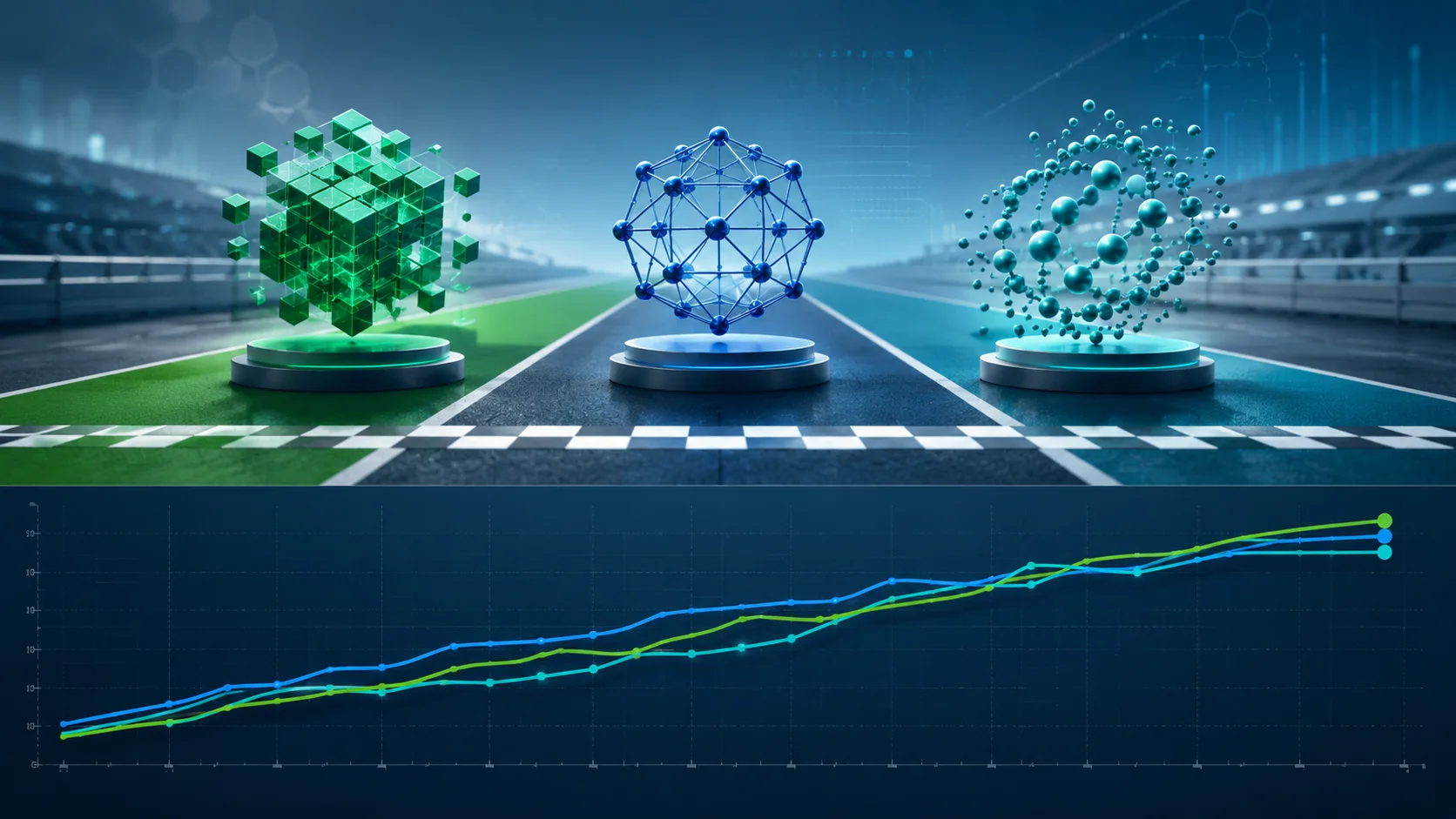
    This week, multiple executives at Google, OpenAI, and Anthropic made statements in various venues — I/O presentations, interviews, conference appearances — that, when read together, describe the same competitive landscape: the frontier AI race is effectively neck-and-neck. “Companies making different tradeoffs around cost, speed and computing resources” with no single model or lab holding a commanding lead. It’s a framing that would have been unthinkable from OpenAI in 2023, when GPT-4’s margin over competitors was substantial and the company’s public posture reflected that advantage. In 2026, the same admission that no single player is clearly ahead is coming from all three simultaneously.

    How Parity Happened

    The convergence at the frontier is the result of several years of parallel investment, research sharing through published papers, and the fundamental dynamics of a field where the training recipes, architectural approaches, and scaling laws that produce frontier models are partially legible to any well-resourced lab that studies the outputs carefully. OpenAI’s early advantage was partly architectural (the transformer architecture that GPT-4 refined was a known quantity), partly scale (OpenAI had the compute and data access to train at the frontier first), and partly product (ChatGPT’s deployment at consumer scale in November 2022 gave OpenAI user feedback data that competitors couldn’t replicate without similar deployment).

    The architectural advantage eroded as competing labs matched OpenAI’s scale of investment and training sophistication. The data advantage is more durable — OpenAI’s consumer deployment at 400 million weekly active users continues to generate training signal that smaller deployments don’t produce — but the other labs’ enterprise and API deployments have accumulated training data of their own. Anthropic’s Constitutional AI approach, which prioritized safety and alignment alongside capability, produced a model that many enterprise customers preferred for its lower hallucination rates and more predictable behavior in sensitive domains. Google’s Gemini has the advantage of being integrated into the world’s most widely used productivity suite — Search, Gmail, Docs, YouTube — which produces usage patterns that shape training in ways that standalone model deployments don’t.

    The result is three models — GPT-5.5, Claude Opus/Mythos, Gemini Ultra — that are each the best in the world at something and none of which holds the kind of general capability lead that GPT-4 held in 2023. The benchmarks that matter most to enterprise buyers (hallucination rates in sensitive domains, reasoning on complex multi-step problems, code generation quality, cost efficiency) show different models leading on different dimensions rather than a single model dominating across all of them.

    Anthropic’s Mythos and the New Competitive Leader

    The executives and analysts who described the race as neck-and-neck also noted that Anthropic has “surged forward” in the competitive landscape over the past six months. The specific catalyst is Claude Mythos — the frontier model that has not been publicly released but whose capabilities have been demonstrated through Project Glasswing’s vulnerability research results and limited enterprise previews. The 10,000+ zero-day vulnerabilities found at under $50 each, including the 27-year-old OpenBSD bug, is the clearest public evidence of Mythos’s capability level and the benchmark against which competitive responses are being calibrated.

    OpenAI’s release of GPT-5.5-Cyber — a cybersecurity-specialized model in limited preview — came within one month of Anthropic demonstrating Mythos’s cybersecurity capabilities. The response time signals how seriously OpenAI is treating Anthropic’s technical progress. GPT-5.5-Cyber is a direct competitive answer to a demonstration of Mythos capability. The speed of the response suggests that OpenAI’s competitive intelligence on Anthropic’s capabilities was good enough that the cybersecurity variant was already in development before the Project Glasswing results were public, rather than being built in reaction to them.

    The neck-and-neck characterization that executives are now offering publicly may be accurate as a description of the general-capability frontier, while Anthropic holds a specific advantage in the capabilities that Mythos demonstrates at the specialized frontier. If that framing is correct, the competitive dynamic in 2026 is not “one lab is ahead overall” but “different labs are ahead in different capability domains, and the enterprise market sorts by which capability domain matters most for specific use cases.”

    Google I/O 2026 as Competitive Positioning

    Google’s I/O 2026 keynote announcement of Gemini 3.5 Flash — the faster, cheaper model rather than a behemoth capability competitor — reflects the same competitive reading. Google has decided that the most important product moves in 2026 are in the cost-efficiency tier (Gemini 3.5 Flash outperforms last year’s frontier at a fraction of the cost, which makes it the right choice for the vast majority of production deployments) and in the integration layer (Gemini embedded in Search, Workspace, Android, YouTube, and the developer ecosystem rather than competing in head-to-head model benchmarks).

    This is a different competitive strategy than the one Google appeared to be executing in 2024, when each Gemini announcement was framed explicitly against the GPT comparison benchmarks. The 2026 strategy acknowledges the neck-and-neck reality at the frontier and makes the case that Google’s advantage is not in having the best model on isolated benchmarks but in having the best-integrated AI system across the products that billions of people use every day. That’s a defensible advantage, and it’s one that OpenAI and Anthropic, as companies primarily selling API access and standalone products, cannot replicate with model capability improvements alone.

    The Stakes of Parity

    The emergence of genuine competitive parity at the AI frontier has implications that extend beyond which lab’s stock price performs best. Competition among frontier labs produces pressure on prices, on safety practices, on alignment investment, and on the deployment decisions that determine how powerful AI systems reach users and at what pace.

    On price: the cost of frontier AI capability has declined dramatically over the past three years as competition has driven efficiency investments. The Gemini 3.5 Flash release — a model that outperforms last year’s frontier at a fraction of the cost — is a direct product of competitive pressure to deliver more capability per dollar. The enterprise market for AI tools benefits from this price competition in ways that a monopoly market wouldn’t produce.

    On safety: the three labs that have declared themselves neck-and-neck are also the three labs with the most developed public commitments to safety evaluation and red-teaming. The competitive dynamic creates both pressures for and against safety investment — the pressure to ship faster creates risk of shortcutting evaluation, while the reputational consequences of a visible safety failure create incentives for investment. The current outcome appears to be genuine safety research happening in parallel with rapid capability development, with the long-term adequacy of that balance being one of the central unresolved questions in AI policy.

    The executives agreeing that the race is neck-and-neck are making a different kind of statement than “we’re all basically the same product.” They’re saying that the era of one lab having a commanding technical lead — the era that shaped AI’s public perception between 2022 and 2024 — is over. What comes next is a more competitive, more fragmented, more application-specific landscape where the model matters less than the ecosystem, the integration, and the specific use case it’s being applied to. That’s a different AI industry than the one that launched in November 2022. It’s the one we’re in now.

    When the Technology Is Equal, Product Is Everything

    Marty Cagan has spent decades arguing that the companies that win in technology don’t win because they have the best engineers — they win because they have product teams empowered to discover what actually matters to users and then build it. The frontier AI race, now officially declared neck-and-neck by all three leading labs, is about to put that argument to the most public test it has ever faced.

    The benchmark convergence changes what the competition is actually about. When GPT-4 launched, there was a meaningful capability gap — OpenAI’s model could do things the alternatives couldn’t. That gap is gone. Google’s Gemini 2.5 Pro, OpenAI’s o3, and Anthropic’s Claude Opus 4 are each at the frontier in different dimensions, and the differences are meaningful primarily to researchers benchmarking specific capabilities. For users evaluating which model to use, the capability gap has become noise.

    What takes over when capability is equal is product. And product, in Cagan’s framework, means three things: discovery (understanding what users actually need, not what they say they need), delivery (building it reliably and at scale), and ecosystem (creating the conditions where users can build outcomes they care about on top of your foundation). On all three dimensions, the three labs are pursuing very different strategies — and the strategic choices are more consequential now that benchmark differentiation has collapsed.

    Google is betting on integration: if Gemini is woven into every Google product, users don’t need to make a choice. The risk is that integration without genuine product discovery produces features nobody asked for. OpenAI is betting on developer ecosystem and consumer habit — ChatGPT’s installed base and the breadth of the API ecosystem create switching costs that pure capability can’t erode. Anthropic is betting on safety and enterprise trust, serving buyers who need to justify their deployment to boards and regulators, not just users who need a fast answer.

    The question of whether AI agents can match human scientists on frontier research tasks illustrates the product discovery problem directly: benchmarks designed to measure capability don’t tell you which lab is building the right things for actual use cases. That question is resolved in the market, not the lab.

    Cagan’s prediction would be that the lab with the clearest picture of what specific users need — and the product team structure to act on it — wins. Benchmark parity makes the product discipline more visible, not less important. The era of differentiation by raw capability is over. The era of differentiation by product judgment has begun.

  • Anthropic’s AI Found Over 10,000 Zero-Day Vulnerabilities

    Anthropic’s AI Found Over 10,000 Zero-Day Vulnerabilities

    The Model That Was Too Capable to Release

    Anthropic built a model powerful enough that releasing it publicly would have been irresponsible. That’s not a theoretical concern — it’s the explicit reasoning behind Project Glasswing, the initiative Anthropic launched after observing what Claude Mythos Preview was capable of in internal testing. Mythos Preview, a frontier general-purpose model that Anthropic has not made publicly available, demonstrated the ability to identify software vulnerabilities at a level that, in Anthropic’s own assessment, surpasses all but the most skilled human security researchers. The company’s response was not to release the model and document the risks afterward. It was to build a dedicated program to deploy the capability responsibly before the capability itself became widely accessible.

    Project Glasswing provides select organizations — vetted cybersecurity teams, open-source maintainers, and security researchers — with controlled access to Mythos Preview for the specific purpose of finding and patching vulnerabilities before malicious actors find and exploit them. The scale of what the model has found is significant: over 10,000 zero-day vulnerabilities across major operating systems, web browsers, and critical software infrastructure. The timeline on which those vulnerabilities are being addressed is the more concerning number: fewer than 1% of the validated high-severity findings have been patched so far.

    The OpenBSD Finding

    The specific vulnerability that has received the most attention from the Project Glasswing disclosures is a bug in OpenBSD’s TCP SACK (Selective Acknowledgement) implementation — the oldest vulnerability Mythos has found, dating back 27 years. OpenBSD is notable as a target precisely because it is known within the security community for its emphasis on code correctness and security by default. If OpenBSD has a 27-year-old bug that a human researcher hadn’t found, the question of what else might be in codebases with lower security focus becomes considerably more pointed.

    The technical nature of the vulnerability — an implementation flaw that allows a remote attacker to crash any OpenBSD host that responds over TCP — is significant because it’s not an obscure edge case. TCP is the foundational protocol of internet communication. A remotely exploitable denial-of-service vulnerability affecting any host that accepts TCP connections is the kind of finding that security researchers spend careers looking for. Mythos found it, validated it, and flagged it for disclosure. The total compute cost for the successful run: under $50. The cost of a comparable human researcher effort to find a bug of that novelty in a mature, security-focused codebase would be orders of magnitude higher — if it were found at all.

    The $50 figure is the number that changes the economics of vulnerability research permanently. Security research has historically been limited by the scarcity of people with the expertise to conduct it and the cost of the time those people spend. A model that can find zero-day vulnerabilities in mature codebases at under $50 per finding doesn’t just accelerate security research — it transforms the cost structure of the entire category. The question of how many organizations can afford to run comprehensive vulnerability assessments was previously a question about budget and staffing. At $50 per finding, it becomes a question about whether anyone who cares about security has any excuse not to.

    The 1% Patch Rate Problem

    The most troubling data point from Project Glasswing is not the number of vulnerabilities found — it’s that fewer than 1% of the validated high-severity findings have been patched. Anthropic committed up to $100 million in usage credits for Mythos Preview across vulnerability research efforts, plus $4 million in direct donations to open-source security organizations. That commitment reflects an understanding that finding vulnerabilities is only half the work — the vulnerabilities have to be fixed, and fixing them requires the maintainers and vendors whose code is affected to act on the findings.

    The patch rate gap reflects a structural problem in software security that AI cannot solve by itself: the human and organizational capacity to review, validate, and implement fixes does not scale at the same rate as the capacity to find vulnerabilities. Mythos can identify thousands of vulnerabilities faster than the teams responsible for those codebases can triage and patch them. The result is a growing backlog of known, validated vulnerabilities that have been disclosed but not addressed — which is better than undisclosed vulnerabilities but still represents significant risk exposure for systems running unpatched software.

    The disclosure and patch coordination problem is not new to the security industry. Responsible disclosure frameworks — where researchers give vendors a fixed window (typically 90 days) to patch a vulnerability before public disclosure — were developed specifically to balance the right of the public to know about risks against the need to give vendors time to respond. Project Glasswing’s experience with patching velocity suggests that the existing responsible disclosure frameworks, designed for the rate at which human researchers find vulnerabilities, are not adequate for the rate at which AI systems can find them. A new coordination model may be required.

    The Dual-Use Question

    Project Glasswing’s existence is Anthropic’s acknowledgment that the same capability that makes Mythos useful for defensive security research makes it dangerous for offensive exploitation. A model that can find a 27-year-old vulnerability in OpenBSD for under $50 can, in principle, find exploitable vulnerabilities in any sufficiently rich target at comparable cost — and the economics of offensive exploitation are very different from the economics of defensive patching. An attacker needs to find one exploitable vulnerability. A defender needs to patch all of them.

    Anthropic’s approach to this dual-use problem is controlled access: Mythos Preview is not publicly available, and the Project Glasswing program gates access to vetted participants with defensive use cases. The theory is that getting the defensive uses of the capability deployed before the capability becomes widely accessible through other means creates a window in which the net security impact is positive — more vulnerabilities found and fixed than exploited. The counter-argument is that the same capabilities being developed at Anthropic are being developed at other AI labs, and that the window for managed deployment may be shorter than the disclosure and patching timeline requires.

    GPT-5.5-Cyber, OpenAI’s cybersecurity-specialized model released in limited preview last month, represents a parallel deployment of similar capabilities under a different governance framework. Multiple AI labs deploying frontier AI to cybersecurity use cases means multiple governance frameworks operating simultaneously, with different criteria for vetting, different disclosure policies, and different assumptions about the timeline before comparable capabilities are available in less controlled forms. The coordination problem in AI cybersecurity is not just between AI systems and the software industry — it’s between the AI labs themselves.

    What Security Teams Should Be Doing Now

    The practical implications of Project Glasswing for security teams that aren’t part of the program are several. First, the vulnerability landscape for major codebases has changed: software that was assessed as secure under the human-researcher threat model may have exposures that the AI-researcher threat model reveals. Security assessments that relied on the cost of human research as an implicit floor on attacker capability need to update their assumptions about what adversaries with AI access can find.

    Second, the patch backlog problem that Project Glasswing is encountering will be encountered by any organization that deploys AI-assisted vulnerability scanning at scale. Finding more vulnerabilities faster is not a solution if the human capacity to prioritize, validate, and implement fixes is the binding constraint. Security teams need to think about their patching pipeline as a production capacity problem, not just a discovery problem — and AI-assisted remediation guidance, not just AI-assisted discovery, may be the tool that actually moves the needle on patch rates.

    Third, the economics of vulnerability research that Mythos has demonstrated will eventually reach the offensive side of the market, whether through continued AI capability development or through access to frontier models by threat actors. Organizations that assume their codebase is secure because a human researcher hasn’t found a publicly disclosed vulnerability need to pressure-test that assumption against a threat model that includes AI-assisted scanning at $50 per finding. The 27-year-old OpenBSD bug had never been found by anyone. It was found immediately once the right capability was applied. The question of how many similar bugs exist in the software your organization depends on is not a comfortable one. Project Glasswing is trying to answer it before someone with worse intentions does.

    What the Three Numbers Are Actually Saying

    The three key numbers from Project Glasswing — 10,000 vulnerabilities found, under $50 per finding, fewer than 1% patched — don’t mean what most coverage suggests they mean. They need to be read as a system, with each number’s implications qualified by the others.

    The 10,000 vulnerabilities figure is large in absolute terms but the base rate context is important: major software projects routinely carry thousands of latent vulnerabilities, and the fraction of critical production software with zero unpatched issues is essentially zero. What’s significant isn’t that 10,000 vulnerabilities exist — it’s that 10,000 were found by a single AI system in a limited timeframe at $50 per finding. The rate of discovery is the signal, not the stock.

    The $50 per finding is the number that changes the structural economics of security research. The field has historically been supply-constrained by the scarcity of people with the expertise to conduct it — a vulnerability that might take a senior researcher 200 hours to find carries an implicit cost of tens of thousands of dollars. At $50 per finding, the calculation that has always governed security investment — “this is too expensive to be thorough” — no longer holds for discovery. Whether it holds for remediation is the harder question.

    Which explains the 1% patch rate. Fixing vulnerabilities requires code review, validation, deployment, and compatibility testing by humans with domain expertise. The supply-side economics of finding vulnerabilities have improved by an order of magnitude. The economics of fixing them haven’t. The bottleneck isn’t awareness — it’s the organizational capacity to act on findings faster than they accumulate. That asymmetry is the actual risk profile, and it will only sharpen as AI discovery capability continues to improve.

    The AI talent competition that has brought top researchers to Anthropic is partly what makes capabilities like those in Mythos Preview possible in the first place. It is also what makes the dual-use concern more than theoretical — the same research community that produced a model capable of finding a 27-year-old OpenBSD vulnerability for under $50 is the community whose capabilities are accessible, in some form, to actors operating outside Anthropic’s Project Glasswing disclosure framework. The organizations planning security strategy under the assumption that AI-assisted offensive scanning is still years away are planning against the wrong threat model.

  • GPT-5.5 Instant Is Now the Default ChatGPT Model

    GPT-5.5 Instant Is Now the Default ChatGPT Model

    Every Few Weeks, a Better Default

    OpenAI replaced GPT-5.3 Instant with GPT-5.5 Instant as the default ChatGPT model earlier this month. The new model scores 81.2% on AIME 2025 math benchmarks, compared to 65.4% for its predecessor — a 24% improvement on a specific reasoning benchmark in the gap between sequential model releases. It reduces hallucination rates in sensitive domains including law, medicine, and finance. It improves image understanding, STEM answers, and the model’s judgment about when to search the web versus answer from training knowledge. It maintains the low latency of GPT-5.3 Instant, which is why the “Instant” label persists.

    The default model for ChatGPT — the product with 400 million weekly active users — changed, and most of those users probably didn’t notice. The improvements are real and measurable on benchmarks. They’re also incremental in a way that doesn’t produce an “aha” moment for a casual user asking routine questions. The 15-point AIME improvement matters for users who push the model on hard math and reasoning. It’s invisible to users asking the model to draft emails or summarize documents.

    The story worth telling isn’t GPT-5.5 Instant specifically. It’s what OpenAI’s release cadence in 2026 looks like as a pattern, and what that pattern means for the competitive dynamics of the AI model market.

    The Release Cadence as Strategy

    OpenAI’s model releases in 2026 have followed an accelerated pattern that reflects competitive pressure from Anthropic, Google, and xAI. The sequence: GPT-5 (flagship, Q1), GPT-5.5 Instant (default, early May), GPT-5.5 (capability tier, mid-May), GPT-5.5-Cyber (specialized, limited preview). This is not a pattern of annual flagship releases followed by stable deployment. It’s a pattern of continuous model iteration where the “default” changes every few weeks and specialized variants address specific high-value markets before general availability.

    The GPT-5.5-Cyber deployment — a cybersecurity-specialized variant rolled out in limited preview to vetted cybersecurity teams — is the most strategically interesting element of the release sequence. One month after Anthropic released Mythos (its AI cybersecurity model that identified 270 Firefox vulnerabilities) to cybersecurity teams, OpenAI responded with a direct competitive answer in the same segment. The response time is one month. That’s not a market where incumbents typically move that fast.

    The specialization strategy — deploying domain-specific variants for cybersecurity, finance, code — is different from the general capability race that defined AI model competition in 2023 and 2024. Instead of competing on who has the highest score on a general benchmark, OpenAI is deploying models that are specifically calibrated for the buying criteria of enterprise segments that pay at premium rates. A cybersecurity team doesn’t primarily care whether the model performs better on MMLU — they care whether it can identify vulnerabilities, reason about attack surfaces, and work within their existing security tooling. GPT-5.5-Cyber is a direct bid for that evaluation.

    The Benchmark Gap Between Instant and the Frontier

    The “Instant” label in OpenAI’s model naming convention identifies the fast/cheap tier — the models optimized for low latency and cost at the expense of some capability. The 81.2% AIME score for GPT-5.5 Instant is impressive in absolute terms but lags behind GPT-5.5’s full capability tier on the hardest reasoning tasks. The pattern mirrors Gemini’s Flash/Pro separation: fast and cheap outperforms last year’s frontier, but the current frontier still leads on the hardest problems.

    For the 400 million weekly ChatGPT users, the default model being GPT-5.5 Instant rather than GPT-5.5’s full capability tier is a product decision about cost management and latency — the vast majority of ChatGPT queries don’t require frontier reasoning capability, and serving them with a faster, cheaper model is economically rational. The full GPT-5.5 is available to users who need it, on queries that trigger it, or through premium tier access.

    The 24% improvement on AIME between 5.3 and 5.5 Instant is the metric worth watching over the series of releases. If each incremental default model replacement produces that kind of benchmark improvement, the capability ceiling of the Instant tier will reach the current full-capability frontier within a few release cycles. At that point, the fast/cheap tier is genuinely frontier-class, and the competitive pressure on every other AI provider’s pricing strategy intensifies significantly.

    Reduced Hallucination in Law, Medicine, Finance

    The hallucination reduction in sensitive domains is the capability improvement most directly relevant to enterprise adoption. The liability exposure of an AI model that confidently produces wrong information in a legal brief, a medical summary, or a financial analysis is the primary hesitation driving regulated industry procurement caution. Every percentage point reduction in hallucination rates in these domains is a direct reduction in the risk assessment that enterprise buyers are making.

    Anthropic has positioned Claude’s lower hallucination rates and Constitutional AI training as its primary enterprise differentiation. OpenAI’s explicit claim that GPT-5.5 Instant reduces hallucination in precisely the domains where Anthropic’s advantage has been sharpest is a direct response to that positioning. The model release notes are a product positioning battle playing out in benchmark claims — who hallucinates less in the vertical where your enterprise customers are most exposed is the question every AI procurement team is asking.

    Independent evaluation of these claims is difficult and methodologically contested. The benchmarks that measure hallucination are themselves imperfect proxies for real-world performance in production systems. Enterprise buyers are learning to weight their own internal testing against vendor benchmark claims, which produces a market where initial adoption is driven by benchmark perception but retention is driven by actual in-production performance. OpenAI’s enterprise retention data — which the company doesn’t publish but which analysts estimate from renewal behavior — will reflect whether the hallucination reduction claims hold in production.

    The Velocity Advantage

    The model release velocity itself is a competitive moat that’s underappreciated in coverage focused on individual model benchmarks. A company that ships a meaningfully improved default model every few weeks is building organizational capability that compounds: faster feedback loops between deployment and improvement, more experiments per year, more data on what actually matters to users versus what matters on benchmarks. The releases that seem incremental individually are building a development infrastructure advantage that larger gaps between releases don’t produce.

    Google’s Gemini release schedule and Anthropic’s Claude release schedule are both measured in months rather than weeks at the major version level. OpenAI’s Instant tier releases at week-level frequency. Whether the week-level iteration produces better models per unit of time than slower, more deliberate releases is an empirical question that will be answered by the capability benchmarks a year from now. The pattern is visible now; the outcome is not yet clear.

    What is clear: GPT-5.5 Instant is the default model for 400 million weekly users as of this month. It’s better than what it replaced on every benchmark OpenAI measures. And in three to six weeks, it will probably be replaced by something better again. That’s the strategy. The releases are the product.

    The Systems Layer Below the Release Cadence

    The release velocity story is interesting on its surface — faster iteration, faster competitive response — but the more consequential systems question is what the cadence reveals about architecture decisions OpenAI made when it rebuilt for the GPT-5 generation. Continuous model iteration at this pace requires infrastructure where each new variant can be evaluated, deployed, and rolled back without service interruption at scale. Four hundred million weekly users experienced a default model upgrade without most of them noticing. That’s a distribution engineering achievement, not just a model improvement.

    The specialisation strategy — GPT-5.5-Cyber, domain-specific finance and code variants — is the systems move worth watching over the next twelve months. OpenAI is building a model family with different configurations for different buying contexts, which is the software business model that enterprise platforms have always used. Different customers have different requirements; a single general model is a compromise for all of them; a model family calibrated per segment captures more of the market without requiring a completely different product for each.

    The same tier-compression logic — where what was premium yesterday becomes standard today — is operating at the model level too. The capability that required GPT-4 in 2023 is now inside the free tier. The capability that required GPT-5 in Q1 2026 is now the default for every ChatGPT user. This is the same dynamic we tracked when Gemini 3.5 Flash compressed its own Pro tier — except at OpenAI the compression happens within a single branded release rather than as a named tier change. Different communication strategy, same competitive logic.

  • Andrej Karpathy’s Move to Anthropic Rewrites the Lab Talent Map

    Andrej Karpathy’s Move to Anthropic Rewrites the Lab Talent Map

    The Most-Watched AI Researcher in the World Chose a Side

    Andrej Karpathy announced on May 19 that he had started at Anthropic on the pretraining team. He is one of the most recognizable figures in machine learning — a founding member of OpenAI, the person who ran Tesla’s Autopilot and Full Self-Driving programs, the creator of micrograd and nanoGPT and hours of YouTube tutorials that have taught a generation of engineers how neural networks actually work. He left OpenAI the first time in 2017. He came back in 2023, stayed for one year, left again in 2024 to found Eureka Labs, an AI education startup. And now, without folding Eureka Labs (his posts suggest it continues in some form), he has joined Anthropic’s pretraining team.

    The specific role matters. Pretraining is the phase of building a large language model that determines its fundamental capabilities — the massive training run that processes the training data and builds the model’s base knowledge and reasoning capacity. It’s computationally expensive, technically demanding, and strategically central. An Anthropic spokesperson told TechCrunch that Karpathy will build a new team focused on using Claude to accelerate pretraining research itself — the recursive step of applying the model to its own improvement process. That’s not a peripheral research role. That’s Anthropic putting one of the field’s best-known researchers at the core of what makes Claude better at the deepest level.

    What This Means for the OpenAI-Anthropic Competition

    The talent flow between AI labs is a continuous story, but Karpathy moving to Anthropic is notable on multiple dimensions. He was a founding member of OpenAI — the company Anthropic’s founders left in 2021 after disagreements about safety and commercialization. The founding narrative of Anthropic is that it represents a different approach to AI development than OpenAI: more deliberate, more safety-oriented, more willing to slow down if the safety case requires it. That narrative has been increasingly tested as Anthropic has scaled its commercial ambitions and its models have become competitive with OpenAI’s on capability benchmarks.

    Karpathy’s public positioning over the past several years has been carefully non-partisan about labs — he has praised work from OpenAI, Google, and independent researchers equally, and his educational content has been explicitly model-agnostic. The choice to join Anthropic rather than OpenAI (where he could presumably have returned), Google DeepMind (which has courted researchers aggressively), or xAI is a signal that requires reading carefully. He could have gone anywhere. He chose the lab that his former OpenAI colleagues founded after leaving over safety concerns.

    That choice doesn’t necessarily say anything definitive about the technical merits of Anthropic’s approach versus OpenAI’s. But it does say something about where Karpathy believes the most interesting pretraining research is happening, or where he believes his specific contributions will be most productive. Karpathy is not someone who takes roles for status or compensation optics. His public record is of someone who moves toward problems he finds genuinely interesting.

    Pretraining as the Central Competition

    The AI capability race in 2026 has multiple layers: model fine-tuning, deployment infrastructure, agent architecture, multimodal capabilities. But pretraining remains the foundation. The base knowledge, the reasoning patterns, the general capability profile of a model is established in pretraining. Fine-tuning can shape behavior and add specific capabilities, but it cannot substantially alter the base capability ceiling that pretraining set. The labs with the strongest pretraining — the best data curation, the most effective training algorithms, the most efficient use of compute — produce models that are harder to match through post-training optimization alone.

    Anthropic’s Claude has been competitive with OpenAI’s GPT and Google’s Gemini on capability benchmarks while maintaining the safety and instruction-following properties that Anthropic has prioritized since its founding. Whether that competitive position is sustainable — whether Anthropic’s pretraining approach can keep pace with the resources OpenAI and Google are deploying — is the strategic question Karpathy is being brought in to help answer.

    The specific mandate — using Claude to accelerate pretraining research — is the frontier of what’s called AI-assisted AI development. If Claude can help identify more effective training approaches, better data curation strategies, or more efficient hyperparameter regimes for the next training run, the pace of Anthropic’s model improvement could accelerate faster than the underlying compute expenditure growth would suggest. This is the virtuous cycle that every frontier lab is trying to establish: using the current model to build a better next model faster.

    Karpathy’s Educational Role and What It Means for Anthropic

    Karpathy’s YouTube channel has over 1.5 million subscribers. His courses on neural networks and language models from scratch have been the primary technical education resource for a generation of engineers who learned ML outside of formal academic programs. His ability to explain complex technical concepts clearly and precisely is as well-documented as his research contributions. This is relevant to Anthropic because one of Anthropic’s stated missions is AI safety research, and safety research requires the broader technical community to understand what frontier models are actually doing at a mechanistic level.

    Whether Karpathy continues his educational work while at Anthropic is unclear from the announcement. If he does, Anthropic gains a researcher with a public platform who can communicate what Anthropic is building and why in ways that resonate with the technical community that has been the primary audience for his work. If the educational work pauses, Anthropic still gains one of the field’s strongest pretraining researchers with specific expertise in the training pipeline optimizations that have historically produced significant capability improvements.

    Either way, the hire is the kind of signal that changes how the technical community evaluates the labs. Research talent aggregates toward other research talent. The researchers who are deciding where to do their best work look at where the interesting problems are and who they’d be working with. Karpathy’s arrival at Anthropic makes the pretraining team more attractive to the next researcher who’s deciding.

    The Eureka Labs Question

    Karpathy founded Eureka Labs in 2024 with the mission of applying AI to education — specifically, building AI teaching assistants that could make high-quality education more accessible at scale. The initial product was an AI-native course platform. The project was early and the progress was slower than the initial enthusiasm suggested. Whether Eureka Labs continues as a separate entity, becomes part of Anthropic’s research agenda, or pauses while Karpathy focuses on pretraining work is not entirely clear from the announcement.

    The overlap between Anthropic’s mission and Karpathy’s educational interests is genuine. Anthropic has published some of the most important interpretability research in the field — work that tries to understand what’s actually happening inside large language models at a mechanistic level. Karpathy’s ability to translate that kind of research for a broad technical audience is directly relevant to Anthropic’s goal of making its safety research influential beyond its own lab. If the educational mission finds a home inside Anthropic’s research communication strategy, the combination could be more effective than either element separately.

    What the Field Is Watching

    The specific technical contributions Karpathy makes to Anthropic’s pretraining pipeline will not be publicly visible until they show up in the capabilities of the next Claude version. That could be six months from now or eighteen months from now depending on where the current training run is in its cycle. The signal from the hiring will be interpreted by other researchers as an indicator of where the most interesting pretraining work is happening, regardless of whether the outputs are immediately measurable.

    For the broader AI competition, the Karpathy move reinforces a pattern: the talent that defines the field’s direction is not locked to any single institution, and the labs that can attract researchers who have demonstrated both technical excellence and the ability to work productively outside established institutional constraints will have an advantage in the next phase of capability development.

    Anthropic got one of those researchers this week. OpenAI, for the second time, watched him leave.

    What The Second Departure Reveals About How AI Talent Actually Works

    Karpathy leaving OpenAI once was an individual decision. Karpathy leaving OpenAI and then joining Anthropic is a data point about the structure of the field — and the structure is more fragile than the press cycles around each individual hire make it appear.

    The labs have been competing as if the talent market works the way capital markets work: money allocated to the highest return, talent flowing to the highest valuation, market signals clearing efficiently. It doesn’t work that way. The researchers who matter most in this generation of AI development are not optimising for compensation. They are optimising for the quality of the research environment, the clarity of the research direction, and — increasingly — their judgment about which lab’s values and working culture are compatible with sustained high-performance work. Those are not attributes capital can easily buy or replicate.

    OpenAI’s problem is not that Karpathy left twice. Its problem is that both departures followed changes to the research environment rather than changes to the compensation structure. The first departure was voluntary exit; the second is a competitive hire by a lab whose research culture Karpathy evidently considers more compatible with the work he wants to do. That distinction matters more than the headline number on either side.

    For Anthropic, the hire is evidence of something harder to manufacture than valuation: the research environment is now compelling enough to attract a researcher who had other options and chose based on quality rather than commercial outcome. Anthropic’s commercial acceleration over OpenAI gives the lab the runway to maintain that environment — but the hire is not a commercial story. It is a research-culture story that commercial success is currently making possible. The distinction between the two will matter when the commercial cycle turns.

    Karpathy’s Move Is Evidence About Organizational Culture, Not Just Compensation

    Andrej Karpathy Anthropic pretraining research 2026

    Glenn Greenwald’s editorial instinct is to read what institutions reveal through behavior rather than what they say about themselves. Karpathy’s departure from OpenAI to Anthropic says publicly that he wants to focus on pretraining research in an environment where that work is central. What it says institutionally is more specific.

    OpenAI has now lost two of its most publicly visible technical researchers — Karpathy here, Ilya Sutskever earlier — both moving in the same directional signal: away from the lab that claims to lead the field. Two departures in the same direction is not a coincidence. It is an organizational data point about what OpenAI optimizes for in 2026, which differs from what it optimized for in 2020. The pressure of commercial deployment at scale, the governance disruption of 2023, and the shift toward inference-heavy product development have changed what it means to do foundational research at OpenAI. That change does not make OpenAI worse at building products. It makes it a different environment for researchers who weight pretraining as the central intellectual problem.

    Technology reporting at the time of the departure emphasized compensation and opportunity framing. That framing is accurate and incomplete. Karpathy’s public track record — his educational work at Eureka Labs, his stated pretraining focus — is consistent with someone who weights research environment quality heavily. Anthropic’s positioning as a safety-focused lab with pretraining as a core investment is the most coherent explanation for where he landed. The consequences of the move extend beyond the research contribution: Anthropic’s $900 billion commercial trajectory is now reinforced by the strongest signal in the field that its research environment is where serious pretraining work is happening. Whether the signal is more valuable than the work itself is a question the next eighteen months of publication record will answer.

  • Gemini 3.5 Flash Beat Last Year’s Pro on Agent Benchmarks

    Gemini 3.5 Flash Beat Last Year’s Pro on Agent Benchmarks

    The Definition of “Frontier” Just Moved Again

    Gemini 3.5 Flash shipped at Google I/O three days ago and went straight to general availability. The benchmarks are now public. The model scores 76.2% on Terminal-Bench 2.1, which tests coding in real-world execution environments. It scores 1656 Elo on GDPval-AA, which measures agentic task completion in realistic contexts. It scores 83.6% on MCP Atlas, which measures scaled tool-use reliability — the benchmark that matters most if you’re building AI agents that interact with external systems. It scores 84.2% on CharXiv Reasoning for multimodal understanding.

    Gemini 3.5 Flash Beats Last Year's Pro on Agent Benchmarks: What Happens When the Cheap Model Becomes the Frontier Model

    What those numbers mean in context: a model wearing a Flash badge — Google’s label for its fast, cheap tier — just outperformed Gemini 3.1 Pro on the benchmarks that look most like real engineering work. The Pro tier model that was Google’s frontier offering twelve months ago is now behind the Flash tier model on agent loops, coding, and tool use. Gemini 3.5 Flash runs at $1.50 per million input tokens and $9.00 per million output tokens. It outputs tokens four times faster than comparable models. It often completes agentic tasks at less than half the cost of the previous generation.

    This is the story the AI industry is living through in 2026: the capabilities that required the most expensive model last year are now available at a fraction of the cost in the model tier below. That’s not gradual improvement. That’s a compression of the cost-capability curve that changes how developers build, how companies deploy, and how investors value the companies selling access to these models.

    Why Agent Benchmarks Matter More Than Chat Benchmarks

    For most of the current AI model cycle, the benchmark conversations have been dominated by performance on reasoning tasks — MMLU, MATH, HumanEval — that measure how well a model performs on structured problems in a single context window. Those benchmarks matter for understanding raw capability. They don’t tell you much about whether a model can be trusted to complete a multi-step task in a live system where errors compound, tools fail, and the model has to adapt its plan mid-execution.

    Agent benchmarks — Terminal-Bench, GDPval-AA, MCP Atlas — are measuring something different. They’re measuring whether a model can sustain coherent goal-directed behavior across long action sequences, recover gracefully from unexpected states, and use external tools reliably enough to be trusted in production systems. Those are the capabilities that determine whether AI agents are usable in the real engineering and business environments where they’re being deployed.

    The gap between a model that scores well on reasoning benchmarks and a model that performs reliably in agentic contexts is real and has been one of the primary friction points in enterprise AI adoption. Organizations that have been waiting for agentic AI to be reliable enough to build on aren’t waiting for better chat performance. They’re waiting for better tool-use reliability and task completion rates. Gemini 3.5 Flash’s 83.6% on MCP Atlas — the tool-use benchmark — is directly addressing that friction.

    The Cost-Capability Compression

    The model release cadence in 2025 and 2026 has followed a consistent pattern: a new frontier model ships at premium pricing, a fast/cheap variant ships several months later at a fraction of the cost with 80-90% of the frontier capability, and the next frontier model ships six to twelve months after that. The curve means that every twelve months, the capability available at the previous frontier’s price point roughly doubles, while the capability available at the previous cheap tier’s price point roughly doubles too.

    For developers building applications on top of these models, the implication is significant. The task that required Gemini 3.1 Pro twelve months ago — and was priced accordingly — can now be completed by Gemini 3.5 Flash at a fraction of the cost with equivalent or better agent performance. Applications that were economically marginal at Pro tier pricing become clearly viable at Flash tier pricing. New application categories become possible when the compute cost drops below a threshold that unlocks the use case.

    Google’s explicit bet with 3.5 Flash is that agents — not chatbots — are the primary use case for the next phase of AI deployment. The model was designed around agentic performance: long context, reliable tool use, fast output for real-time task execution. The pricing signals the same intent: $1.50/$9.00 per million tokens is competitive enough that developers building agent-heavy applications can run them at scale without the compute cost dominating the business economics.

    What “Betting on Agents, Not Chatbots” Actually Means

    The distinction between agents and chatbots is more than a marketing reframe. A chatbot is a stateless question-answering interface: the user inputs a question, the model outputs an answer, the interaction ends. A chatbot can be genuinely useful — millions of interactions a day on routine information tasks — but the intelligence is contained within the conversation window. The model isn’t doing anything in the world. It’s producing text that a human then acts on.

    An agent is a model that acts — that calls tools, runs code, queries databases, sends messages, books appointments, and executes multi-step plans in external systems. The value of an agent scales with how many steps it can complete reliably without human intervention. An agent that completes the first three steps of a ten-step task correctly and then fails is less useful than a human doing all ten steps. An agent that completes all ten steps reliably is more useful than almost any human doing the same work — because it runs at millisecond speed, costs fractions of a cent per step, and can be parallelized across thousands of simultaneous instances.

    That last sentence describes the economic case for agentic AI, and it’s why the companies that are actually deploying AI at operational scale — not in demos, not in pilots, but in production systems that touch real workflows — are focused on agent reliability rather than chat performance. The enterprise use cases that justify the capital expenditures in AI infrastructure are agent use cases: code review pipelines, customer service escalation chains, document processing workflows, contract analysis systems. These run on agent architectures, and they need agent benchmarks to evaluate the models powering them.

    The Four-Times Speed Advantage

    Speed in AI model outputs is not a luxury feature. For agentic tasks, where the model is executing a sequence of steps and waiting for tool results between steps, output speed directly affects total task completion time. An agent running on a model that outputs tokens four times faster can complete a ten-step task in roughly a quarter of the wall-clock time — not because each step is four times better, but because the latency between steps is compressed.

    For applications where humans are waiting — code review pipelines with engineers blocked on results, customer service systems where a live customer is waiting for a resolution — the speed advantage is directly user-facing. For applications that run asynchronously — overnight document processing, batch contract review, automated data analysis — the speed advantage translates to throughput: more tasks completed per unit of compute time, which is per unit of cost.

    Gemini 3.5 Flash at four times the output speed of comparable models, combined with the MCP Atlas tool-use reliability score, positions it as the model that makes the agent use cases economically viable at production scale. Reliable tool use at high speed at low cost is the combination that allows an agentic application to serve an enterprise workflow without being the most expensive line item in the engineering budget.

    What This Means for the Model Providers

    Every AI model provider is watching the cost-capability compression with the same attention that airlines watched fuel costs through the 1970s. The compression benefits developers and enterprises that build on top of the models. It creates competitive pressure at every pricing tier: if your Pro tier model is now being outperformed on agent benchmarks by a competitor’s Flash tier model, your Pro tier customers have a decision to make.

    OpenAI, Anthropic, and Google are all running the same race: ship frontier capability at frontier pricing, then compress that capability into the lower tier fast enough that your customers upgrade to the new frontier before the competitive gap closes. The race is good for developers and enterprises because it means the cost of AI capability drops continuously. It’s demanding for the model providers because maintaining pricing power requires staying ahead of the compression on the frontier tier.

    Gemini 3.5 Flash’s agent benchmark performance puts direct pressure on OpenAI’s GPT-4o and Anthropic’s claude-3-5-haiku at the fast/cheap tier. If a developer is building an agentic application and evaluating fast tier models, MCP Atlas scores and GDPval-AA performance are the metrics they’re comparing. Today, 3.5 Flash has posted competitive numbers that change that comparison.

    The Phase Shift the Industry Is In

    The framing that has emerged in AI analysis in 2026 is that the industry has moved from the “excitement phase” — where new capabilities were the story and the benchmarks measured raw intelligence — to the “deployment phase,” where reliable performance in real-world systems is the story and the benchmarks measure operational trustworthiness. That’s a harder phase. It requires models that don’t just demonstrate capability in controlled conditions but maintain performance under the unpredictable conditions of real production environments.

    Gemini 3.5 Flash’s benchmark profile is designed for the deployment phase: agent-first design, tool-use reliability, speed, and pricing that allows production-scale deployment without requiring a capital expenditure conversation to justify. Google’s bet is that the next major wave of AI adoption isn’t in consumer chatbots or enterprise knowledge management — it’s in operational automation, where agents replace or augment workflows that have costs, timelines, and error rates that AI deployment can measurably improve.

    The Flash-tier model that beats last year’s Pro on agent benchmarks is the product designed to win that market. At $1.50 per million input tokens, it’s priced to be tried. At 83.6% on MCP Atlas, it’s reliable enough to be trusted. At four times the speed of comparable models, it’s fast enough to be used in workflows that can’t wait.

    The easy excitement phase of AI is over. The phase where the cheap model outperforms last year’s frontier has arrived. This is what serious looks like.

    The Product-Manager Read On A Tier-Compression Move

    The headline that Gemini 3.5 Flash beats last year’s Pro on agent benchmarks is the kind of moment product managers inside competing AI labs notice immediately, because it signals something more important than the benchmark numbers themselves. It signals that Google is willing to compress its own product tiers — to put what used to be its premium capability into its mid-tier offering — and that means the competitive structure of the API market just changed shape.

    The pattern is familiar from prior technology platforms. The incumbent that decides to commoditise its own former premium tier is signalling confidence that the next premium tier above it will hold differentiation. Apple did this when it moved A-series chip designs from “exclusive to the newest phone” to “shared across the lineup” — the signal was that the M-series and the next phase of chip work was so far ahead that the prior tier could safely become the broad floor. Google is making the same move with Flash vs Pro vs Ultra. The Flash tier becoming agent-capable means Pro and Ultra have moved into a different category of capability that the public benchmark suite cannot yet measure cleanly.

    The product question for everyone else is whether to match the tier compression or to hold the prior premium pricing. The labs that match it will compress their own margin in exchange for keeping share at the mid-tier. The labs that hold pricing will keep margin in the short term and risk being undercut at the mid-tier by Google’s Flash. Neither path is clearly correct. Both paths trade something the lab needs against something else the lab needs. The decision will reveal which constraint each lab thinks is binding — share or margin — and the decision will show up in pricing announcements over the next ninety days.

    This is the same compression pattern that Google teased at I/O and is now executing on. The I/O announcements set the strategic frame; this release puts the frame into operational pricing. The two should be read as one continuous move.

  • Elon Musk Is Building a $119 Billion Chip Factory in Texas. Terafab Is the Most Audacious Bet in the History of Semiconductors.

    Elon Musk Is Building a $119 Billion Chip Factory in Texas. Terafab Is the Most Audacious Bet in the History of Semiconductors.

    Elon Musk Is Building a $119 Billion Chip Factory in Texas. Terafab Is the Most Audacious Bet in the History of Semiconductors.

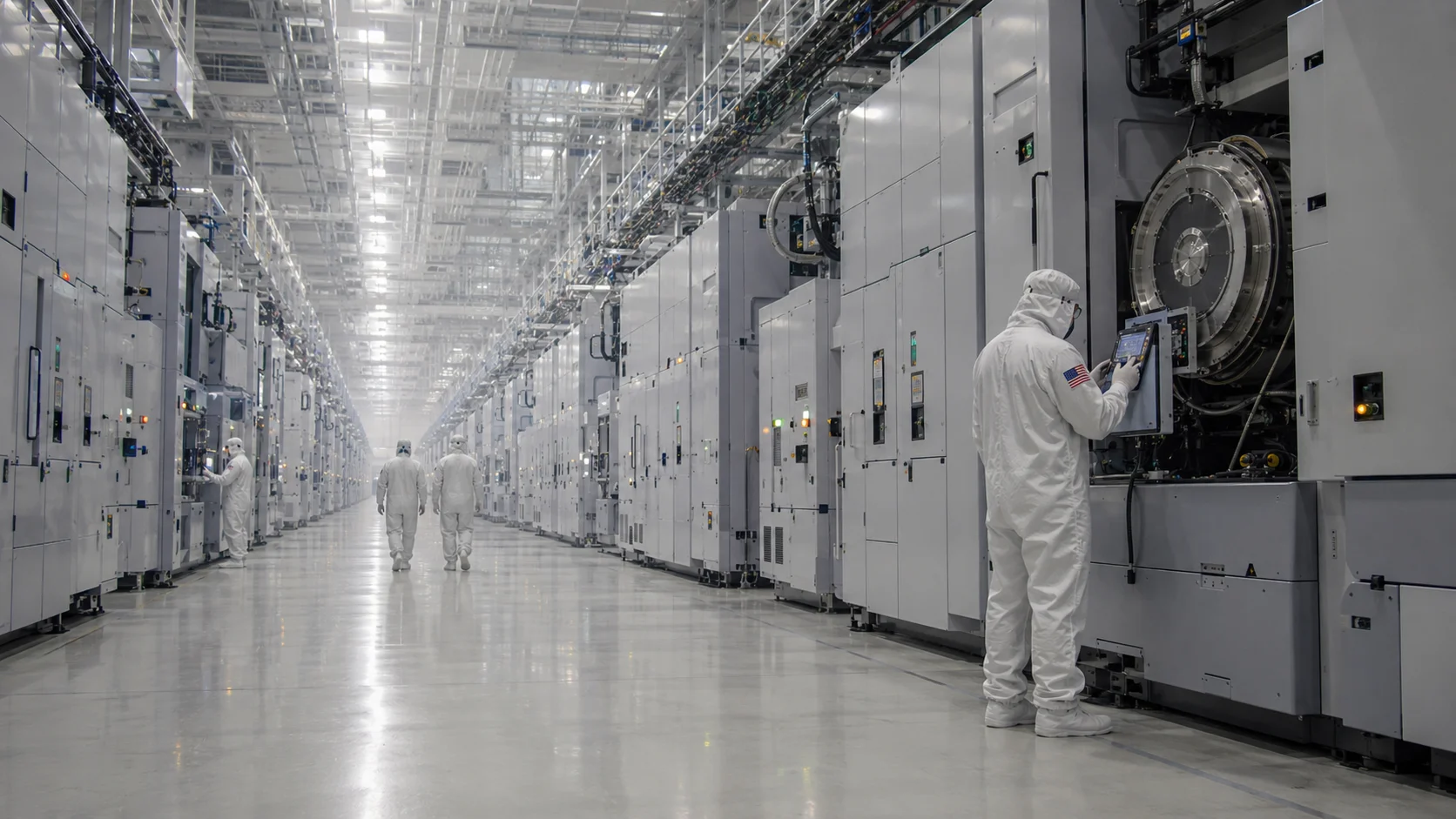
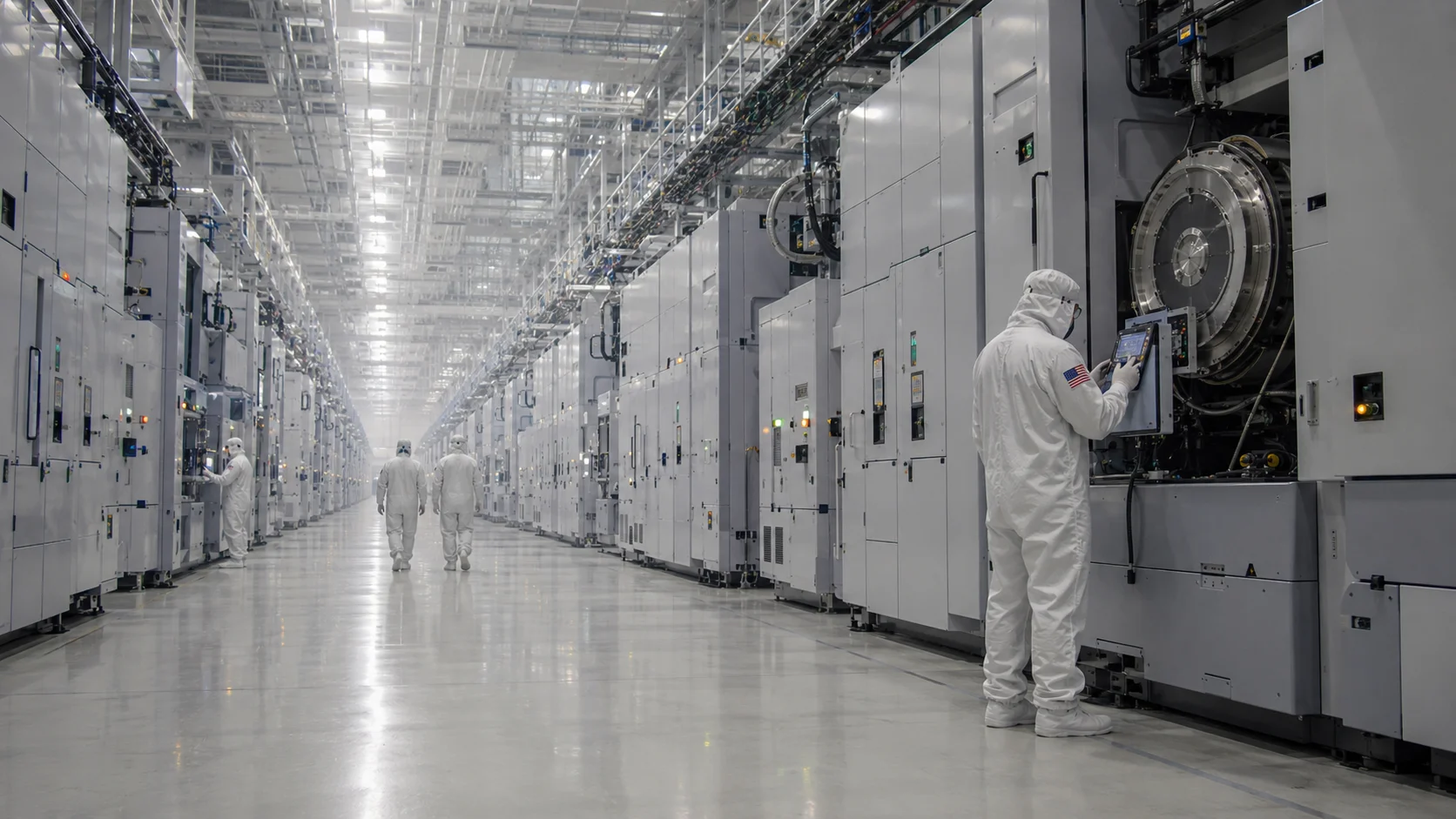
    In March 2026, Elon Musk announced Terafab — a joint semiconductor fabrication venture between Tesla, SpaceX, and xAI — with a stated goal of producing more than one terawatt of AI compute capacity per year. In April, Intel joined as the foundry partner, bringing its 18A process node — the most advanced semiconductor manufacturing technology produced entirely within the United States. In May, SpaceX filed paperwork estimating the project’s total investment at up to $119 billion.

    To put that number in context: TSMC’s entire capital expenditure program for 2025 was approximately $38 billion. Intel’s multi-year recovery plan for its foundry business involves approximately $100 billion in investment across multiple sites and multiple years. A single Terafab facility in Austin, Texas — one project, one company group — targeting $119 billion in total investment is a number that has no precedent in the history of the semiconductor industry.

    Whether Terafab delivers on its stated ambitions is a question that will take years to answer. What is worth examining now is what the project actually is, why it exists, and what success looks like for the entities involved.

    The Architecture of the Bet

    Terafab is not a traditional chip fab. It is a vertically integrated compute infrastructure project that starts at the silicon fabrication layer and extends to the AI systems that run on the resulting chips.

    The chips Terafab is designed to produce are Tesla’s AI5 processors — the next-generation silicon behind Tesla’s Full Self-Driving system, the Cybercab robotaxi platform, and the Optimus humanoid robot series. These are not general-purpose AI accelerators competing in the data center market against Nvidia. They are purpose-built chips for a specific set of applications that Tesla and SpaceX control end-to-end.

    SpaceX’s acquisition of xAI in February 2026 — creating a combined entity valued at approximately $1.25 trillion — is the context that makes Terafab comprehensible. Musk’s stated intention is that 80% of Terafab’s compute output will be directed toward space-based AI infrastructure: a constellation of orbital satellites internally designated AI Sat Mini, designed to provide AI compute capacity from orbit. The remaining 20% is for ground-based applications across Tesla, SpaceX, and xAI’s operations.

    The orbital AI constellation is the part of Terafab’s stated purpose that mainstream analysis has struggled with. It sounds like science fiction. But SpaceX is the world’s dominant launch provider, with the ability to deploy satellite constellations at a cost and cadence no other entity can match. If AI compute from orbit is technically feasible — and the physics of space-based computing have been studied extensively — SpaceX is the only organisation on the planet that could actually build and operate it at scale. Musk is attempting to vertically integrate from chip fabrication to satellite deployment to orbital AI compute. The ambition is real even if the timeline is aggressive.

    Intel’s Role and the 18A Process Node

    Intel joining Terafab as the foundry partner is the development that transforms the project from a press release into a credible manufacturing plan. Tesla and SpaceX know how to design chips — Tesla’s FSD chips have been produced at TSMC — but neither company knows how to fabricate them. Intel does.

    Intel’s 18A process node is technically significant. It features gate-all-around transistor architecture — a fundamental improvement over the FinFET architecture that has been the industry standard — combined with backside power delivery and advanced 3D stacking capabilities via Intel’s EMIB and Foveros technologies. At 1.8 nanometre class, 18A is competitive with TSMC’s N2 and Samsung’s 2nm nodes in the global technology race.

    What makes Intel’s involvement geopolitically significant is that 18A is manufactured entirely within the United States. Every Nvidia H100 and H200 that powers the AI industry today is fabricated by TSMC in Taiwan. Every AMD MI300X. Every Google TPU. The concentration of advanced semiconductor manufacturing on a small island with a complex geopolitical relationship with China is the strategic vulnerability that the CHIPS Act was designed to address and that Terafab directly confronts.

    If Terafab produces AI5 chips on Intel’s 18A process at scale, it creates a meaningful quantity of advanced AI silicon that does not depend on Taiwan for fabrication. For Tesla’s autonomous vehicle program and SpaceX’s satellite constellation, supply chain security is not an abstract concern — it is a precondition for the kind of long-duration, large-scale deployment that both programs require.

    The $119 Billion Number and What It Actually Covers

    The $119 billion figure from SpaceX’s filings covers all phases of the Terafab project — from the initial prototype fab in Austin to full production capacity. The initial investment is approximately $55 billion, with the total scaling to $119 billion as production ramps.

    Breaking down where that capital goes illuminates the scope. A single advanced semiconductor fab — the kind that produces chips at 2nm-class nodes — costs $20–30 billion to build and equip with the ASML EUV lithography tools and associated equipment required for advanced process nodes. A fab at the scale Terafab is targeting requires multiple production lines, extensive clean room infrastructure, supporting utilities, and the workforce to operate it.

    The $119 billion also reflects the nature of semiconductor manufacturing as a capital-intensive, long-duration investment. Fabs are not built and immediately profitable — they require years of yield ramp, process development, and manufacturing learning curve before they operate at the efficiency levels that justify the capital. Intel’s existing foundry investments are not yet profitable in part because it is in the early stages of that learning curve on its advanced process nodes.

    The funding structure for Terafab is not fully public. Tesla, SpaceX, and xAI have different balance sheet profiles and different access to capital. The project is likely to involve a combination of equity from the parent companies, government incentives under the CHIPS Act framework, and potentially debt financing against future chip supply commitments. The $119 billion total investment number is almost certainly not a single capital commitment — it is the projected cumulative investment across a multi-year build and ramp program.

    Why Musk Is Doing This Instead of Using TSMC

    Tesla’s FSD chips are currently produced by TSMC. Samsung has also been a supplier for Tesla silicon. The question of why Musk is spending up to $119 billion to build his own fab rather than continuing to use the world’s most advanced contract manufacturer requires a specific answer.

    The answer has three components. First, supply chain independence. TSMC charges premium prices for advanced node capacity, has limited availability at the leading edge, and is subject to geopolitical risk that is difficult to hedge contractually. A company with the supply chain exposure of Tesla — which is deploying tens of millions of autonomous vehicle chips — cannot accept the concentration risk of single-source advanced manufacturing indefinitely.

    Second, customisation depth. TSMC produces chips to customer specifications but the process node is standardised across customers. A company with a proprietary fab can co-develop the process node specifically for its chip architecture — optimising at the materials and process level for the exact performance characteristics its applications require. This is what Apple has done, in collaboration with TSMC but with increasing co-design depth, to produce the industry’s most power-efficient mobile chips.

    Third, and most speculatively, the orbital compute thesis. If Terafab’s primary purpose is to produce chips for space-based AI infrastructure, TSMC is simply not the right partner. The security requirements, the supply chain visibility requirements, and the volume profile for an orbital AI constellation are unlike anything in TSMC’s standard customer base. A purpose-built fab under Musk’s control is the only production model that supports that application at scale.

    The Risks Are Proportional to the Ambition

    Terafab carries execution risks that are proportional to its scale and ambition. The semiconductor industry has a long history of large, expensive fabs that underperformed their projections — Intel’s own Fab 42 in Arizona was announced in 2011, broke ground in 2013, and did not reach volume production for over a decade.

    Intel’s 18A process, while technically impressive, is entering commercial production at a moment when Intel’s foundry business is still in recovery. Intel Foundry’s existing customers — Microsoft and AWS have been announced as 18A customers — are qualifying the process but have not yet moved to volume production. Terafab’s AI5 chip would be among the first 18A volume production commitments at scale. If the process has yield issues at volume, Terafab’s timeline slips and the economics become more challenging.

    The workforce challenge is substantial. Advanced semiconductor fabs require highly specialised engineers — process engineers, equipment engineers, yield engineers — who are in short supply globally. Building out the human capital for a new fab in Austin, competing with established fabs in Taiwan, South Korea, and Arizona for the same talent pool, is a constraint that capital cannot fully resolve.

    The orbital AI constellation — 80% of Terafab’s stated output — is the most speculative component. Space-based computing is technically possible but has not been demonstrated at the scale Musk is targeting. The thermal management challenges, the radiation hardening requirements, and the communication latency of orbital compute are all solvable engineering problems, but they are unsolved at the scale Terafab implies. If the orbital compute thesis does not materialise, Terafab’s utilisation model looks very different from what the initial filings describe.

    What Success Looks Like

    The realistic near-term success scenario for Terafab is narrower than the $119 billion headline suggests. Small-batch AI5 chip output from the Austin prototype facility in 2026 — which is the stated initial timeline — would represent genuine progress. Volume production in 2027 would validate the manufacturing thesis. A functioning supply of AI5 chips for Cybercab and Optimus at a cost and availability that beats TSMC alternatives would prove the economic case.

    The broader orbital AI constellation is a longer-duration bet. Five years from now, if SpaceX has launched the first AI Sat Mini constellation and Terafab chips are operating in orbit, the project will be seen as one of the most consequential infrastructure investments in the history of technology. If the orbital component stalls and Terafab operates as a relatively conventional chip fab supplying Tesla’s automotive and robotics operations, it will still have been a significant domestic semiconductor investment — just not the transformative one the filings describe.

    The $119 billion number will look different depending on which scenario materialises. It is either the foundation of a vertically integrated AI infrastructure empire spanning silicon to orbit, or it is an expensive but strategically sound insurance policy against Taiwan Strait risk for the company that has bet its automotive future on autonomous driving. Both are coherent outcomes. The distance between them is the distance between Musk’s orbital AI vision and the engineering reality of the next five years.

    The Power Question Hiding Inside The Terafab Bet

    The right Helmer-style question to ask about a $119 billion vertical-integration bet is: which of the seven powers is Musk attempting to acquire that he does not already have? The honest answer is most likely “process power” — the cumulative know-how of running a leading-edge fab, which TSMC currently dominates and which neither xAI nor Tesla can replicate by spending money alone. The Terafab structure is essentially a bet that this know-how can be partially imported via the Intel 18A node and the talent that comes with it.

    The historical base rate on this kind of vertical-integration bet is unforgiving. Companies that attempted to acquire process power by purchasing or contracting with an incumbent fab have, more often than not, discovered that the process power was distributed across thousands of operational decisions made by engineers who were not part of the transaction. The know-how does not transfer cleanly. Apple’s silicon program took a decade and required acquiring P.A. Semi plus building an internal team. Google’s TPU program took similar time and similar org-building. Neither was a $119 billion single-stroke bet.

    Musk’s structural advantage, if any, is that the urgency of the AI buildout compresses the timeline he is willing to accept for the bet to compound. The structural disadvantage is that the compression makes the historical pattern more, not less, likely to bind. The next four years will produce one of three outcomes — Terafab works, it partially works at large cost, or it fails and gets restructured into something smaller. The probability mass is roughly evenly distributed across those three, which is enough uncertainty that anyone reading the announcement as confirmed strategy is overconfident relative to the base rate.

    FAQ

    What is Terafab?
    A joint semiconductor fabrication venture between Tesla, SpaceX, xAI, and Intel, targeting production of over one terawatt of AI compute capacity per year. Located in Austin, Texas, near Tesla’s Gigafactory. Total investment estimated at up to $119 billion across all phases.

    What chips will Terafab produce?
    Primarily Tesla’s AI5 processor — the chip powering Full Self-Driving, the Cybercab robotaxi, and the Optimus humanoid robot. 80% of compute output is stated to be directed toward a space-based AI satellite constellation.

    Why is Intel involved?
    Intel is the foundry partner, providing its 18A process node — the most advanced semiconductor manufacturing technology produced entirely within the United States. Tesla and SpaceX can design chips but do not have fabrication expertise. Intel provides the manufacturing capability.

    Why not just use TSMC?
    Supply chain independence from Taiwan, the ability to co-develop process nodes for Tesla’s specific applications, and the unique requirements of the orbital compute thesis all point toward a proprietary fab. TSMC is not optimised for a customer whose primary product use case is satellites.

    Is the $119 billion committed?
    No. It is the estimated total investment across all phases of the project. The actual capital will be deployed incrementally as each phase is validated. The initial investment is approximately $55 billion.

    What is the timeline?
    Small-batch AI5 chip output from the Austin prototype facility in 2026; volume production targeted for 2027. The orbital AI constellation is a longer-duration component with no public timeline commitment.

    Sources

  • Anthropic Quadrupled Its Enterprise Market Share Over OpenAI in a Year. Now Both Are Racing to Own AI Cybersecurity.

    Anthropic Quadrupled Its Enterprise Market Share Over OpenAI in a Year. Now Both Are Racing to Own AI Cybersecurity.

    Anthropic Quadrupled Its Enterprise Market Share Over OpenAI in a Year. Now Both Are Racing to Own AI Cybersecurity.

    Anthropic has quadrupled its enterprise market share relative to OpenAI since May 2025 — a swing that represents the most significant competitive shift in the enterprise AI market since GPT-4’s launch. The immediate battleground is cybersecurity: Anthropic’s Claude Mythos helped Mozilla find and fix over 270 vulnerabilities in the Firefox browser, and OpenAI has responded with Daybreak — a dedicated cybersecurity initiative powered by GPT-5.5-Cyber and Codex Security. Meanwhile, Google is racing to embed Gemini at the center of Android before Apple’s iOS 27 Extensions framework turns the device layer into an open marketplace. The enterprise AI market is fragmenting by use case, and the security sector is where the next phase of the competition is being fought.

    Anthropic’s Enterprise Surge: What Quadrupling Share Actually Means

    Quadrupling enterprise market share in 12 months isn’t a rounding error — it’s a structural shift in enterprise AI procurement. To be precise about what “quadrupling share” means: if Anthropic held 5% of enterprise AI contract value in May 2025, it holds approximately 20% in May 2026. If OpenAI held 60% in May 2025, it still leads, but the gap has narrowed substantially. The absolute numbers aren’t public; the direction and magnitude are.

    The mechanism behind the shift is Claude’s enterprise-specific product development. Anthropic’s head of product Cat Wu told TechCrunch that the company’s philosophy is building AI that anticipates enterprise needs before users articulate them — a product direction that differs meaningfully from OpenAI’s consumer-originated general-purpose model approach. Enterprise buyers want AI that understands workflow context, integrates with existing data environments, and operates predictably under compliance constraints. Claude’s Constitutional AI framework, lower hallucination rates on enterprise factual tasks, and document processing capabilities have proved more compelling than GPT-4o for the procurement categories where Anthropic is competing.

    The government pre-release testing regime is also part of Anthropic’s positioning. Anthropic has joined Microsoft, Google, OpenAI, and xAI in agreeing to submit AI models for review by the U.S. Commerce Department’s Center for AI Standards and Innovation before public release. For enterprise buyers in regulated industries — financial services, healthcare, government contracting — this pre-release review signals a compliance orientation that OpenAI’s consumer-first history doesn’t project as naturally.

    Claude Mythos and the Mozilla Benchmark

    The most concrete demonstration of Anthropic’s cybersecurity capability is Claude Mythos’s work with Mozilla. The engagement involved deploying Claude Mythos to systematically analyze Firefox’s codebase for security vulnerabilities — and the result was identification and remediation of over 270 vulnerabilities that Mozilla’s existing security review processes had missed.

    Android Headlines’ analysis of the Mythos-Mozilla result puts it in context: 270 vulnerabilities in a mature, extensively audited codebase like Firefox is a remarkable outcome. Firefox has been under continuous security review for over two decades, with dedicated security engineers and external bug bounty programs. Finding 270 issues that prior processes missed suggests that AI-assisted vulnerability discovery operates at a fundamentally different scale than human-led review — analyzing code paths and dependency interactions at a speed and comprehensiveness that human reviewers can’t match.

    The enterprise security market is a $200+ billion annual spend. If AI models can reliably find vulnerabilities that traditional security tools miss, the ROI case for enterprise AI security contracts is immediate and quantifiable — not a future productivity story but a measurable risk reduction today. That makes cybersecurity the highest-value near-term enterprise AI use case, which explains why both Anthropic and OpenAI are competing directly for it.

    OpenAI’s Daybreak: Playing Catch-Up in Security

    OpenAI’s Daybreak initiative — powered by GPT-5.5-Cyber and Codex Security — is a direct response to Claude Mythos’s security positioning. The Daybreak name signals OpenAI’s intent to establish a distinct security-focused product line rather than positioning general-purpose GPT-5.5 as a security tool. That’s the right strategic instinct: enterprise security buyers are skeptical of general-purpose AI applied to security, and a purpose-branded security AI product addresses that skepticism directly.

    The challenge for OpenAI is the Mozilla benchmark. Claude Mythos has a concrete, named, quantified security result — 270 Firefox vulnerabilities found — that Daybreak needs to match or exceed with its own reference customer outcomes. In enterprise sales, the first vendor to establish a benchmark result in a new use case has a substantial advantage in subsequent competitive evaluations. Anthropic is the reference point now; OpenAI has to demonstrate Daybreak outperforms it.

    GPT-5.5-Cyber’s specific capabilities — whether it’s fine-tuned on security datasets, integrated with vulnerability databases, or designed to output in security-tool-compatible formats — will determine whether Daybreak can compete with Mythos on enterprise security procurement. OpenAI hasn’t yet provided the reference customer results that would let the market evaluate that comparison directly.

    Google’s Android Race Against iOS 27 Extensions

    While Anthropic and OpenAI compete in enterprise security, Google is fighting a different battle: embedding Gemini so deeply in Android that Apple’s iOS 27 Extensions framework — which allows users to choose Gemini, Claude, or ChatGPT as their system AI — doesn’t make Google’s Android advantage irrelevant.

    The strategic logic is clear: if Apple opens iOS to competing AI models on equal terms, Google’s default position on iPhones weakens unless Gemini has established itself as the demonstrably superior experience on the 3 billion Android devices where Google retains system-level integration control. iOS 27 Extensions turns the device layer into a competitive marketplace — and Google needs Android to be the platform where Gemini is so deeply embedded that the integrated experience is noticeably better than what iOS offers even after Extensions launch.

    Google’s competitive response has been Gemini integration into Android’s core services: Google Assistant replacement, Pixel camera AI, Google Search AI Overviews, Workspace productivity, and Android Auto. Each integration point is a surface where Android users interact with Gemini through native OS functionality rather than a downloaded app — the same ambient presence that iOS 27 Extensions will create for whichever model iPhone users set as their default.

    The Government Pre-Release Testing Regime

    The agreement by Microsoft, Google, xAI, OpenAI, and Anthropic to submit AI models for Commerce Department review before public release is a more significant development than its press coverage suggested. This is the first time major AI labs have collectively accepted pre-release government oversight of their models — a precedent that changes the regulatory posture of the AI industry from “self-regulate or face mandates” to “participate in oversight proactively.”

    The Commerce Department’s Center for AI Standards and Innovation (CAIS) is not yet a formal regulatory body with enforcement authority. But the voluntary pre-release review creates a framework that Congress can legislate into a mandatory regime if AI deployment problems emerge. For enterprise buyers, the pre-release testing program is a meaningful due diligence signal — a government-reviewed AI model carries lower regulatory risk than one that hasn’t been through any external validation.

    For Anthropic specifically, participation in the government review program reinforces its positioning as the enterprise-safe AI provider. Claude’s Constitutional AI framework, its lower hallucination rates on factual tasks, and its government pre-release testing participation create a compliance profile that OpenAI — which built its reputation on consumer products and rapid deployment — has to work harder to match in regulated enterprise procurement.

    Crypto and Web3 Security Implications

    The AI cybersecurity competition between Anthropic and OpenAI has direct implications for Web3 protocol security. Smart contract auditing — the manual process of reviewing Solidity, Rust, or Move code for vulnerabilities before deployment — is expensive, slow, and incomplete. The most significant DeFi exploits in 2022-2024 involved vulnerabilities that manual audits missed.

    AI-assisted smart contract auditing is already a growing market: firms like Sherlock and Code4rena run competitive audit contests, and AI tools from Mythril, Slither, and newer AI-native security firms are integrated into the audit pipeline. If Claude Mythos can find 270 vulnerabilities in Firefox’s battle-hardened codebase, its application to smart contract security — where codebases are smaller but attack surfaces are higher-value — could catch the type of edge-case logic errors that human auditors routinely miss.

    AI agents are already being deployed for on-chain security monitoring — detecting anomalous transaction patterns, identifying front-running, and flagging potential exploits before they’re fully executed. The enterprise cybersecurity AI competition between Anthropic and OpenAI will produce models that Web3 security teams can direct at smart contract audit workflows, bridge monitoring, and protocol vulnerability scanning. The protocols that integrate AI security tooling soonest will have a meaningful risk reduction advantage over those still relying exclusively on human audit processes.

    The Contrarian Question Hidden In Anthropic’s Quadrupling

    The consensus reading of Anthropic’s enterprise-share quadrupling is that the company has out-shipped OpenAI on capability and that enterprises are voting with their procurement dollars. The contrarian question is whether the quadrupling reflects Anthropic’s superiority at all, or whether it reflects a structural shift in how enterprises buy AI that any non-OpenAI competitor would have captured.

    The structural shift is procurement risk concentration. Through 2024 and most of 2025, enterprises bought primarily from OpenAI because it was the only credible vendor. Through 2026, the same enterprises have been instructed by their procurement teams to add a second AI vendor for dependency risk reasons — and Anthropic is the obvious second vendor because it is the only one with comparable capability across the relevant enterprise use cases. The quadrupling, on this reading, is mostly procurement risk diversification, not capability competition.

    If the contrarian read is correct, two things follow. First, the quadrupling will stabilise once enterprises reach their target vendor-mix ratio (typically 60/40 or 70/30 across the two primary vendors). Second, the next phase of enterprise AI competition will not be Anthropic-vs-OpenAI head-to-head. It will be both incumbents defending against entrant pressure from Google, the Chinese labs, and the open-source ecosystem — each of which is structurally cheaper to procure from than the two leaders, and each of which the procurement teams will be told to add as a third or fourth vendor over the next two years. The competitive math gets harder for both Anthropic and OpenAI, not easier. The market is fragmenting structurally, and the quadrupling is the first visible artefact of the fragmentation rather than the consolidation it appears to be.

    FAQ

    How did Anthropic quadruple its enterprise market share over OpenAI?
    Anthropic’s enterprise market share surge reflects several competitive advantages that enterprise buyers have prioritized over the past 12 months: Claude’s lower hallucination rates on factual enterprise tasks, its Constitutional AI framework that provides more predictable behavior under compliance constraints, stronger document processing and long-context capabilities suited to enterprise workflows, and Anthropic’s positioning as a safety-focused AI lab that participates in government pre-release testing programs. Enterprise procurement in regulated industries — financial services, healthcare, legal, government contracting — weights these compliance and reliability attributes more heavily than the general-purpose capability metrics that favor GPT-4o in consumer evaluations. Anthropic’s product development under Cat Wu has focused specifically on anticipating enterprise workflow needs rather than optimizing for general benchmark performance.

    What is Claude Mythos and what did it do for Mozilla?
    Claude Mythos is Anthropic’s dedicated cybersecurity AI initiative, purpose-built for vulnerability discovery, code security analysis, and security-specific reasoning tasks. In its Mozilla engagement, Claude Mythos analyzed Firefox’s codebase — a mature, extensively audited browser that has undergone continuous security review for over two decades — and identified over 270 security vulnerabilities that Mozilla’s existing processes had missed. The result is significant because Firefox’s existing security review includes dedicated internal security engineers, external bug bounty programs, and automated scanning tools. AI-assisted vulnerability discovery at this scale demonstrates a capability gap between human-led and AI-augmented security review that changes the ROI calculation for enterprise security AI procurement.

    What is OpenAI’s Daybreak initiative?
    Daybreak is OpenAI’s dedicated cybersecurity initiative, powered by GPT-5.5-Cyber (a security-specialized version of GPT-5.5) and Codex Security (an AI-assisted code security analysis tool). The initiative is OpenAI’s direct competitive response to Anthropic’s Claude Mythos and its Mozilla vulnerability discovery result. Daybreak positions OpenAI in the enterprise security market as a purpose-built security AI rather than a general-purpose model applied to security tasks — a distinction that enterprise security buyers weight heavily. The primary challenge for Daybreak is establishing comparable reference customer results to Mythos’s 270-vulnerability Mozilla benchmark, which currently serves as the market’s primary evaluation point for AI-assisted vulnerability discovery.

    Why is Google racing to embed Gemini in Android before iOS 27?
    Apple’s iOS 27 Extensions framework, expected to be announced at WWDC 2026 on June 8, will allow iPhone users to choose Gemini, Claude, or ChatGPT as their system-level AI default — turning the iOS device layer into an open AI model marketplace. This eliminates any exclusive distribution advantage Google might gain from becoming the default AI on iPhone through a deal with Apple. Google’s response is to make Gemini’s integration into Android so deep and so clearly superior to what competing models can offer on Android that the Android platform becomes Gemini’s most defensible competitive position. Google is embedding Gemini into Google Assistant replacement, Pixel camera AI, Search AI Overviews, Workspace productivity tools, and Android Auto — creating ambient Gemini presence across all Android interactions rather than a downloaded app experience.

    How does the AI cybersecurity race affect crypto and Web3 security?
    The Anthropic-OpenAI cybersecurity competition will produce AI models increasingly capable of finding smart contract vulnerabilities at scale and speed that human auditors cannot match. Smart contract security is structurally similar to the Firefox vulnerability discovery problem — large codebases, complex dependency interactions, edge-case logic errors that are difficult to identify through manual review. AI-assisted audit tools already integrated into platforms like Sherlock and Code4rena will become significantly more capable as Mythos and Daybreak advance. DeFi protocols that integrate AI security tooling earliest gain a measurable risk reduction advantage. Bridge monitoring, real-time exploit detection, and pre-deployment vulnerability scanning are the three highest-value Web3 security applications for enterprise-grade AI security models.

    Sources

  • Anchorage Digital and Google Cloud Built the Bank Account AI Agents Actually Need

    Anchorage Digital and Google Cloud Built the Bank Account AI Agents Actually Need

    Anchorage Digital and Google Cloud Built the Bank Account AI Agents Actually Need

    Anchorage Digital has launched what it calls “Agentic Banking” — a regulated custody and settlement infrastructure purpose-built for AI agents that transact autonomously on behalf of institutions. Built in partnership with Google Cloud, the platform hands AI agents access to multi-party computation key management, stablecoin payment rails, and compliant crypto custody without requiring a human to approve every transaction. This is not a roadmap announcement. The infrastructure is live, 20 banks are already in the pipeline for stablecoin issuance, and Anchorage CEO Nathan McCauley is calling it a “trillion-dollar opportunity.” The question is whether the crypto industry has built the right rails for the agentic economy — or whether this moment arrives before the compliance infrastructure can hold it.

    What Anchorage Agentic Banking Actually Does

    The core product is a trust and settlement layer that lets AI agents hold, move, and settle assets programmatically — without a human countersigning each instruction. That matters because the existing banking system was built around human intent. Every wire transfer, every custody instruction, every payment authorization assumes a person reviewed and approved it. AI agents operating at machine speed break that assumption entirely.

    Anchorage’s architecture solves this with three components working together. First, policy-based authorization controls let institutions define what agents are allowed to do — which assets, which counterparties, which transaction sizes — without hard-coding rules into the agent itself. The agent operates within a permission envelope rather than requesting approval for every action.

    Second, Google Cloud supplies the cryptographic backbone. The partnership uses Google’s Multi-Party Computation (MPC) Key Management Service, which means private keys are never held in a single location. This is the same architecture that makes Anchorage the only federally chartered digital asset bank in the United States — and it’s now being extended to credentialed AI agents, not just human account holders.

    Third, settlement runs on stablecoin and crypto rails rather than legacy correspondent banking networks. An AI agent doesn’t wait two days for an ACH to clear. It settles on-chain in seconds, with full auditability, against Anchorage’s regulated custody infrastructure on the backend.

    Why Google Cloud Is the Right Partner for This

    Anchorage didn’t need a cloud provider — it needed one with credible enterprise compliance tooling and MPC-native infrastructure. Google Cloud brings both. Its Confidential Computing suite, combined with MPC key management, means institutions can run agentic banking workloads with the same attestation guarantees they’d expect from a Tier 1 financial services environment.

    The partnership also signals something larger about where enterprise AI infrastructure is heading. AWS moved in the same direction earlier this year with its X-402 protocol for USDC payments between AI agents — the hyperscalers are converging on crypto rails as the settlement layer of choice for agentic systems. Google Cloud’s Anchorage integration is the regulated, federally chartered version of that thesis.

    Critically, Google Cloud provides the audit trail infrastructure that compliance teams require. Every agent action is logged, policy-gated, and verifiable. Regulators auditing an institution’s AI agent activity get the same documentation they’d expect from a human trader’s order book — which is what makes this architecture deployable at banks rather than just crypto-native firms.

    Twenty Banks and the Stablecoin Pipeline

    The commercial signal here is the 20 banks Anchorage has already placed into its stablecoin issuance pipeline. These aren’t crypto-native firms. They’re traditional institutions that recognize stablecoins as the payment format for agentic systems — and they want regulated infrastructure to issue and manage them.

    The timing connects directly to the GENIUS Act and broader U.S. stablecoin legislation moving through Congress. Once payment stablecoin regulation clears, banks will need compliant issuance infrastructure immediately. Anchorage is positioning itself as the federally chartered backend those institutions route through — not a competitor to bank stablecoin issuance but the regulated rails underneath it.

    Nathan McCauley’s “trillion-dollar opportunity” framing isn’t hyperbole in context. Axios Pro reported that McCauley estimates agentic banking will handle a substantial share of institutional crypto volume within three years, driven by AI agents executing treasury management, cross-border payments, and DeFi yield strategies autonomously. At institutional scale, even a basis-point fee on that volume is a significant business.

    The Compliance Architecture Nobody Else Has

    Anchorage’s federal charter from the Office of the Comptroller of the Currency (OCC) is the moat that competitors can’t replicate quickly. It means Anchorage operates under the same regulatory framework as a national bank — BSA/AML obligations, capital requirements, examination authority — which is the only framework enterprise financial institutions will accept for custody of client assets.

    Every other crypto custody provider operates under state trust charters or money transmitter licenses. Those are adequate for many use cases, but they don’t carry the same institutional weight when a global bank’s compliance team reviews a vendor. For agentic banking at institutional scale — where AI agents are moving hundreds of millions in assets daily — the OCC charter is the difference between a vendor that makes it past legal review and one that doesn’t.

    The MPC architecture reinforces this. As crypto-native AI agent infrastructure matures, the key management question becomes central: who holds the keys, under what security model, and with what audit rights? Anchorage’s answer — distributed MPC, Google Cloud attestation, OCC oversight — is designed to clear the bar for the most risk-averse institutions in the world.

    The Crypto and DeFi Implications

    Anchorage Agentic Banking is fundamentally a bridge between regulated institutional capital and on-chain settlement rails. The assets moving through it will be stablecoins — USDC, USDP, and bank-issued stablecoins when legislation passes — settling on Ethereum, Solana, and compatible L2s.

    For DeFi protocols, this matters because it’s institutional volume that doesn’t come with the counterparty risk of a centralized exchange. An AI agent managing a bank’s liquidity position, running through Anchorage’s custody layer, can interact with on-chain money markets, yield vaults, and liquidity pools using the same compliance controls the institution applies to its off-chain positions. That’s a fundamentally different quality of institutional DeFi participation than the speculative flow that dominated 2021-2022.

    Protocols positioned to capture this include Aave and Compound for lending markets, Uniswap for liquidity management, and Maple Finance for institutional credit — all of which have invested in KYC-compatible pools or institutional access layers. The Anchorage infrastructure doesn’t dictate which protocols agents use, but it sets the compliance floor that filters which protocols are reachable from regulated capital.

    The stablecoin issuance pipeline has direct implications for Circle (USDC) and emerging competitors. If 20 banks are preparing to issue their own stablecoins through Anchorage’s rails, the stablecoin market structure shifts from a duopoly (USDC/USDT) toward a fragmented landscape of bank-branded stablecoins settling over shared infrastructure. That’s closer to how money markets work today than how crypto stablecoins work — and it’s probably what institutional adoption at scale actually looks like.

    What This Means for the Agentic Economy Timeline

    The infrastructure narrative for AI agents has moved fast. Twelve months ago, the question was whether AI agents could reliably complete multi-step tasks. Today, wallet infrastructure is already being rebuilt around agent-native primitives, and now a federally chartered bank is offering purpose-built custody and settlement for agents operating at institutional scale.

    That compression of timeline is the signal. The agentic economy isn’t a 2030 scenario — the financial infrastructure for it is being deployed now, by regulated institutions, with enterprise compliance built in from the start. Anchorage and Google Cloud aren’t betting on a future where AI agents manage institutional capital. They’re building for a present where the first wave of institutional deployments is already underway and needs regulated rails to operate on.

    The 20-bank stablecoin pipeline is the proof. These institutions wouldn’t be queuing for issuance infrastructure if they weren’t already planning to deploy agentic payment systems that require it. The question is no longer whether banks will use AI agents for treasury and payments — it’s which infrastructure layer those agents will settle through.

    Plain Language On What Anchorage And Google Cloud Just Built

    Strip the announcement of marketing language and the deal is this: a regulated bank trust company has connected to a hyperscaler’s compute and identity stack to offer custodial banking services aimed at agentic AI workflows that need to move money. That is one sentence. Most of the press coverage takes paragraphs to say it less clearly.

    Three observations follow from saying it plainly.

    First, the regulated bank is the load-bearing piece. Anchorage’s existing trust charter is what makes the offering possible at all. Google Cloud is the distribution. The reverse framing — that Google is moving into banking — gets the story wrong, and it gets it wrong in a way that matters for who actually gets accountability when something fails.

    Second, the agentic workflow framing is genuine, not retrofit. The product was designed around a use case the prior generation of bank products was not built for, and the design choices (rate limits, programmatic key rotation, action-level signing) reflect that. The press has under-reported this because the technical specifics do not headline well.

    Third, the comparison set is not “other crypto custodians” or “other AI tools.” It is “every other bank that has tried to build the same product over the past decade and failed.” That comparison set is the one to watch. The reasons earlier attempts failed are documented and have not been resolved. Whether Anchorage and Google Cloud have actually solved them is the question, and the answer will arrive in the trailing twelve months of operational results, not in the launch announcement.

    FAQ

    What is Anchorage Digital Agentic Banking?
    Anchorage Digital Agentic Banking is a regulated custody and settlement platform designed for AI agents that transact autonomously on behalf of financial institutions. Built with Google Cloud’s MPC Key Management infrastructure, it allows AI agents to hold and move digital assets — including stablecoins — within policy-defined authorization controls, without requiring human approval for every transaction. Anchorage is the only federally chartered digital asset bank in the United States, giving the platform a regulatory foundation that traditional crypto custody providers cannot match. The system is designed for institutional use cases including treasury management, cross-border payments, and on-chain yield strategies.

    How does Google Cloud’s MPC key management work in this context?
    Multi-Party Computation (MPC) key management distributes the cryptographic keys controlling digital assets across multiple secure parties rather than holding them in a single location. In the Anchorage-Google Cloud architecture, no single entity — including Google or Anchorage — holds a complete private key. Transactions require coordinated computation across distributed key shares, which means a single point of compromise cannot drain assets. For AI agents, this provides the same cryptographic security model used for human institutional custody, extended to machine-speed autonomous transactions. The system also produces audit trails compatible with financial institution compliance requirements.

    What is the significance of the 20-bank stablecoin pipeline?
    Twenty traditional financial institutions in Anchorage’s stablecoin issuance pipeline represent a substantial early-adopter cohort for bank-issued stablecoins. Once U.S. stablecoin legislation — including the GENIUS Act — passes, these institutions will need compliant issuance infrastructure immediately. Being pre-positioned in Anchorage’s pipeline means they can launch bank-branded stablecoins through a federally chartered backend rather than building custody and issuance infrastructure from scratch. This shifts the stablecoin market structure toward institutional-grade, bank-issued tokens settling over shared regulated rails — a different paradigm from the USDC/USDT-dominated market today.

    Which DeFi protocols benefit most from institutional agentic banking?
    Protocols that have built KYC-compatible or institutional-access features are best positioned. Aave and Compound, which have governance-approved institutional pool options, can receive AI agent liquidity from regulated capital with appropriate compliance controls. Maple Finance, which already serves institutional credit markets on-chain, aligns directly with the type of treasury management AI agents will execute. Uniswap’s liquidity management infrastructure can serve agents running automated market-making or portfolio rebalancing strategies. The common thread is on-chain protocols with audit trails, policy-compatible access controls, and settlement finality that integrates with the Anchorage custody layer’s compliance reporting.

    How quickly will agentic banking scale at institutions?
    The infrastructure timeline is faster than most expect, but deployment at individual institutions will follow standard enterprise rollout cycles — 12 to 24 months from initial pipeline entry to live volume for most banks. The constraint is internal compliance review and agent policy configuration, not the availability of the underlying infrastructure. Anchorage and Google Cloud are ready now; the pace is set by how quickly institutions can define agent authorization frameworks, get legal and compliance sign-off, and integrate with their existing treasury systems. Given the 20-bank pipeline already assembled, visible institutional volume on Anchorage’s agentic rails by late 2026 or early 2027 is a reasonable expectation.

    Sources

  • Chainalysis Deploys AI Agents Against Crypto Crime as Illicit Volume Hits $154 Billion

    Chainalysis Deploys AI Agents Against Crypto Crime as Illicit Volume Hits $154 Billion

    Chainalysis Deploys AI Agents Against Crypto Crime as Illicit Volume Hits $154 Billion

    When Chainalysis unveiled its blockchain intelligence agents at the Links 2026 conference in March, the move was framed as a productivity upgrade for compliance teams. The subtext was darker. Chainalysis’s own 2026 Crypto Crime Report had just logged $154 billion in illicit crypto volume for 2025 — a 162% year-on-year increase — and the company’s investigators knew the math didn’t favor human-only workflows. AI-enabled scams were averaging $3.2 million per operation, 4.5 times the yield of traditional fraud schemes. Impersonation scams alone had jumped 1,400%. The only plausible counter was to automate the investigators too.

    That is exactly what Chainalysis built. Its blockchain intelligence agents are trained on billions of screened transactions, over ten million investigations, and more than a decade of on-chain forensics. They can follow complex transaction trails across multiple blockchains, run open-source intelligence collection, generate summary reports, write monitoring code, and file alerts — without waiting for a human analyst to begin. For financial crime investigators who spend hours tracing a single layering scheme, these agents represent a genuine operational shift.

    The launch matters beyond Chainalysis’s existing client base. It signals that AI-versus-AI is now a live dynamic inside crypto compliance — and that the platforms failing to automate their defenses are falling behind faster than last year’s numbers alone suggest.

    The Crime Environment That Made Automation Necessary

    The $154 billion illicit volume figure from Chainalysis’s 2026 report is striking, but the composition matters as much as the total. Sanctioned entities drove the sharpest movement, with a 694% increase in value received from designated actors. Nation-states were active. Russia launched its ruble-backed A7A5 token in February 2025, processing over $93.3 billion in under a year. North Korea-linked hackers extracted $2 billion from exchanges and bridges during the same period.

    Scam operations were worse. AI-enabled fraud extracted an average of $3.2 million per operation — not because the scams were novel, but because AI made them scalable. Phishing-as-a-service toolkits let low-skill operators run professional impersonation campaigns at volume. Pig butchering operations — where victims are cultivated through fake relationships before being stripped of assets — got longer, more convincing, and harder to flag before the losses were already locked in. Chainalysis recorded $17 billion stolen in scams and fraud in 2025 alone.

    Against that backdrop, a compliance team running manual blockchain analysis was already losing the time arbitrage. Investigators capable of tracing layered transactions across five chains in a day were facing criminal networks that could restructure their laundering routes faster than reports could be written.

    What Chainalysis’s Blockchain Intelligence Agents Actually Do

    The agents are not a chatbot layer placed over existing tools. According to CoinDesk’s March 2026 coverage, they operate in two modes: deterministic, where identical inputs produce consistent outputs for auditable compliance workflows, and exploratory, where the agent reasons across open-ended investigative questions with a human monitor setting scope and reviewing conclusions.

    Both modes produce full audit trails, which matters for any output that might end up in a legal proceeding. The agents handle open-source intelligence gathering — pulling public blockchain data, exchange announcements, wallet cluster information — alongside multi-chain transaction tracing, alert generation, and summary reporting. During the pre-launch testing phase, The Block reported that agents were also deployed to write web monitoring applications and compile structured reports that previously required senior analyst time.

    Chainalysis plans a phased rollout starting in summer 2026, beginning with investigations and compliance use cases before expanding. That sequencing is deliberate: investigations and compliance have clearer success criteria and higher tolerance for AI-assisted output than, say, law enforcement evidentiary standards.

    The Crypto Protocols in the Crosshairs

    Chainalysis’s client base spans centralized exchanges, DeFi protocols, stablecoin issuers, and government agencies. But the illicit volume data points to specific areas of the on-chain stack where AI-assisted investigation is most urgent.

    Privacy protocols remain active in criminal layering workflows. Mixers and privacy coins — including Monero (XMR) — appear in the transaction chains of multiple high-profile seizures. Cross-chain bridges, long exploited for their weaker monitoring infrastructure, remain a preferred exit route for stolen funds. The $2 billion attributed to DPRK-linked actors in 2025 moved primarily through bridge routes and decentralized exchange hops before reaching cashout points.

    Stablecoin rails present the other major challenge. Tether (USDT) on Tron remains the dominant medium for high-volume illicit settlement because of its speed, liquidity, and minimal friction. Chainalysis’s agents will need to operate effectively on Tron — a chain that has historically posed forensic challenges due to its transaction volume and address clustering complexity — to close the most significant gap in current investigative coverage.

    Layer-2 networks including Arbitrum and Optimism also appear in increasingly sophisticated layering schemes, as lower fees make them economical for breaking transaction trails. Ethereum mainnet remains the primary settlement layer for the largest criminal wallets, but the movement increasingly starts and ends off it.

    Why This Is Different From Prior Compliance Automation

    Crypto compliance tools have existed for years. Elliptic, TRM Labs, and Chainalysis itself have offered transaction monitoring, wallet screening, and risk scoring for most of the last decade. What changed with the blockchain intelligence agents is the shift from visualization and flagging to active investigation reasoning.

    Earlier tools told analysts what to look at. The new agents can reason about what they find — forming hypotheses, following transaction chains autonomously across chains, and generating reports without an analyst queuing up each step. That distinction matters because most compliance teams are understaffed relative to the volume of alerts they receive. A platform that produces ten flagged transactions per hour still requires human capacity to investigate each one. An agent that investigates each flag automatically, produces a draft report, and only escalates genuinely ambiguous cases changes the capacity equation entirely.

    The competitive pressure is real. PYMNTS noted that Chainalysis framed the agents explicitly as a response to AI-powered criminal operations — acknowledging that the criminal side of the industry had already automated before the compliance side. Closing that gap is the stated commercial rationale.

    Limitations and What Still Requires Human Judgment

    The agents have meaningful limitations that Chainalysis has been careful not to obscure. The most important: they are only as good as the data they were trained on. Chainalysis’s institutional knowledge comes from a Western-law-enforcement-centric investigative base. Jurisdictions with different regulatory frameworks, local exchange infrastructure, or informal currency markets may produce transaction patterns the agents are less calibrated to recognize.

    The deterministic mode is well-suited for repetitive compliance workflows — sanctions screening, transaction batch monitoring, periodic regulatory reporting. The exploratory mode, which requires more judgment, will need human review for anything approaching evidentiary standards. An agent that flags a wallet cluster as probable money laundering based on pattern matching is generating a hypothesis, not a prosecutable conclusion.

    There is also the adversarial adaptation question. Criminal operations that are aware of AI-assisted investigation have already begun varying transaction patterns and laundering routes to defeat heuristic detection. More capable AI investigators may accelerate that arms race rather than ending it — forcing both sides into progressively more sophisticated positions.

    Crypto/Web3 Project Implications

    For legitimate DeFi protocols and Web3 projects, the Chainalysis agent rollout has direct operational significance. Projects relying on Chainalysis’s KYT (Know Your Transaction) and Reactor tools for compliance will see those tools become substantially more automated over the next 18 months. That means fewer analyst hours billed for routine monitoring — and faster turnaround on investigation requests when something complex surfaces.

    Protocols operating on Ethereum, Base, Arbitrum, and Solana are all within Chainalysis’s primary investigative coverage. Projects on chains with thinner forensic coverage — certain UTXO chains, newer layer-1 networks with limited labeled address data — should expect the agent layer to be less effective on their infrastructure until Chainalysis expands its training data accordingly.

    For teams building DeFi protocols with treasury risk functions or on-chain insurance products, the implication is that AI-assisted forensics will raise the floor for what constitutes defensible compliance documentation. Protocol treasuries that can demonstrate clean transaction histories via automated monitoring will carry lower risk profiles in institutional partnerships and regulatory review — a material advantage as institutional DeFi adoption continues past 2026.

    The Artificial Superintelligence Alliance — the merged entity combining Fetch.ai, SingularityNET, and Ocean Protocol under the FET/ASI token — represents the parallel infrastructure side of this shift. Where Chainalysis is building AI for forensic purposes, ASI and its network are building general-purpose AI agent infrastructure for decentralized tasks. The investigator and the investigated may both be running on similar foundational AI architectures within a few years. That convergence deserves more attention than it currently gets.

    The Broader Question: Who Sets the Standard

    Chainalysis’s decision to lead with AI agents at Links 2026 — its flagship industry conference — was a positioning move as much as a product announcement. The company operates as a de facto standard-setter for crypto compliance infrastructure. Its data feeds inform sanctions enforcement decisions, exchange risk policies, and regulatory guidance in multiple jurisdictions. When Chainalysis moves to AI-led investigation, the expectation transmitted to every exchange, protocol, and compliance team in its network is that AI-assisted investigation is now the bar.

    That matters for smaller exchanges and DeFi projects that cannot afford dedicated compliance teams. The implicit message is that the tools will increasingly do what humans currently cannot scale — but that operators still need to be running them, maintaining human review protocols, and keeping audit trails that survive legal scrutiny. Automation reduces headcount requirements; it does not eliminate accountability.

    The $154 billion illicit volume figure is alarming enough as a headline. The more meaningful number may be the one that emerges in the 2027 report, after a full year of AI-assisted investigation running at scale. If detection and seizure rates improve substantially, the case for aggressive AI deployment in compliance becomes self-reinforcing. If they do not — if criminal networks adapt faster than the investigators — the arms race dynamic will force another cycle of investment in both directions.

    Who Decides What An AI Agent Is Allowed To Flag, And On What Authority?

    The Chainalysis announcement deserves to be read with one specific question in front of it: when an AI agent autonomously flags a wallet, generates a SAR-shaped report, and forwards that report to law enforcement, who has signed off on the underlying judgment? The marketing language frames this as efficiency. The substantive question is about the chain of authority that turns a model output into a legal-process trigger.

    The current answer, as far as the public materials disclose, is that a human compliance officer reviews the AI agent’s recommendation before action. That is the same human compliance officer who is currently overwhelmed by manual case volume, who is under metrics pressure to clear queues, and who is being given a tool whose recommendations come pre-formatted as plausible. Anyone who has watched a compliance review process under capacity strain knows what happens to the rubber-stamp rate when the rubber gets sharper. The model outputs do not have to be wrong on the margin to produce wrong outcomes at scale.

    This is the part of the announcement that did not get scrutinised. The autonomy of the agent matters less than the substantive review the human downstream is actually capable of giving. The structural risk is not a rogue agent. The structural risk is a tool that quietly raises the floor of the human review process to “looks plausible, click approve.” That floor was already low. It is about to get lower, and the people whose wallets are flagged on the basis of inherited model judgments will not have meaningful recourse before action is taken.

    Frequently Asked Questions

    What are Chainalysis blockchain intelligence agents and what do they do?
    Chainalysis blockchain intelligence agents are autonomous AI tools trained on billions of screened transactions and over ten million past investigations. They can trace complex transaction flows across multiple blockchains, gather open-source intelligence, generate investigation reports, write monitoring code, and file alerts — without requiring an analyst to direct each step. They operate in two modes: deterministic mode for repeatable compliance workflows with auditable outputs, and exploratory mode for open-ended investigations where a human sets scope and reviews conclusions. Both modes produce full audit trails for legal and regulatory purposes. Chainalysis plans to begin rolling them out in summer 2026, starting with investigations and compliance teams.

    How bad is crypto crime in 2025 and 2026?
    According to Chainalysis’s 2026 Crypto Crime Report, illicit cryptocurrency addresses received at least $154 billion in 2025, a 162% increase from the prior year. The sharpest driver was a 694% surge in value received by sanctioned entities, including nation-state actors. Scam and fraud operations stole $17 billion from individuals, with impersonation scams growing 1,400% year-on-year. AI-enabled fraud schemes averaged $3.2 million per operation — 4.5 times more profitable than traditional approaches — because AI tools let criminal networks operate at higher volume with lower per-attack overhead. North Korea-linked actors alone extracted $2 billion from crypto platforms.

    Which crypto protocols face the highest forensic risk from Chainalysis agents?
    Protocols and chains where illicit activity concentrates face the most direct investigative attention. Tron’s USDT rails remain a dominant settlement layer for high-volume illicit transactions. Cross-chain bridges on Ethereum, Arbitrum, and Optimism appear frequently in layering schemes. Privacy protocols including Monero (XMR) remain active in criminal transaction chains. Newer layer-1 networks with thin labeled address data in Chainalysis’s coverage have less forensic accountability currently, but that gap will narrow as agent training expands. Legitimate DeFi protocols on well-covered chains like Ethereum, Base, and Solana benefit from the automation because routine monitoring improves without proportional cost increases.

    How is AI being used by criminals in crypto and how does Chainalysis respond?
    Criminals are using AI primarily to scale scam operations. Phishing-as-a-service toolkits allow low-skill actors to run professional impersonation campaigns at volume. AI-generated deepfakes and synthetic personas power pig butchering operations that cultivate victims over weeks or months. The efficiency gains are substantial: AI-enabled operations extract 4.5 times more per scheme than traditional approaches. Chainalysis responded by training investigative agents on its full historical dataset — over ten million past investigations — giving the AI tools the pattern recognition needed to identify complex laundering chains that human analysts would take hours to trace manually. The goal is to restore the time advantage to the compliance side.

    What does Chainalysis’s AI agent launch mean for DeFi protocols and Web3 projects?
    DeFi protocols using Chainalysis’s KYT and Reactor tools will see those products become more automated over the next 18 months, with faster alert resolution and lower analyst hours for routine monitoring. Protocols that can demonstrate clean, auditable transaction histories through automated monitoring will carry lower compliance risk profiles in institutional partnerships — a meaningful advantage as institutional DeFi participation grows. Projects on chains with thinner Chainalysis coverage should expect less effective AI-assisted forensics on their infrastructure until the training data expands. For any project operating at scale, the practical implication is that AI-assisted compliance documentation is becoming the expected standard, not an enhancement.

    Sources