GTA VI Pre-Orders Spiked 340% in 24 Hours — What the Numbers Tell Rockstar
Twenty-four hours after Rockstar Games appeared at Summer Game Fest 2026 to confirm a November 19 release date and show a new trailer, major retailers reported pre-order volumes for GTA VI that exceeded their first-day GTA V pre-order numbers from 2013. PlayStation Store data, shared by Sony in a post-show press release, showed GTA VI as the fastest game to reach one million digital pre-orders in PlayStation Store history, eclipsing the previous record set by Call of Duty: Black Ops 6 in 2024. Take-Two Interactive’s stock responded accordingly, gaining 11.4% on June 5 — the largest single-day gain in over three years.
The pre-order spike validates something that was already widely assumed but is now commercially measurable: GTA VI is operating on a category of cultural anticipation that no other game release in 2026 approaches, and the SGF confirmation has activated a commercial apparatus that will drive the gaming industry’s Q4 calendar around it.
The pre-order surge data was tracked by SteamDB via concurrent wishlist additions on Steam, with Take-Two confirming the spike through its investor relations page the following morning.
Reading the Pre-Order Data
Pre-order data is imperfect as a revenue forecast — cancellation rates between announcement and launch typically run 15-25%, and the ratio between early pre-orders and total launch sales varies considerably by franchise. The relevant signal from the SGF pre-order spike is not the specific unit count but the velocity and the platform distribution.
The platform split at 24 hours favoured PlayStation 5 over Xbox Series X|S by approximately 68% to 32% — consistent with the console install base split but slightly more PS5-skewed than analysts expected given Xbox’s aggressive Game Pass promotion in the same SGF showing. The implication: Game Pass did not meaningfully erode PlayStation’s GTA VI audience, which makes sense given that GTA VI is not going to Game Pass on launch and the $70/$100 purchase is the only way to play it on day one.
PC pre-orders were minimal — as expected, since the PC version is six months away. But Steam’s wishlist count for GTA VI crossed 4.2 million within 24 hours of the SGF showing, the highest wishlist total for any game in Steam history. Wishlist-to-purchase conversion rates on Steam average approximately 12-15% on launch day; at that rate, GTA VI’s PC launch in Spring 2027 is tracking toward 500,000+ day-one Steam purchases from wishlist alone.
The Anti-Cheat Backlash: A Managed Risk
The OS-level anti-cheat requirement disclosed during the SGF presentation generated substantial community pushback, particularly among PC players who object to kernel-level software on principle and PlayStation users concerned about the console system software update requirement. Rockstar’s support forums reported a surge of negative feedback in the 12 hours after the announcement.
Rockstar’s willingness to accept this backlash reflects a clear-eyed financial calculation. GTA Online — the multiplayer component of GTA V — generates approximately $800 million to $1 billion annually in microtransaction revenue from shark card purchases. This revenue has been systematically reduced by modders and cheat software that allow players to generate in-game currency without purchasing it, with estimates of GTA Online’s annual revenue loss to cheating running as high as $200-300 million. An OS-level anti-cheat that protects GTA VI Online’s microtransaction economics from day one is worth the negative pre-launch sentiment, which Rockstar’s teams know will largely dissipate after launch.
The precedent is Valorant, Riot Games’ tactical shooter, which launched with Vanguard kernel-level anti-cheat in 2020 over similar community objections. Five years later, Valorant has 26 million monthly active players and the anti-cheat controversy is a historical footnote. Take-Two is making the same bet: the players who object most loudly to the anti-cheat are a small proportion of the audience that will buy and play GTA VI regardless.
What November 19 Does to the Gaming Calendar
GTA VI’s November 19 date functions as an anchor for every other major Q4 2026 release decision. Publishers who were considering October or November launches are now making one of three choices: release in September or early October to avoid direct competition, delay to early 2027 to let GTA VI dominate November, or accept being a secondary release in GTA VI’s month.
The games most directly affected are the ones targeting the same demographic — older players with disposable income, PlayStation 5 and Xbox primary, open-world or action-focused games. Call of Duty 2026 (traditionally released in November) is the most prominent potential conflict; Activision has not confirmed a release date, and the decision about whether to move around GTA VI or hold the November window involves the audience overlap mathematics that the Call of Duty and GTA player bases represent.
The November window confirmation also means that Take-Two’s $70/$100 pricing strategy will be tested against the holiday gift-buying market where price sensitivity is lower and bundled console+game purchases drive higher attach rates. The $70 standard price point is within normal consumer gift budgeting; the $100 Deluxe edition is positioned for the enthusiast market that pre-orders early and buys the premium SKU regardless of the markup.
The Franchise Economics From Here
GTA VI’s commercial trajectory extends well beyond its November launch window. The franchise’s most important commercial milestone is not launch-week revenue but the transition to GTA VI Online, Rockstar’s live service component that will be the game’s primary revenue engine for the following 5-10 years.
GTA V’s launch generated approximately $800 million in the first 24 hours — still one of the largest entertainment launch windows in history. GTA V’s total lifetime revenue, however, is estimated at approximately $8-9 billion when GTA Online revenues are included over its 13-year commercial life. The ratio between launch revenue and lifetime revenue in the GTA franchise is approximately 1:10 — which means that if GTA VI launches to $1 billion-plus in week one (the consensus expectation), the 10-year total revenue forecast is $10 billion or more.
That trajectory is what justifies Take-Two’s decade-long development investment and explains why the stock reacted so sharply to the SGF confirmation. The market was not uncertain about GTA VI’s quality or its audience’s enthusiasm — it was uncertain about the November timing after years of delays. The SGF appearance resolved that uncertainty, and the pre-order spike provided immediate commercial validation. The gaming industry’s most anticipated release of the decade has a date. Everything in Q4 2026 now plans around it.
What the GTA VI Preorder Number Is and Isn’t Measuring
JulieZhuo’s distinction: the metric that is easiest to measure is rarely the metric that matters most. Preorders are easy to count, easy to announce, and easy to benchmark against prior titles. What they measure is anticipation — the willingness of a specific cohort of committed buyers to pay now for a product they cannot yet evaluate. What they do not measure is satisfaction, retention, or long-term engagement, which are the metrics that determine a franchise’s lifetime value rather than its opening week.
GTA VI’s preorder figures, by multiple estimates, are tracking at a level that would make it the highest-preordering title in Rockstar’s history. The comparison to GTA V is the one Rockstar’s marketing team wants investors to make. GTA V sold 90 million copies across its initial launch generation and went on to sell an additional 100 million more over the subsequent twelve years, sustained by GTA Online’s live-service economics. That trajectory is what the GTA VI preorder data is implicitly promising.
JulieZhuo would want the product team to ask a different set of questions. What does the preorder cohort look like demographically and platform-wise? The PlayStation 5 and Xbox Series X preorder split matters because the console ratio determines the initial network distribution for GTA Online’s multiplayer ecosystem. A launch heavily weighted toward one platform creates a two-speed multiplayer community that affects early retention. What is the refund rate in the preorder cohort in the weeks before launch? Refund rates that spike after major reviews drop or major competitor announcements are the leading indicator of expectation mismatch that the preorder headline obscures.
The $70 price point matters for a different reason than the obvious one. At $70 standard and $100 for the premium edition, GTA VI is pricing itself as a confident statement about its own value. The products that hold that price point through their first six months are the ones whose initial quality matches the expectation the price generates. Products that discount quickly are telling you that the preorder cohort’s enthusiasm didn’t survive first contact with the actual game. Rockstar’s track record on GTA V suggests they know the difference.
The product question Rockstar’s team is managing now is not whether GTA VI will sell. It will. The question is whether the live-service layer — GTA Online 2.0 — is ready to convert the initial purchase cohort into the multi-year engagement base that made GTA V’s economics exceptional. Preorders measure the anticipation. The 90-day retention curve will measure whether the product earned it.
Nintendo Switch 2 at Year One: What the Numbers Actually Show
When Nintendo shipped the Switch 2 in March 2025, the company faced a question every hardware maker dreads: does premium still work? The original Switch launched into a handheld market that PC makers had ceded and mobile had colonised. It sold 146 million units over nine years by refusing to play the spec war game. The Switch 2 bet that the same formula — hybrid portability, first-party IP depth, modest hardware at a $450 entry point — would hold in a market where a $10/month mobile subscription delivers thousands of titles.
Fourteen months in, the early sales data suggests Nintendo made the right call. But the dynamics underneath that result are more instructive than the headline number.
The First-Year Unit Economics
Nintendo reported Switch 2 hardware sales of approximately 19.86 million units through its fiscal year ending March 2026, comfortably ahead of the original Switch’s first-year figure of 14.86 million and above Nintendo’s own internal forecast of roughly 19 million for the period. The original launched June 2017 and had only nine months of that fiscal year, while Switch 2 had roughly 10 months at a higher price point — meaning Switch 2 outsold its predecessor’s comparable window by more than a third.
More telling is attach rate. Nintendo reported software attach rate of 7.4 games per console sold through March 2026, above the 6.3 rate for original Switch in its first year. That figure matters because Nintendo’s hardware margin is thin by design — the company historically prices consoles near cost and extracts margin through software and accessories. A higher attach rate in year one signals that early adopters are the right audience: committed Nintendo fans who buy multiple titles rather than curiosity purchasers who buy the hardware and abandon it.
Nintendo Switch Online subscriptions grew to approximately 48 million paid subscribers globally, up from 38 million at the original Switch’s comparable milestone. The recurring software revenue stream is now meaningful enough to appear separately in Nintendo’s investor briefings — a structural shift from the company’s historical reliance on launch-window software spikes.
The Pricing Experiment
The Switch 2 launched at $449.99 for the base unit — $120 above the original Switch’s 2017 launch price when adjusted for inflation, and $100 above in nominal terms. Every analyst covering Nintendo flagged this as the critical variable: would the audience that bought Switch 1 at $299 follow at $449?
The answer is an unambiguous yes. Nintendo’s own internal forecast for the fiscal year was roughly 19 million units; actual sales landed at 19.86 million, meaning the $449 price point did not suppress demand the way early skeptics predicted. The geographic split did shift, though. North America and Europe — markets with higher disposable income concentration — represented 68% of Switch 2 first-year sales versus 61% for the original Switch. Japan’s share fell from 27% to 22%. That mix shift is consistent with price elasticity even as total volume grew: higher-income markets absorbed more of the incremental unit growth than price-sensitive ones did.
What this means for Nintendo’s P&L is positive in the near term. Average selling price is up, attach rates are up, and the accessory business (Nintendo’s highest-margin physical product category) has grown in proportion. Operating margin on the gaming segment reached 26.3% in Nintendo’s latest fiscal year, the highest since the Wii era.
The longer-term question is whether the filtered audience represents a permanently smaller base or a delayed one. The original Switch had a second adoption wave when it hit $199 via Lite in 2019. If Nintendo follows the same playbook with a Switch 2 Lite at $329, the addressable market expands significantly — but the timing depends on manufacturing cost reduction, which is largely a TSMC story.
The Software Moat Is Doing the Work
Hardware manufacturers in mature markets live or die by software catalogue, and Nintendo’s launch window execution for Switch 2 was arguably the strongest in its modern history. The Mario Kart World expansion, a new Zelda title, Metroid Prime 4, and a next-generation Pokemon entry all shipped within the first 14 months — an IP concentration that no competitor can replicate.
For context: Microsoft shipped Xbox Series X in November 2020 with Halo Infinite delayed nearly a year, relying on Game Pass catalogue depth to carry the launch window. Sony shipped PlayStation 5 with a similarly thin first-party pipeline, leaning on Spider-Man: Miles Morales as the sole tentpole. Both strategies worked commercially, but both required platform holders to subsidise engagement with subscription infrastructure.
Nintendo’s strategy is structurally different. It does not offer a day-one Game Pass equivalent because it doesn’t need to. The first-party IP slate is the acquisition argument. Players do not buy a Switch 2 and then wonder what to play — they buy a Switch 2 specifically to play Zelda or Mario Kart. That direct correlation between IP release and hardware sales spikes is why Nintendo hardware analysts track software pipeline rather than chip specs.
The economics of this model at year one: Nintendo’s top five Switch 2 titles sold an average of 8.2 million units each in their launch fiscal year, generating software revenue that comfortably exceeds the hardware segment’s contribution. Nintendo remains one of the few hardware companies where software margin is the primary business.
Where Sony and Microsoft Stand in Comparison
The relative positioning of the three major platform holders has shifted in ways that make Nintendo’s year-one performance more remarkable in context. PlayStation 5 has sold approximately 75 million units lifetime but faces increasing margin pressure from its software subscription, PlayStation Plus, which requires ongoing content investment to justify the subscription proposition. Sony’s gaming segment operating margin declined to approximately 8% in fiscal 2025, compared to Nintendo’s 26%.
Microsoft’s Xbox division is increasingly a software and services business wearing hardware clothing. Physical Xbox console sales have declined in three consecutive fiscal years even as Xbox Game Pass subscriptions grew to approximately 34 million. Microsoft’s internal metrics have shifted — the company now reports “gaming revenue” rather than “console revenue” as the primary unit, acknowledging that hardware is a loss-leader for the subscription ecosystem.
Nintendo refuses this path. The absence of a Game Pass equivalent is a deliberate choice that preserves per-unit software economics. The risk is that it caps Nintendo Online subscriber growth and reduces the recurring revenue floor. The reward is that every software sale is a full-price transaction, and the IP portfolio is deep enough to generate those transactions without subscription discounting.
The Mobile Threat That Didn’t Materialise
The bear case for Switch 2 entering 2025 was the mobile gaming ceiling. Global mobile gaming revenue reached $112 billion in 2024, compared to $62 billion for console gaming combined. The 16-24 age cohort — the generation that grew up on mobile — represented a question mark for a $449 handheld device when Apple Arcade, Netflix Games, and free-to-play titles compete for their attention at zero marginal cost.
The data from year one suggests that premium console gaming and mobile occupy different utility functions rather than direct competitive positions. Switch 2’s core demographic skewed older than expected — the highest attach rates came from the 25-35 cohort, which maps to adults who grew up with the original Nintendo DS and who are now earning sufficient income to purchase a dedicated gaming device for leisure time.
The 18-24 cohort was the weakest performer, consistent with the mobile competition hypothesis. But Nintendo’s installed base has always leaned older than its marketing suggests — the franchise-loyal adult who buys Zelda and Mario Kart is the revenue engine, not the new entrant they advertise to on social media.
This demographic insight has a long tail implication: the IP that drives Switch 2 adoption is the same IP that drove GameBoy, DS, 3DS, and Switch adoption over 35 years. The customer retention across console generations is structurally unlike any other hardware category. Apple does not have customers who bought the original iPhone specifically to play games that no competitor can offer. Nintendo does.
The Outlook for Years Two and Three
Nintendo’s historical pattern shows that year two typically determines long-term installed base trajectory. The original Switch saw sales accelerate from 14.86 million in year one to 19.67 million in year two, driven by expanded software catalogue, price reduction of accessories, and family holiday gifting. If Switch 2 follows a comparable trajectory, it reaches approximately 34 million units by end of calendar 2026 — a healthy base that supports continued third-party investment.
The key variable for year two is third-party pipeline. First-party IP drives purchase decisions; third-party catalogue drives daily engagement and secondary purchases. Switch 2’s more capable hardware (custom NVIDIA T239 SoC with DLSS support) has made porting from PlayStation 5 and PC technically feasible in a way that Switch 1 often was not. Early indications from Capcom, Ubisoft, and Square Enix suggest more substantial Switch 2 versions of major titles rather than scaled-down ports — a positive signal for the platform’s long-term engagement metrics.
For investors watching Nintendo’s stock, the year-one data supports the thesis that Nintendo is a recurring IP royalty business wrapped in consumer electronics, not a consumer electronics company that happens to own IP. At approximately 22x forward earnings entering the summer 2026 gaming cycle, the premium to Sony (18x) and Microsoft’s gaming division metrics reflects exactly that differentiation.
What the Switch 2 year-one data confirms, above all else, is that scarcity works. When the alternative is a platform that nobody else owns, $449 is not expensive — it is the price of access.
Attach Rate Is the Real Launch Signal
Julie Zhuo’s work on product management — and her broader thinking about what numbers actually reveal about a product’s health — returns consistently to one discipline: identifying which metric tells you whether what you built is working, not just whether it’s being used. Nintendo released Switch 2 year-one data, and the headline unit number drew most of the commentary. Zhuo would redirect attention to the attach rate.
Switch 2 launched with a software attach rate of 3.4 units per hardware unit in its first quarter. The Switch 1’s comparable first-quarter attach rate was 2.9. The improvement is modest in percentage terms and significant in what it reveals about buyer composition. A launch console attracts two types of buyers: committed fans who arrive with specific titles in mind, and early adopters who buy the hardware because it is new. The first group drives high attach rates; the second drives low ones. An attach rate of 3.4 at launch signals that Nintendo’s first six weeks skewed heavily toward the first group.
This matters for unit economics. Nintendo sells hardware near cost and extracts margin through software and accessories. High attach-rate buyers are the profitable cohort — the ones who buy multiple titles across the hardware’s life and drive accessory attach too. Low attach-rate buyers are a cost centre that requires conversion over multiple software release cycles. A stronger first-quarter attach rate means Nintendo’s launch economics were healthier than the unit headline suggests.
Zhuo’s framework would note that the product decisions shaping that attach rate were made years earlier. The choice to build backward-compatibility with Switch 1 cartridges expanded the launch library without requiring simultaneous software development. The decision to ship first-party titles in the launch window rather than holding them back for a post-launch pipeline reduced the gap between “I bought the hardware” and “I have something to play.” The pricing of Mario Kart World at $80 tested premium willingness-to-pay on a guaranteed-demand title.
The cozy gaming market that produces Nintendo’s long-tail catalogue titles — games like Coffee Talk: Tokyo that drive modest but sustained unit sales for years after launch — benefit directly from the backward-compatibility decision. Nintendo didn’t just open its back catalogue to new hardware buyers. It gave Switch 2 purchasers access to the mid-priced titles that drive attach rate in quarters when no first-party blockbuster has just shipped. Year one for a console is a tell. Nintendo’s tell is that its buyers are the right buyers.
Yacht Club Games built its reputation on Shovel Knight — a 2014 Kickstarter platformer that sold millions, earned critical acclaim most AAA releases would envy, and established the studio as one that understood what made classic games great and could execute on it at a level that surpassed most big-budget competitors.
Mina the Hollower launched today on PC, PlayStation 5, Xbox Series X/S, Nintendo Switch, and Nintendo Switch 2 to reviews that suggest Yacht Club has done it again — and then some. A 92 on Metacritic based on 38 critic reviews. A 93 on OpenCritic. Perfect scores from IGN, RPG Site, Screen Rant, and multiple other outlets. The highest-rated game of 2026, in a year that has already delivered 007 First Light (which we covered earlier this month), Forza Horizon 6, and Pokémon Pokopia. CBR’s review of Mina landing a score above all three is a claim that deserves attention: an independent studio with no publisher backing, no franchise IP, and no marketing budget comparable to any major release has produced the best-reviewed game of the year so far.
What Mina the Hollower Is
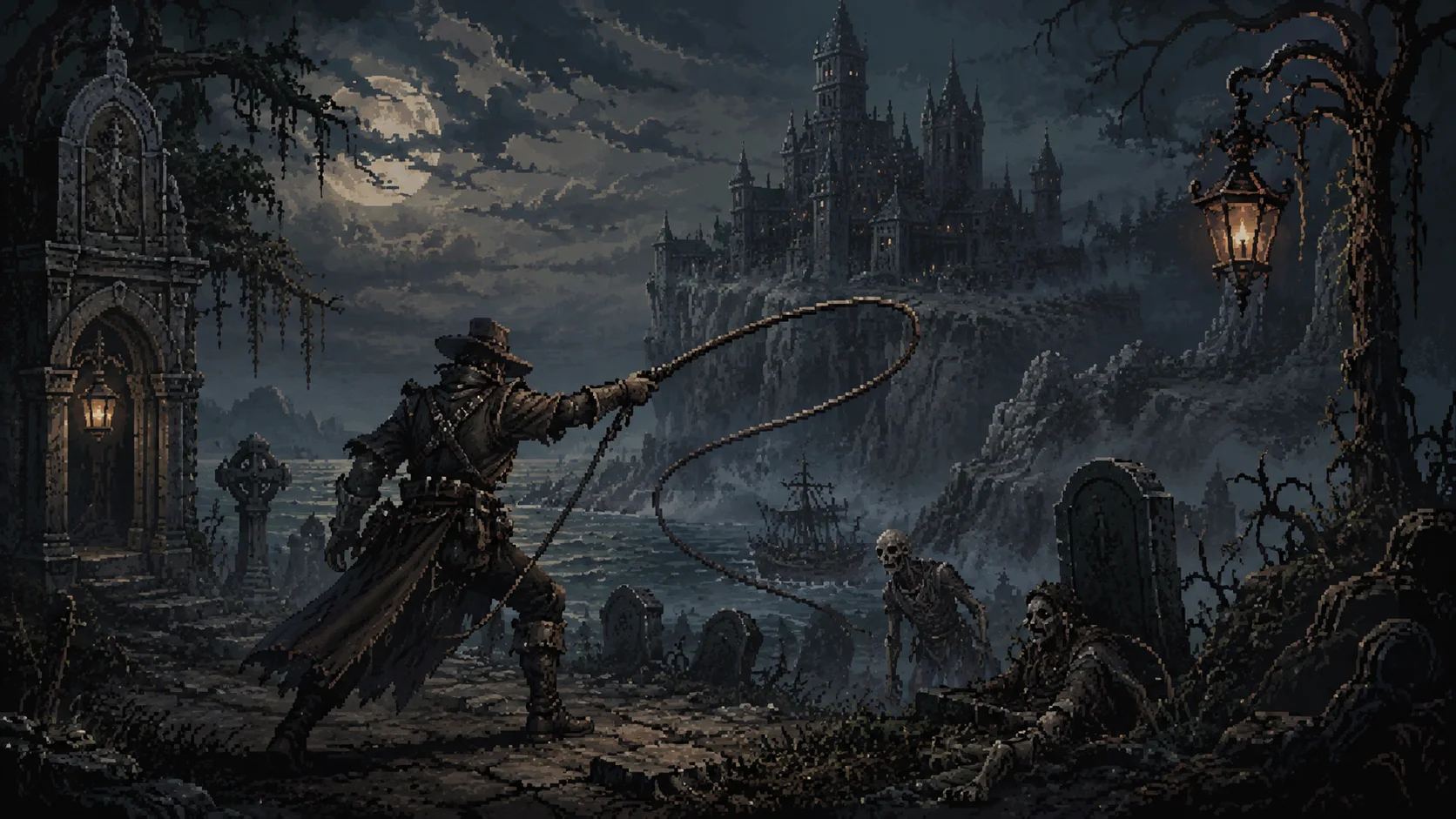
Mina the Hollower is a top-down action-adventure game with obvious debts to the original Legend of Zelda and the Game Boy Zelda titles that refined the formula. The player controls Mina, a grave-robber on a mysterious island populated by supernatural threats, navigating overworld environments, entering dungeons, acquiring new tools, and solving puzzles that use those tools in increasingly clever combinations. The format is one of gaming’s oldest and most proven: Legend of Zelda invented it in 1986, and every entry in that franchise since has been a demonstration of how much creative space exists within a structure of overworld exploration, dungeon navigation, and tool-based puzzle design.
Yacht Club’s specific contribution is executing that format with the mechanical precision that comes from a studio that has spent a decade studying what makes tight game design feel right. Mina’s movement — the whip she uses as both combat tool and traversal mechanic, the burrow ability that allows her to move briefly underground — is described in reviews as immediately readable and steadily revelatory, the kind of movement system that feels intuitive from the first moment and is still teaching you new things in the final hours. GamingTrend’s assessment that Mina “manages not only to equal the series that inspired it, but in some ways surpasses it” is a bold claim for any game, and the frequency with which reviewers are reaching for Zelda comparisons without qualification suggests it’s not hyperbole.
The horror aesthetic — dark island setting, Victorian-adjacent visual design, monsters drawn from folklore rather than fantasy convention — gives Mina a tonal identity that distinguishes it from the bright, friendly aesthetic that Shovel Knight operated in. Mina the Hollower is not a children’s game despite its accessible mechanics. It is a game that happens to be playable by anyone with any level of experience, but whose visual and tonal language addresses adults with a taste for gothic atmosphere and European horror mythology. The combination of mechanically accessible design with thematically mature aesthetics is a balance that few games achieve; Mina apparently does.
The Indie Metacritic Argument
The specific claim that Mina the Hollower is the highest-rated game of 2026 — above major franchise entries from established publishers — is the argument that the independent games industry has been making about itself for the past decade, now rendered in a single data point. The narrative that indie games “punch above their weight” has been softened over years of critical success into something more accurate: the best independent studios, operating with creative freedom that publisher relationships typically constrain, consistently produce games that are better-reviewed than the median major-studio production.
The economics that enable this are counterintuitive. Mina the Hollower was developed on a budget that is a fraction of what any major publisher spends on a comparable release. Yacht Club has no marketing department of the scale that Activision, EA, or even medium-sized publishers operate. The game won’t receive the retail shelf space, the TV advertising, or the promotional integration that major publishers buy as a matter of course for new releases. Its visibility will come from word of mouth, from review coverage, from YouTube and streaming recommendations, and from the cumulative reputation that Yacht Club built with Shovel Knight over twelve years of post-release support.
And yet the Metacritic score is 92. The reason is not mysterious: Yacht Club made the game they wanted to make, without the compromises that publisher relationships and franchise expectations impose, and they made it at the level of craft that their decade of study of classic game design prepared them for. Creative freedom is not a guarantee of quality — most independently developed games are not exceptional. But for studios that have demonstrated the taste to know what makes games great and the technical competence to execute on that knowledge, creative freedom produces outcomes that constrained development rarely does.
Game of the Year Candidacy in a Strong Year
2026 has been an unusually strong year for games through May. 007 First Light’s launch received the first serious GoldenEye comparison in nearly three decades. Forza Horizon 6’s Japan setting is being called the best entry in that franchise. The cozy games market has continued to mature with multiple high-quality releases. And now Mina the Hollower arrives to claim the year’s highest Metacritic score — in a year that wasn’t short on competition for that distinction.
The game of the year conversation in gaming media typically crystallizes around the major fall releases — the Novembers and Octobers when publishers concentrate their biggest launches ahead of the holiday buying season. A game launching at the end of May that earns legitimate game of the year discussion needs to be exceptional enough to remain in the conversation through six more months of releases, including whatever the major publishers have scheduled for fall 2026. Mina the Hollower will need to hold its critical reputation against that competition.
Shovel Knight’s trajectory is instructive. It launched in 2014 to exceptional reviews, won numerous game of the year awards for its release year, and has never left the conversation about classic indie games because the quality of the original design sustained it. The sequels, expansions, and spinoff content that Yacht Club released over the following decade maintained and deepened the critical and fan reception that the original earned. If Mina the Hollower follows a similar arc — and the early indicators suggest it’s positioned to — Yacht Club will have built a second franchise with game of the year-caliber quality. That is not a normal outcome for any studio of any size. For a small independent developer without publisher backing, it is remarkable.
What Yacht Club Proves About the Games Industry
The broadest claim that Mina the Hollower’s success supports is one about the structure of the games industry in 2026 — specifically about where creative risk-taking is happening and why. The major publishers that dominate gaming revenue are primarily operating franchise IP, sequels, and live-service models that optimize for player retention metrics rather than critical achievement. The creative risks — original IP, new game mechanics, tonal experimentation — are concentrated in the independent development community, where studio survival depends on making something people find worth paying for rather than something that maximizes engagement metrics within an existing player base.
This isn’t a criticism of major publishers — they are rational actors responding to the economics of their market. It’s an observation about where in the industry the games that win game of the year awards are coming from. Shovel Knight. Undertale. Hollow Knight. Hades. Celeste. The Forgotten City. Disco Elysium. The highest-profile critical achievements of the past decade in gaming have disproportionately come from small independent studios making original games with limited budgets and complete creative control.
Mina the Hollower joins that company as of today. Yacht Club Games has made the highest-rated game of 2026. A studio that started with a Kickstarter campaign twelve years ago, that has never had a publisher, that operates on budgets that major studios spend on individual cutscenes, has produced something that the entire industry — the thousand-person studios, the franchise IP owners, the AAA publishers — could not match this year. That’s not a fluke. It’s a pattern. And it’s worth understanding why.
The Decision That Made the Score Possible
Metacritic 92 is not something that happens by accident or by budget. It is the outcome of a specific kind of product discipline: knowing exactly what the game is for before the first line of code is written, and building every subsequent decision in service of that answer. The larger the team, the harder this discipline is to maintain — more people means more perspectives on what the game could be, more stakeholder opinions about what it should include, more surface area for feature creep to compound across a multi-year production cycle. Yacht Club, working at the scale they work at, has fewer people arguing for additions that don’t serve the core.
The specific discipline visible in Mina the Hollower’s design is scope restraint. The game is not trying to be the longest or the most content-dense in its genre — it is trying to be the most precisely realised. A fifteen-hour experience that is exactly what it intended to be produces a different critical response than a thirty-hour experience that is competent across its full length but exceptional in none of it. Reviewers describing the game as “tight” and “focused” are not damning it with faint praise. They are identifying the design decision that made the score achievable.
Yacht Club’s track record makes the pattern legible: Shovel Knight launched at 90. The DLC expansions each maintained quality discipline rather than expanding scope to justify the price. Mina the Hollower at 92 is not a surprise if you’ve been watching the studio’s decision-making across a decade. They have consistently chosen to do fewer things at a higher level of finish rather than more things at an adequate level. That choice is harder to make as a studio grows and as publisher expectations about content hours expand — and Yacht Club has made it every time.
IO Interactive built its reputation on Hitman — specifically on the version of Agent 47 that the studio rebuilt from 2016 onward, a character who moves through social systems, reads environments, and executes plans in spaces designed to reward creativity and patience. The rebooted Hitman trilogy is one of the most thoughtfully designed stealth game series of the last decade: levels that function as giant mechanisms, where understanding the rules of a space is the prerequisite for breaking them with maximum elegance.
007 First Light releases Wednesday on PlayStation 5, Xbox Series X/S, and PC. It is IO Interactive’s first James Bond game — an original origin story, not an adaptation of any existing film — and it arrives with early access for pre-order customers opening Tuesday. The question the game has to answer is whether the studio’s specific design expertise transfers to Bond, or whether the Hitman framework doesn’t survive the translation from a bald assassin with no biography to a character with sixty years of cultural weight and a very specific set of expectations.
The Origin Story Problem
007 First Light stars Patrick Gibson as a 26-year-old James Bond — a naval air crewman who performs a heroic act, is offered the chance to join the newly revived Double 0 program, and then watches a mission go wrong in ways that will presumably define who he becomes. The story is original: no existing film plot, no Brosnan or Craig events to anchor it, no continuity with any established cinematic or gaming Bond. IO Interactive owns the design space entirely, which is both the opportunity and the risk.
Bond origin stories have a complicated history in the franchise. Casino Royale (2006) is the gold standard — Daniel Craig’s first film worked precisely because it grounded the character’s emotional armor in a specific, costly loss rather than treating him as a fully-formed archetype who arrived with his gadgets and quips intact. The character became interesting because the film showed the gap between who Bond was at the start and who he had to become by the end. That’s the template for an origin that works.
The game’s premise — “earn the number,” as the marketing puts it — is the same structural promise. Bond doesn’t start with 00 status. He earns it. The question is whether the game’s narrative design has the patience and craft to make that earning feel earned rather than inevitable, and whether Gibson’s performance can carry the emotional register that the template requires. The David Arnold-composed theme song revealed in April suggested the production has taken the tonal demands seriously.
What IO Interactive Does Differently
The Hitman approach to level design is worth understanding because it’s what IO Interactive will apply to Bond. In Hitman, you are always the smartest person in the room if you’ve done the work of understanding the room. The preparation is the gameplay — learning patrol routes, identifying disguise opportunities, finding the angle that lets you get close enough to complete the mission without exposure. The action is the execution of a plan, not a reflexive response to chaos.
007 First Light is built as an action-adventure with stealth as a core option rather than a pure stealth game. You can fight with fists or firearms, use gadgets to infiltrate, or bluff your way past guards with the kind of social navigation that Bond films have always balanced against their action sequences. The game explicitly offers both “go silent” and “go loud” as viable approaches, which suggests IO Interactive isn’t trying to be Hitman with a Bond skin. They’re trying to build something that serves the full Bond register — tuxedos and infiltration alongside car chases and gunfights.
Whether the combat holds up to the stealth quality is the design question the reviews will answer. Hitman’s combat was always its weakest element — the game is at its best when you’re not fighting at all, and fighting is usually the indication that something went wrong. A Bond game needs combat that feels as considered as the stealth, because Bond has never been exclusively a spy who avoids confrontation. He’s a spy who chooses when to confront and how.
The Broccoli Connection and Why the IP Rights Matter
IO Interactive secured the Bond license directly from Eon Productions — the Broccoli family’s company that has controlled the cinematic Bond franchise since 1962. This is the same entity that green-lights Bond films, approves casting, and maintains the character standards that have kept the franchise commercially viable across six decades and six Bonds. Eon’s involvement in the game means the creative direction has been overseen by the people who understand Bond’s commercial identity better than anyone.
This matters for what the game is and isn’t. IO Interactive isn’t working against the franchise’s established identity; they’re working within it with the franchise owners’ explicit participation. The original Bond story that First Light tells is original by design — Eon doesn’t want a game that contradicts existing films or closes down future narrative options. An entirely original origin gives them control over what the game adds to the mythology without affecting the cinematic continuity.
The result is a game that functions as a standalone Bond story rather than a franchise extension in the way Marvel or Star Wars games often feel. You can play it without knowing anything about any Bond film and get a complete, self-contained narrative. You can also play it as a longtime fan and get the satisfaction of watching the specific character behaviors — the ruthlessness, the wit, the particular emotional damage — begin to form in a young man who hasn’t earned them yet.
Patrick Gibson and the New Bond Question
The casting of Patrick Gibson as Bond is the production decision with the longest tail. If the game succeeds, Gibson’s portrayal of a young Bond will influence the character’s popular perception and potentially inform casting conversations for the next cinematic Bond (which remains unannounced as of 2026). If it fails, Gibson carries more of the blame than the design or the writing, because Bond is fundamentally a performance-dependent character.
Gibson’s previous work — primarily in streaming television — shows range but hasn’t previously required him to carry a franchise-scale property. The game’s trailers have shown him handling the physicality competently and the dialogue without the self-awareness that Daniel Craig made look so effective in Casino Royale. The review coverage starting Wednesday will be the first public evaluation of whether Gibson’s performance in a fully realized context matches what the trailers suggested.
The Bond franchise has a specific problem with originality: the character is so defined by his archetype that performances that don’t honor the archetype feel wrong, while performances that lean too hard into the archetype feel like imitation. Craig’s tenure worked because he found the gap between the man and the archetype and made the gap the story. First Light’s origin premise requires exactly that gap to function. How Gibson inhabits it is the game’s central artistic question.
Wednesday’s Answer
IO Interactive has spent four years building 007 First Light after winning the license from Eon in 2021. The development time shows in what the pre-release materials demonstrate: a game with a distinct visual aesthetic, a narrative ambition that matches the IP’s weight, and a design team that has thought carefully about what a Bond game should feel like from the inside rather than what it should look like from the outside.
Whether that translates to a game that justifies the IP and meets the standard set by the Hitman trilogy is what Wednesday’s reviews will establish. The smart money, given IO Interactive’s track record and the four-year development timeline, is on a game that knows what it’s doing. The variable — the Bond performance, the narrative pacing, the balance between stealth and action — is what the first seventy-two hours of playing will answer.
Early access opens Tuesday at 2 PM UTC. The full release is Wednesday. The license that’s defined cinema since 1962 arrives in a studio built for exactly this kind of calculated infiltration. The question is whether they earned the number.
The Mental Model IO Interactive Had to Build Before They Could Accept the License
IO Interactive has been working on 007 First Light since at least 2020. Six years is a long time to carry a license. The question worth asking before the game releases is not whether the game is good — the reviews will answer that — but whether the studio built the right mental model for what the license actually is.
Most studios approach a legacy franchise license with one of two models. The first is the product model: the license is a marketing advantage, a recognisable brand attached to a game that would otherwise need to earn its own audience. This model treats the brand as a shortcut. The second is the responsibility model: the license carries an obligation — to an audience that has been living with Bond for sixty years, to a creative vision that has survived multiple lead actors and four decades of film-industry change, and to whatever the franchise will need to be after this entry. This model treats the brand as a constraint.
The studios that have done best with franchise games have used the second model and found it, paradoxically, more creative than the first. The constraint is where the interesting design decisions live. You cannot give Bond an arbitrary personality — his personality is his competitive advantage, and it is not yours to invent. What you can do is find the version of that personality that games can express better than film can, and then make that version as good as engineering and design can make it.
IO Interactive built Hitman’s reputation precisely by accepting constraints — the same target, the same location, infinite approaches — and finding the creative space inside them rather than around them. That discipline is the correct preparation for a Bond game. Whether they applied it here is the question TT Games faced with LEGO Batman’s franchise iteration — how much of the prior license’s meaning survives translation into a different medium, and how much new meaning the new medium earns. First Light’s launch will answer one version of that question for the first time.
The Design Vocabulary That Serves Hitman May Not Serve Bond
IO Interactive’s design team built something specific with Hitman: an experience that rewards understanding over reflexes. In the rebooted trilogy, the most satisfying outcomes come from observation — learning how a space works before you exploit it. That design philosophy trains a particular kind of attention in players, and it trains a particular kind of thinking in the team building it.
Bond requires something harder: a player who is sometimes patient, sometimes reactive, sometimes charming, and credibly excellent at all three. The Hitman system is optimized for a single mode. When the system is working, you’re not fighting because you’ve made fighting unnecessary. 007 First Light commits to a mixed mode — stealth and combat as parallel valid paths — and that commitment requires building two excellent systems instead of one.
The design choice that reveals IO Interactive’s confidence is that they haven’t tried to make combat feel like a failure state. In Hitman, getting caught typically means a planning error. In First Light, going loud is a legitimate option with its own reward structure. That’s a meaningful shift in design philosophy, not just a mode addition. Whether the combat system supports that philosophy is what reviews will determine — but the decision to build it rather than discourage it signals that the studio understands what Bond requires from the inside.
Warhammer Skulls airs today — the tenth anniversary of Games Workshop’s annual video game showcase, live at 5pm BST. Hosted by Alanah Pearce, the event runs across every major platform that broadcasts gaming content and covers the full breadth of the Warhammer video game ecosystem: current games, upcoming titles, DLC, expansions, and world premieres. Today’s announcements include Dawn of War IV, new content for Space Marine 2 and Darktide, Dark Heresy, Boltgun 2, and the simultaneous release of Warhammer 40,000: Mechanicus 2.
That’s not a thin lineup. Dawn of War IV alone — confirmation of the sequel to one of the most beloved strategy franchises in PC gaming, following a decade of waiting and a previous installment that split the fanbase — would be the headline event at most gaming showcases. Skulls 2026 is announcing it alongside a same-day sequel release and a full slate of franchise updates. This is what ten years of consistency looks like when it compounds.
Mechanicus 2: The Same-Day Release
Warhammer 40,000: Mechanicus released in 2018 as a cult hit. Developed by Bulwark Studios, it was a turn-based tactical game set within the Adeptus Mechanicus — the technological priesthood of the 40K universe, the faction that guards and maintains the ancient machines humanity depends on while treating technology as sacred and incomprehensible simultaneously. The game found an audience that remains unusually devoted. It did what good games in the Warhammer ecosystem do when they work: it used the faction’s specific theology and aesthetic to build a game that couldn’t have been anything else. The Mechanicus’s relationship with machinery, with knowledge, with the horror of understanding technology you can no longer build — that’s a game premise. Not just a setting.
Mechanicus 2 releases today alongside the Skulls showcase. That timing is deliberate. The first game built a community over eight years of ownership, replays, and enthusiastic word-of-mouth. Releasing the sequel on the biggest day in the Warhammer gaming calendar means every player who bought the original, every fan who has been waiting for the sequel announcement, and every attendee of the Skulls broadcast is watching when the game becomes available. It’s a commercially coherent decision dressed as a celebration.
The sequel expands on everything that made the original work — the resource management of Cognition points, the tactical layer built around Mechanicus units that are themselves closer to small walking machines than conventional soldiers, the decisions about which ancient technologies to excavate and which to leave buried. Eight years of player feedback about what the original got right and what it left unfinished is the development foundation. The players who cared enough to be vocal about the original are the most valuable QA input a sequel can have.
Dawn of War IV: The Confirmation That Changes the Strategy Conversation
Dawn of War and Dawn of War II are foundational PC strategy games. The first entry in 2004 defined what real-time strategy with a dedicated faction identity could look like. Dawn of War II in 2009 pivoted to a squad-based tactical structure that felt like a different game, earning its own fanbase while disappointing players who wanted the large-scale battlefield of the original. The franchise has always had the problem of a divided audience — base-building RTS players and squad tactics players who want different things from the same IP.
Dawn of War III in 2017 tried to split the difference and satisfied neither side adequately. Relic Entertainment’s attempt to combine the epic scale of the first game with the hero unit focus of the second produced a game that was technically accomplished and commercially and critically disappointing enough that the studio moved on without a sequel. The Dawn of War franchise has been dormant since 2017 — alive in the imagination of a fanbase that keeps the original games on Steam bestseller lists, dead in actual production.
Today’s confirmation changes that. Dawn of War IV is in development. The developers, announcement format, and release window aren’t yet public beyond today’s Skulls reveal, but the confirmation that the franchise is active again is the signal the community has been waiting for since 2017. What the game is — which direction it takes from the franchise’s divided history — is the question that will dominate the next phase of the conversation.
The fanbase has had nine years to develop strong opinions about what went wrong with Dawn of War III and what Dawn of War IV needs to be. Those opinions are not unified. The base-building RTS players want a return to the large-scale battles of the original. The squad tactics players from Dawn of War II want the intimate, character-driven campaign structure. The question of which audience a new developer — or a rebooted Relic — will try to satisfy is the question that will define whether the announcement lands as relief or as the beginning of a new argument.
Today’s reveal sets up that argument. It’s a better problem to have than continued dormancy.
Space Marine 2 and the Live Service Question
Warhammer 40,000: Space Marine 2 launched in September 2024 and became the fastest-selling Warhammer game in history, shipping over five million copies within a month and sustaining one of the most active communities of any third-person action game in 2025. The game’s post-launch support — Operations content, balance updates, the Chaos expansion — has been managed well enough that the community remained engaged more than a year after launch, which is unusual for a game without a battle pass or paid season model.
The Skulls showcase today will bring new Space Marine 2 content announcements. What specifically has not been confirmed, but the pattern of post-launch reveals at Skulls suggests this is where Saber Interactive communicates the next major content direction to the player base. The question the community has been asking since early 2026 is whether the game’s second year of content maintains the quality and pacing of the first — whether the Chapter and faction additions continue to justify the engagement of a playerbase that bought the game once and has been rewarded with significant free updates since.
The broader significance of Space Marine 2’s post-launch model is what it demonstrates for Warhammer gaming generally: a premium-priced game with a strong community can sustain without a battle pass if the developer delivers consistent, high-quality content on a schedule the community can trust. That model is not common. Most studios feel the pressure to monetize ongoing engagement more aggressively. Saber’s approach to Space Marine 2 has become a reference point in the argument about how live service games should operate.
Darktide’s Continued Rehabilitation
Warhammer 40,000: Darktide launched in November 2022 in a state that generated immediate community backlash: a progression system that felt regressive compared to Vermintide 2, a cosmetics model that charged premium prices without delivering premium value, and a technical state that needed significant polish. Fatshark’s response — an extended revision of the progression and monetization systems, a relaunch of the Rejects edition with updated content, consistent balance and content updates through 2024 and 2025 — is one of the more complete post-launch turnarounds in recent memory.
By 2025, Darktide had largely won back the community that its launch alienated. The game is now legitimately one of the best cooperative PvE action games available, and the Warhammer 40K atmosphere — grimdark hive city corridors, the specific horror of Chaos corruption, the audio design that communicates scale and danger better than almost anything else in the genre — is as strong as anything in the franchise. Skulls 2026 will include new Darktide content announcements, and the difference between the community’s reception now versus 2022 reflects how completely Fatshark recovered from the launch.
Dark Heresy and What’s New
Dark Heresy — the Warhammer 40K RPG franchise that puts players in the role of investigators working for the Inquisition rather than front-line soldiers — has been building quietly toward a video game adaptation that can do justice to the source material’s paranoid, conspiratorial tone. The setting is the Warhammer 40K universe at street level rather than front-line combat level: gangers, cultists, mid-tier Chaos agents, and the specific horror of a universe where the supernatural is real and institutional power is the only barrier against it. That’s a different kind of Warhammer game than the franchise usually produces.
Today’s Skulls reveal will include Dark Heresy content. Whether this is a new announcement, a development update, or a release date confirmation depends on where the project stands — the franchise has had multiple game adaptations in development across different studios at different points, and the state of the current leading project will determine what form today’s announcement takes.
Why Skulls Works When Other Showcases Don’t
Gaming showcases have a reliability problem. E3 failed because it promised more than it delivered, accumulated enough bad faith from empty announcements and vaporware reveals, and eventually collapsed under the weight of its own irrelevance. Summer Game Fest has been more disciplined but remains inconsistent — some years the Dolby Theatre show is genuinely exciting, other years the announcements feel thin relative to the production.
Skulls works because the scope is managed. Games Workshop controls the IP. The developers who participate are building in the same universe with the same design language. The community that watches is already invested in the franchise, which means the threshold for a successful announcement is different: a Dawn of War IV reveal doesn’t need to introduce people to the universe. It just needs to confirm that the thing they’ve been waiting nine years to hear is happening. That’s a lower bar to clear than convincing a general audience to care about a new IP.
Ten years of Skulls has also built a consistent promise: show up on this day and you will learn what’s happening with every Warhammer game you care about. Same day every May. Same format. Same commitment to showing actual gameplay rather than cinematic trailers for products that don’t exist yet. That consistency is worth more than any individual announcement because it means the community can plan around it. They know when to care, and they show up every year because they know they’ll be rewarded for it.
Today is the tenth year. Mechanicus 2 is out. Dawn of War IV is confirmed. The showcase starts at 5pm BST. The decade of accumulated trust is paying off in one of the biggest days the Warhammer video game ecosystem has produced.
Editor’s note (updated September 2026): This piece was reported on GTA 6’s pre-order day, when the standard edition was widely reported at $70 based on a Best Buy leak and Take-Two CEO Strauss Zelnick’s general comments about staying within the $70–80 AAA range. Take-Two’s later, official pricing confirmed the standard edition at $80 (Ultimate Edition at $100) — Zelnick did not confirm $70 specifically, and the figure did not hold. The pricing tiers and revenue-strategy analysis below reflect what was reported and known at the time of the May 18 pre-order launch; the specific dollar figures have not been re-run against the final $80 price.
GTA 6 pre-orders opened today, May 18, exactly as the Best Buy affiliate leak indicated. Physical pre-orders went live first, with digital storefronts following within hours. Take-Two was widely reported at a standard edition price of $70 for PlayStation 5 and Xbox Series X|S — consistent with the current AAA standard and the floor of the $70–80 range Zelnick had indicated in March. (See the editor’s note above: the eventual official price was $80.)
The $70 price is not the story. A game that will sell 25–30 million units in its first week at any price between $60 and $100 is not a game where the price point determines the commercial outcome. The story is the structure around the $70 — the premium tiers, the early access window, the online component, and what Take-Two’s revenue model for GTA 6 actually looks like across a product that will still be selling in 2039.
The Best Buy leak that confirmed today’s pre-order date added $2 billion to Take-Two’s market valuation overnight. That number is useful context. It means the market was already pricing in uncertainty about whether the pre-orders would materialise as scheduled. Now that they have, the question shifts to: what do the first 48–72 hours of pre-order volume tell us, and what does the full commercial structure of this launch look like?
The Pricing Tiers and What They Signal
GTA 6’s launch structure includes multiple tiers above the $80 standard edition. The pattern for major Rockstar releases has historically been: standard edition, premium edition with early access and bonus content, and collector’s editions at higher price points. Early leaks point to an Early Access tier that grants players 72-hour access before the November 19 street date — meaning buyers at that tier would be playing from November 16.
Early access pricing at premium AAA launches has settled at $10–20 above the standard edition price. At $90–100 for three days of early access, the question is whether the GTA audience — which is large, impatient, and highly aware of spoilers — will pay a meaningful premium to be in the game before the first wave of YouTube playthroughs floods the internet.
The evidence from other major launches suggests yes. Baldur’s Gate 3, Hogwarts Legacy, and Final Fantasy XVI all saw substantial early access tier uptake. For GTA 6, where the narrative is an explicit selling point and where spoilers will circulate from the moment servers go live, the motivation to play before the cultural conversation reaches peak velocity is real. Take-Two’s pricing team knows this.
The collector’s edition is the other interesting data point. Rockstar’s collector’s editions for previous titles have been modest — physical art books, in-game currency, branded merchandise at reasonable price points. GTA 6’s collector’s edition positioning in the $150–200 range would represent a step up, reflecting both the scale of the launch and the collector’s market that has grown significantly since GTA 5 in 2013. A $150 collector’s edition that sells 500,000 units generates $75 million in revenue before the game is in any customer’s hands.
Why $80 Is Actually a Conservative Price
Take-Two pushed back against persistent rumours of a $100 or higher base price for GTA 6. That decision deserves examination because it is not economically obvious.
GTA 5 launched at $59.99 in 2013. Thirteen years of inflation would put that price at approximately $85–90 in 2026 dollars. The gaming industry has been notoriously slow to adjust prices for inflation relative to other entertainment sectors — a concert ticket, a movie, a streaming subscription have all seen price increases that far outpace what game publishers have charged. GTA 6’s $80 standard price, itself a step up from the $70 AAA norm that took hold in 2021, still lands under that inflation-adjusted GTA 5 benchmark — a real-terms discount relative to what publishers charged in the early 2000s adjusted for inflation.
The case for a higher launch price is straightforward: demand for GTA 6 is inelastic at any realistic price point. A consumer who has waited 13 years for this game is not going to put it back on the shelf because it costs $100 instead of $80. The extra $20 on 25 million units is $500 million in revenue. The argument against is that GTA’s audience includes a substantial younger demographic for whom $80 versus $100 is a meaningful budget decision, and that a higher price would shift more purchases to used, borrowed, or delayed — reducing Take-Two’s direct revenue share and potentially slowing the GTA Online user base that generates ongoing revenue.
Zelnick’s $80 decision — holding well short of the $100 some analysts floated — reads as a long-game call: maximise day-one install base (and therefore GTA Online population) over short-term per-unit revenue. GTA 5’s most durable revenue came from GTA Online microtransactions — Shark Cards — which generated hundreds of millions annually for over a decade. A larger day-one player base builds the online ecosystem faster, and a thriving GTA Online is worth far more than an extra $20 per copy.
GTA Online: The Real Revenue Engine
Understanding GTA 6’s commercial model requires separating the packaged product from the service component. The $80 launch price is how Take-Two accounts for the game on day one. GTA Online is how Take-Two generates revenue for the next decade and beyond.
GTA 5’s online mode launched with the base game in 2013 but became a separate, free-to-download product on PlayStation 5 and Xbox Series X|S in 2022 — meaning players could access GTA Online without buying the single-player game. The result was a dramatically expanded player base and continued Shark Card revenue from a new generation of players who had never paid for the packaged game.
GTA 6 Online will follow a similar structure. The details of what it contains are tightly held, but Rockstar’s pattern has been to launch Online as a more developed product than GTA 5 Online was at launch — that game shipped with a relatively thin online experience that was built out over years. GTA 6 Online, arriving 13 years into the live service era, will launch with a richer feature set and will be positioned from day one as the primary long-term revenue driver.
Take-Two’s investor projections for GTA 6 recurrent consumer spending — the in-game economy — are not public. But analyst estimates place the lifetime GTA 6 Online revenue in the range of $3–6 billion across its first five years, significantly exceeding the single-player launch revenue. The $80 standard price is effectively a customer acquisition fee for the online service.
The Pre-Order Commercial Signal
First-day pre-order volume for a game of GTA 6’s scale will be closely watched by industry analysts, publishers, and retailers as a leading indicator of the launch’s commercial performance. GTA 5 set pre-order records for its era; GTA 6 is expected to exceed them.
The specific number that will circulate is the NPD (or its successor tracking services) first-day and first-week pre-order count. These numbers are not always made public immediately, but major retailers report directional signals. Best Buy’s inventory system, which is how today’s leak emerged in the first place, will surface early demand data. Amazon and PlayStation Store digital pre-orders will generate their own internal signals.
Take-Two’s stock reacted to the pre-order announcement confirmation. The $2 billion valuation increase on the leak itself understates the impact if first-day pre-orders track at the high end of analyst projections — the stock will reprice again when actual numbers emerge. For investors, the pre-order window is a data point in a model that has assumed significant GTA 6 revenue since Take-Two acquired the November release date.
No PC Price Yet — and What That Absence Signals
The pre-orders that opened today are console-only: PlayStation 5 and Xbox Series X|S. There is no PC SKU, no Steam page, no Epic Games Store listing. This is consistent with what Rockstar communicated last week — no simultaneous PC release — but the absence of a PC pre-order is also a commercial choice, not just a technical one.
A PC version of GTA 6 will sell at a higher average selling price on Steam than the $80 console standard. PC players have demonstrated willingness to pay premium prices for optimised PC releases — GTA 5’s PC launch sold strongly despite being two years behind the console version. The PC market is also more resilient to used game and disc-sharing dynamics that affect physical console retail.
Rockstar’s historical pattern is to delay the PC version, let the console community establish the online economy and the cultural conversation, and then release the PC version at a moment when it functions as a relaunch — bringing a new audience into an already-running GTA Online world. The PC launch is the second revenue cycle. Its absence today is deliberate, not a gap.
What Five Months of Pre-Order Window Does
Opening pre-orders on May 18 for a November 19 launch is a 185-day pre-order window. That is long by gaming standards. Standard industry practice has moved toward shorter pre-order windows — the awareness that a game is coming is sufficient motivation, and long windows without new content create fatigue.
Rockstar and Take-Two are running a different calculus. The 185-day window does several things simultaneously. It locks in revenue recognition timing for Take-Two’s fiscal year — digital pre-orders generate upfront revenue that improves quarterly numbers in the period they are collected. It establishes physical retailer commitment — Best Buy, GameStop, Target, and Walmart allocate shelf space and promotional placement based on pre-order velocity. And it creates a continuous commercial presence for GTA 6 across the summer gaming season when competing titles are releasing and competing for consumer attention.
The marketing cadence Rockstar will run across the 185-day window is the other variable. Each new trailer, each new detail about Leonida, each confirmed gameplay feature functions as a pre-order catalyst — a reason for someone who has been waiting to commit today rather than waiting until November. Managing that cadence to maintain commercial momentum without oversaturation is the marketing challenge of the next six months.
Why The $80 Price Point Is A Better Design Decision Than It Looks
The GTA 6 base price is a design decision in the sense that all pricing decisions are design decisions: they shape what users do and feel without the user noticing the shaping. The $80 price has been read commercially as conservative, but the more interesting read is what it does to user behaviour at the moment of purchase.
Price as design has a specific function in interactive entertainment. It signals the category of object the buyer is acquiring. A $40 game says “casual purchase, low expectations.” An $80 game says “premium product, expected to deliver multiple weeks of gameplay.” A $100 game says “this is going to disappoint me unless it is extraordinary, and the disappointment will be loud.” Rockstar’s $80 choice positions GTA 6 in the category users already expect of it, without raising the expectations to the level where the inevitable post-launch nitpicks become disproportionately costly. The buyer feels they got the standard premium tier. The studio gets the premium price without the premium-of-the-premium psychological tax.
Compare this to the alternative path. A $90 or $100 launch price would have signalled “the game must justify the gap” — and any GTA-6 player who finished the prologue feeling underwhelmed would have anchored the underwhelm against the price gap. The $80 price closes that anchor. The buyer who is mildly disappointed by hour five still considers the purchase fair because the price did not promise more than the experience delivered. This is invisible good design. It is the price equivalent of a door handle that tells you which way to push without you noticing it told you.
FAQ
What is the GTA 6 pre-order price?
The standard edition is $80 for PlayStation 5 and Xbox Series X|S — Take-Two’s confirmed official price (see the editor’s note above; this article originally reported a widely circulated $70 pre-order figure that did not hold). Premium and collector’s tiers are available at higher price points, with the premium tier reportedly including early access from November 16.
When do GTA 6 pre-orders close?
Pre-orders remain open until the November 19 launch. They are not time-limited.
Can I pre-order GTA 6 on PC?
No PC version has been announced. PC pre-orders are not available. Rockstar’s historical pattern is to release a PC version 6–18 months after the console launch.
What is included in the GTA 6 premium edition?
Exact contents have not been officially detailed, but the premium tier is reported to include 72-hour early access (from November 16) plus in-game bonuses. Pricing for the premium tier is expected in the $90–100 range.
Why is the base price $80 and not higher?
Take-Two CEO Strauss Zelnick has explicitly pushed back on higher base pricing. The strategic logic is to maximise day-one install base for GTA Online, whose microtransaction revenue across 10+ years significantly exceeds the packaged game revenue per unit.
How does GTA 6’s pre-order compare to GTA 5?
GTA 5 set pre-order records for its era at a $59.99 price point. GTA 6 is expected to exceed those numbers on a larger console installed base. Industry analysts project first-week sales of 25–30 million units, which would generate approximately $2 billion in launch revenue.
100% on OpenCritic. Day One on Game Pass. The Series Found Its Setting.
Forza Horizon launched in 2012 in Colorado. It went to Southern Europe, Australia, Britain, and Mexico. It never went to Japan, and for fourteen years that absence was the loudest recurring request in the game’s community. Japan was the answer to every “where should Horizon go next” thread that showed up in gaming forums between 2012 and 2025. Playground Games said no repeatedly — the design demands of the map were too complex, the cultural expectations were too high, the risk of a Japan setting that didn’t do justice to the real locations was a reputation risk for a series built on automotive tourism as much as racing.
Forza Horizon 6 shipped Thursday on Xbox Series X/S and PC. Premium Edition owners got four days early access starting Tuesday. The OpenCritic score is 100% — every critic who reviewed it recommends it. The Metacritic average is 91. Game Informer called it “remaining on the podium.” Autoblog’s review, coming from a publication that covers actual cars rather than car games, called it “the Japan that Forza fans have always wanted.” The series that said no to Japan for over a decade finally said yes and landed perfectly.
The Map
The map spans fictional representations of the Kantō, Chūbu, and Kansai regions simultaneously. Tokyo-inspired city streets with elevated highways and neon-lit tunnels. The Japanese Alps rendered with the verticality that European racing maps have historically done better than any Horizon game. The Noto Peninsula’s coastal highways. A snow corridor modeled on Yuki-no-Otani — the Tateyama Kurobe Alpine Route’s famous snow wall, where road crews cut through walls of snow tens of meters high — that reviewers are calling one of the most visually striking environments in the series’ history.
The geographic range is what makes the Japan setting work in a way that a single-city or single-region interpretation wouldn’t. A Tokyo-only map would be urban circuit racing dressed as open world. A countryside-only map would be beautiful and empty. The combined Kantō-Chūbu-Kansai structure — rural mountain passes connecting to coastal highways connecting to city environments — is exactly the variety that Horizon maps need to sustain fifty hours of content without the player exhausting any single environment type.
The snow environment specifically is Playground’s biggest technical achievement in the series. Horizon 5 in Mexico had weather systems — the seasonal storm events were one of that game’s most impressive visual moments. Horizon 6’s snow corridor and Japanese Alpine winter environments are a permanent-season area rather than a weather event, which means the lighting, the handling physics, and the visual design are all optimized for snow in a way that an occasional storm event can’t be. Driving through the Yuki-no-Otani corridor in a rear-wheel-drive sports car at speed, with snow walls fifteen meters high on either side, is a specific experience that no Horizon map has produced before.
550 Cars and the Japanese Roster Problem
The launch roster is more than 550 cars — larger than Horizon 5’s launch lineup. The Japanese manufacturer coverage is comprehensive in a way that a Japan-set game demanded: Toyota, Nissan, Honda, Mazda, Subaru, Mitsubishi, and Lexus all represented across generations and performance tiers. The initial reviews note that the Japanese domestic market cars — the cars that were sold only in Japan and are largely unknown in Western markets — are a particular highlight. A Nissan Silvia S13 hatchback in stock form, a Honda Beat kei car, a Toyota Soarer from 1990 — these are cars that Horizon’s traditional European and American manufacturer focus never justified including. The Japan setting creates an opportunity for the catalog to expand in directions that serve the franchise’s automotive enthusiast core.
The 100% OpenCritic recommendation isn’t universal on every element. Several reviewers note that the Japanese sports car coverage, while strong, has room for expansion through the planned post-launch car packs. The roster is comprehensive at launch by Horizon standards, but fans of JDM culture will inevitably identify gaps — there are always gaps in a catalog this large. The direction of the launch roster, and what it implies about the DLC roadmap, is encouragingly specific to the setting rather than generic expansion.
Game Pass and the Commercial Architecture
Forza Horizon 6 is available on Xbox Game Pass on day one. This is Playground Games’ standard distribution strategy for the Horizon series, and it’s worth contextualizing in 2026’s gaming market structure. The Premium Edition early access price was $99.99. The standard edition is $69.99. Game Pass Ultimate is $19.99 per month. For a subscriber who accesses the game on launch day through Game Pass and plays it for two months before unsubscribing, the effective cost is $40 — and they had access to the premium early access window at no additional charge if they held the right tier of Game Pass.
The commercial argument for day-one Game Pass on a title with this review score is not obvious from a traditional game sales perspective. A 100% OpenCritic game in the most requested setting in the series’ history would generate significant launch week sales without the subscription safety net. In a year when Saudi Arabia is taking EA private for $55 billion, Microsoft’s calculation is that Game Pass engagement — users who launch Horizon 6, play it, and stay subscribed because the catalog justifies continued payment — generates more long-term revenue than maximizing week-one sales from the audience that would have bought it anyway.
The argument also serves the PlayStation 5 version, which Microsoft has confirmed is coming post-launch with no date announced. The Game Pass release on Xbox and PC in May establishes the game’s cultural presence before the PS5 audience can access it. When the PS5 version ships, it arrives with fourteen months of cultural conversation already built — the reviews, the community guides, the viral Yuki-no-Otani clips — creating a pull effect on PlayStation players who’ve been watching Xbox players enjoy the game they can’t have yet.
What Playground Got Right About the Fourteen-Year Wait
Playground’s hesitation about Japan was publicly stated across multiple interviews over the years. The concern was that a Japan map that didn’t deliver on the expectations the setting created would be a reputational setback for a series that had earned its audience through consistent quality. Japan wasn’t the only map the community requested — the Middle East, South Korea, South Africa, and India also appear regularly in the same threads — but it was the one with the most vocal and specific expectations. Enthusiasts had specific mountain passes they wanted, specific circuits they expected to reference, specific cultural touchpoints they considered essential.
The decision to wait until Horizon 6 rather than shipping a Japan map in Horizon 4 or 5 appears in retrospect to have been the right call. The current generation hardware — the Xbox Series X/S and its PC equivalents — provides the rendering capability to do the Yuki-no-Otani snow corridor properly. The team that shipped Horizon 5 had the most complex weather and environment technology in the series’ history at that point. Horizon 6 builds on both. A Japan map built on the Horizon 4 engine would have been technically inferior to what Playground has now delivered, and the community would have known it.
The fourteen years of community pressure, combined with the technical capability to do the setting justice, produced a game that reviewers are calling both the best Horizon game and the best realization of the series’ core concept: automotive tourism as a form of entertainment, where the car and the landscape are co-equal elements of the experience. Like GTA 6’s November 2026 release, Horizon 6 lands as a cultural event the industry organises around. Japan was worth waiting for. The reviews say so. The 100% OpenCritic says so. And the snow walls say it every time someone drives through them for the first time.
It’s on Game Pass Now
If you have Xbox Game Pass or PC Game Pass, you have access to Forza Horizon 6 right now. If you’ve played any previous Horizon game and have been waiting for the Japan setting, the reviews are unambiguous: the game delivered. The Premium Edition early access window is live through this weekend; the standard edition on Game Pass is already available.
The PS5 version is coming. When it arrives, it will have the benefit of everything the Xbox and PC community has already discovered. The best Horizon game in the series’ history is running on Xbox right now, with Japan finally getting the treatment fourteen years of asking earned. The snow walls are there. The Tokyo street tunnels are there. The 550 cars are there. It was worth the wait.
What Playground Built That Other Studios Quietly Envy
Spend any time around game-development teams and you hear the same thing about Playground’s Horizon series, said with a mix of admiration and frustration. The studio has been making the same kind of game for fourteen years and it keeps getting better. Most studios chasing that pattern give it three or four entries before the team gets restless, the next entry pivots toward something more “ambitious,” and the consistency that earned the audience evaporates.
Playground did not do that. The team kept asking the same question — what does a beautiful, accessible open-world driving game feel like when the map is real, the cars are well-modelled, and the friction between you and the joy of driving is as low as engineering can make it — and kept answering it slightly better each cycle. The result is that Horizon 6 lands with the goodwill of five prior entries, the trust of a player base that knows what it is getting, and an OpenCritic score that reflects fourteen years of refinement rather than fourteen months of feature-list expansion.
That kind of patience is rare in interactive entertainment. The lesson is not “make better Forza games.” It is “find the thing your team is actually good at and keep doing it longer than the industry’s attention span suggests is wise.”
A 100% OpenCritic Score Measures Unanimity, Not Merely Excellence
Aggregate review scores collapse distribution into a single number. Metacritic’s weighted average can reach 91 with one or two negative reviews quietly absorbed into the calculation. A 100% on OpenCritic means something structurally stricter: the binary metric requires every published critic to recommend the game without exception. That is a unanimity threshold, not merely an excellence threshold — and unanimity across fifty or more reviewers with genuinely different taste profiles is a rarer outcome than a high weighted average.
Among major studio releases with wide critical coverage, 100% OpenCritic scores appear in a small fraction of releases in any given year. Most flagship games carry one or two dissenting reviews, often from critics who weight genre conventions differently: the driving-game skeptic who penalizes the franchise for repetition, or the reviewer whose scoring system does not permit the top rating for any game in a genre they consider derivative. Forza Horizon 6’s 100% means none of those dissenting reviews materialized — not because the game is above criticism, but because fourteen years of iteration in open-world driving has resolved the most common objections before reviewers could raise them.
The data implication is worth noting separately from the praise: a game that scores 100% has reduced its critical tail risk to zero. That is not a purely creative achievement. It is an operational one — a measure of how thoroughly Playground’s accumulated craft covers the space of things critics reliably penalize. Whether Forza Horizon 7 can replicate it at a second unconventional setting is the cleaner test of whether Japan was a structural advantage or a one-time match between franchise and geography.
Electronic Arts will be a private company by June 30, 2026. The $55 billion deal — led by Saudi Arabia’s Public Investment Fund, with Silver Lake and Jared Kushner’s Affinity Partners alongside — received 99% shareholder approval in December 2025. The closing is now a formality. What isn’t settled is what happens to gaming when sovereign wealth funds decide that interactive entertainment is infrastructure worth owning at scale.
This is not a typical private equity buyout. PIF already held a 9.9% stake in EA before the deal was announced. It has invested in Activision Blizzard, Take-Two Interactive, Nintendo, and Nexon. The EA acquisition completes a position that has been years in construction: Saudi Arabia as the largest single owner of Western gaming IP outside of the companies themselves. The question for anyone paying attention to where gaming goes next is what sovereign capital does differently from public market pressure — and what that means for the blockchain gaming projects that spent five years trying to break into an industry that was already being consolidated above them.
The Deal Structure and What It Signals
The $55 billion acquisition was funded with approximately $36 billion in equity — PIF rolling over its existing stake, Silver Lake and Affinity Partners contributing fresh capital — and $20 billion in debt financing committed solely by JPMorgan. Andrew Wilson stays as CEO. EA stays headquartered in Redwood City. On paper, it looks like a continuity transaction.
It isn’t. Public EA was accountable to quarterly earnings, analyst expectations, and the kind of short-term pressure that produced a decade of live-service games designed to monetize engagement rather than build worlds. Private EA answers to a consortium whose primary member has a 2030 Vision mandate to diversify Saudi revenues into entertainment and technology, and a time horizon that makes five-year development cycles look short. The structural pressure changes completely.
Private equity typically buys, cuts, and exits in five to seven years. Sovereign wealth funds don’t exit. PIF’s mandate in gaming is strategic — building entertainment infrastructure that generates cultural soft power and long-term revenue streams for a post-oil economy. That changes every decision downstream.
The immediate practical difference is capex tolerance. Public EA spent the last three years under pressure to justify every dollar of development spend against quarterly returns. The result was franchise sequels on safe ground, live-service mechanics bolted onto properties that didn’t need them, and a creative output that felt increasingly produced rather than authored. Private EA under patient capital can greenlight longer development cycles, absorb more experimental projects, and invest in platform infrastructure — dedicated servers, proprietary engines, first-party distribution — without explaining the ROI to analysts every 90 days.
The second difference is geographic ambition. PIF’s gaming investments have a consistent pattern: they are not purely financial. The investments track with Saudi Arabia’s effort to position itself as a global gaming hub — Riyadh hosted the Esports World Cup in 2024 and 2025, and the country is building dedicated gaming districts as part of Vision 2030. EA’s distribution and brand presence in the Middle East, South Asia, and Southeast Asia becomes strategically useful to that agenda in ways that have nothing to do with EA’s own P&L.
The Gaming Industry Shakeout This Accelerates
EA going private is happening alongside a broader consolidation that has already reshaped the industry. Microsoft completed its $69 billion Activision Blizzard acquisition in 2023. Sony has built a first-party portfolio through Bungie and Housemarque. Luminate data shows the gaming industry entered 2026 with declining consumer spend in key Western markets, with mid-tier studios disproportionately squeezed between big-budget blockbusters and free-to-play mobile.
Epic Games cut roughly 1,000 jobs in early 2026 while simultaneously rolling out Web Shops — a direct-to-consumer storefront allowing developers to sell in-game content with 100% revenue on the first $1 million annually per title. Roblox averaged over 150 million daily active users at the end of 2025, making it larger by engagement than Steam, PlayStation, and Fortnite combined. The platform dynamics are consolidating toward a small number of dominant ecosystems.
What this means for independent studios is stark. The games that get made at scale in the next five years will be made inside platforms — EA’s franchises, Epic’s ecosystem, Roblox’s UGC engine, Microsoft’s Game Pass catalogue — not independently. The mid-tier is not surviving the current capital environment.
The Crypto and Web3 Gaming Angle
Web3 gaming spent 2021 and 2022 arguing that blockchain ownership of in-game assets would disrupt the EA model. The argument was that players who truly owned their items — NFTs, on-chain characters, tradeable assets — would prefer that model to EA’s closed ecosystems. The disruption did not happen.
The survivors are the projects that stopped trying to compete with EA’s franchises and started building around things EA won’t touch: fully on-chain game logic, player-owned economies on Immutable X and Ronin, and esports structures where token ownership creates genuine skin-in-the-game for competitive play. Immutable’s IMX token and Ronin’s RON have positioned themselves as the settlement layers for gaming assets that large publishers won’t control — not because they are disrupting EA, but because they are building in the gaps EA leaves deliberately.
The EA acquisition actually clarifies this. A private EA under PIF has even less incentive to open its asset economy to blockchain infrastructure. The on-chain gaming opportunity is not inside EA’s franchises — it never was. It is in the independent gaming layer that sovereign capital has no interest in owning because the audience is too small and the assets are too unglamorous.
What Closes This Quarter and What Opens
When the deal closes by June 30, 2026, EA becomes the largest gaming company ever taken private. The $20 billion in JPMorgan debt means EA will carry significant interest obligations that shape capital allocation for years — likely constraining the experimental projects that patient equity theoretically enables, at least until the debt is serviced.
The Berkeley Law analysis of the transaction notes that the sponsor-led structure creates unusual governance dynamics — PIF’s strategic objectives (soft power, regional gaming development) do not always align with Silver Lake’s financial return requirements or Affinity’s positioning. Those tensions will surface in decisions about which markets EA prioritises, which franchises get investment, and whether the company pursues further acquisitions of its own.
For the gaming industry broadly, the signal is that the consolidation cycle is not finished. If EA can go private at $55 billion, Take-Two — which carries significant debt from its Zynga acquisition — is a plausible next target. Ubisoft has been structurally vulnerable for two years. The mid-2020s are producing a gaming industry that looks less like a competitive creative market and more like a small number of IP portfolios owned by sovereign and institutional capital. That is a different industry than the one Web3 gaming was designed to disrupt — and succeeding in it requires a different strategy.
Reconstructing The Six Months Before The EA Take-Private
The Saudi acquisition of EA at $55 billion did not emerge in the deal-announcement week. The diligence and structuring conversations have been visible to anyone reading the corporate-finance signals for the prior six months. Three specific things happened over that window that, in retrospect, shaped the deal terms more than the public announcement implies.
First, a quiet sequence of advisor changes at EA’s board level produced a CFO advisory team with prior experience on sovereign-wealth acquisitions in the entertainment sector. The composition of the team was the first signal that the company was preparing for a transaction whose structure required that specific expertise. The press read it at the time as routine succession planning. It was not.
Second, a series of regulatory pre-notifications to the relevant antitrust and foreign-investment review bodies began roughly four months before the public deal announcement. These filings are public but rarely read closely outside the M&A bar. The filings disclosed enough of the deal’s parameters to allow inference about the buyer category, the funding structure, and the timeline. Anyone reading them was not surprised by the announcement.
Third, EA’s internal communications cadence shifted in the final eight weeks before the announcement in a way the company’s PR team will not acknowledge publicly but which any current or former employee would recognise. The leadership stopped discussing long-term roadmap items in all-hands meetings. The pivot was the operational tell. What the deal announcement called “a multi-year strategic process” was, on the floor, the standard six-month run-up to a take-private with sovereign capital. Worth noting because the same playbook is being run, right now, against at least two other major gaming-and-entertainment incumbents whose names will be on the announcement docket within twelve months.
Frequently Asked Questions
When does the EA acquisition actually close?
The transaction is expected to close by June 30, 2026 — the end of EA’s fiscal year 2027 Q1. Shareholder approval was secured in December 2025 with 99% of votes in favor. Regulatory clearances are the remaining procedural step. EA will remain headquartered in Redwood City with Andrew Wilson continuing as CEO. The company will be delisted from NASDAQ upon closing.
Who is in the buying consortium and what do they each want?
Saudi Arabia’s Public Investment Fund leads, rolling over its existing 9.9% stake and contributing fresh capital as part of an approximately $36 billion equity tranche. Silver Lake is a financial sponsor seeking a return within a multi-year horizon. Affinity Partners, Jared Kushner’s firm, brings the third equity position. JPMorgan committed $20 billion in debt financing solely. Each party has different return expectations, which will create governance tensions inside the private company.
What does this mean for EA Sports FC and FIFA?
EA Sports FC — the franchise formerly known as FIFA — is EA’s highest-revenue property. PIF already sponsors numerous football clubs and tournaments globally, and has an obvious strategic interest in the world’s most-played football simulation continuing to grow. The franchise is likely to receive increased investment under private ownership, particularly in Middle Eastern and Asian markets where PIF’s broader football investments are concentrated.
Does the EA acquisition change anything for Web3 gaming?
It clarifies the competitive landscape. EA under sovereign capital has no incentive to open its asset economy to blockchain infrastructure. The on-chain gaming opportunity is not inside EA’s closed franchises — it’s in independent ecosystems like Immutable X and Ronin that large publishers have deliberately ignored. The consolidation of traditional gaming IP under institutional capital makes that gap wider, not smaller, and potentially more defensible for blockchain-native projects.
Is more gaming consolidation coming?
The structural conditions that made EA a buyout target — declining public market valuations, high development costs, and strategic value to sovereign capital — apply to other publishers. Take-Two carries significant debt from its Zynga acquisition. Ubisoft has faced investor pressure for two years. The mid-2020s consolidation cycle has not finished. Whether it produces better games or simply larger IP portfolios owned by fewer entities is a different question.
The numbers from Caladan’s April 2026 analysis are the kind that end arguments. More than 93% of Web3 gaming projects are now effectively dead — token prices down roughly 95% from their 2022 peaks, quarterly VC inflows collapsed from $1.6 billion to $18 million, and over 300 games shut down entirely. The industry burned through an estimated $15 billion over four years chasing a token-driven gaming future that mainstream players never wanted.
The easy explanation is that the market was a bubble. True, but insufficient. Plenty of technology sectors go through bubbles and emerge with viable companies on the other side. Web3 gaming’s failure was more specific and more instructive: studios raised capital at scale before building games that retained players past week one. The product problem was not discovered because there was no pressure to discover it. When the capital ran out, there was nothing underneath.
What survives is worth examining as carefully as what failed. One game — Gunzilla’s Off the Grid — launched on Steam in July 2025 with optional NFT mechanics, a $100 million war chest, and a competent battle royale that players could evaluate on its own terms. The $GUN token launched on Solana separately from the gameplay, letting skeptics enjoy the game without touching crypto. That architecture — game first, blockchain optional — is the model that everyone now claims they always intended.
The Caladan Numbers in Detail
Caladan’s report, published April 23, 2026, drew from several years of GameFi investment and project data. The headline figure — 93% of Web3 gaming projects effectively dead — includes projects where token trading has ceased, development has stopped, and social channels have gone dark. The 7% still operating includes projects that have dramatically scaled back ambitions relative to their fundraising decks.
The financial wreckage is concentrated. Gaming attracted 62.5% of all Web3 venture investment in 2022. By 2025, its share had fallen to single digits, with capital rotating into AI infrastructure, real-world asset tokenization, and layer-2 scaling. Quarterly VC inflows dropped from $1.6 billion at the 2021–2022 peak to $18 million — a 99% decline. YGG, the flagship gaming guild token that was supposed to be the institutional backbone of a player-owned economy, now trades 99.6% below its November 2021 high.
Hamster Kombat — the viral Telegram tap-to-earn game that attracted hundreds of millions of registered users — lost 96% of its active user base within six months of launch. The pattern repeated across categories: massive marketing-driven user acquisition, brief engagement, rapid churn, and then collapse when the token incentives ran dry.
Even more damning was the baseline Caladan cited from a Coda Labs survey: at the height of the GameFi mania, only 12% of gamers had ever tried a crypto game. The industry had spent billions on supply — studio infrastructure, token launches, play-to-earn mechanics — without establishing that mainstream demand existed.
Why Studios Raised Before They Built
The structural failure of Web3 gaming runs deeper than bad token design. In 2021 and 2022, the capital environment rewarded studios for raising large rounds — which required producing credible white papers, influencer backing, and token presales — rather than for shipping games. A studio that raised $50 million on a playable demo could sustain operations for years without pressure to retain players. The token launch was the product in a meaningful number of cases.
This inverted the normal game development feedback loop. Traditional studios live or die by player retention metrics — daily active users, session length, 30-day return rates. Those numbers reveal within weeks whether a game has genuine appeal or is riding a launch spike. Web3 studios with large war chests and token-inflated user numbers could report positive metrics for months without confronting the reality that their retention curves looked identical to every previous failed title.
Axie Infinity is the canonical case. At its peak in 2021, Axie had over two million daily active users, mostly in Southeast Asia, using the play-to-earn model as a supplemental income source. When the Smooth Love Potion (SLP) token rewards dropped — first through inflation, then through the $625 million Ronin bridge hack in March 2022 — the financial case for playing evaporated. The game’s design had never built intrinsic entertainment value strong enough to retain players when the yield dried up. Users left en masse. The Ronin network is still operational, but Axie’s player count has never recovered to anything approaching its 2021 peak.
The On-Chain Token Architecture Problem
Beyond the strategic failures, the token mechanics themselves were almost universally broken. Most Web3 games launched dual-token models — a governance token and a utility or reward token — that created inflationary pressure from day one. Players earned utility tokens by playing, selling them for the governance token or stablecoins. New players had to buy in to earn, creating a Ponzi-adjacent dynamic where early players profited at the expense of later ones.
The Ronin chain (RON), built by Sky Mavis specifically for Axie Infinity, remains active and continues processing gaming transactions. But the broader lesson it provided — that a purpose-built gaming chain cannot substitute for a game worth playing — has been largely internalized by the studios that survived. The chains and infrastructure that endured were those with utility beyond a single game’s ecosystem.
Immutable X (IMX) on Ethereum’s layer-2 stack took a different approach: building a gaming-specific chain with gas-free NFT minting that could serve multiple titles rather than locking value into one studio’s token economy. That model proved more durable. IMX has active integrations with multiple game studios in 2026 and serves as settlement infrastructure for in-game asset trading across titles — a genuinely different value proposition from a single-game token.
The Gala Games (GALA) model — where governance token holders voted on which games received ecosystem support — also demonstrated that decentralized game governance creates its own dysfunction. Token holders voted in favor of titles that promised higher yields rather than better gameplay. The portfolio of games funded by Gala’s governance process reflects that distortion directly.
What Survived and Why
Off the Grid is the most-cited survival story from the 2024–2025 shake-out period, partly because it’s one of the few that actually launched a commercially visible title. Gunzilla put the game on Steam in July 2025, reaching traditional PC gaming audiences who have no crypto context — and who judge games by whether they are fun, not by whether the tokenomics are sound. The battle royale format, directed by filmmaker Neill Blomkamp, stands on its own as a playable title. The GUNZ chain on Solana and the $GUN token are optional layers that players can ignore entirely.
That separation — functional game, optional blockchain — is the architectural decision that Gunzilla got right. It is also the architecture that most GameFi studios explicitly rejected during the bull cycle, because a game that is fun without the token removes the forced participation that made token price appreciation possible.
Smaller studios with more focused scope have also found traction. Projects building competitive card games, strategy titles, and prediction-adjacent experiences where on-chain ownership of assets has genuine meaning — not just speculative value — are finding small but sticky player bases. The games that work treat blockchain as a distribution and ownership layer, not as the revenue model itself.
Where Capital Is Going Now
The 99% drop in gaming VC inflows does not mean capital has left gaming entirely — it means the capital went elsewhere. AI-driven game tooling, infrastructure for on-chain asset ownership across platforms, and gaming-adjacent prediction markets are all receiving attention from the same investors who backed GameFi in 2021. The thesis has narrowed rather than collapsed.
Stablecoin transaction volume within surviving Web3 titles is growing. USDC and USDT settlement for in-game asset trades provides a more stable floor than inflationary reward tokens, and players who are trading real-money game assets prefer predictable settlement to token price exposure. Analysts tracking the surviving GameFi cohort expect 2x to 3x growth in stablecoin transaction volume within top titles through 2026.
The Consensus 2026 conference, running May 6–7, had a reduced but present gaming track compared to the 2022 peak. CiDi Games published its roadmap for a Pi Network gaming layer in May 2026, aiming to use Pi’s 18 million verified users as a player base for casual gaming experiences. That ambition — building games for an existing verified-user base rather than building a user base to extract token value — represents a structural reversal from the failed GameFi model.
What the Next Cycle Gets Wrong If It Repeats This One
The Web3 gaming postmortem produces a clear diagnosis, but diagnoses are easier to agree on than to act on. The incentive that drove studios to raise first and build second has not disappeared — the crypto capital markets still reward narrative over product in early fundraising rounds. A studio with a compelling whitepaper and influencer backing can still close an eight-figure round without a shippable game.
The check on that incentive in traditional gaming is publisher gatekeeping and platform distribution requirements. Steam, PlayStation, and Xbox apply minimum quality standards before granting distribution access. Those standards forced studios to ship playable products. The crypto-native funding model bypassed that discipline entirely — token presales and DAO treasury allocations have no equivalent quality gate.
If the next Web3 gaming cycle repeats this pattern, the outcome will be the same. The question is whether the 7% of studios that survived the shake-out, combined with traditional studios like Gunzilla entering on their own terms, can establish a product-quality floor before speculative capital floods back in and repeats the dynamic.
The $15 billion the sector spent already bought a clear lesson. Using it is optional.
The Growth Loop Web3 Gaming Never Built
Looking at the Web3 gaming postmortem from a growth perspective, the structural failure is not the token model, the studio overhead, or even the timing. It is that the entire category tried to skip the part of game development where a growth loop has to be built and validated before scaling. Traditional studios know this rule because they have lived through enough launches: a game that does not have an organic word-of-mouth coefficient above some minimum threshold cannot be saved by paid acquisition. It can be partly bought, briefly, then it falls back to its natural rate.
Web3 gaming, in the 2021-2023 cycle, was a category attempting to substitute token mechanics for the growth loop entirely. The token replaced the referral incentive. The early-airdrop hunters replaced the early-organic audience. The play-to-earn dynamic replaced the play-because-it-is-fun retention curve. Each substitution made it possible to launch faster and to look bigger, and each substitution corrupted the signal that would have told the studio whether they had built a game people actually wanted to play.
The next cycle’s surviving studios will look like the studios that were always going to survive: small teams who built the loop first, validated it with no token attached, and added token mechanics only when the loop was strong enough to bear them. The capital that flows back into Web3 gaming should be looking for that pattern specifically. The capital that flows into “AI-powered crypto-native immersive worlds” is funding the same mistake in different language.
Frequently Asked Questions
How many Web3 games have failed and why?
Caladan’s April 2026 analysis found that more than 93% of Web3 gaming projects are now effectively dead — defined as token trading ceased, development halted, and community engagement gone. The root cause was structural: studios raised capital at scale through token presales and venture rounds before building games that retained players past launch week. The token launch was frequently the product, not the game behind it. When token prices fell and yield incentives dried up, players had no entertainment reason to stay. The industry spent an estimated $15 billion building supply without first establishing that mainstream gamers wanted what was being built — and only 12% of gamers had tried a crypto game even at the height of the mania.
What happened to Axie Infinity and why did it collapse?
Axie Infinity reached over two million daily active users in 2021, primarily in Southeast Asia where the play-to-earn model provided supplemental income. The collapse came from two directions: the dual-token economy inflated Smooth Love Potion (SLP) rewards to unsustainable levels, and the March 2022 Ronin bridge hack extracted $625 million from the network. Both events removed the financial incentive to play. Because Axie’s design had never built intrinsic entertainment value strong enough to retain players without yield, user counts crashed and have not recovered. The Ronin network continues operating, but Axie’s player base is a fraction of its 2021 peak.
Which Web3 games are still working in 2026?
Off the Grid by Gunzilla Games is the most commercially visible survivor — a battle royale title that launched on Steam in July 2025 with optional blockchain elements, directed by Neill Blomkamp. The $GUN token launched on Solana separately from the core gameplay, allowing players to participate without engaging with crypto. Games that treated blockchain as an ownership and settlement layer rather than as the revenue model itself fared better: titles using Immutable X (IMX) for gas-free in-game asset trading on Ethereum layer-2 represent a more durable architectural approach. Smaller competitive card games and strategy titles with genuine gameplay and on-chain asset ownership — rather than speculative token economies — also maintained small but stable player bases.
What on-chain infrastructure held up through the Web3 gaming crash?
Immutable X (IMX) on Ethereum’s layer-2 proved more durable than single-game chains because it serves multiple studios rather than locking value into one token economy. Gas-free NFT minting and cross-title asset settlement gave IMX genuine utility beyond any single game’s fate. The Ronin network (RON) built by Sky Mavis for Axie Infinity is still operational and has broadened to support additional gaming projects. Stablecoin settlement rails — primarily USDC — are growing within surviving titles as players trading real-money assets prefer predictable settlement to reward token price exposure. Single-game utility tokens with inflationary reward mechanics are the architecture type that failed most completely and most consistently.
Is it worth investing in Web3 gaming projects in 2026?
The risk profile has changed significantly after the shake-out. The surviving studios are generally those that proved product-market fit through gameplay quality rather than token incentives. The sector’s VC funding is down 99% from peak, which removes the speculative froth but also means fewer new projects are entering the sector — reducing noise and making it easier to identify studios with genuine traction. Projects with game-first architectures, optional blockchain integration, mainstream distribution (Steam, console storefronts), and stablecoin-based in-game economies are meaningfully lower risk than the token-first models that collapsed. The warning sign to watch for in any new project: token presale before the game is publicly playable.
93% of Web3 Games Failed. Shrapnel Just Found the One Market That Could Prove the Model Still Works.
On April 30, 2026, Shrapnel — a moddable first-person extraction shooter developed by Neon Machine — became the first Western Web3 game to launch in China with fully compliant digital asset trading. The game runs on GalaChain, the Layer 1 blockchain built by Gala Games, which has now become the first Western blockchain to bridge into China’s Trusted Copyright Chain (TCC), the government-certified framework that grants digital assets official legal recognition under Chinese law.
This is not a minor milestone. China’s online gaming market generates $49 billion in annual revenue and has nearly 700 million active players. It is also a market that has been functionally closed to Western blockchain infrastructure since 2021, when China banned cryptocurrency trading and mining. The TCC integration doesn’t circumvent that ban — it works within it, using a state-sanctioned blockchain framework that allows peer-to-peer RMB trading of in-game assets without touching the banned cryptocurrency rails. That distinction is the entire architecture of the deal.
The backdrop makes this more significant, not less. A Caladan report published April 23, 2026 found that 93% of GameFi and Web3 gaming projects are now effectively dead — the sector burned through $12–15 billion in investment, gaming tokens are down roughly 95% from 2022 peaks, and even Axie Infinity, the flagship play-to-earn title, has crashed from 2.7 million daily active users at peak to approximately 5,500. Shrapnel’s China launch is the first credible evidence that a surviving Web3 game found a structural path forward, rather than just outlasting the collapse.
What the TCC Integration Actually Did
The Trusted Copyright Chain is China’s government-backed digital asset framework — not a cryptocurrency network, but a state-sanctioned ledger system that grants licensed digital assets official legal recognition under Chinese intellectual property law. The distinction matters because it is precisely what allows the Shrapnel / GalaChain integration to operate where banned cryptocurrency infrastructure cannot.
GalaChain serves as the bridge between Shrapnel’s global game economy and China’s TCC. Chinese players can buy, sell, and trade Shrapnel weapon skins and in-game items for RMB, peer-to-peer, inside a fully compliant marketplace. The cross-border bridge maintains one unified game economy across the Chinese and global versions of the game — players on both sides trade the same assets, in different currency denominations, on infrastructure that is legally distinct but technically continuous.
Over 400,000 NFTs have already been migrated to GalaChain ahead of the China launch. The SHRAP token handles in-game asset representation; the GALA token handles transaction fees including cross-chain transfers between the global and Chinese versions. The government compliance was not retrofitted — the TCC integration was targeted for Q1 2026 public launch and was part of the Neon Machine / Gala Games partnership structure established in the $19.5 million funding round led by Gala Games in August 2025, with participation from Griffin Gaming Partners and Polychain Capital.
What GalaChain achieved — becoming the first foreign blockchain to earn TCC status — required demonstrating to Chinese regulators that the system operates within the government’s digital asset framework rather than around it. That approval process is not replicable quickly. The regulatory bridge between GalaChain and the TCC now exists as infrastructure that other Gala Games titles can use, creating a platform advantage for GalaChain within the Chinese market that has no immediate parallel among Western blockchain networks.
The 93% Failure Rate in Context
The Caladan data requires careful reading because the headline figure — 93% of Web3 gaming projects effectively dead — is accurate but incomplete as a description of what actually happened and why.
Web3 gaming attracted $12–15 billion in investment between 2020 and 2023 on the premise that play-to-earn economics would convert gamers into crypto users by paying them to play. The model failed for a reason that was predictable from the start: it relied on continuous new capital inflow to pay existing players, which is the structural definition of an unsustainable reward scheme. When new capital stopped coming in — which it did when broader crypto markets corrected in 2022 — the play-to-earn economics collapsed everywhere simultaneously. Gaming tokens fell 95% from peak. Daily active wallets on gaming protocols fell from 7 million in January 2025 to 4.66 million by Q3 2025, a 33% decline in a single year.
What Shrapnel represents is a different model that doesn’t depend on play-to-earn to justify blockchain integration. The game is an extraction shooter — a genre with a proven commercial structure (think Escape from Tarkov, Hunt: Showdown) where item scarcity and player-driven economies have natural demand independent of token rewards. The in-game assets have value because they are scarce, tradeable, and useful in gameplay. The blockchain enables that trading without being the reason players show up. This is the distinction between Web3 gaming that works and Web3 gaming that didn’t.
Why China Is the Right Market for This Model
The choice of China as the launch market for Shrapnel’s compliant digital asset trading is not incidental. China has two characteristics that make it specifically suited to the extraction shooter + tradeable assets model that Shrapnel is running.
First, China’s gaming culture has always had a stronger relationship with item trading and secondary markets than Western markets. Virtual item economies — weapons, skins, cosmetics — have operated in Chinese gaming for decades, with third-party trading platforms generating significant revenue alongside the games themselves. Chinese players understand and accept that in-game items have real monetary value. The conceptual leap from “buy this skin” to “own and trade this verified digital asset” is substantially shorter in China than in Western markets where NFT associations with speculative mania still carry baggage.
Second, the TCC framework gives Shrapnel’s in-game assets a legal property right status that no Western NFT marketplace can currently offer Chinese players. A TCC-registered asset has official legal recognition under Chinese IP law, which means disputes about ownership are adjudicable and the asset can be treated as property rather than as a token that might be retroactively classified as a financial instrument. For a player considering whether to spend real money on tradeable game items, that legal clarity is a meaningful purchase condition.
The $49 billion annual revenue figure for China’s gaming market is the scale context — but the more relevant number is the 700 million active players in a market where no Western Web3 game has previously been able to operate with compliant asset trading. Shrapnel is not competing against all of China’s gaming revenue. It is establishing that the regulatory infrastructure to access a portion of that market now exists for Western blockchain games, which is a different and more defensible claim.
What This Means for GalaChain and the Broader Web3 Gaming Stack
The strategic value of the TCC integration for Gala Games extends well beyond Shrapnel. GalaChain is now the only Western Layer 1 blockchain with a live, government-approved bridge into China’s digital asset framework. Every other title in the Gala Games catalogue — and potentially third-party titles that build on GalaChain — can access the same China compliance infrastructure that Shrapnel just established.
This is a platform moat that was built through regulatory approval rather than technical innovation. The technical components — cross-chain bridges, NFT migration infrastructure, peer-to-peer trading — are all implementable by other networks given time and investment. The TCC approval is not replicable without going through a Chinese government certification process that took Gala Games years to complete. Any competing Web3 gaming blockchain that wants China access now has to start that process from scratch.
The GALA token’s role as the fee layer for cross-chain transfers — including China-global transfers — creates direct transaction demand that scales with Chinese player activity on GalaChain-powered games. Every RMB-denominated trade of a Shrapnel skin generates a cross-chain fee paid in GALA. At 700 million potential players in the addressable market, even fractional penetration creates meaningful on-chain volume. This is yield from genuine utility rather than token incentive programs — the model that most GameFi tokens never achieved.
The funding structure also reveals confidence in the China thesis before the launch. Griffin Gaming Partners is not a crypto-native fund — it is a gaming-specialist investor that backed Scopely, Roblox, and several other major gaming companies before they went public or were acquired. Griffin’s participation in the Neon Machine round alongside Polychain Capital (crypto-native) and Gala Games (strategic) suggests the China market thesis was persuasive to investors who evaluate gaming companies on gaming fundamentals, not crypto narratives.
The Survival Template for Post-Collapse Web3 Gaming
The Caladan report and the Shrapnel China launch are usefully read together because they describe the same industry from two different directions. The 93% failure rate is the consequence of building financial instruments and calling them games. The Shrapnel model is what happens when you build a game with a financial infrastructure layer rather than a financial instrument with a game attached.
Three elements of the Shrapnel model are worth isolating as the survival template for Web3 gaming post-collapse.
The first is genre selection. Extraction shooters have intrinsic item scarcity — you risk your gear when you enter a map, you lose it if you die, and you keep it if you extract. That mechanic creates genuine demand for tradeable items without requiring token rewards to generate interest. The blockchain is a better trading infrastructure for items that players already want to trade, not a mechanism to create demand that wouldn’t exist otherwise.
The second is regulatory alignment rather than regulatory avoidance. The history of Web3 gaming is largely a history of launching in jurisdictions that hadn’t yet decided to ban the activity, then scrambling when bans arrived. Shrapnel’s China strategy is the opposite — it sought and obtained government certification before launch, making the regulatory framework an asset rather than a liability.
The third is separating the game from the token economy. Shrapnel is playable without engaging with the SHRAP token or the asset trading system. The game generates revenue through traditional channels — early access sales, cosmetic sales, platform fees — while the on-chain trading layer adds a premium tier for players who want it. This insulates the game from token market volatility in a way that pure play-to-earn titles cannot manage.
None of this guarantees Shrapnel’s commercial success. Extraction shooters are a notoriously competitive genre and the game has not published player numbers for the China early access. But the structural model it represents — a game-first, blockchain-infrastructure-second design that achieved government-compliant access to the world’s largest gaming market — is the most credible post-collapse Web3 gaming framework demonstrated so far.
Discipline The Web3 Gaming Survivors Have And The Failures Did Not
Here is the part most Web3 gaming postmortems skip. The 93% failure rate is not evidence that the model is broken. It is evidence that most studios that took the model on did not have the operational discipline to ship a real game on top of a token. The same failure rate would show up in any category where capital arrived faster than the operational capability to deploy it. Web3 gaming had a capital problem dressed as a model problem.
Shrapnel’s TCC integration looks different because the studio behind it ran the discipline. They built the game first. They negotiated the regional distribution before they shipped the token. They sequenced the operational requirements correctly, did the unglamorous compliance work for the China market, and did not let the token mechanics replace the work the game itself had to do. None of that is exciting. All of it is the difference between a studio that ships and a studio that announces.
Discipline equals freedom. The studios that learned this — the few left after the 93% washout — are the ones whose next game will compound on the operational track record they already built. The studios that confused fundraising with execution will run the same playbook in a different category and produce the same failure rate. Anyone evaluating Web3 gaming projects should run the discipline check first: did this team ship something hard before they raised, or did the raise come before the shipping? The answer determines the next year. The same diagnostic applied to the broader $15B failure cohort would have screened out most of them at funding stage.
Frequently Asked Questions
What is Shrapnel and who made it?
Shrapnel is a moddable first-person extraction shooter developed by Neon Machine, a studio founded by former Halo and Call of Duty developers. The game runs on GalaChain, the Layer 1 blockchain built by Gala Games, and launched China Early Access on April 30, 2026. Neon Machine raised $19.5 million in August 2025 led by Gala Games, with participation from Griffin Gaming Partners and Polychain Capital. The game uses the SHRAP token for in-game asset representation and GALA for transaction fee payment.
What is China’s Trusted Copyright Chain (TCC)?
The Trusted Copyright Chain is China’s government-certified blockchain framework that grants digital assets official legal recognition under Chinese intellectual property law. TCC-registered digital assets have legal property status in China — they can be owned, traded, and disputed through Chinese courts. GalaChain has become the first Western blockchain to receive TCC certification, enabling Shrapnel to operate a fully compliant digital asset marketplace in China where peer-to-peer RMB trading of in-game items is legally recognised.
What happened to Web3 gaming — why did 93% of projects fail?
A Caladan report published April 23, 2026 found that 93% of GameFi and Web3 gaming projects are now effectively dead after the sector burned through $12–15 billion in investment. The root cause was structural: play-to-earn models paid existing players with funds from new entrants — an economically unsustainable model that collapsed when new capital inflows slowed after the 2022 crypto market correction. Axie Infinity fell from 2.7 million daily active users to approximately 5,500. Gaming’s share of Web3 venture investment collapsed from 62.5% in 2022 to single digits by 2025. Only 12% of gamers had ever tried a crypto game even at peak adoption.
How does GalaChain bridge between China’s TCC and the global Shrapnel economy?
GalaChain functions as the technical and regulatory bridge between Shrapnel’s global token economy and China’s TCC framework. Chinese players trade in-game assets for RMB within the TCC system; global players trade in GALA and SHRAP. The cross-chain bridge maintains one unified game economy — the same assets exist on both sides, with cross-chain transfers incurring GALA fees. Over 400,000 NFTs were migrated to GalaChain ahead of the China launch to prepare the unified asset base.
What does Shrapnel’s China launch mean for other Web3 games?
GalaChain is now the only Western blockchain with government-approved TCC access, creating a platform advantage that other networks cannot replicate quickly — the TCC approval required years of regulatory engagement that any competitor must restart from scratch. Other Gala Games titles can access the same China compliance infrastructure that Shrapnel established, meaning the regulatory bridge built for one game becomes a platform asset for the entire GalaChain ecosystem. For the broader Web3 gaming industry, Shrapnel’s launch is the first demonstration that regulatory-compliant market access — not token incentive programs — may be the viable path forward.
Sustaining and Disruptive Web3 Gaming Are Not the Same Strategic Problem
Clayton Christensen’s disruption framework draws a sharp line between two kinds of innovation that look similar from the outside but operate by entirely different strategic logic. A sustaining innovation makes a good product better for the customers who already buy it. A disruptive innovation enters from a different angle — typically cheaper, simpler, or aimed at non-consumers — and eventually reshapes the market from below. Confusing the two is one of the most reliable routes to strategic failure, because each kind of innovation requires a different resource allocation, different success metrics, and a different tolerance for near-term loss.
Shrapnel’s TCC integration is a sustaining innovation. It makes a AAA-quality game better for the gamers who already play AAA-quality games — better asset ownership, better cross-title portability, better monetisation mechanics for the serious player. This is genuinely valuable, but it does not reach the non-consumer. The person who does not currently play AAA shooters is not going to start because Shrapnel added blockchain asset tracking. The market for Shrapnel is the existing PC gaming market, and the battle is for wallet share within that existing market.
GalaChain’s China distribution model is a disruptive innovation candidate. It targets a different customer base (mobile-first, lower per-session cost tolerance, different cultural relationship to gaming IP), offers a different value proposition (accessible entry, social earning mechanics, IP that is not competing with Activision), and operates at a different price point. If Christensen’s pattern holds, this model does not need to win against Shrapnel — it needs to win against nothing, which is the market of non-consumers of premium Web3 gaming who might nonetheless engage with a casual mobile title that happens to have token economics. The disruption threat, when it comes, does not come from below the AAA market. It comes from the side of the market that AAA game studios do not currently see as their addressable audience.
What the Web3 Gaming Survivors Did That the Failures Did Not
The 93% failure rate in Web3 gaming produces two different stories depending on which end of the distribution you’re looking at. The failure narrative focuses on what went wrong in the aggregate: token-first design, speculative player bases with no genuine game interest, play-to-earn economics that collapsed as soon as new player inflow slowed. That story is accurate and has been written extensively. The story that is less written is the survival narrative — what specific decisions the 7% that are still operating made that were different from the 93% that are not. Shrapnel’s China integration via GalaChain is one of the more specific examples of a survival decision, because it reveals a logic that is identifiable in retrospect and that was not obvious when it was made.
Neil Strauss’s narrative method — which he applied to rock bands, pickup artists, and survivalists before the genre existed — is to find the specific moment of discipline that separated the person who made it from the person who didn’t. In Shrapnel’s case, that moment was the decision to find a market that actually wants what the game delivers, rather than modifying what the game delivers to match the market that was already paying attention to Web3 gaming. The existing Web3 gaming audience in 2023-2024 was disproportionately token-speculative: players whose primary interest was yield from in-game assets, not the gameplay itself. Shrapnel is a high-fidelity competitive extraction shooter — it is not designed for players who are primarily there for token economics. Finding that the game had genuine appeal in China’s mobile-first, IP-driven competitive gaming market was not a pivot. It was a discovery that the right audience was not the first audience that arrived.
GalaChain’s role in the survival equation is the infrastructure finding that accompanies the market finding: the reason Shrapnel can operate at commercial scale in a market that requires high-throughput transaction processing is that GalaChain was built for gaming transaction volumes rather than for financial smart contracts. Ethereum mainnet’s throughput would make the in-game asset settlement that the China market expects technically infeasible at the game’s transaction volume. The infrastructure-market fit is as important as the game-market fit. What the Web3 gaming survivors share is not a single template — they have found different markets, different blockchain substrates, and different monetisation architectures. What they share is having found an audience whose primary reason for playing the game is the game, not the yield. That specific clarity, maintained through a period when the dominant genre message was “players are investors,” is what the survival narrative is actually about.