
MSTR$126.15▼ 5.11%BNB$683.62▼ 0.87%BRENT$83.76▼ 1.92%TSLA$357.10▼ 2.95%WTI$80.46▼ 5.13%MSFT$500.77▼ 1.29%RAIN$0.0165▼ 2.93%TRX$0.3232▼ 2.96%COIN$178.15▼ 5.30%AAPL$325.32▲ 2.67%XAU$4,395.80▼ 0.80%LEO$9.38▼ 2.75%GOOGL$335.69▼ 1.08%FIGR_HELOC$1.01▼ 3.94%ETH$2,432.37▼ 1.58%SOL$100.83▼ 2.19%DOGE$0.0821▼ 1.20%ZEC$836.74▼ 0.54%NVDA$218.58▼ 1.00%XAG$65.36▼ 1.31%NFLX$81.02▼ 0.04%USDS$0.9999▼ 0.01%XRP$1.37▼ 1.13%XMR$498.05▼ 3.86%HYPE$81.96▼ 2.40%NATGAS$2.89▼ 8.25%LINK$11.35▲ 0.03%BTC$77,498.00▼ 1.59%META$581.15▲ 1.54%AMZN$254.79▼ 1.92%MSTR$126.15▼ 5.11%BNB$683.62▼ 0.87%BRENT$83.76▼ 1.92%TSLA$357.10▼ 2.95%WTI$80.46▼ 5.13%MSFT$500.77▼ 1.29%RAIN$0.0165▼ 2.93%TRX$0.3232▼ 2.96%COIN$178.15▼ 5.30%AAPL$325.32▲ 2.67%XAU$4,395.80▼ 0.80%LEO$9.38▼ 2.75%GOOGL$335.69▼ 1.08%FIGR_HELOC$1.01▼ 3.94%ETH$2,432.37▼ 1.58%SOL$100.83▼ 2.19%DOGE$0.0821▼ 1.20%ZEC$836.74▼ 0.54%NVDA$218.58▼ 1.00%XAG$65.36▼ 1.31%NFLX$81.02▼ 0.04%USDS$0.9999▼ 0.01%XRP$1.37▼ 1.13%XMR$498.05▼ 3.86%HYPE$81.96▼ 2.40%NATGAS$2.89▼ 8.25%LINK$11.35▲ 0.03%BTC$77,498.00▼ 1.59%META$581.15▲ 1.54%AMZN$254.79▼ 1.92%
Prices as of 17:15 UTC

Author: Nathan Cole

  • OpenAI Operator Revenue Trajectory Points to 2026 Automation

    OpenAI Operator Revenue Trajectory Points to 2026 Automation

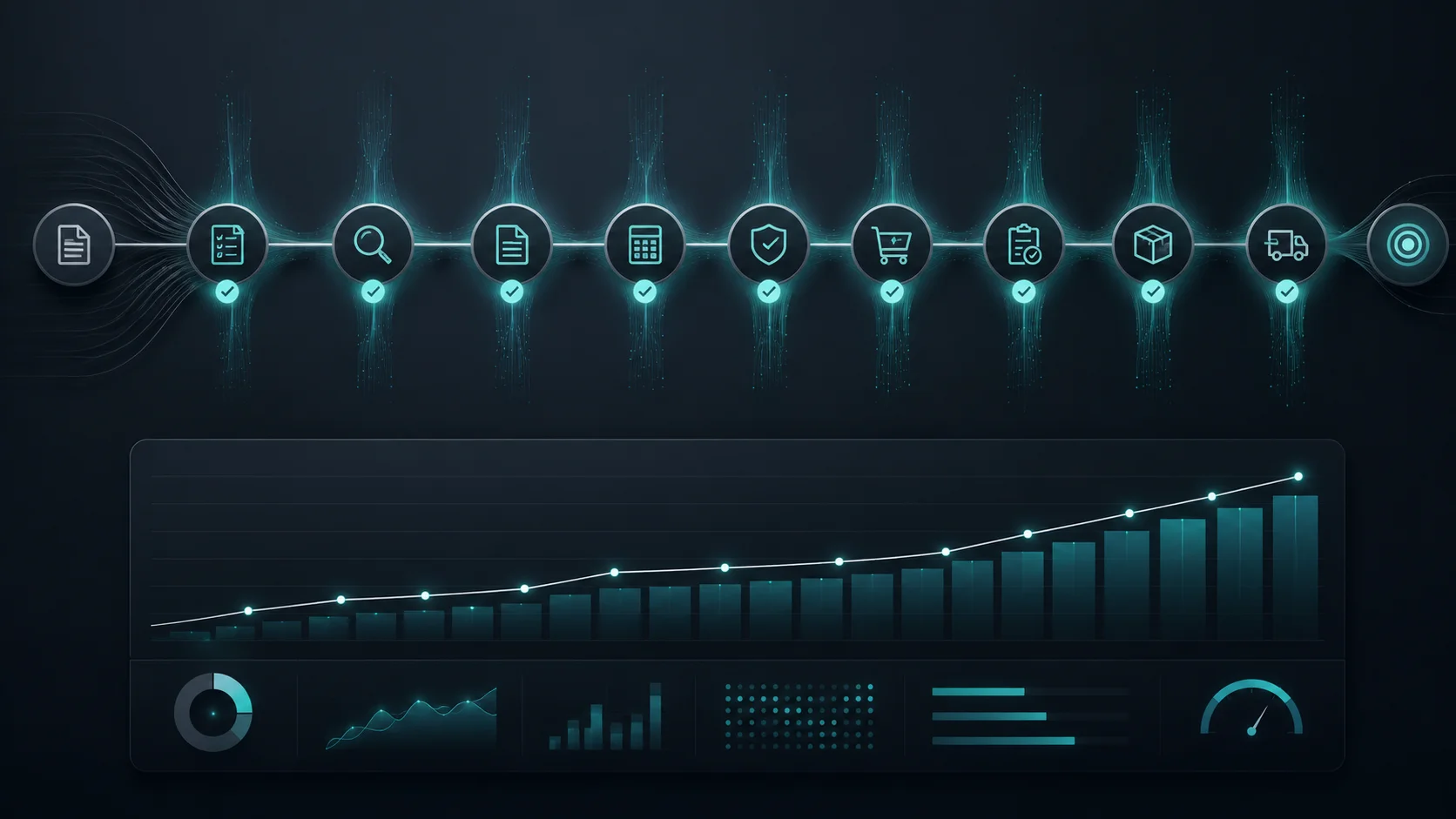
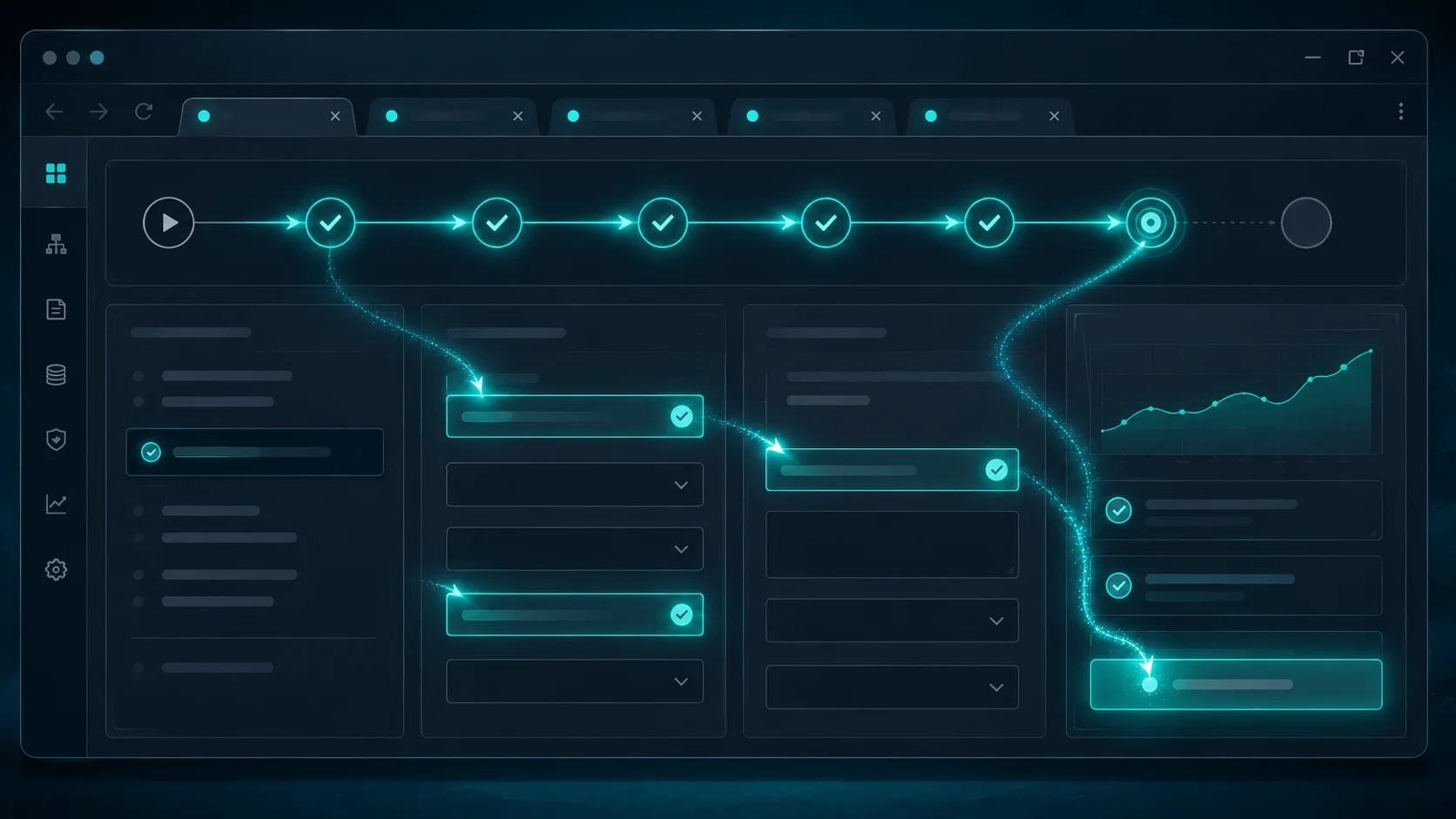
    AI agent completing enterprise automation workflows — OpenAI Operator multi-step task execution

    AI Agents Go Mainstream: What OpenAI Operator’s Revenue Trajectory Reveals About the Automation Economy in 2026

    The pivot from conversational AI to agentic AI — systems that plan, execute, and iterate across multi-step tasks without continuous human input — represents the most significant commercial inflection in AI since the GPT-3.5 consumer moment in late 2022. Three years on from that moment, the technology has matured from impressive demo to deployable infrastructure. The question that enterprise buyers and investors are now asking is not whether AI agents work but how much operational value they generate and at what cost.

    OpenAI’s Operator product, launched in January 2025 and progressively expanded through the year, offers the most commercially visible data point. The numbers emerging from enterprise deployments tell a complicated story about the automation economy’s first real cycle.

    What Operator Actually Does

    OpenAI Operator is, in structural terms, a web-browsing agent. It receives a task, navigates the web autonomously — clicking, filling forms, reading content, making decisions — and returns a result or completes a workflow without step-by-step human direction. The initial use cases were deliberately mundane: booking travel, filing online forms, purchasing products, extracting structured data from websites.

    The deliberate mundanity was strategic. OpenAI’s product team had observed that the most common enterprise AI failure mode was overpromising on complex reasoning tasks and underdelivering on execution. By launching with repetitive, well-defined workflows, Operator could demonstrate reliable completion rates before tackling higher-stakes tasks.

    By Q1 2026, Operator’s capability envelope had expanded considerably. Enterprise deployments at scale include: automated vendor contract review workflows pulling data from supplier portals, competitive intelligence gathering across public databases, customer support ticket routing with autonomous resolution for structured request types, and procurement workflows that compare supplier pricing across multiple platforms before surfacing a recommendation.

    The common thread is workflow automation on top of existing web infrastructure. Operator does not require API integration or custom system development. It interacts with existing interfaces the way a human employee does — which is both its advantage (zero implementation overhead) and its current ceiling (anything requiring authenticated internal systems requires additional scaffolding).

    The Revenue Picture

    OpenAI does not break out Operator revenue separately in its public communications. However, the company’s ARR trajectory and customer composition provide enough signal to model the agentic contribution.

    OpenAI reported annualised revenue of approximately $3.7 billion at end of calendar 2024, with projections toward $11.6 billion for 2025. The revenue acceleration in 2025 substantially outpaced ChatGPT consumer subscription growth, which suggests enterprise API consumption — including agentic workloads — is the primary growth driver.

    Enterprise customers using Operator and the broader Assistants API (which powers custom agentic applications built on OpenAI’s models) now represent approximately 40% of OpenAI’s total revenue by some estimates, up from roughly 25% at the start of 2025. The shift reflects the commercial reality of AI deployment: consumer subscriptions at $20-200/month are arithmetically limited; enterprise API consumption scales with workflow volume and has no natural ceiling.

    A single enterprise customer running Operator across 10,000 procurement workflows per month at roughly $0.50-2.00 per completed workflow generates $5,000-20,000 in monthly API costs — comparable to a mid-tier SaaS subscription but with direct correlation to output rather than seat count. The unit economics make sense for buyers: if a procurement workflow that costs a human employee 45 minutes is replaced by a $1.50 Operator task, the payback period on implementation is measured in weeks rather than quarters.

    Where Enterprise Adoption Is Concentrating

    Six months of expanded Operator deployment and the broader agentic AI market have produced some clear sectoral concentration patterns.

    Financial services represents the highest-value deployments by ticket size but the slowest adoption curve. Banks and asset managers have regulatory constraints on autonomous decision-making that require human-in-the-loop configurations for anything touching client accounts. The deployments that have landed are in back-office operations: regulatory filing compilation, compliance monitoring across public data sources, and research synthesis workflows. Goldman Sachs, Morgan Stanley, and JPMorgan all have disclosed agentic AI programs in some form, though the scope of autonomous execution (as opposed to human-assisted summarisation) varies significantly.

    Consulting and professional services are moving faster. McKinsey’s QuantumBlack AI unit and Accenture have both integrated agentic workflows into client deliverable production — specifically in the data gathering and competitive benchmarking phases that previously required junior analyst time. The pattern here is consistent with historical enterprise software adoption: professional services firms are simultaneously implementers and early adopters because they both sell the capability and deploy it internally.

    E-commerce and retail represent the highest-volume Operator deployments in unit terms. Automated price monitoring, competitor product catalogue analysis, supplier portal management, and customer query automation are the dominant use cases. The task structures are well-defined, the error tolerance is moderate, and the volume potential is enormous — a large retailer managing 50,000 SKUs across multiple supplier relationships has effectively unlimited workflow hours to automate.

    Legal and compliance is the fastest-growing segment in early 2026. Contract management platforms are embedding agentic AI for due diligence workflow automation, pulling public records, cross-referencing regulatory databases, and generating structured summaries for human review. The critical distinction here is “for human review” — legal deployments are almost universally operating in an assist-not-decide configuration.

    The Competitor Landscape

    OpenAI is not executing Operator in a vacuum. The agentic AI market in 2026 has at least four credible competitors for enterprise wallet share.

    Anthropic’s Claude-based agentic capabilities — deployed under the API and integrated into enterprise products via partners like Salesforce and AWS Bedrock — compete directly on task quality. Anthropic’s research focus on instruction-following accuracy and reduced hallucination rates in extended task execution gives it a credible differentiation argument in high-stakes deployments where errors are costly. The KPMG deployment (276,000 employees accessing Claude-based tools) represents the largest single disclosed enterprise AI commitment in professional services.

    Google’s Gemini 2.0 agents, embedded into Workspace and available via the Vertex AI platform, have the distribution advantage. Any enterprise already running Google Workspace has a low-friction path to deploying Gemini-based agents through existing procurement relationships. The adoption pattern mirrors how Microsoft 365 Copilot spread — not through greenfield wins but through expansion of existing platform relationships.

    Microsoft Copilot Studio allows enterprises to build custom agents on top of Azure AI and Microsoft’s model portfolio. The platform’s differentiation is integration depth — Copilot agents can access SharePoint, Teams, Dynamics, and the full Microsoft 365 data graph in ways that third-party agents cannot without custom development. For customers heavily invested in the Microsoft stack, this creates a switching cost dynamic that favours Copilot even when OpenAI or Anthropic models outperform on isolated benchmarks.

    Startups including Replit, Cognition (Devin), and a cohort of vertical-specific automation platforms are attacking specific workflow categories rather than the horizontal market. The venture investment in agentic AI startups reached approximately $4.1 billion in 2025 alone — a capital allocation signal that the market expects disaggregation as commodity models make the underlying AI layer less differentiated and application layer execution becomes the primary value driver.

    The Automation Paradox

    Enterprise AI agent adoption is producing a dynamic that economists will be studying for years: productivity gains are measurable and large, but employment displacement has been slower and more selective than the 2022-2023 forecasts suggested.

    The mechanism is task-level automation rather than role-level automation. An analyst at a consulting firm does not lose their job because Operator can compile a competitive benchmark dataset in 20 minutes instead of two days. What happens instead is that the analyst’s two days are redirected toward higher-order synthesis, client communication, and the judgment-intensive work that agents are not yet reliable for. Firms increase throughput with stable headcount rather than reducing headcount with stable throughput — at least in the initial adoption phase.

    The longer-term employment trajectory is less clear. If the task-level automation compounds over three to five years — expanding from structured data tasks to more complex judgment tasks as model capabilities improve — the headcount math changes. But the 2026 deployment reality is that most enterprises are deploying AI agents to grow without hiring rather than to shrink by firing. The labour market signal is consistent: professional services employment has held up as AI adoption has risen, while the total output per employee in AI-augmented roles has increased materially.

    The Infrastructure Build-Out Behind It All

    Agentic AI is significantly more computationally intensive than single-turn AI queries. An Operator workflow that completes a 15-step procurement task requires persistent context, multiple model calls, browser interaction overhead, and error recovery loops. The compute cost per completed agent workflow is estimated at 10-50x the cost of an equivalent number of conversational turns, depending on task complexity.

    This cost structure is why the $250 billion cloud infrastructure investment that Amazon, Microsoft, and Google announced for 2026 is not simply a response to training demand — it is an operational infrastructure investment for inference at scale. Running 100 million agentic workflows per day across enterprise customers is a different infrastructure problem than running 100 million chatbot turns per day. Longer context windows, persistent session state, and lower latency requirements for interactive agent tasks all demand hardware that GPU-only server configurations from 2023 were not designed to provide.

    The capex cycle and the agentic product cycle are synchronised. OpenAI, Anthropic, and Google are building products that will create demand for the infrastructure that Microsoft, Amazon, and Google are simultaneously building out. The vertically integrated players — Google most prominently, with both Gemini products and GCP infrastructure — have structural advantages in this environment that pure-play model companies like Anthropic and OpenAI will need to address through partnerships.

    What the Next 18 Months Determines

    The agentic AI market in mid-2026 is at a stage that resembles cloud computing circa 2012: enterprise proof-of-concepts have become production deployments, pricing models are stabilising, and the question has shifted from “does this work” to “how do we scale this safely.” The answers to the safety question — around error rates, audit trails, compliance configurations, and human oversight requirements — will determine which vendors win the enterprise market rather than which models score highest on benchmarks.

    OpenAI’s Operator revenue trajectory suggests the company understands this. The product roadmap for late 2026 focuses on workflow orchestration tools, error recovery transparency, and enterprise audit logging — features that are less impressive in demo environments but critical for regulated industries where autonomous action requires explainability.

    The automation economy is real, growing, and increasingly measurable. What it is not yet is the job-displacing wave the 2022 headlines forecast. The 2026 reality is more nuanced and more durable: AI agents are doing the work that human employees are glad to stop doing, freeing capacity for the work that AI is not yet reliable enough to touch. That division of labour, more than any benchmark score or valuation headline, is what the enterprise AI market is actually building toward.

    The Platform Bet Inside the Task Executor

    Ben Thompson’s aggregation theory has a specific prediction for platform competition: the aggregator that controls the discovery layer — the point where users and suppliers connect — captures the majority of economic value over time. OpenAI’s Operator product is not primarily a task execution service. It is an attempt to build the aggregation layer for enterprise automation — and the difference between those two framings determines what Operator is actually worth.

    A task executor gets paid per task completed. Its revenue scales with usage and is bounded by the number of automatable tasks its customers can identify. An aggregation platform captures value from every workflow that runs through it — not because it does the work, but because it mediates the connection between the enterprise and the service the workflow requires. Operator, in its Q1 2026 enterprise deployments, sits in exactly that position: between the enterprise workflow owner and the web-accessible services the workflow depends on. Every task Operator completes on behalf of an enterprise generates a data point about how that enterprise’s automation needs map to available services. At scale, that data becomes a structural advantage — not in the task completion itself but in the orchestration layer’s understanding of what enterprises need to automate.

    Thompson’s framework would identify the competitive risk clearly. For Operator to win the aggregation layer, it needs to be where enterprise buyers route their automation workflows first. That requires either distribution advantages — already embedded in the ChatGPT enterprise relationship — or supplier exclusivity — specific integrations that competitors cannot replicate. Operator currently has the first and not the second. Its integrations are built on public web access available to every agent platform. The moat is in the enterprise relationship, not the technical approach.

    This is why the pairing of Operator’s expansion with large institutional deployments matters structurally. KPMG’s 276,000-employee Claude deployment illustrates the competing dynamic: an enterprise that has committed deeply to one AI provider for its workflow infrastructure is not a natural buyer of a competing agent layer. Operator’s window to win enterprise deployment share is the period before those large commitments cement — which is now.

    The automation economy’s first full year of revenue data will resolve a lot about which orchestration layer enterprises trust most. Thompson’s framework predicts that the winner captures disproportionate value once the aggregation layer is established. The data on Operator’s Q1 trajectory is one early read on whether OpenAI is building that layer or a feature inside a competitor’s.
  • China Classified Its AI Engineers as National Security Assets

    China Classified Its AI Engineers as National Security Assets

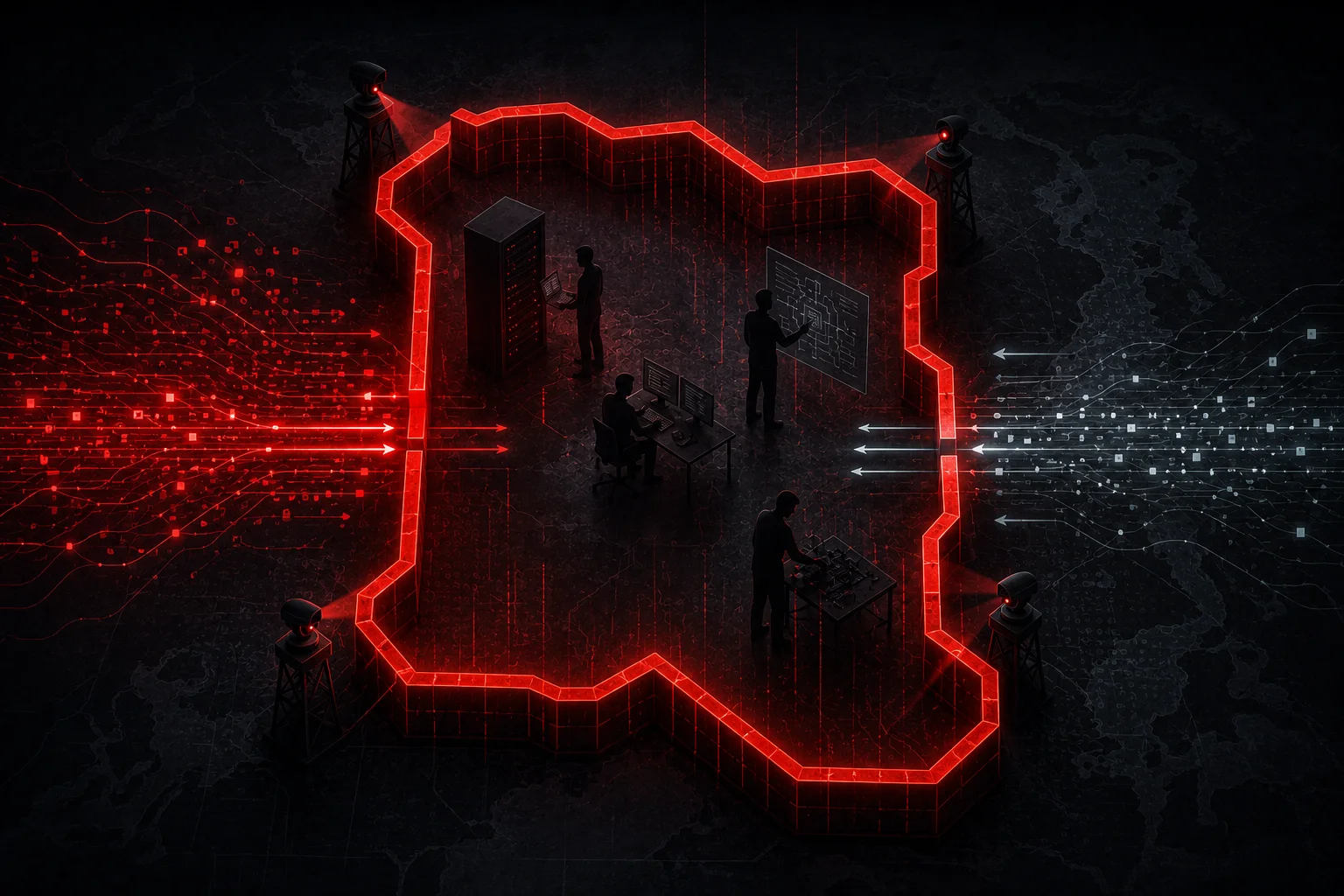
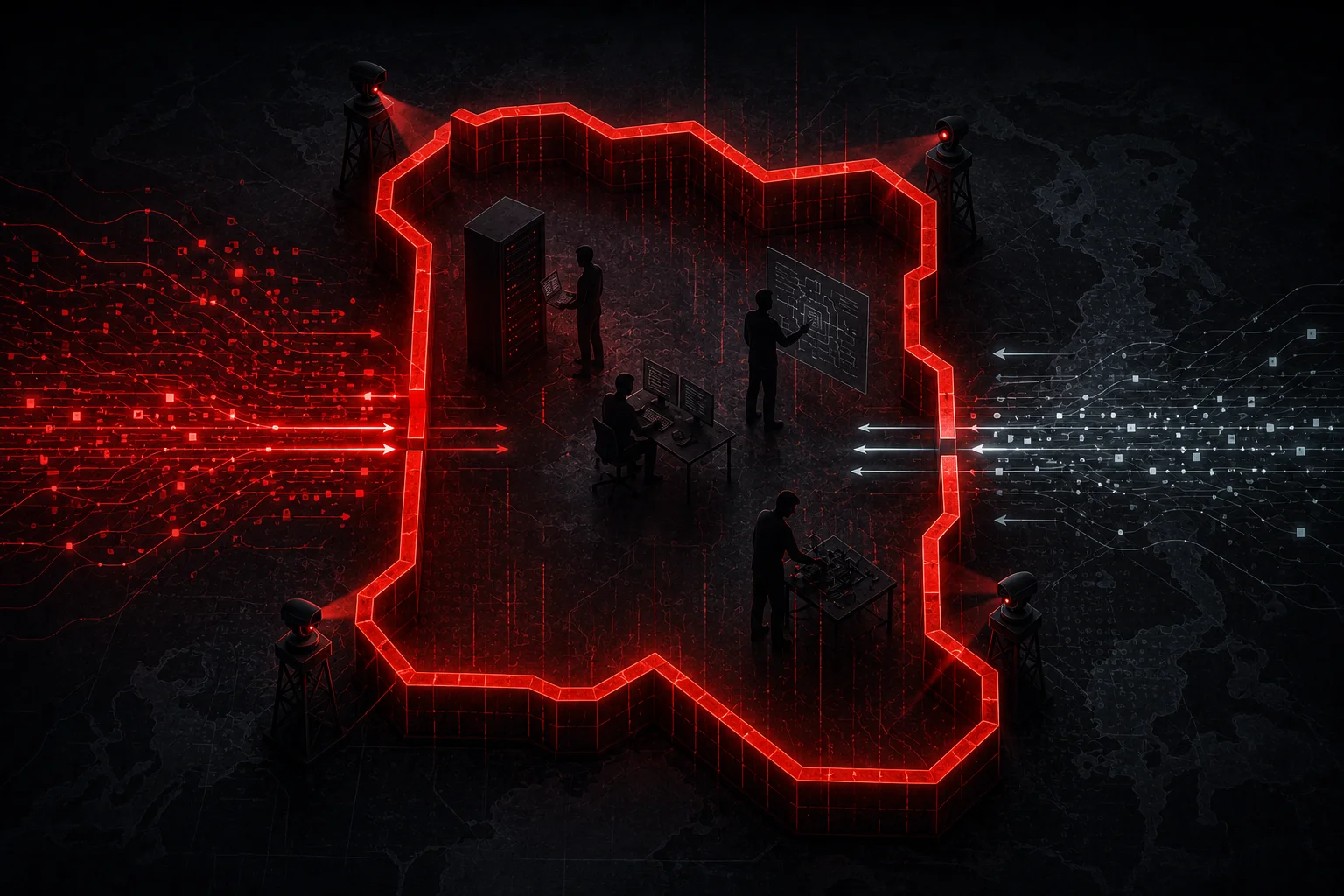
    China AI engineers classified national security assets travel ban 2026

    The Policy That Treats AI Talent Like Nuclear Scientists

    China has historically reserved its most restrictive overseas travel controls for people whose knowledge or access could compromise national security: nuclear scientists, senior executives at state-owned enterprises, researchers at military-linked universities, intelligence personnel. The common thread is that these individuals carry information or capability that the state has determined is too strategically significant to allow unrestricted movement toward foreign jurisdictions. The policy reflected a specific theory about what was strategically significant — essentially, the physical science and institutional knowledge that underpinned China’s military and heavy industrial capacity.

    Bloomberg reported this week, citing sources familiar with the policy, that China has extended those travel controls to a new category: senior AI researchers, startup founders, and executives at private AI companies including DeepSeek and Alibaba. The practical change is significant. Previously, prominent AI figures had been “advised” to avoid traveling to the United States — soft guidance that carried social and professional weight but not legal enforcement. The new policy requires mandatory pre-travel government approval. Proceeding without approval is no longer a social compliance question. It is a legal one.

    The decision to apply state-sector travel restriction frameworks to private sector AI workers is the clearest signal yet that Beijing has reclassified AI talent from “valuable commercial asset” to “national security asset” — the same category as nuclear scientists. The implications of that reclassification extend beyond travel logistics.

    Why This Moment, Why Private Sector

    The extension to private sector AI workers reflects two converging pressures that have reached an inflection point in 2026. The first is the acceleration of the US-China AI competition to a level that Beijing has concluded requires treating AI capability the same way it treats military technology. DeepSeek‘s R1 model, released in early 2025, demonstrated that Chinese AI organizations could produce frontier-class models at dramatically lower cost than US labs — a finding that accelerated US government anxiety about the technology gap and simultaneously elevated DeepSeek in Beijing’s strategic calculus from “impressive commercial achievement” to “national strategic capability.”

    The second pressure is the demonstrated vulnerability of talent as a vector for technology transfer. US semiconductor export controls, compute restrictions, and AI chip embargo policies have had measurable impact on the hardware inputs available to Chinese AI development. The software layer — model architectures, training methodologies, research directions, safety alignment techniques — has proven far harder to restrict through export controls because it travels in human minds rather than in physical goods. A senior DeepSeek researcher who joins a US AI lab carries knowledge about DeepSeek’s training approaches and efficiency techniques that is strategically valuable in ways that no export control on chips can address.

    The travel restriction policy is, in effect, a human capital export control. Where hardware export controls restrict the physical inputs to AI development, travel restrictions restrict the movement of the cognitive inputs — the researchers and engineers whose accumulated expertise represents years of investment in building competitive AI capability. Beijing is betting that the strategic value of keeping that expertise within China’s ecosystem outweighs the costs imposed on private sector companies that compete globally for talent and need their researchers to travel for conferences, partnerships, and recruitment.

    The Scope Question

    The policy as reported does not apply to all AI workers at Chinese technology companies — it targets specifically those involved in “advanced AI work” at private firms. The practical implementation of that definition is unclear and creates significant uncertainty for the companies and individuals affected. Does “advanced AI work” mean frontier model development? AI safety research? Applied AI engineering? The ambiguity is typical of Chinese regulatory frameworks that define scope broadly and implement it through administrative discretion rather than bright-line rules.

    The companies most immediately affected are the ones whose researchers represent the highest strategic value: DeepSeek, whose low-cost frontier model development has become a point of national pride; Alibaba’s DAMO Academy and AI research division, which has published extensively and whose researchers have cross-institutional relationships with international academic institutions; Baidu’s AI division; and the cohort of well-funded AI startups that emerged from the 2023-2025 Chinese AI investment wave. Each of these organizations has senior researchers with international reputations who regularly travel for academic conferences, investor meetings, and industry events.

    The international conference circuit — NeurIPS, ICML, ICLR, and similar venues where the global AI research community convenes — is a primary mechanism through which researchers build cross-institutional relationships, present findings, and develop collaborative work. Chinese AI researchers have been significant contributors to these venues, and the restriction on travel for senior figures will reduce Chinese participation in ways that create reciprocal isolation: Chinese researchers will have less exposure to international research directions, and international researchers will lose the direct interactions with Chinese counterparts that conferences provide.

    The Talent Competition Implications

    For Chinese AI companies competing with US counterparts for global talent, the travel restrictions create a structural disadvantage that goes beyond the inconvenience to existing employees. The global AI talent market is highly competitive, and the researchers whose expertise makes them subject to travel restrictions are exactly the researchers that every AI lab in every country is trying to recruit. A senior researcher weighing an offer from a Chinese AI company against an offer from a US lab now has to factor in that accepting the Chinese offer means operating under travel restrictions that the US offer doesn’t impose.

    The companies affected can offer compensation to offset this friction, but compensation doesn’t fully substitute for the professional autonomy that unrestricted travel represents. Academic researchers in particular value the ability to present their work, attend conferences, and maintain the international collaborations that their careers depend on. Chinese AI companies that have attracted international talent with academic backgrounds — the profile most likely to be affected by travel restrictions — will find it harder to retain and recruit those individuals under the new framework.

    The countervailing consideration is that China’s AI talent pipeline is enormous, and the researchers affected by travel restrictions are a small fraction of the total workforce. Chinese universities are producing AI engineers and researchers at a scale that US institutions cannot match, and the domestic talent pool is deep enough that travel restrictions on senior figures don’t constrain the companies’ overall capacity in the near term. The strategic concern is the medium-term: whether isolation from international research networks produces capability gaps that compound over years, and whether the talent competition disadvantage accumulates into something that affects the quality of the output from China’s leading AI organizations.

    The Reciprocal Escalation Dynamic

    China’s AI travel restrictions don’t exist in isolation — they are part of a reciprocal escalation pattern between the US and China in which each country’s defensive measures create conditions that justify the other’s further restrictions. US export controls on AI chips restricted Chinese access to hardware, prompting Chinese investment in domestic semiconductor development and efficiency-focused AI research. The resulting capability demonstrations (DeepSeek R1) elevated the perceived threat level in Washington, prompting further export control tightening and consideration of additional technology restrictions. China’s travel restrictions are the human capital analog to hardware export controls — a defensive measure that reflects the elevated threat assessment on both sides.

    The practical consequence of the escalation dynamic is that the global AI research ecosystem is becoming less global. The free flow of researchers, ideas, and collaborative relationships that has characterized AI development — a field that grew in large part through international academic collaboration — is being constricted by state intervention on both sides of the US-China divide. The conferences that remain fully international are becoming the sites of increasingly careful conversations between researchers who are aware that their institutional affiliations carry political weight that scientific collaboration didn’t previously require.

    Beijing’s decision to classify its AI engineers as national security assets is a statement about what AI has become: not a commercial technology sector where international competition produces innovation that benefits everyone, but a strategic domain where capability is a form of power and controlling its diffusion is a national priority. The field that was built on open research and international collaboration is being nationalized, incrementally, by both sides simultaneously. This week’s travel restriction policy is the latest visible step in that process.

    What the Reclassification Actually Reveals

    The decision to classify China’s AI engineers as national security assets isn’t primarily a labor policy. It’s a strategic statement about what AI actually is and what the competition over it means. Reading it as a restriction on worker movement misses the signal that matters.

    Beijing has run the calculation that Western tech executives are still debating: is AI a commercial product with national security implications, or is it a national security capability with commercial applications? The travel restriction policy is a revealed preference answer. When governments treat something the way they treat nuclear scientists, they are communicating that the capability is considered civilizationally significant in a way that transcends commercial competition. China has concluded that AI is in that category. The policy follows from the conclusion.

    The contrarian reading of the restriction — the one the Western tech commentary largely misses — is that it reflects confidence in what China has built, not insecurity about losing it. You don’t protect a secret you don’t have. DeepSeek’s low-cost frontier model development became a point of national pride in Beijing because Chinese AI organizations have developed methodologies Beijing believes are strategically worth protecting, the way nuclear weapons research was worth protecting. The export control logic applies to human knowledge when human knowledge is the scarce strategic input.

    China’s semiconductor self-sufficiency push was the hardware layer of this strategy — reducing dependence on foreign chips to reduce the leverage that US export controls provide. The AI talent restriction is the software layer: reducing the diffusion of Chinese AI methodologies through researcher mobility. Both policies reflect the same underlying theory of the competition. In a technology contest where capability is the relevant variable, controlling the inputs to capability is the national security imperative. The week’s travel restriction is not the endpoint of that dynamic. It is a step in a longer escalation that, absent a negotiated framework neither side has pursued, has no obvious stopping condition.

    The symmetric question — whether the US should apply analogous restrictions to researchers at US AI labs traveling to or collaborating with Chinese institutions — is not hypothetical. It is actively being debated in Washington. The answer Washington gives to that question will determine whether the global AI research community fragments into parallel national ecosystems or finds a way to preserve the collaborative structure that built the field in the first place.

    The Probability the Talent Restriction Works Is Lower Than the Policy Implies

    The travel restriction rests on a specific causal model: that unrestricted mobility would allow Chinese AI expertise to transfer to US institutions in ways that would meaningfully reduce China’s competitive position. That model is plausible but poorly supported by what we know about how knowledge transfer actually works at the research frontier.

    The historical base rate for travel restrictions as knowledge-containment tools is poor. The Soviet Union restricted scientist mobility throughout the Cold War; the primary effect was to slow the Soviet research establishment’s access to international developments while providing negligible containment of knowledge that had already circulated through publications and conference proceedings. The information a researcher carries about their own lab’s methodologies depends on the infrastructure, the team, and the data environment — all of which the restriction is designed to preserve, but none of which travel transfers in a meaningful form.

    A more calibrated read of the policy’s likely effects: it will have meaningful impact on the small number of researchers genuinely considering moving to US institutions — perhaps 2–5% of the targeted workforce — and moderate impact on conference participation and collaborative publishing. The direct containment effect on Chinese AI capability development is probably minimal, because that development is primarily constrained by compute access and domestic talent pipeline rather than by knowledge leakage to foreign institutions. What the restriction does accomplish is signaling: it tells the international research community how Beijing has classified AI talent, and it tells DeepSeek and Alibaba researchers how Beijing views their work. That reclassification has consequences for recruitment and retention that a technical probability estimate alone doesn’t capture.

  • Human Scientists Still Beat AI on Complex Research

    Human Scientists Still Beat AI on Complex Research

    The Paper That Cut Against the Narrative

    The dominant narrative about AI and scientific research in 2026 runs in one direction: AI is accelerating discovery, AI agents are running experiments autonomously, AI will compress the research timelines of the next decade into months. Every week produces a new announcement about an AI system that has identified drug candidates, discovered protein structures, synthesized literature at superhuman speed. The narrative has enough supporting evidence that it isn’t wrong — it’s incomplete.

    The incomplete part arrived in Nature this month in a piece titled “Human scientists trounce the best AI agents on complex tasks.” The study assessed the current state of AI performance on genuine scientific research workflows — not benchmark tasks designed to test specific capabilities in controlled conditions, but the kind of multi-step, ambiguous, context-dependent research work that constitutes actual scientific practice. The finding: on these tasks, the best available AI agents perform significantly below the level of experienced human researchers. The performance gap isn’t marginal. It’s large enough to matter for how organizations should think about deploying AI in research contexts.

    What the Benchmarks Actually Measure

    The gap between AI benchmark performance and real-world research capability is a known problem in the field, but the Nature assessment makes it concrete in a way that press releases and conference papers don’t. Standard AI benchmarks — MMLU, GPQA, SWE-bench, and their successors — are designed to measure specific, evaluable capabilities within controlled conditions. A model’s score on a graduate-level science benchmark tells you something real about its knowledge of scientific facts and its ability to reason about well-defined problems. It doesn’t tell you much about its ability to navigate the messiness of actual research.

    Actual scientific research is not a series of well-defined problems. It involves identifying which questions are worth asking. It involves recognizing when an unexpected result is noise versus signal. It involves drawing on contextual knowledge that isn’t in the training data — conversations with colleagues, institutional memory about past failed approaches, intuitions developed from years working in a specific domain. It involves making judgment calls under uncertainty where there is no clear correct answer. These are the dimensions on which benchmark performance systematically overestimates real research capability.

    The AstaBench evaluation framework, published alongside related work, found that AI agent performance drops dramatically as task complexity increases: roughly 20% success rate on tasks that take humans one hour to resolve, dropping to under 5% on tasks requiring more extended reasoning, dropping to near zero on the most complex multi-step research tasks. The performance collapse at the high-complexity end is the most important finding — it’s not that AI agents are slightly less capable than humans on hard tasks, it’s that the capability curve has a cliff rather than a slope.

    The Cascading Failure Problem

    The mechanism behind the performance collapse at complexity is structural rather than a simple capability gap. AI agent workflows fail because of compounding error rates across sequential steps. A useful framework: if an agent is 85% reliable at each step in a workflow, a 10-step workflow succeeds end-to-end only about 20% of the time. Extend to a 20-step workflow at 85% per-step reliability and the end-to-end success rate drops to about 4%.

    Scientific research workflows are not 10-step processes. A typical research project involves dozens of sequential decisions, each of which depends on the outputs of previous steps and shapes the context for subsequent ones. The error compounding that makes multi-step AI workflows unreliable in software engineering contexts is the same mechanism that makes AI agents unreliable for extended research workflows. The problem isn’t that any individual step fails too often — it’s that long chains of steps, even at high individual reliability, produce end-to-end outcomes that fail more often than they succeed.

    Human researchers manage this through different mechanisms. We recognize errors when they occur rather than compounding them. We apply contextual judgment that allows us to detect when a research direction is going wrong before investing significant effort in it. We use heuristics developed from experience that let us skip steps that are unlikely to be productive. We have the metacognitive awareness to know what we don’t know and to seek additional information before proceeding. Current AI agents have limited versions of these capabilities — they exist in research models but are not robust enough to produce human-level performance on extended tasks.

    Where AI Is Actually Winning in Research

    The Nature assessment is not an argument that AI has no role in scientific research. It’s an argument that the role AI is currently equipped for is more specific than the most expansive claims suggest. The domains where AI is delivering genuine research value are characterized by well-defined tasks, large training sets, and evaluable outputs — rather than by the kind of open-ended exploratory work that constitutes the leading edge of scientific discovery.

    Protein structure prediction is the canonical example: AlphaFold and its successors have transformed structural biology by solving a well-defined problem (predict protein folding from amino acid sequence) at a scale and speed that human researchers couldn’t match. The problem was tractable for AI because it had a massive training set of known structures, a clear evaluation metric (how closely does the predicted structure match the experimental structure), and a defined problem boundary. The AI solved the defined problem extraordinarily well without requiring the kind of open-ended judgment that makes general research difficult for current systems.

    Literature synthesis is another area of genuine value: AI agents can process and summarize thousands of papers in the time it would take a human researcher to read dozens, identifying patterns across a literature that no individual researcher could hold in working memory simultaneously. The limitation is that AI literature synthesis is good at identifying what has been published and extracting stated conclusions, but less reliable at identifying what the literature means in context — which findings are likely to replicate, which methodological choices create hidden assumptions, which apparent patterns are artifacts of publication bias.

    The Productivity Tool vs. Research Agent Distinction

    The practical implication for research organizations is a distinction that the marketing around AI research tools tends to blur: the difference between AI as productivity tool and AI as research agent. Productivity tool AI — literature search, data analysis automation, code generation for repetitive analyses, experimental design assistance — delivers real value within well-defined subtasks without requiring the open-ended judgment that current AI agents lack. Research agent AI — autonomous execution of extended research workflows, independent generation of novel hypotheses, replacement of human judgment in complex experimental decisions — remains beyond reliable current capability.

    Organizations that adopt AI productivity tools in research and use them appropriately — to accelerate specific subtasks while keeping human researchers in the loop for judgment-intensive decisions — are capturing genuine value. Organizations that have absorbed the “AI is doing science autonomously” narrative and have restructured research workflows around that assumption are setting themselves up for the kinds of failures that emerge when you ask AI to navigate complexity it isn’t equipped for.

    The distinction matters financially as much as scientifically. Pharmaceutical companies investing in AI-driven drug discovery are making bets on where in the research pipeline AI can reliably add value. If the AI is good at identifying candidate molecules from a defined target (a specific, evaluable task) but unreliable at the iterative experimental reasoning required to understand why candidates fail (an open-ended, judgment-intensive task), building a pipeline that treats both capabilities as equivalent produces failures at the second stage that the first stage’s performance didn’t predict.

    Multi-Agent Systems as a Partial Answer

    The research community’s response to the single-agent limitation is multi-agent architectures — coordinated teams of specialized agents working in parallel, with each agent handling a narrower, better-defined task and passing outputs to other agents for subsequent processing. Nature published a companion piece to the benchmark study examining multi-agent systems in research contexts, finding that coordinated agent teams do unlock task complexity that single agents can’t handle.

    The gains from multi-agent approaches are real but come with their own limitations. Coordinating multiple agents introduces communication overhead, error propagation across agent boundaries, and the challenge of maintaining coherent context across a system where no single agent holds the full picture. Multi-agent systems also raise the research infrastructure requirements substantially — instead of a researcher using a single AI assistant, they’re managing a pipeline of interacting systems that requires its own engineering and oversight investment.

    The honest assessment from the current state of the research is that AI is a powerful and increasingly indispensable tool in scientific research, and that the tool is better suited to some tasks than others. The benchmark performance that generates the most press coverage is real. The gap between benchmark performance and real-world complex task capability is also real. The organizations and researchers that hold both of those truths simultaneously — rather than letting the excitement about one obscure the evidence about the other — are the ones making sound decisions about where to invest in AI-assisted research and where to keep humans firmly in the loop.

    Nature published the benchmark. It shows what it shows. Human scientists still win on the hard problems. The harder question — when does that stop being true — is the one that the next generation of benchmarks will need to answer.

    The Distinction That Matters More Than the Benchmark

    The AI capability gap documented in the Nature study is real and significant. But the reason it matters is not the number — not the 20% success rate on one-hour tasks, not the near-zero on complex multi-step research — it’s the category of capability the gap reveals.

    AI systems in 2026 are extraordinarily good at retrieval, synthesis, and generating plausible text that reflects statistical patterns in training data. These capabilities accelerate research by reducing the time researchers spend on literature review, on writing drafts, on pattern-matching across large datasets. The acceleration is real and valuable. It does not require the AI to understand anything in the way scientists understand — it requires processing information quickly and generating useful outputs, which current systems do well.

    The tasks where the gap is largest — where AI performance collapses toward zero while experienced human researchers maintain meaningful success rates — are the tasks requiring something different: judgment about which questions are worth asking, recognition of when an unexpected result should change the direction of inquiry, integration of contextual knowledge that has no clear training signal. These capabilities accumulate through years of doing specific work inside a specific domain. They have no obvious training-data analogue, and current benchmarks systematically overestimate AI performance on them because benchmarks are designed around well-defined problems.

    This connects directly to the talent competition now visible in AI research hiring. The arrival of someone like Andrej Karpathy at Anthropic is not primarily about what he knows from training data — it’s about the category of judgment he brings that current AI systems demonstrably lack. The Nature study is quantifying that gap. The talent competition is a market’s implicit acknowledgment that the gap exists and is worth paying to close.

  • Anthropic Reached $900 Billion on Its First Profitable Quarter

    Anthropic Reached $900 Billion on Its First Profitable Quarter

    The Safety-First Lab That Built a Business

    Anthropic was founded in 2021 by Dario Amodei, Daniela Amodei, and a team that left OpenAI over disagreements about safety and commercialization direction. The founding narrative was deliberately positioned as a counterpoint to OpenAI’s trajectory: more deliberate development, more emphasis on interpretability and alignment research, more willingness to delay commercial releases when safety questions weren’t resolved. That narrative attracted early investors who were willing to fund a lab with a longer time horizon and a more cautious philosophy.

    In 2026, Anthropic is approaching a $900 billion valuation. Q2 projected revenue is $10.9 billion. The company is expected to post its first quarterly operating profit — $559 million. Enterprise market share for Claude went from 23.9% in January to 28.6% in February to 56.2% in March among qualified enterprise respondents surveyed. Karpathy just joined the pretraining team. A potential IPO is being prepared. The safety-first lab built a business that is now one of the most valuable private companies in the world.

    These numbers require unpacking, because the distance from the founding narrative to the current financial position is substantial enough to raise questions about what Anthropic actually is now, and whether the safety-first positioning and the $900 billion commercial ambition are complementary or in tension.

    The $10.9 Billion Revenue Number

    Anthropic’s Q2 projected revenue of $10.9 billion would make it one of the fastest-growing software companies in history. For context: it took Salesforce 14 years to reach $10 billion in annual revenue. Snowflake took 8 years. Anthropic launched its first commercial product in 2023 and would reach equivalent quarterly revenue in approximately three years. The growth rate is possible because of a market dynamic that didn’t exist during Salesforce or Snowflake’s early growth phases: enterprise AI adoption at scale, with Fortune 500 companies allocating substantial budget to AI model access as a primary operational expenditure.

    The enterprise market share numbers are the most striking data point. The jump from 23.9% to 56.2% enterprise respondent adoption across two months in early 2026 reflects Anthropic’s positioning in exactly the enterprise segments where Claude’s properties — safety orientation, instruction following, long context, governance compatibility — translate to procurement advantage. Regulated industries (financial services, healthcare, legal) and enterprises with strict compliance requirements have been disproportionately attracted to Anthropic because Claude’s Constitutional AI training process produces behavior that’s more predictable and auditable than competing models.

    The Stainless acquisition — announced May 18, 2026 — fits this pattern. Stainless builds high-quality SDKs for API products: the developer tooling layer that makes it easier to build reliable integrations against Anthropic’s API. Enterprises that want to embed Claude into internal systems need reliable, well-documented, enterprise-grade integration tooling. Acquiring the company that builds that tooling rather than licensing it signals Anthropic’s intention to own the full developer experience layer, not just the model.

    First Profitable Quarter — What That Means and Doesn’t Mean

    An expected operating profit of $559 million on $10.9 billion revenue would be an operating margin of approximately 5%. For a company that was burning hundreds of millions of dollars per quarter on infrastructure and model training as recently as 2024, this is a meaningful inflection. But it’s worth being precise about what it means.

    Operating profit excludes non-cash charges and certain capital expenditures. The compute infrastructure required to train frontier models and serve inference at Anthropic’s scale is enormously capital-intensive. The $4 billion-plus that Anthropic has raised from Amazon, Google, and private investors has been partly funding infrastructure that doesn’t show up as operating expense in the quarter it’s deployed — it’s capitalized and depreciated over time. The first operating profit is a real milestone, but it doesn’t mean Anthropic has solved the fundamental challenge of AI economics: the cost of staying at the frontier requires continuous capital expenditure that could consume operating profit for years.

    The IPO preparation in that context is not surprising. Public market access provides a capital raising mechanism that doesn’t dilute existing shareholders (through secondary offerings) and that creates liquidity for the investors who funded the company through its burn phase. The question for any Anthropic IPO is what multiple of revenue the market will assign — the $900 billion implied valuation at $10.9 billion quarterly revenue is roughly a 20x annualized revenue multiple, which is at the high end of software company valuations even accounting for the growth rate.

    The Safety-Commercial Tension

    The honest version of the question that Anthropic’s financial success raises: at $900 billion in implied valuation and a commercial growth rate of this magnitude, the founders who left OpenAI over commercial pressure are now running a company that faces the same commercial pressure they left to escape. The scale is different, the stakeholder base is different, and the organizational structure includes a Public Benefit Corporation structure designed to preserve the safety mission. But the fundamental tension between maximizing commercial output and taking the time to be safe doesn’t disappear because the company that faces it was founded by safety-conscious researchers.

    Anthropic’s response to this tension has been to argue that safety and commercial success are aligned rather than in conflict — that enterprises specifically want Claude because it’s safer, more predictable, and more governable than alternatives, and therefore the safety investment is also the commercial investment. The enterprise market share numbers support this argument. The regulated industry adoption specifically supports it.

    Whether the argument holds as Anthropic scales toward and past a $900 billion valuation, prepares for an IPO, and faces the quarterly earnings expectations that public markets impose — these are future tests of whether the alignment thesis survives contact with the full weight of capital market accountability. The founders have maintained the thesis this far. The next phase will be the most demanding.

    What the IPO Timeline Looks Like

    No specific IPO date has been announced. The preparation — which includes organizational structuring, financial documentation, and the stakeholder conversations that precede a public filing — suggests a 2026 or early 2027 timeline is possible. The SpaceX S-1 filing, submitted in May 2026, will set a reference point for how the market values high-growth private technology companies with unusual governance structures and long-horizon missions. Anthropic’s IPO will face different questions — the AI model business has fundamentally different economics than launch services — but the market appetite for large private technology company listings will be partly shaped by how SpaceX’s filing is received.

    For the AI industry, an Anthropic IPO would produce a public valuation reference point that currently doesn’t exist. OpenAI remains private. Anthropic going public would create public market pricing for a frontier AI lab with commercial revenues, which would then be used to benchmark every private AI company’s valuation and every investor’s expectations for the sector’s long-term economics.

    The safety-first lab is approaching the market on the market’s terms. The $900 billion question is whether the market’s terms and the mission’s terms remain compatible as the IPO process closes the gap between them.

    The Oldest Tension In The Safety Argument Is Now A Balance Sheet Problem

    The $900 billion valuation is not, primarily, a story about Anthropic. It is a story about what happens when an institution built around a specific theory of civilisational risk encounters the commercial conditions that make the alternative — building cautiously, constrained by mission — financially untenable.

    Anthropic was founded on the premise that the development of artificial general intelligence poses risks severe enough to justify a different organisational form: the public benefit corporation, the safety-first research mandate, the refusal to optimise for growth at the expense of caution. The founding argument was that the labs racing toward AGI without adequate safety work were making a collective mistake — and that an institution willing to slow down, to do the interpretability research, to publish safety findings even when they were commercially inconvenient, would be playing a different and more responsible game.

    The $900 billion valuation does not invalidate that premise. But it does change the conditions under which the premise operates. At $900 billion, the gap between Anthropic’s mission and the commercial machinery required to sustain it narrows to the point where every major decision is simultaneously a safety decision and a market decision. The question is not whether Anthropic will remain committed to safety — the founding team has given no reason to doubt that commitment — but whether the institutional structures that protect safety-first decision-making survive the pressures that come with being a company at this valuation navigating a public offering.

    Anthropic’s answer to this question is that safety IS the commercial advantage: models that are reliably safe are models enterprises can deploy without catastrophic risk exposure, and enterprises will pay for that reliability. The $700 billion AI infrastructure build from the largest platforms is the competitive pressure that tests whether that argument holds. If safety and scale are genuinely compatible, Anthropic’s model survives the valuation. If the pressures of being a $900 billion company erode the institutional margin that safety research requires, the valuation becomes the price at which the original mission was exchanged for the market’s terms. The IPO will not answer that question — but it will set the conditions under which the answer eventually becomes visible.

    Safety-First Framing Has Always Been the Best Competitive Barrier

    Anthropic $900 billion valuation first profit 2026

    Peter Thiel’s framework for competition distinguishes between businesses that compete on features and businesses that build structural barriers that make competition expensive. Anthropic’s safety-first positioning is the most sophisticated moat in the current AI landscape because the cost to replicate it is the cost to redo the pretraining work from the same starting philosophy.

    Every major AI lab claims safety as a value. What separates Anthropic is that its safety claims are operationally load-bearing in enterprise procurement. When a regulated buyer — a bank, a hospital system, a federal contractor — chooses Claude over a competing model, one procurement criterion is the ability to explain to a compliance officer why this model’s training methodology produces more predictable behavior in high-stakes contexts. Anthropic can answer that question with specificity backed by Constitutional AI research, published interpretability work, and a deployment methodology that generates an auditable record. Competitors can claim comparable safety. They cannot easily demonstrate the same documented methodology without starting over.

    Anthropic’s public documentation of its safety research is also, not coincidentally, its marketing collateral. The KPMG 276,000-employee deployment and the government contract pipeline both route through Anthropic’s safety compliance framework specifically because that framework is more legible to enterprise buyers than a competitor’s equivalent claims. The $900 billion valuation reflects the market’s assessment that this claim is worth paying for. When the IPO filing arrives, it will be the first time that claim survives scrutiny from public-market investors rather than enterprise procurement committees — audiences with different standards of evidence.

  • OpenAI’s $4 Billion Deployment Company Is a Confession: The Bottleneck Was Never the Model

    OpenAI’s $4 Billion Deployment Company Is a Confession: The Bottleneck Was Never the Model

    OpenAI deployment company enterprise consulting 4 billion 2026

    When a Capability Company Builds a Services Arm, Read the Signal

    OpenAI launched the OpenAI Deployment Company on May 11 with $4 billion in initial investment at a $10 billion pre-money valuation. Nineteen global partners — TPG leading, Bain Capital and Brookfield as co-leads, Goldman Sachs, SoftBank, Warburg Pincus, and a dozen others filling out the roster. It acquired Tomoro, an applied AI consulting and engineering firm, on the same day, immediately adding 150 Forward Deployed Engineers and Deployment Specialists to the operation. Capgemini and Bain & Company made public investment announcements within 48 hours.

    The structure is majority-owned and controlled by OpenAI. The mission, stated plainly: help enterprises identify where AI makes the biggest impact, redesign organizational infrastructure around it, and turn gains into durable systems. The marketing language is “turn AI into operational advantage.” The simpler translation is: go help large organizations do what they’ve been failing to do with OpenAI’s models for two years.

    The fact that OpenAI needed to build this company is the most informative part of the story. Not the valuation. Not the partners. The fact that the company that built the most widely discussed AI models in history has decided that selling the models is insufficient, and that the real constraint on enterprise AI adoption is the gap between capability and deployment.

    The Capability Overhang Problem

    The AI industry in 2026 has a capability overhang. The models are more capable than most organizations know how to use. GPT-4o, Claude 3 Opus, Gemini 3 Pro — these models can perform tasks that would have been described as artificial general intelligence adjacent five years ago. They can write code that passes review, summarize legal documents at a level that saves paralegal hours, generate financial analyses that are directionally correct and structurally complete. The ceiling on what they can do in a controlled evaluation is genuinely impressive.

    The ceiling on what most enterprises are actually doing with them is considerably lower. The gap between a model’s performance in a demo and its performance in a production workflow that touches real systems, real data, real edge cases, and real organizational processes is the problem that several billion dollars worth of enterprise AI budget has been thrown at since 2023 without reliable resolution. The consulting industry saw this gap clearly and has been selling implementation services at substantial margins. McKinsey, BCG, Accenture, Deloitte — all have significant AI practice buildouts. The advice for sale is how to close the gap between what the model can do and what your organization is actually capturing from it.

    OpenAI’s Deployment Company is a direct play for that market. Rather than watching consulting firms capture the margin on OpenAI-powered implementations, OpenAI is building the capability to capture it directly. The 19-partner structure preserves relationships with the existing consulting ecosystem — the firms investing in DeployCo have incentive to route client work through it — while putting OpenAI at the center of enterprise implementation rather than upstream of it.

    Tomoro and the Forward Deployed Engineer Model

    The Tomoro acquisition is the operational heart of the launch. Forward Deployed Engineers — a term popularized by Palantir, which built its entire early enterprise business around the model — are engineers who embed with client organizations, understand the specific data systems and workflows involved, and build implementations that work in the client’s actual environment rather than a general demonstration environment. It’s expensive. It doesn’t scale linearly. It works where general product-led deployment doesn’t.

    Palantir’s growth in government and enterprise was almost entirely powered by this model in its early years. The FDE goes in, understands the problem, builds something that functions, and creates a dependency that turns into a long-term contract. OpenAI’s acquisition of Tomoro’s 150-person team implies it understands that the first wave of enterprise AI adoption will be won by the companies willing to do the implementation work, not just the companies with the best models.

    The FDE model also creates feedback loops. An engineer embedded in a large financial institution, building AI workflows against real trading data and real compliance systems, is generating product insights that no benchmark can produce. The problems that matter to enterprise buyers — reliability at the tail end of distributions, audit-ready output, integration with legacy systems — are problems that surface in deployment, not in evaluation. An OpenAI with 150 engineers embedded in enterprise deployments will understand its own product’s real limitations faster than a model provider that only sees aggregate API usage data.

    The Competitive Logic

    Anthropic moved first on enterprise consulting. The overlap is explicit — the PYMNTS headline reads “OpenAI Launches AI Consulting Company, Following Anthropic.” The enterprise AI consulting race is being run simultaneously by the companies that built the models and the consulting firms that have been the traditional intermediaries between technology and enterprise adoption. Both groups are competing for the same budget: the portion of enterprise AI spend that goes to implementation rather than infrastructure.

    The 19-partner structure is designed to handle the conflict. If Bain Capital and SoftBank are investors in DeployCo, their portfolio companies have an economic incentive to route OpenAI implementations through DeployCo rather than a competitor’s offering. If Goldman Sachs is an investor, the bank’s own AI implementation work becomes a reference customer and a feedback source. The partner ecosystem is a distribution network dressed as an investment syndicate.

    Microsoft is the variable the structure doesn’t fully address. OpenAI’s most important enterprise distribution relationship is with Microsoft, which sells OpenAI’s models through Azure OpenAI Service and through Microsoft 365 Copilot. DeployCo’s direct enterprise consulting creates potential tension: if OpenAI is now competing for the implementation contract alongside Microsoft’s own consulting arm and Azure partner ecosystem, the boundaries between the two companies’ enterprise motions become more complicated.

    OpenAI’s majority control of DeployCo, combined with the explicit framing that it helps organizations build “around intelligence” rather than just around OpenAI’s models specifically, may be the hedge. A deployment company that can implement across multiple model providers is a more defensible business than one that’s exclusively an OpenAI sales channel. Whether the practice in execution follows that framing remains to be seen.

    What This Means for the Enterprise AI Market

    The AI adoption data supports the urgency. AI usage increased from 16.3% to 17.8% of the world’s working-age population in Q1 2026 — 1.5 percentage points in a quarter, which is rapid but still implies more than 80% of working-age adults globally are not using AI in their work. The penetration in enterprise specifically — where the budget is concentrated — is higher, but the depth of use remains shallow in most organizations. Tools are being accessed; workflows are not being redesigned.

    The consultants who understand that gap are the ones currently capturing the implementation margin. DeployCo’s $4 billion launch is OpenAI’s decision to compete for that margin directly rather than cede it to the Accentures and McKinseys of the world. At a $10 billion pre-money valuation, the market is pricing the opportunity as substantial. The question is whether having the best model is a durable advantage in enterprise implementation, or whether enterprise relationships and organizational knowledge accumulate in the consultants regardless of which model they’re deploying.

    That question will take years to answer. What’s clear from the launch is that OpenAI has concluded it can’t wait to find out. The bottleneck to capturing enterprise AI’s economic value isn’t the model. It never was. It was always the gap between what the model can do and what the organization can absorb. DeployCo is OpenAI’s bet that it can own that gap instead of watching someone else fill it.

    The Job-To-Be-Done Inside The Enterprise AI Buy

    The OpenAI Deployment Company exists because OpenAI’s enterprise customers are not actually buying GPT-5 or whatever the current capability model is called. They are buying a specific outcome — a back-office process automated, a knowledge-worker headcount reduced, a customer-support tier handled — and the capability model is one component of the bundle that delivers that outcome.

    The bundle includes integration, change management, model selection, prompt engineering, monitoring, escalation paths, and the institutional learning that turns a model deployment from a pilot into a system the business actually relies on. None of those pieces are the model. All of them are the job. The customer hires the model + the bundle. The customer fires the bundle when the bundle stops delivering the outcome, regardless of how good the underlying model becomes.

    OpenAI watched this play out across two years of enterprise pilots and noticed the pattern: capability companies that refuse to do the bundle work end up selling a component, and the integrator who does the bundle work captures the customer relationship and most of the margin. The Tomoro acquisition is OpenAI accepting that the enterprise market does not reward pure capability companies — it rewards firms that resolve the full job. The strategy follows the customer’s actual JTBD, not the company’s preferred self-image as a research lab.

    Services Arms Follow a Predictable Competitive Displacement Pattern

    Michael Porter’s competitive advantage framework makes a distinction that is useful here: between operational effectiveness (doing the same things better than competitors) and strategic positioning (doing different things or doing similar things in different ways). When a capability company builds a services arm, it is not primarily choosing operational effectiveness — it is making a strategic choice about vertical integration that has predictable consequences for every relationship in its value chain. The services arm is the company choosing to own a different step in the value chain rather than enabling partners to own it. That choice has a downstream effect: the partners who were previously intermediaries between the capability and the customer are now competing with the capability company itself.

    Porter’s five forces analysis of this move is not flattering to OpenAI’s system integrators. Before the deployment company was announced, the power of buyers (enterprise customers) was partially mediated by the integrators who translated OpenAI’s API capabilities into deployable enterprise solutions. Consulting firms, system integrators, and forward-deployed-engineer shops were the channel. OpenAI’s move into direct deployment compresses that channel at exactly the moment enterprise AI deployment at scale is proving its commercial viability — the KPMG-scale deployments that validate the enterprise thesis are also the deployments OpenAI’s services arm is now positioned to pursue directly. Channel partners who built businesses on OpenAI API access are now facing a competitor who has structural advantages in every dimension of Porter’s five forces: lower threat of substitution (they are the capability), lower cost of accessing customers (they have the brand), and higher bargaining power over suppliers (they are the supplier).

    The strategic question Porter’s framework surfaces is whether OpenAI’s deployment company represents a new competitive position or simply a tactical response to the consulting firms that were generating value from OpenAI’s underlying work. If it is tactical — a margin recapture move — the deployment company will likely function as a price signal to the market rather than a durable competitive advantage. If it is strategic — an intentional move toward a position where OpenAI both produces and deploys AI capability — the channel conflict is not an unintended side effect but the point. The deployment company’s $4 billion consulting ambition is large enough to suggest this is a strategic positioning move, not a tactical one. The integrators who built on OpenAI’s API should be pricing this in.

    The deployment-company pattern is not isolated. Netflix’s $600M acquisition of Ben Affleck’s AI studio is the same structural move in entertainment — buying the deployment layer rather than the model. And KPMG’s 276,000-employee Claude rollout shows what happens when the deployment work is absorbed inside the consulting firm rather than priced out to one. OpenAI’s bet is that there is room for a vertically integrated model + deployment vendor; the consulting firms’ bet is that there isn’t.

  • Google I/O 2026 Is Happening Today. The Theme Is Gemini That Does Things, Not Just Answers.

    Google I/O 2026 Is Happening Today. The Theme Is Gemini That Does Things, Not Just Answers.

    Google I/O 2026 opened today with a keynote that made the company’s direction for the next 12 months explicit: Gemini is no longer a question-answering system. It is an agent. The distinction is not semantic — it changes what the product actually does and what it means for the devices, services, and workflows that Google touches.

    Google I/O 2026 Is Happening Today. The Theme Is Gemini That Does Things, Not Just Answers.

    The headline announcement is Gemini Intelligence for Android — a system-level AI agent for multi-step task automation coming to Samsung and Pixel devices in summer 2026. The product does not answer your questions. It does the things you would otherwise do yourself: it browses Chrome for you, fills forms on your behalf, builds widgets dynamically, cleans up your Gboard dictation, and integrates your calendar, email, and messages to handle replies and reminders without you having to orchestrate the pieces manually.

    The shift from answering to doing is the most significant architectural change in consumer AI since the large language model era began. Google I/O 2026 is the first major platform keynote to commit to it fully — not as a demo, but as a shipping product with announced timelines.

    Gemini Intelligence for Android: What It Actually Does

    Gemini Intelligence is a system-level agent, not an app. The distinction matters. An app runs when you open it. A system-level agent runs in the background, has access to your device’s data and applications, and can take actions across your entire device state without you explicitly instructing it to.

    The features Google demonstrated today illustrate the architecture:

    Chrome Auto Browse: Rather than searching and clicking through results manually, Gemini Intelligence can browse the web on your behalf for defined tasks — researching a product, comparing options, reading review summaries — and present you with the output without requiring you to manage the browsing process.

    AI-Generated Widgets: Instead of manually selecting and arranging widgets on your home screen, Gemini Intelligence generates dynamic widgets based on your current context — what you have been working on, what meetings are coming, what purchases are in transit — and updates them in real time as your situation changes.

    Gboard Rambler Dictation Cleanup: A feature that processes dictated text after the fact, removing filler words, correcting grammar, and restructuring run-on speech into clean written copy. This converts voice dictation from a rough draft tool into a production tool.

    Android Auto Context Integration: Gemini Intelligence in the car can access your messages, email, and calendar to answer questions, draft replies, and prepare you for what is coming next without requiring eyes-off-road interaction with your phone.

    Smarter Form-Filling: The agent can complete web forms on your behalf using information from your existing data sources — contact details, preferences, previous form entries — without requiring you to copy and paste or remember details across contexts.

    The common thread: these features move work from the user to the system. The user provides the intent; Gemini Intelligence executes the steps. This is the agentic AI pattern applied at the operating system level.

    The Agentic Shift: Why “Doing” Is Different From “Answering”

    Every major AI product launched between 2022 and 2025 was fundamentally a retrieval and generation interface. You asked a question. The AI answered. The workflow required you to take the answer, evaluate it, and then do something with it. The human remained the executor; the AI was the advisor.

    Agentic AI inverts this. The human provides the goal. The AI executes the steps to reach it. The human reviews the outcome. The executor and the advisor have traded roles.

    This shift changes what AI is useful for dramatically. An AI that answers questions about how to book a flight is marginally useful — you still have to book the flight. An AI agent that books the flight for you is transformatively useful. The first reduces cognitive load slightly. The second eliminates an entire task.

    Google’s commitment to agentic AI at the system level — not just in a single app but across the entire Android device experience — is the most comprehensive deployment of this architecture by any major platform. Apple has been moving in the same direction with its Apple Intelligence features, but the scope of what Google demonstrated today goes further in the agentic direction than Apple’s current offering.

    The risk that accompanies agentic AI is proportional to its power. An agent that acts on your behalf can take wrong actions. It can book the wrong flight, send a draft email that was not ready, or submit a form with incorrect information. The trust model for agentic AI is fundamentally different from the trust model for conversational AI — with a chatbot, you review the answer before acting; with an agent, the action may happen before you have reviewed it. Google will need to build the review, undo, and confirmation architecture that makes users comfortable delegating consequential actions.

    Gemini Spark and the Model Tier Strategy

    Alongside Gemini Intelligence for Android, Google is expected to announce Gemini Spark — a new, smaller model tier designed for on-device inference. The naming strategy reveals the architecture: Gemini Ultra for the most demanding tasks, Gemini Pro for standard API and application use, Gemini Spark for always-on, low-latency, on-device applications where sending data to the cloud is impractical.

    The on-device model is the prerequisite for agentic features that need to respond instantly and cannot tolerate the latency of a cloud round-trip. Form-filling, dictation cleanup, widget generation — these need to happen in milliseconds, on the device, without a network dependency. Gemini Spark is the model layer that makes Gemini Intelligence’s real-time features technically feasible.

    The competitive context: Apple’s on-device models, running on the Neural Engine chips Apple designs into its A-series and M-series processors, have set a high bar for on-device AI performance. Google’s Tensor processor chips in Pixel devices have been improving toward this standard. Gemini Spark’s quality on Pixel hardware will determine whether Google’s on-device AI can compete with Apple’s on the features that users encounter most often.

    Veo Upgrades and the Video Generation Layer

    Google’s Veo video generation model is receiving upgrades announced at I/O — specifically improved temporal coherence (scenes that maintain visual consistency across frames), higher resolution output, and faster generation times. Veo is Google’s answer to OpenAI’s Sora and the growing field of AI video generation.

    The commercial application of improved Veo is direct: Google’s YouTube Multimodal Video Creation tool, announced at Brandcast this week, uses Veo to generate advertising creative from briefs. Better Veo means better ad creative from the same prompt inputs. For advertisers using YouTube’s AI creative tools, the Veo upgrade is a direct improvement to the quality of their output without any change in their workflow.

    The consumer application is broader. Google Photos, YouTube Shorts creation tools, and the broader Workspace creative suite will all benefit from Veo improvements. The model that generates a professional video advertisement is the same model that helps a user create a birthday video or a travel reel — the capability scales from enterprise to consumer because the underlying technology is the same.

    Android XR Glasses: The Physical Form Factor Play

    Google demonstrated Android XR glasses at I/O — a hardware product that extends Gemini Intelligence to a wearable form factor. The glasses overlay contextual information onto the user’s field of view: who you are talking to, what meeting is next, relevant context about what you are looking at.

    The glasses are not a mass-market consumer product at this stage — they are a developer platform announcement that gives third-party developers a framework to build XR applications. But the demonstration signals Google’s commitment to the hypothesis that the next primary computing interface is not a phone or a computer — it is something worn on the face that integrates information into the physical world rather than requiring attention to a separate screen.

    The competitive landscape for XR glasses is crowded and has been characterised by repeated failures to reach mainstream adoption. Meta’s Ray-Ban smart glasses have achieved modest but real sales. Apple’s Vision Pro is a premium spatial computing device. Google Glass was the original and failed commercially. Android XR is Google’s attempt to establish a developer ecosystem that learns from previous failures by leading with developer tools rather than consumer hardware.

    The Agentic Everything Strategy

    Google’s I/O 2026 and its Google Marketing Live event tomorrow — which runs on the same two days — share a deliberate strategic message: agentic AI is the framework for everything Google is building. For developers, it means agents that integrate with Android’s system layer. For advertisers, it means campaign automation that acts on performance signals without human intervention. For consumers, it means a phone that handles tasks instead of facilitating them.

    This unified narrative is Google’s response to the fragmentation that has characterised its AI communication in recent years. Google had Bard, then Gemini, then Gemini Ultra, Gemini Pro, Gemini Nano — a model naming strategy that confused consumers and developers alike. I/O 2026 is an attempt to consolidate all of that under a single story: Gemini is the agent layer of the Google ecosystem, and it is now doing things rather than answering questions.

    Whether the execution matches the vision is the question that will be answered over the next 12 months. Google has the model capability, the device ecosystem, the developer tools, and the distribution to deliver on the agentic promise. It has also been slower than some of its competitors to ship consumer-facing AI features that users actually notice and use. I/O 2026 sets an ambitious bar. The summer 2026 Pixel and Samsung launches will show whether Gemini Intelligence on Android is as useful as today’s demonstrations suggest.

    The Question The “Agentic Shift” Framing Is Designed To Avoid

    Read Google’s “agentic shift” framing next to the operational reality of what an agent does on a user’s behalf, and the question Google’s communications team would rather you not ask becomes visible. An agent that books a flight on your behalf is also an agent that creates a record of your travel preferences. An agent that drafts an email on your behalf is also an agent that has read the prior threads it is drafting against. An agent that orders groceries is also an agent that has logged what you wanted to eat this week.

    Each of these is a category of data Google did not previously have at the granularity the agentic interaction now produces. The “doing” the framing celebrates is also the “observing” the framing minimises. The combination is a step-change in the surveillance surface of the Google relationship, and the step-change is happening under marketing language that emphasises the user benefit and elides the structural data acquisition.

    This is the standard architecture of every successful platform surveillance shift over the last two decades. The benefit is real. The data acquisition is also real. The platform names one and quietly accumulates the other. Anyone evaluating Gemini agentic features for personal or enterprise use should make the data-acquisition layer explicit before adoption rather than after. The user-benefit case will largely be true. The data-acquisition case will also be true. The question is whether the user gets to weigh both, or whether the agentic framing successfully obscures one until adoption has already cemented the new norm. The same architecture is visible in how agentic compliance tools work on the crypto side — efficiency framing, surveillance reality, structural design rather than gap.

    FAQ

    What is Gemini Intelligence for Android?
    A system-level AI agent for multi-step task automation, coming to Samsung and Pixel devices in summer 2026. It can browse the web, fill forms, generate widgets, clean up dictation, and integrate your calendar and messages to handle tasks across your entire device without you orchestrating each step.

    What is the difference between an AI assistant and an AI agent?
    An assistant answers questions; an agent takes actions. Gemini Intelligence is designed to do things on your behalf — completing tasks rather than advising you on how to complete them yourself.

    What is Gemini Spark?
    A smaller, on-device Gemini model tier designed for low-latency, always-on applications that cannot tolerate cloud round-trip latency. It is the model layer that makes real-time agentic features like dictation cleanup and dynamic widgets technically feasible.

    What did Google announce about video AI?
    Upgrades to Veo — Google’s video generation model — including improved temporal coherence, higher resolution, and faster generation. Veo powers YouTube’s Multimodal Video Creation tool and Google’s broader creative AI products.

    What are Android XR glasses?
    A developer platform for wearable extended reality glasses that overlay Gemini Intelligence contextual information onto the user’s field of view. Not a mass-market consumer product yet — a developer framework announcement.

    How does Google I/O 2026 relate to Google Marketing Live?
    Google is running both events on the same two days (May 19–20) as a deliberate strategy to align its developer story and advertiser story under a single “agentic everything” narrative. Developers see agentic AI for Android; advertisers see agentic AI for campaign management.

    Sources

  • Goldman Sachs Says AI Has a Problem Code Cannot Fix. The U.S. Is 45 Gigawatts Short.

    Goldman Sachs Says AI Has a Problem Code Cannot Fix. The U.S. Is 45 Gigawatts Short.

    Goldman Sachs published a report this week identifying what it calls the binding constraint on AI’s growth — and it is not compute, it is not chips, and it is not software. It is watts. The United States faces a projected 45 gigawatt power shortfall for data centers by 2028, and nearly half of all data center capacity planned for 2026 — approximately 7 gigawatts out of 12 gigawatts of announced build — has already been canceled or delayed.

    Goldman Sachs Says AI Has a Problem Code Cannot Fix. The U.S. Is 45 Gigawatts Short.

    Ford’s CEO described the situation as a “full-blown crisis.” Goldman revised its data center power demand forecast to 220% growth by 2030 versus 2023 levels — up from an already alarming 165% forecast in 2024. The revision happened three times in 18 months. Each time, the number was higher than the time before.

    This is the AI bottleneck that cannot be vibe-coded away. You can accelerate model training. You can optimize inference. You can compress weights. You cannot train a transformer model without electricity, and you cannot plug 72 gigawatts of new nuclear-equivalent power generation into the grid before 2030 regardless of what the models say you should do.

    The Agentic Multiplier

    The reason the forecasts keep getting revised upward is agentic AI. The power consumption numbers used in 2024 were based on standard chat-style inference: a user asks a question, the model generates a response, the session ends. That use pattern is efficient. A single chat interaction uses a defined, bounded number of tokens.

    Agentic AI is different. Research published alongside Goldman’s report found that AI agents — systems that plan, act, check results, and iterate — use approximately four times more computing tokens than standard chat interactions. Multi-agent systems, where multiple AI models coordinate with each other to complete a task, use approximately 15 times more.

    The entire enterprise AI build happening right now is oriented around agentic deployment. Companies are not building AI chat tools — they are building AI workflows: agents that process invoices, draft contracts, monitor inventory, manage customer interactions, and execute code. Every one of those deployments is running on an inference infrastructure that consumes significantly more power per task than the models that generated the original power demand forecasts.

    When Goldman revised its forecast from 165% to 175% to 220%, the primary driver of each revision was the accelerating shift toward agentic and multi-agent architectures. The compute demand is scaling faster than the forecasters expected because the use case mix is shifting faster than anticipated.

    7 Gigawatts Already Gone

    The data center cancellations are the most concrete indicator of the crisis. Of the 12 gigawatts of U.S. data center capacity announced for 2026, approximately 7 GW — nearly 60% — has been canceled or delayed. The reasons are consistent across projects: power not available, grid interconnection queues too long, permitting timelines too extended.

    A data center in the planning phase requires a power purchase agreement or utility commitment before construction begins. In markets where grid capacity is already strained — Virginia’s northern data center corridor, Phoenix, Dallas — utilities are putting projects on multi-year interconnection waitlists. Projects that went into the queue in 2023 expecting 18-month timelines are now being told they will not get grid access until 2027 or 2028.

    The companies that had reserved land, hired architects, and begun permitting for 2026 delivery are either delaying or canceling. The 7 GW figure represents billions in planned infrastructure that is not being built on schedule. It is a direct constraint on AI capacity deployment for every hyperscaler and co-location provider that was counting on that supply.

    Data center occupancy rates reflect the same squeeze. Occupancy was approximately 85% in 2023 — already high by historical standards. Goldman projects it will reach 95% or more in late 2026. At 95% occupancy, the data center market is effectively full. New AI deployments will compete for scarce existing capacity until new supply comes online.

    The Grid Cannot Absorb What Is Coming

    The power demand problem is not simply that data centers need more electricity — it is that the electrical grid was not designed to deliver power at the scale and density that AI data centers require.

    A modern AI training cluster consumes power at a density that is incompatible with the distribution infrastructure most utilities have in place. Transformers, switchgear, and distribution lines in most U.S. markets were sized for industrial and commercial loads that look nothing like a 500-megawatt GPU cluster. Upgrading that infrastructure requires long-lead equipment — specifically high-voltage transformers — that have their own supply chain constraints.

    Goldman’s research identifies five additional bottlenecks beyond power generation: grid infrastructure, high-voltage components, advanced cooling systems, fiber optic capacity for interconnection, and mission-critical facility services. All five are constrained simultaneously. This is not a single-point failure that one category of investment can resolve — it is a systemic infrastructure deficit across the entire stack that sits below AI compute.

    The $720 billion figure Goldman cites for grid spending through 2030 is the estimated capital required to resolve the constraint — not the capital that has been committed. Current grid investment plans are running well below that figure. The gap between required and planned investment is itself a bottleneck.

    760,000 Workers the U.S. Does Not Have

    The power infrastructure problem has a workforce dimension that compounds the capital challenge. Goldman estimates approximately 760,000 additional power and grid workers will be needed by 2030, including 207,000 specialized transmission and distribution roles.

    Those specialized roles require three to four years of training to fill. If those workers do not exist today — and Goldman’s analysis suggests the current pipeline does not produce them at the required rate — the gap cannot be closed by 2030 even if training programs are launched immediately.

    This is the bottleneck that genuinely cannot be solved with money. Capital can commission new power plants and transmission lines. Capital can procure high-voltage transformers. Capital cannot compress a four-year electrician apprenticeship into one year without degrading the quality of the workers who maintain the grid. The workforce constraint is a hard physical limit that paces everything else.

    The implication for AI deployment timelines is significant. Even if permitting were resolved tomorrow and utilities committed the required capacity, the ability to build, commission, and staff the grid infrastructure needed to deliver that power is constrained by a workforce training pipeline that runs on its own schedule, independent of market demand or capital availability.

    Who Benefits From the Constraint

    The power bottleneck is a problem for AI deployment broadly, but it creates specific winners and losers across the energy and infrastructure sectors.

    Nuclear power is the most direct beneficiary. Nuclear plants provide the high-density, dispatchable, carbon-free baseload power that AI data centers require. The economics of nuclear are better than they have been in decades: demand is captive, power purchase agreements are long-duration, and the offtakers (hyperscalers) are investment grade credits. Amazon, Google, and Microsoft have all signed nuclear power purchase agreements or facility purchase agreements in the past 18 months. More will follow.

    Natural gas generation is also benefiting, despite its carbon profile. Gas peakers and combined-cycle plants can be brought online faster than nuclear and can be sited closer to data center campuses. Several hyperscalers are exploring dedicated gas generation co-located with data centers — an approach that bypasses the utility interconnection queue entirely.

    High-voltage transformer manufacturers are in a structural shortage. Lead times for large power transformers have extended from 12 months to 36-48 months. A handful of manufacturers produce the large power transformers required for grid interconnection — ABB, Hitachi, and Siemens Energy are the major players globally. Their order books are full for the foreseeable future.

    Advanced cooling companies are seeing similar demand. Air cooling cannot efficiently manage the thermal density of modern GPU clusters. Liquid cooling — direct liquid cooling and immersion cooling in particular — is transitioning from specialized to standard. The companies building that cooling infrastructure are growing at rates that were not in their original business plans.

    The AI Companies Know and Are Not Saying It Publicly

    The hyperscalers are aware of the power constraint. Their capital expenditure plans reflect it — the reason Microsoft, Google, Meta, and Amazon are spending $700 billion on AI infrastructure in 2026 is partly that they understand the constraint is real and that the winners will be those who secured capacity before the shortage became acute.

    The strategy is to move fast enough that when the grid catches up, you are already at scale and your competitors are still waiting for interconnection. This is an infrastructure land grab dressed in AI language.

    What the hyperscalers do not discuss publicly is the degree to which their AI deployment timelines are constrained by power availability rather than model capability. The narrative around AI progress emphasizes model improvements — GPT-5, Gemini Ultra, Claude — as the pacing mechanism for AI deployment. The actual pacing mechanism, for enterprise deployments at scale, is increasingly whether the data center has power.

    The Goldman report makes this explicit in a way that is unusual for mainstream financial analysis. The framing — AI’s constraint is physical, not digital — is correct and important for investors to understand. The companies building and deploying AI at the frontier are not constrained by their ability to write code. They are constrained by their ability to plug servers into functioning electrical infrastructure.

    What This Means for AI Timelines

    The power bottleneck does not stop AI progress — it changes the shape of it. The models will keep improving regardless of data center occupancy. What the power constraint affects is the rate at which those models can be deployed at scale, particularly for agentic workloads that consume the most resources.

    Enterprise AI deployments planned for 2026 and 2027 will increasingly run into capacity constraints. Companies that secured data center capacity early — either through long-term co-location agreements or by building their own facilities — will have a structural advantage over those who assumed market-rate capacity would be available when they needed it.

    The 45 gigawatt shortfall by 2028 means the constraint tightens for at least the next two years. Resolution requires a combination of new power generation, grid upgrades, permitting reform, and workforce development — all of which operate on timelines measured in years, not quarters.

    Goldman’s forecast revision from 165% to 220% power demand growth is a signal that the market is underpricing the energy infrastructure buildout. The companies and investors who are positioned in power generation, grid infrastructure, and thermal management are likely to outperform the companies building on top of that infrastructure — at least until the supply/demand balance corrects.

    The Product Question Goldman’s Power-Bottleneck Note Is Actually Asking

    Strip the energy-infrastructure framing from the Goldman note and the product question underneath is the one every empowered product team should be asking right now. The question is: which AI products are dependent on compute capacity continuing to scale at the rate of the last three years, and which are not? Because the answer to that question determines which products survive a capacity-constrained 2027-2028 and which do not.

    The capacity-dependent products are the ones whose unit economics only work when compute prices keep falling. Long-context conversational agents, real-time multimodal interaction, persistent memory across sessions — each of these features became unit-economically viable only as inference costs dropped. If the drop pauses or reverses for two years because of the energy bottleneck Goldman describes, these features become loss leaders the platforms will have to either price up or restrict access to. Users will notice.

    The capacity-independent products — the ones whose value comes from the model’s reasoning, not from the inference volume — survive the bottleneck without changing pricing. The product teams that understand which category their roadmap sits in have a different planning horizon than the teams that assume compute will keep getting cheaper at the same rate. Goldman’s note is, for the right reader, a forcing function to do that categorisation honestly. The teams that do it early get to ship a 2027 product. The teams that do it late get to negotiate a 2027 price increase. The same dynamic applies to the coordinated $700B capex race — the spending buys options, not certainty.

    FAQ

    What is the AI power shortfall Goldman Sachs identified? Goldman projects a 45 gigawatt power shortfall for U.S. data centers by 2028. Nearly 7 gigawatts of planned 2026 data center capacity has already been canceled or delayed due to power unavailability.

    Why do AI agents use more power than chatbots? AI agents plan, act, and iterate — consuming approximately 4x more compute tokens than standard chat interactions. Multi-agent systems where models coordinate with each other use approximately 15x more. Enterprise AI is shifting toward agentic deployments, which is why power demand forecasts keep getting revised upward.

    How much grid investment does Goldman say is needed? Approximately $720 billion in grid spending through 2030 — covering generation, transmission, distribution, and associated infrastructure. Current investment plans are running well below that figure.

    Who benefits from the power bottleneck? Nuclear power developers, natural gas generators that can bypass interconnection queues, high-voltage transformer manufacturers (ABB, Hitachi, Siemens Energy), and advanced cooling companies (liquid and immersion cooling). Companies that secured data center capacity early also benefit from the scarcity premium.

    Can AI companies build their own power generation? Several are exploring dedicated gas generation co-located with data centers to bypass utility interconnection queues. Amazon, Google, and Microsoft have signed nuclear power purchase agreements. This is becoming standard practice for hyperscalers rather than an exception.

    How does this affect AI stock valuations? It suggests the energy and infrastructure layer is underpriced relative to the software and model layer. AI model companies get most of the attention, but the binding constraint on AI deployment at scale is physical infrastructure — which means the infrastructure companies may have more durable pricing power than current valuations reflect.

    Sources

    Who Benefits From the Power-Scarcity Narrative

    When Goldman Sachs publishes a research note arguing that AI infrastructure faces a severe power bottleneck, it is worth asking which investment positions would benefit from that framing taking hold. Goldman has significant infrastructure investment exposure — energy assets, grid infrastructure, data center real estate investment trusts. A widely-circulated narrative that AI power demand will outstrip grid capacity for the next decade increases the valuation of every energy and infrastructure asset that Goldman and its clients hold. The note may be analytically correct. The incentive alignment is also worth noting.

    The specific bottleneck framing — 7 gigawatts already committed, 760,000 missing workers — carries the rhetorical structure of a crisis that can only be resolved by capital allocation at scale. That structure serves capital allocators. The nuclear energy solution, the grid upgrade mandate, the data center REIT expansion: each of these represents a multi-decade investment thesis that requires the power-scarcity narrative to remain credible. The analysis may be correct. But correct analysis and self-serving analysis are not mutually exclusive categories, and distinguishing between them requires examining what alternatives the note does not present.

    The alternatives Goldman does not foreground: AI inference costs have fallen faster than most analysts predicted in 2023, and the nuclear and grid buildout that hyperscalers have already commissioned may resolve the constraint without the crisis the note implies. Efficiency gains at the model layer — smaller context windows, distillation, quantization — reduce power per inference unit in ways that the note’s demand projections do not fully model. That is not an argument that there is no power problem. It is an argument that the crisis framing is a specific reading of the evidence, not the only defensible one, and that the institutions doing the reading have a material interest in the outcome.

    The power-bottleneck conclusion lands inside two adjacent capital-markets stories. On the demand side, Nvidia’s $81 billion Q1 and Blackwell record show how aggressively hyperscalers are still pulling chips off the line. On the workforce side, Cisco’s record-revenue layoffs and AI restructuring are the operational tax incumbents pay when capital re-routes into a capacity race the grid cannot yet absorb.

  • Apple Is Turning iOS 27 Into an AI Model Marketplace. Here Is What Happens When Siri Runs on Claude.

    Apple Is Turning iOS 27 Into an AI Model Marketplace. Here Is What Happens When Siri Runs on Claude.

    Apple Is Turning iOS 27 Into an AI Model Marketplace. Here Is What Happens When Siri Runs on Claude.

    Apple is about to end its ChatGPT exclusivity deal and turn iOS 27 into a competitive marketplace for AI models. The feature — internally called “Extensions” — lets users route Apple Intelligence requests to Google Gemini, Anthropic Claude, or OpenAI ChatGPT, selectable per use case or set as a system-wide default. WWDC 2026 on June 8 is the expected announcement date, with consumer rollout in fall. This is a structural shift in how AI models reach consumers: instead of competing for app downloads, Google and Anthropic will now compete for the system-level default on 1.4 billion active Apple devices. For the AI model industry, the device is becoming the distribution layer — and Apple just decided it won’t pick winners.

    What iOS 27 Extensions Actually Does

    The “Extensions” framework works by letting users select a third-party AI model as the engine behind Apple Intelligence features — Siri responses, Writing Tools, image generation, and more. According to 9to5Mac’s report, which broke the story on May 5, users can choose different models for different tasks — Gemini for search-heavy queries, Claude for writing assistance, ChatGPT for general use — or set a single model as the default across all Apple Intelligence requests.

    The mechanism is App Store-native. Google and Anthropic would add Extensions support to their existing Gemini and Claude iOS apps, and those apps would then appear as selectable providers in iOS Settings. Apple retains control of the distribution channel and the user interface — the model becomes a pluggable backend rather than a separate product.

    What changes is the competitive surface. Previously, winning AI users on iPhone meant winning App Store downloads and daily active use of a standalone app. Under Extensions, it means becoming someone’s system default — the model that answers when they ask Siri to draft an email, rewrite a document, or summarize a webpage. TechCrunch described it as “Choose Your Own Adventure for AI models” — and the prize for winning isn’t a download, it’s ambient presence across every iOS workflow.

    Why Apple Is Doing This Now

    The ChatGPT deal Apple struck with OpenAI in 2024 for iOS 18 was a pragmatic first move — Apple needed a capable AI backend quickly, and OpenAI was ready. But that deal carried a strategic cost: it made Apple’s AI capabilities dependent on a single vendor, and it created a perception problem as Google’s Gemini and Anthropic’s Claude demonstrated capabilities equal to or better than GPT-4o in specific domains.

    The regulatory environment accelerated the decision. The EU’s Digital Markets Act (DMA) and ongoing U.S. antitrust scrutiny of Apple’s App Store practices created pressure to demonstrate openness in AI distribution, not just app distribution. An Extensions framework that routes system AI through a competitive marketplace is a defensible posture in both jurisdictions — it’s structurally similar to the browser choice screens the EU mandated for Windows, applied to AI models.

    There’s also a purely commercial logic. Apple doesn’t build foundation models. Its advantage is the device, the OS, and the 1.4 billion user install base. By becoming the AI model distribution layer rather than a competitor to OpenAI or Google in model development, Apple captures revenue from every model provider that wants iOS access without having to win the arms race for training compute.

    What This Means for OpenAI’s iPhone Advantage

    OpenAI’s 2024 deal with Apple gave it an extraordinary distribution advantage: ChatGPT was the default AI behind Siri for every iOS 18 user who opted into Apple Intelligence. That’s a different order of magnitude from App Store downloads. The Extensions framework ends that exclusivity — or at minimum, demotes it from default to one option among several.

    The OpenAI relationship with Apple isn’t ending. ChatGPT will remain available as an Extensions provider, and it may remain the pre-set default for new users who haven’t made an active choice. But the dynamic shifts from “ChatGPT is iOS AI” to “ChatGPT is one of several iOS AI options.” For OpenAI’s commercial model — which depends heavily on converting free users to ChatGPT Plus subscriptions — the loss of exclusive default status is a material distribution risk.

    Google and Anthropic gain most from this change. Gemini integration into iOS means Google’s AI model is accessible to the same hardware installed base that Google has historically struggled to penetrate deeply. For Anthropic, the Claude iOS extension puts it in direct competition for system-default status — a position that drives enterprise and consumer paid subscriptions more efficiently than any marketing campaign.

    The On-Device AI Agent Implications

    The Extensions framework matters beyond simple AI feature selection. It creates the infrastructure for on-device AI agents that can operate across Apple’s app ecosystem using whichever model the user — or a developer — has designated as the system intelligence layer.

    That has direct implications for crypto wallet and DeFi management on iOS. An AI agent running as a system extension can, in principle, monitor a user’s on-chain portfolio, surface gas fee alerts, draft transaction confirmations in plain language, and flag suspicious contract interactions — all within the native iOS interface rather than inside a standalone app. The agent doesn’t need to be a crypto specialist; it uses whatever Claude, Gemini, or GPT-4o capability is available via the Extension, combined with data from apps like MetaMask, Coinbase Wallet, or Phantom that are already installed.

    Crypto wallet infrastructure is already being rebuilt around AI-native primitives — iOS 27 Extensions gives that infrastructure an OS-level entry point that doesn’t require a new app install or explicit user action per interaction. The model just needs to be the system default, and the wallet app needs an Extensions-compatible API. That’s a much lower friction path to AI-assisted DeFi than anything currently available.

    The AI Model Market Structure Shifts

    The immediate consequence of Extensions is a distribution arms race between Google, Anthropic, and OpenAI for the iOS default position. That race won’t be won on model quality alone — it will be won on integration quality, trust signals, and pricing. A model that integrates seamlessly with iCloud data, respects Apple’s privacy architecture, and offers a compelling free tier has a structural advantage over one that requires sign-in to an external service for every query.

    Anthropic’s positioning is interesting here. Claude’s reputation for lower hallucination rates on factual tasks and more careful handling of sensitive information aligns well with Apple’s privacy-first brand positioning. A Claude iOS Extension that emphasizes on-device processing and privacy commitments could win a segment of Apple users that Google Gemini — with its Google account integration and data sharing implications — cannot easily reach.

    The deeper consequence is what Extensions does to the standalone AI app category. If the most valuable AI interactions happen at the system level — responding to user queries, processing documents, managing communications — then the standalone AI app becomes less important than the system integration. ChatGPT’s 100-million-plus active user base was built partly on the iPhone app. If that user base migrates to using Claude or Gemini through the iOS system layer, ChatGPT’s app loses the daily interaction surface that drives subscription conversions.

    Crypto and Web3 Protocol Angles

    The competitive pressure from iOS 27 Extensions accelerates the case for decentralized AI inference infrastructure. If three major foundation model providers are competing to become the default on Apple devices, the AI model market faces a winner-takes-distribution dynamic that concentrates power at the OS layer. The counter-architecture is AI inference that runs without platform permission — on-chain or through decentralized compute networks that any app or agent can access without routing through Apple’s Extensions framework.

    Networks like Bittensor (TAO), which incentivizes decentralized AI model development and inference, and io.net, which aggregates distributed GPU capacity for inference workloads, offer the infrastructure for AI models that don’t need Apple’s approval to reach users. Akash Network similarly provides decentralized cloud compute that model developers can run inference on without hyperscaler dependency.

    For crypto-native AI applications — wallet management agents, on-chain analytics, DeFi strategy execution — the choice isn’t necessarily between being an Apple Extension or being a standalone app. It’s between relying on centralized model distribution for intelligence, or building on decentralized inference infrastructure that operates regardless of which model Apple users have set as their default. As AI agents take on more of the operational load in crypto, the infrastructure those agents run on matters as much as the models they use.

    How To Read The iOS 27 Marketplace Probabilistically

    The iOS 27 model-extensions announcement is a moment where the bullish narrative is easy to write and the actual probability distribution is less obvious than it first appears. Apple’s history with developer-facing platform openings — App Store, HealthKit, CarPlay, App Clips — does not converge on a single template. Some opened cleanly and became durable infrastructure. Others opened with restrictions that effectively neutered third-party participation within eighteen months. Estimating which pattern the model-extensions marketplace ends up following is the question worth doing.

    The base rate from prior Apple platform openings, conservatively counted, is roughly even between “becomes meaningful third-party economy” and “becomes Apple’s preferred distribution channel for Apple’s own products with token third-party presence.” The variance is high. The factors that historically tip the outcome are well documented: how much of the platform value Apple needs to capture directly, how much regulatory scrutiny is in the room when the rules get written, and how big the secondary market becomes before the rules harden.

    On those three, the model-extension marketplace has unusual specifics. The economic value of being the default AI provider on a billion phones is too large for Apple to give away cleanly. The regulatory scrutiny is intense across multiple jurisdictions. The secondary market — third-party AI models — is already large enough that Apple cannot simply close it without antitrust consequences. None of those determine the outcome individually, but together they suggest the probability of a genuinely open third-party economy is closer to a third than to a half. Worth tracking the actual revenue-share terms when published; they will move the estimate sharply.

    FAQ

    What is Apple’s iOS 27 Extensions feature for AI?
    iOS 27 Extensions is Apple’s framework for letting users choose which AI model powers Apple Intelligence features — including Siri, Writing Tools, and other system-level AI capabilities. Instead of being locked to ChatGPT as the default AI backend (as in iOS 18), users will be able to select Google Gemini, Anthropic Claude, OpenAI ChatGPT, or potentially other models as their preferred AI system. The feature works through the App Store — AI providers add Extensions support to their existing iOS apps, which then appear as selectable options in iOS Settings. The announcement is expected at WWDC 2026 on June 8, with consumer rollout in fall 2026.

    Why is Apple ending its ChatGPT exclusivity arrangement?
    Apple is moving from ChatGPT exclusivity to a competitive model marketplace for several reasons. Regulatory pressure from the EU’s Digital Markets Act and U.S. antitrust scrutiny incentivizes demonstrating openness in AI distribution. Strategically, Apple’s advantage is its device ecosystem and install base — not model development — so becoming the distribution layer for multiple competing AI providers is more commercially valuable than exclusive commitment to one. Additionally, as Google Gemini and Anthropic Claude demonstrated capabilities competitive with GPT-4o, Apple’s AI offering was constrained by limiting users to a single provider.

    What does iOS 27 Extensions mean for crypto and DeFi on iPhone?
    The Extensions framework creates infrastructure for OS-level AI agents that can interact with any installed app, including crypto wallets and DeFi applications. An AI agent operating as a system extension could monitor on-chain positions, surface transaction alerts, explain contract interactions in plain language, and assist with DeFi decisions — all within the native iOS interface rather than inside a standalone app. Crypto wallet developers building Extensions-compatible APIs could make their applications significantly more capable without requiring users to switch contexts or install separate AI tools. This is a materially lower-friction path to AI-assisted crypto management than anything currently available on iOS.

    How does this affect Google and Anthropic’s competitive position?
    Both gain significantly. Google Gemini gains iOS system-level access to an installed base it has historically been unable to deeply penetrate — iPhone users who use Google services but have their device AI default set to ChatGPT. For Anthropic, the Claude iOS Extension puts it in competition for system default status with a model that is well-regarded for low hallucination rates and careful handling of sensitive information — attributes that align with Apple’s privacy positioning. The critical battleground will be integration quality, privacy architecture compatibility, and pricing rather than raw model capability benchmarks.

    Could decentralized AI infrastructure benefit from this shift?
    The iOS 27 Extensions framework concentrates AI model distribution power at the OS level, which accelerates the case for decentralized AI inference as an alternative architecture. Networks like Bittensor (TAO) and io.net offer AI inference that doesn’t require platform permission structures, which matters for crypto-native applications that need AI intelligence without routing through Apple’s Extensions approval process. As the dominant AI model providers compete for iOS default status, decentralized inference becomes more attractive for developers who want model-agnostic AI capabilities and aren’t willing to bet on which of the three major providers wins the distribution contest.

    Sources

  • AWS Just Gave AI Agents a Wallet — USDC on Base Is How They Pay

    AWS Just Gave AI Agents a Wallet — USDC on Base Is How They Pay

    AWS Just Gave AI Agents a Wallet — USDC on Base Is How They Pay

    Amazon Web Services launched the first enterprise-grade payment infrastructure for autonomous AI agents on May 7, and the settlement layer it chose wasn’t PayPal or ACH or a bank wire. It was USDC on Base, Coinbase’s layer-2 blockchain, processed through x402 — an open HTTP-native payment protocol that lets software pay software the same way browsers load web pages.

    The announcement of Amazon Bedrock AgentCore Payments is the most concrete proof yet that stablecoins aren’t waiting for consumer adoption to matter. They’re already becoming the settlement layer for a market most people haven’t noticed is being built: the economy of machines paying machines, at scale, automatically, in real time.

    Warner Bros. Discovery is already testing the platform. The use case they cited — agent-driven transactions for premium content including live sports — sounds narrow but isn’t. It’s the same logic that governs every paywall, every API, and every data feed that AI agents will need to access at scale. The infrastructure problem is identical across all of them.

    How x402 Works — and Why HTTP Matters

    The technical foundation of this system is worth understanding, because it explains why USDC rather than any traditional payment method was the right choice.

    x402 is built on HTTP status code 402 — “Payment Required” — a code that has existed in the internet’s protocol specification since 1991 but was never implemented because there was no payment method fast enough or cheap enough to make it practical. Traditional payments through card networks take seconds to authorize and days to settle. Even PayPal and Stripe APIs introduce latency and require merchant accounts with human-controlled credentials.

    x402 resolves this by embedding stablecoin micropayments directly into the HTTP request cycle. When an AI agent hits a 402 response — indicating a resource requires payment — the protocol authenticates with a connected wallet, executes the USDC transfer, and returns the paid content, all within the agent’s execution loop. Settlement on Base takes approximately 200 milliseconds at less than a fraction of a cent per transaction.

    That speed and cost profile is what makes machine-to-machine payments viable at the granularity AI agents require. An AI agent accessing a financial data API might make hundreds of small payments per session. At $0.30 per card transaction — the typical Stripe or PayPal minimum — the economics don’t work. At sub-cent per settlement on Base, they do.

    Coinbase launched x402 in May 2025. Within one year, the protocol processed over 169 million payments across more than 590,000 buyers and 100,000 sellers — mostly on Base. The AWS integration, launching in preview on May 7 across four global regions, is the first time that volume has been backed by enterprise infrastructure at Amazon’s scale.

    What AWS Built and How It Controls Risk

    Amazon Bedrock AgentCore Payments is built in partnership with two companies: Coinbase provides the x402 protocol and wallet infrastructure; Stripe’s Privy product provides the wallet connection layer for enterprise deployments.

    The architecture is designed to address the objection that has blocked enterprise AI agent adoption from moving into financial transactions: legal and compliance review. Brian Foster of Coinbase stated directly that enterprises “have been asking for agents that can transact but could not get past legal and compliance review.” AgentCore Payments is the answer to that problem.

    The system includes several enterprise controls that matter:

    • Agents do not have access to private keys — they operate within time-bound spending limits set per session by developers
    • All transactions go through sanctions and illicit finance screening on the Coinbase Developer Platform
    • Complete payment lifecycle logs, metrics, and dashboards are available for audit purposes
    • Wallet authentication, transaction signing, and payment execution happen through a single API call

    These aren’t UX conveniences. They’re the compliance architecture that allows a legal team to approve AI agent transactions. Without them, the question “can our AI spend money?” has no credible enterprise answer. With them, it does.

    Henri Stern, CEO of Privy, put the underlying problem plainly: “Agents need a way to hold and spend money to become real economic actors.” AgentCore Payments gives them that capability inside a compliance framework that enterprises can actually deploy.

    USDC, Base, and the On-Chain Infrastructure Bet

    The choice of USDC on Base as the settlement layer is a deliberate positioning move by Coinbase, and it has significant implications for the on-chain economy.

    Base is Coinbase’s Ethereum layer-2 network, built on the OP Stack. It processes transactions at Ethereum security levels with significantly lower gas costs and faster confirmation times. USDC — Circle’s regulated, fully-backed dollar stablecoin — is the payment token, chosen for its compliance architecture: transparent reserves, monthly attestations from independent auditors, and regulatory cooperation with U.S. financial authorities.

    The combination is important. An enterprise deploying AI agents to make autonomous payments needs a stablecoin that its compliance team can defend in a regulatory audit. USDC’s track record and Circle’s regulatory posture make it the defensible choice. Tether’s USDT has larger raw transaction volume, but for enterprise deployments where the legal team needs to sign off, USDC’s audit trail is the differentiator.

    Base’s growth as an AI payment settlement network is a major development for the Ethereum ecosystem more broadly. x402 also supports Solana, Polygon, Arbitrum, and World in addition to Base — Coinbase’s facilitator service is chain-agnostic in architecture. But the default settlement recommendation for AgentCore Payments is Base with USDC, which means AWS enterprise deployments default to Coinbase’s own chain. That’s a meaningful distribution advantage for Base’s on-chain economy.

    For context: 590,000 buyers and 100,000 sellers transacted on x402 in its first year, mostly on Base, before the AWS enterprise integration. The scale of AWS’s developer ecosystem — tens of thousands of enterprises building with Bedrock — could expand that number by orders of magnitude within the next 12 months.

    Where This Sits in the Broader AI Payment Race

    AWS, Coinbase, and Stripe are not moving into this space alone. The competitive context explains why the May 7 launch matters as a timing signal, not just a product announcement.

    Visa launched its Trusted Agent Protocol in October 2025, designed to let AI agents authenticate and transact over existing card rails. Mastercard completed Europe’s first live AI-agent bank payment inside Santander’s regulated infrastructure within the same week as the AWS announcement — both on card rails with cryptographic verification layered on top. Visa and Coinbase are building very different internets for AI payments: card rails versus on-chain settlement.

    The competitive split is structural. Card rails carry interchange fees that make micropayments economically irrational — a $0.05 API call cannot sustain a $0.25 transaction fee. On-chain settlement at sub-cent cost on Base makes those economics work. Regulated commerce — hotel bookings, travel, merchant purchases — will likely remain on card rails because chargeback protections and consumer trust are built into that infrastructure. Machine-to-machine payments — agents hiring agents, paying per API call, buying compute on demand — have a natural economic home in stablecoin settlement.

    Ant Group in China is separately developing an “agent-to-agent” economy where bots hold balances and pay each other. MoonPay launched Agents for non-custodial wallet generation for AI bots. The race to define the infrastructure layer for agentic payments is happening simultaneously across multiple geographies and business models. AWS’s scale gives the Coinbase x402 approach a distribution advantage that its open-source competitors cannot easily match.

    What This Means for AI and Crypto’s Convergence

    The framing that AI and crypto are separate industries with occasional overlap is no longer accurate. The AWS Bedrock AgentCore Payments announcement is the clearest evidence yet that they are converging at the infrastructure level — and that the convergence is being driven by economic necessity rather than ideological alignment.

    AI agents need money that works like software: programmable, always-on, globally accessible, and denominated in stable value. Stablecoins on programmable blockchains are the only payment infrastructure that satisfies all four requirements simultaneously. Credit cards require human credentials and settlement delays. Bank wires require correspondent relationships and jurisdiction-specific compliance. USDC on Base requires a wallet and an API call.

    AI agents may also solve crypto’s longstanding user-experience problem from the other direction. The most consistent barrier to crypto adoption has been the complexity of managing wallets, keys, and gas fees for ordinary users. If AI agents abstract that complexity — handling the wallet interaction automatically as part of completing a task — then crypto settlement becomes invisible to end users. The user asks the AI to book a flight. The AI pays for an API call in USDC. The user never sees a wallet or a token. The adoption curve changes entirely.

    The roadmap for AgentCore Payments is explicit: current capability covers APIs, data feeds, and paywalled content. Planned expansion includes hotel bookings, travel reservations, and merchant payments. That expansion path maps directly onto the universe of tasks AI agents will be asked to complete as their capabilities mature. The payment infrastructure is being built now, before the demand arrives at scale — which is exactly the right sequencing if you intend to own the settlement layer when it does.

    What The Best Product Teams See In The AWS x402 Move

    Empowered product teams reading the AWS x402 announcement are noticing something that the financial-press coverage is mostly missing. The interesting part is not that AI agents can pay for things. It is that AWS picked HTTP-native settlement as the integration layer, which means the AI agent does not need a custom client, a wallet SDK, or a specialised integration with the merchant. It just makes an HTTP request to a URL and the rails do the rest.

    That choice tells you what AWS believes about the next two years of agent development. They believe the agent ecosystem is going to look more like the web than like the mobile-app ecosystem. Agents will be lightweight, polymorphic, often built by people who are not infrastructure engineers, and they will need to interact with merchants who do not want to maintain bespoke integrations. HTTP plus stablecoin settlement gives both sides the lowest possible coordination overhead. It is the opposite of how the current mobile-payments ecosystem works, which requires SDK integration on the buyer side and merchant onboarding on the seller side.

    The product implication for crypto teams building in this space is that the value capture is not at the wallet layer. It is at the merchant-discovery and dispute-resolution layers, neither of which the AWS announcement addresses. Those are exactly the layers where the next crop of empowered product teams should be building — not because the gap is obvious, but because the gap is what AWS deliberately left for the ecosystem to fill. The Anchorage + Google Cloud partnership reads as one bet on that layer; expect more.

    FAQ

    What is Amazon Bedrock AgentCore Payments and how does it work?
    Amazon Bedrock AgentCore Payments is an AWS infrastructure service that enables autonomous AI agents to make real-time payments for resources they access during task execution, including APIs, data feeds, paywalled content, and other agents. It is built on Coinbase’s x402 protocol — an HTTP-native payment standard using the 402 “Payment Required” status code — and Stripe’s Privy wallet for enterprise wallet connectivity. When an agent encounters a 402 response, the system authenticates with the connected wallet, executes a USDC payment, and returns the paid content within the agent’s execution loop. Settlement on Base takes approximately 200 milliseconds at sub-cent transaction cost. The platform launched in preview on May 7, 2026.

    Why did AWS choose USDC and Base instead of traditional payment methods?
    Traditional payment rails — card networks, PayPal, bank wires — carry fees and settlement delays that make micropayments economically unworkable. A $0.05 API call cannot absorb a $0.25 card transaction minimum. USDC on Base settles in 200 milliseconds at less than a cent per transaction, making payments viable at the granularity AI agents require. USDC was specifically chosen over other stablecoins for its regulatory compliance profile: transparent reserves, monthly independent attestations, and full regulatory cooperation with U.S. financial authorities — the audit trail that enterprise legal teams need to approve AI agent spending.

    What is x402 and how widely has it been adopted?
    x402 is an open payment protocol developed by Coinbase that embeds stablecoin micropayments into the HTTP protocol layer. It uses HTTP status code 402 — which has existed in internet protocol specifications since 1991 but was never practically implemented — to signal payment requirements and trigger automatic settlement. In its first year since launching in May 2025, x402 processed over 169 million payments across more than 590,000 buyers and 100,000 sellers, primarily on Base. The protocol also supports Solana, Polygon, Arbitrum, and other chains. The AWS integration represents its first deployment at enterprise scale.

    How do the enterprise compliance controls work?
    AgentCore Payments includes several compliance features: AI agents do not hold private keys, operating instead within time-bound spending limits set per session by developers; all transactions go through sanctions and illicit finance screening on the Coinbase Developer Platform; complete payment lifecycle logs and dashboards are available for audit; and wallet authentication, transaction signing, and execution happen through a single API call. These controls address the legal and compliance barrier that previously blocked enterprises from allowing AI agents to make autonomous financial transactions. Brian Foster of Coinbase explicitly stated this was the core obstacle the platform was designed to remove.

    How does this compare to what Visa and Mastercard are building for AI agents?
    Visa launched its Trusted Agent Protocol in October 2025, and Mastercard completed Europe’s first live AI-agent bank payment inside Santander’s infrastructure in early May 2026 — both on existing card rails with cryptographic verification. The fundamental difference is economics: card rails carry interchange fees that make sub-dollar micropayments economically irrational, while USDC on Base settles at sub-cent cost. The likely market split: regulated consumer-facing commerce (hotel bookings, merchant purchases) remains on card rails where chargeback infrastructure has value; machine-to-machine payments (agents paying APIs, compute, and other agents) migrate to stablecoin settlement because the fee structure demands it.

    Sources:
    AWS Blog: AgentCore Payments Launch · Coinbase: x402 Launch and Adoption Stats · CoinCentral: AWS Coinbase Stripe Analysis · x402.org: Protocol Specification · CoinDesk: Amazon AI Wallet · CoinDesk: Visa vs Coinbase AI Payment Rails · CoinDesk: AI Agents and Crypto UX

  • Haun Ventures Raised $1 Billion for the Argument That AI Agents Need Blockchain More Than Bank Accounts.

    Haun Ventures Raised $1 Billion for the Argument That AI Agents Need Blockchain More Than Bank Accounts.

    Haun Ventures Raised $1 Billion for the Argument That AI Agents Need Blockchain More Than Bank Accounts.

    Katie Haun has closed a $1 billion fund — split evenly between an early-stage vehicle and a later-stage vehicle — with a thesis that marks a decisive turn from where crypto venture capital has spent the last four years. The new fund is not primarily a crypto fund. It is a bet on the intersection of crypto infrastructure and AI agent technology, specifically the argument that as AI agents take on a growing share of human tasks, they will need financial rails that banks cannot provide and that blockchain can.

    The announcement, which broke May 4–5 via Bloomberg and confirmed by TechCrunch and The Block, comes with a track record that makes the thesis worth examining seriously. Haun’s previous fund backed Bridge, which Stripe acquired for $1.1 billion, and BVNK, which Mastercard acquired for $1.8 billion after Haun’s initial investment at a $678 million valuation. Those two exits alone demonstrate that the stablecoin infrastructure thesis Haun has been running since 2022 is generating real acquisition outcomes at the highest level of corporate finance. The new fund is the same team, extending that thesis one layer further: from stablecoin infrastructure for humans to payment rails for machines.

    The new fund is smaller than Haun’s debut $1.5 billion fund raised in 2022. That compression is deliberate — the deployment timeline is two to three years, and the mandate is more focused. This is not a broad crypto fund investing across the asset class. It is a thesis fund with three named pillars: next-generation financial infrastructure, tokenised assets and new markets, and the agentic economy.

    The AI Agent Payment Problem That Crypto Solves

    The core argument in Haun’s agentic economy thesis is structural, not speculative, and it holds up to examination.

    AI agents — software systems that execute multi-step tasks autonomously on behalf of users, from booking travel to managing code deployments to conducting research — are increasingly being designed to transact. An agent that can book a flight needs to pay for it. An agent that can purchase API credits needs a payment method. An agent that manages a freelance portfolio needs to invoice and receive payment. These are not edge cases in agentic design — they are core requirements for the most commercially valuable agent applications.

    The problem is that the financial infrastructure AI agents need does not exist in the traditional banking system in a form they can use. Opening a bank account requires government-issued identification, proof of residency, and a legal entity structure. AI agents have none of these. Even if an agent operates under the legal umbrella of its creator company, giving an autonomous system access to a corporate bank account creates liability and fraud exposure that compliance teams are not positioned to manage at scale. The traditional answer — give the AI a corporate credit card — fails for agents operating at machine speed across multiple simultaneous tasks.

    Blockchain rails have none of these constraints. A crypto wallet requires no identity verification to create, operates 24/7 without banking hours restrictions, can process programmable payments with conditional logic built in, and supports multi-party authorisation structures that allow a human principal to set spending limits and approve transaction types without reviewing every individual transaction. Coinbase’s Jesse Pollak put it directly on April 25, 2026: “AI agents are the next big wave for crypto payments.”

    The market is already building the infrastructure Haun is backing. OKX launched an Agent Payments Protocol on April 29, 2026. Coinbase released x402, an open payment protocol for AI agents. Google is leading the AP2 protocol. Stripe and Tempo co-authored the Machine Payments Protocol. Ant Group’s blockchain arm unveiled a platform for AI agents to transact on crypto rails in April 2026. Four separate payment protocols for AI agents from four major technology companies in a single month is not a trend — it is an infrastructure race.

    Why the Haun Track Record Makes This Fund Credible

    Crypto venture capital has produced a large number of funds that raised capital on thesis claims that didn’t survive contact with market reality. Haun’s prior exits are the specific evidence that distinguishes this fund from that category.

    Bridge was a stablecoin infrastructure company — it built the rails for cross-border stablecoin payments, specifically the kind of payment infrastructure that fintech companies and enterprises need to move money without correspondent banking delays. Stripe’s $1.1 billion acquisition of Bridge in 2024 was not a crypto bet. It was Stripe — the dominant global payments processor — recognising that stablecoin rails are the answer to the cross-border payment problem that has made Stripe’s own product slower and more expensive in non-US markets than it should be. The acquisition thesis was payment infrastructure, not crypto speculation.

    BVNK was a similar architecture — enterprise-grade crypto payment infrastructure for businesses operating across multiple currencies and jurisdictions. Mastercard’s $1.8 billion acquisition was a direct acknowledgment that the largest global card network believes crypto payment rails are becoming a required component of enterprise financial infrastructure. Haun’s entry at $678 million valuation and Mastercard’s exit at $1.8 billion is a 2.65x return on a single position, in a fund that has multiple other portfolio companies including Bitwise, Chainalysis, Fireblocks, and Aptos Labs.

    Both exits validate the same thesis: large traditional financial companies are acquiring crypto infrastructure rather than building it themselves. The companies Haun backed in 2022 are the acquisition targets of 2024–2025. The new fund is betting that the companies Haun backs in 2026–2027 will be the acquisition targets of 2028–2030, as AI agent infrastructure becomes the next category that traditional financial institutions need to acquire rather than build.

    The Agentic Economy: Scale of What Is Coming

    The scale projections for agentic commerce are large enough that they require specific sourcing to be credible rather than aspirational.

    Industry analysts project stablecoin supply will grow another 56% in 2026, reaching approximately $420 billion — with agentic payments and machine-to-machine transaction flows cited as key growth drivers alongside human payment use cases. The existing stablecoin supply of roughly $270 billion (as of early 2026) is primarily human-facing: cross-border payments, DeFi collateral, trading settlement. The $420 billion projection implies that a material fraction of new supply is being absorbed by machine-to-machine flows — a demand source that didn’t exist in any significant quantity two years ago.

    Agent-driven transaction spikes of 10,000% or more have already been recorded on major Layer 2 networks in early 2026. These spikes occur when agentic systems — typically interacting with DeFi protocols to execute multi-step arbitrage, liquidity management, or portfolio rebalancing strategies — generate transaction volume in compressed time windows that human activity patterns never produce. Networks designed for human-speed transactions are already experiencing infrastructure stress from agent-speed activity.

    Consensus Miami, the largest annual crypto industry conference, dedicated an entire programming track to agentic commerce for the first time at its May 5–7, 2026 event. When the flagship industry conference creates a dedicated track for a topic, it is a reliable signal that the topic has moved from speculative discussion to active product development among the builders who attend.

    Anchorage Digital announced on May 6, 2026 a new banking model specifically designed for the AI economy — the same day Haun’s fund was being confirmed across industry publications. The timing is coincidence, but the convergence of a crypto-native bank repositioning around AI on the same day a top-tier crypto VC closes an AI-focused fund tells you something about where the industry’s operational centre of gravity is moving.

    What the Three Fund Pillars Mean in Practice

    Haun’s three thesis pillars — next-generation financial infrastructure, tokenised assets, and the agentic economy — are not independent categories. They are a sequenced argument about where value accrues as the financial system adapts to machine participants.

    Next-generation financial infrastructure is the foundational layer: the stablecoin payment rails, cross-border settlement systems, and programmable money primitives that human and machine transactions both need. This is the category Bridge and BVNK represented — and the category where the two largest exits in Haun’s track record occurred. The investment thesis here is proven by acquisition data.

    Tokenised assets and new markets is the middle layer: the on-chain representation of real-world assets — equities, bonds, real estate, commodities — that creates the asset base that both human investors and AI agents can transact with programmatically. An AI agent managing a portfolio cannot easily interact with a traditional brokerage account. It can interact with an on-chain tokenised equity position through a smart contract call. The tokenisation thesis is the interface between traditional asset classes and the programmatic financial infrastructure the agentic economy requires.

    The agentic economy is the application layer: the specific products, protocols, and companies that enable AI agents to transact autonomously with appropriate human oversight mechanisms. This is where the payment protocols — x402, AP2, MPP — sit, along with the identity and authorisation infrastructure that allows humans to set parameters for agent spending without reviewing individual transactions.

    The investment logic running through all three pillars is that as AI agents become more capable and more commercially deployed, the financial infrastructure they need will be built on crypto rails — not because crypto is the ideologically correct choice, but because crypto rails are technically better suited to machine participants than the legacy banking system is. Haun is betting that the companies building that infrastructure will be acquired by or grow into the financial institutions of the next decade.

    The Civilisational Bet Hidden In The Haun $1B

    Step back from the fund-marketing language and the Haun Ventures thesis is a specific bet about what kind of economic actors the next decade produces. The dominant economic actors of the twentieth century were human individuals and the corporations they staffed. The dominant economic actors of the twenty-first century, the thesis goes, will include a third category: autonomous software agents that hold value, transact on behalf of principals, and accumulate the operational track records that determine who they will be trusted by next. If the third category emerges at the scale the fund assumes, the legacy financial rails — designed exclusively for human-and-corporation actors — will be inadequate, and the actors that need crypto-native settlement will not be the early-adopter humans but the agents themselves.

    This is a larger claim than the standard “crypto pays for AI” framing acknowledges. It is a claim about the changing composition of economic life. If correct, the change is on the same scale as the corporation itself, which took a hundred years to mature its own regulatory and infrastructure stack. The agents will need analogous infrastructure, and the period in which that infrastructure is built is the period the Haun thesis is investing into.

    If the thesis is wrong, the result is not catastrophic — the same capital will be deployed against a smaller market that still produces returns. If the thesis is correct, the firms that built the infrastructure during the formation period will earn the multi-decade compounding advantage that infrastructure builders typically earn. The same structural bet is visible in the Anchorage + Google Cloud partnership and the AWS x402 announcement. Three different bets on the same civilisational shift, all placed within months of each other. The next decade will arbitrate which of the three was the right shape.

    Frequently Asked Questions

    What is Haun Ventures and who is Katie Haun?
    Haun Ventures is a venture capital firm founded by Katie Haun, a former federal prosecutor and former general partner at Andreessen Horowitz where she pioneered the firm’s crypto investment practice. Haun’s debut fund raised $1.5 billion in 2022 — one of the largest crypto-focused venture funds at the time. The new $1 billion fund, announced May 4–5, 2026, is split evenly between early-stage and later-stage vehicles with a two-to-three year deployment timeline. Previous portfolio companies include Bridge (acquired by Stripe, $1.1B), BVNK (acquired by Mastercard, $1.8B), Bitwise, Chainalysis, Fireblocks, and Aptos Labs.

    What is the agentic economy thesis?
    The agentic economy thesis holds that as AI agents take on a growing share of commercial tasks autonomously — booking, purchasing, managing, transacting — they will require financial rails that banks cannot provide. AI agents cannot open bank accounts, cannot hold government ID, and operate at speeds and volumes that traditional financial compliance systems cannot accommodate. Blockchain rails — permissionless, programmable, 24/7, identity-optional — are structurally better suited for machine-to-machine payments. The thesis predicts that the dominant payment infrastructure for AI agent commerce will be crypto-based rather than bank-based.

    What AI agent payment protocols exist in 2026?
    As of May 2026, four major protocols have been announced: x402 (Coinbase), AP2 (Google-led), Machine Payments Protocol (Stripe and Tempo), and OKX’s Agent Payments Protocol (launched April 29, 2026). Ant Group’s blockchain arm also unveiled a platform for AI agent crypto transactions in April 2026. Anchorage Digital announced a new banking model for the AI economy on May 6, 2026. The convergence of multiple large-company protocol announcements in a single month reflects active infrastructure development rather than speculative roadmap claims.

    Why is the new Haun fund smaller than the first?
    The new $1 billion fund is intentionally smaller than the $1.5 billion debut fund. Haun told Bloomberg that the firm is not “all-in on AI” but focused specifically on the intersection of crypto infrastructure and AI agent technology — a more focused mandate that supports a more concentrated fund size. Smaller funds with focused theses typically deploy capital with more conviction per position, which is appropriate for an early-stage intersection category where the number of genuinely differentiated companies is limited.

    What does the Bridge and BVNK acquisition history mean for the new fund?
    The Bridge ($1.1B, Stripe) and BVNK ($1.8B, Mastercard) acquisitions validate the pattern that large traditional financial companies are choosing to acquire crypto payment infrastructure rather than build it internally. Both acquisitions occurred because the acquirer determined that the fastest path to stablecoin-rail capability was to buy a company that had already built it. The new fund is betting that the same dynamic will occur in AI agent payment infrastructure — that financial institutions and technology companies will acquire the best agentic finance infrastructure companies rather than build their own, generating similar acquisition premiums for early-stage investors.

    Sources