TL;DR: In this episode, NCNG host Raphael Rocher speaks with N. “Moo” Pungcharoenpong, co-founder and co-CEO at SIX Network, a Thailand-born Web3 infrastructure player focused on building its own chain and accelerating real-world asset (RWA) tokenization. Moo shares how SIX began seven years ago during the ICO era, initially inspired by the opportunity to register and protect intellectual property (IP) on-chain, leveraging his experience as a tech entrepreneur and operator of a major Thai platform (UPI) with millions of monthly active users. He explains how the market evolved from a mostly investor-driven environment to today’s wave of real-world use cases, and why Thai regulation has become increasingly supportive through licensed exchanges, OTC rails, and the “ICO Portal” framework that helps legitimize public offerings. Moo then walks through how SIX works with asset owners, from closed-loop tokenization (private/fractional ownership) to public-market-ready structures requiring regulated partners, illustrating it with examples like fractional yacht ownership and ultra-fine-grained real estate tokenization down to “square-inch” units. Looking ahead, SIX aims to expand tokenization beyond luxury assets into everyday categories (memberships, consumer use cases), and expects to launch 5–10 showcase projects in 2025 to help mainstream RWA adoption. The conversation also covers SIX’s long-standing Korea strategy (local presence, early Korea partnerships, and cultural collaborations), Moo’s investor mindset via “500 Tuk Tuk” (tech adoption + ability to attract smart teams), and his view that Web3 must drastically simplify UX to bring Web2 users on-chain. Moo closes with a call for asset owners and partners to reach out to SIX via its official channels.
Context
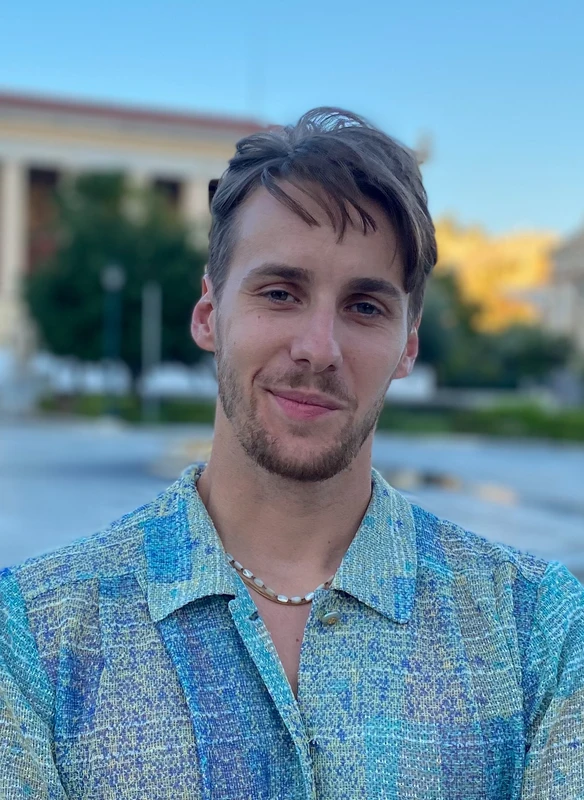
NCN Host Raph Rocher welcomes N. “Moo” Pungcharoenpong, co-founder and co-CEO at SIX Network, to discuss how tokenization is moving from hype to real-world adoption, especially through real-world assets (RWA) in Thailand and beyond.
Moo shares SIX Network’s origin story from the ICO era, how Thailand’s regulatory environment and “ICO Portal” framework supports safer public tokenization models, and how SIX works with asset owners, from closed-loop tokenization to public-market-ready structures.
The conversation dives into concrete examples of fractional ownership (including luxury assets and real estate), what’s next for SIX in 2025, why SIX has a strong Korean community, and Moo’s broader perspective as an investor and Shark Tank jury member on what it will take to make Web3 truly mainstream: simpler UX, clearer value, and better bridges to Web2.
Conversation Transcript
Introduction
Raphael Rocher (Host, NCNG): To start, can you introduce yourself very shortly? Explain a bit to us what you are doing for SIX.
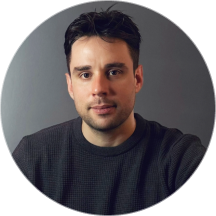
N. “Moo” Pungcharoenpong (Co-founder & Co-CEO, SIX Network): My name is Moo. I’m the co-CEO at SIX Network.
Raphael Rocher (Host, NCNG): Perfect. Thank you. Regarding SIX, can you tell us a bit the story, like the epic story of SIX Network.
How SIX Started (ICO Era Origin)
Raphael Rocher (Host, NCNG): How did it start? How did you get the idea, why you decided to do this seven years ago?
N. “Moo” Pungcharoenpong (Co-founder & Co-CEO, SIX Network): SIX started seven years ago, back in the ICO days. My background is as a tech entrepreneur, and I was also an investor in several blockchain projects back then. One project was Omifit Go, and that helped me learn how blockchain works. We realized there were many business opportunities we could transform into blockchain businesses.
At the beginning, we were “uploading” the IP business, my traditional business that I still run today. I run a platform called UPI in Thailand, which is quite popular. We have over 7 million monthly active users, and there is a lot of IP uploading on the platform. So SIX started as registering that IP on the blockchain.
What Changed in Web3 Over the past 7 Years
Raphael Rocher (Host, NCNG): You started seven years ago, what changed in the past seven years? How did you see the whole Web3 ecosystem evolve?
N. “Moo” Pungcharoenpong (Co-founder & Co-CEO, SIX Network): Many things changed. First, on the user front: back then there weren’t many users, most people were crypto investors. They invested in projects, received tokens, and tried to profit. That still happens, but what’s different now is we see many more real use cases in Web3.
SIX is focusing on building our own chain, and on RWA we are tokenizing assets, especially in Thailand, onto blockchain. A second major change is local regulation. Thailand has become more friendly: the government offers exchange licenses, OTC, and there is also the ICO Portal framework where projects can work with regulators and list on local exchanges. That makes it much easier today for partners and traditional asset owners to tokenize assets and work with us.
And of course the market is bigger, more liquidity and traders than before.
How SIX Works With Asset Owners (Closed Loop vs Public)
Raphael Rocher (Host, NCNG): Let’s say I’m interested in tokenizing some of my assets and I want to work with the network. How would it work? Can you run me through the process?
N. “Moo” Pungcharoenpong (Co-founder & Co-CEO, SIX Network): There are two kinds of projects. If you want to tokenize an asset in a closed loop, meaning you don’t plan to sell it publicly, our platform can work with anyone.
For example, if I own a yacht and want to tokenize it: maybe it costs one million USD and I tokenize it into 20 “tickets” of 50,000 USD each. People can buy a ticket and become partial owners, like a timeshare. If the asset is sold later, they can be reimbursed. Trading the whole yacht is hard, but trading fractions is easier.
This can be done legally by creating an entity to hold the yacht and issuing tokens or NFTs, like 20 NFTs, tradable on our platform. When NFTs/tokens are traded, the legal entity helps transfer ownership. The token/NFT can also track usage and value remaining per ticket.
But if the asset size is bigger, 10 million, or even 50 million, then it’s hard to sell among friends. If you want public liquidity, you need to work with legal entities and government agencies. In Thailand that’s done through an “ICO Portal” that has a license from the local SEC and works with the project owner so public customers feel safer. In that model, SIX comes in as the technical partner, working with the project owner and the regulated agency to make everything smooth.
Making Tokenization Mainstream (Beyond Luxury)
Raphael Rocher (Host, NCNG): How do you see this evolving in the future? What’s the next step, how do we make sure more people use it and it becomes more recognized, cleaner, safer?
N. “Moo” Pungcharoenpong (Co-founder & Co-CEO, SIX Network): Right now, many tokenized projects are luxury things, assets people don’t want to own 100%, so they tokenize fractions. But long term, to make tokenization popular, we have to tokenize normal daily-life things. A club membership can be tokenized, for example.
One interesting project in Thailand tokenized a whole condominium building, but instead of selling by units, the fraction is as small as one square inch. People can invest by buying small pieces. When the project earns income, dividends can be paid by “square inch” owned. If someone accumulates enough square inches to equal a whole room, they can convert it back to a full room.
Raphael Rocher (Host, NCNG): I love that ownership model, because for many people, the minimum to invest in real estate is still too big.
N. “Moo” Pungcharoenpong (Co-founder & Co-CEO, SIX Network): Exactly. If the ticket size per token/NFT is small enough, it becomes accessible for smaller investors, and that’s how it becomes popular in the long run.
What’s Next for SIX (2025 and Beyond)
Raphael Rocher (Host, NCNG): If these are the next steps, what’s next for SIX? Where are you moving in 2025 and in the future?
N. “Moo” Pungcharoenpong (Co-founder & Co-CEO, SIX Network): Two things. First, more use cases have to come up and become showcases so people understand what we’re doing. We’re trying to find a good showcase in each industry and bring in leaders to pilot projects.
Most tokenized projects today are in real estate, but there are also other use cases like memberships or club cards. We expect at least 5 to 10 interesting projects in 2025, then we can showcase them to more project owners and customers to join RWA tokenization.
This is real business: we try to bridge the investor, the project owner, and the technology provider, and link them together to create real-world outcomes. Hopefully in the next few years it becomes normal, everyone should do it.
Why SIX Has a Strong Korean Community
Raphael Rocher (Host, NCNG): You actually have a massive Korean community. Why do you think you have so many fans in Korea, and why should Koreans be interested in SIX?
N. “Moo” Pungcharoenpong (Co-founder & Co-CEO, SIX Network): From the origin of SIX Network: Korea has been a very big crypto market and crypto popularity is very high. From day one, we knew we had to start with Korean partnerships. Our ICO launched in both markets at the same time, Thailand and Korea.
We have our own local team in Korea to talk to customers, do marketing, and develop projects. In the past we also worked with some K-pop collaborations, tokenization and NFTs, so over seven years we built a strong local Korean fan base, and we hope it continues.
Moo as an Investor (500 Tuk Tuk) — What He Looks For
Raphael Rocher (Host, NCNG): On top of SIX Network, you’re also an investor. I think you founded 500 Tuk Tuk. If you give me the three things you look at first to decide whether you want to invest, what are they?
N. “Moo” Pungcharoenpong (Co-founder & Co-CEO, SIX Network): The first thing: are they willing to use technology? Today it can be any business, F&B, cosmetics, anything, as long as the owner is willing to sell online first. Social platforms let scalability jump even if it’s not a “tech company.”
The second thing: can they find smart people to work with them? Vision matters, but also the ability to attract talented people who can execute. If we have those two, we invest small first, track progress, and then invest more over time.
And of course diversification: investing is risky, so I invest in many companies each year. Many fail, but one big winner can cover the losses.
How Web3 Becomes More Open to “Smart People” (UX & Web2 Bridges)
Raphael Rocher (Host, NCNG): You’re also known for being on the Shark Tank jury in Thailand. How can we make smart people more open to Web3, so that tomorrow we see more Web3 projects, more blockchain ideas?
N. “Moo” Pungcharoenpong (Co-founder & Co-CEO, SIX Network): The technology gap is still big, and Web3 isn’t easy to use. Even trading tokens, DeFi, using MetaMask to swap coins, is harder than centralized exchanges. The experience must be much easier and easier to understand.
Web3 people have to be open-minded and improve UX to convert Web2 users. Web2 already works well for most people. The key pain is centralization and abuse, but many other things are “fine.” So Web3 should work with Web2, build on top of it and add decentralization where it matters, making adoption faster.
Closing & Call to Action
Raphael Rocher (Host, NCNG): I think we’re at the end of the time, do you have one last thing you want to add, maybe a small call to action for people to start using SIX?
N. “Moo” Pungcharoenpong (Co-founder & Co-CEO, SIX Network): Thank you, and thank you VaaSBlock for this podcast. SIX is focused on RWA and we are one of the leaders in Thailand, one of the biggest in terms of tokenized projects and AUM. If you have a project you want to tokenize or want to partner with us, feel free to contact us on any of our social media.
Raphael Rocher (Host, NCNG): Thank you very much for this interview.
About SIX Network
SIX Network is a Thailand-born Web3 infrastructure project focused on building its own chain and accelerating real-world asset (RWA) tokenization. Founded during the ICO era, SIX began by exploring how blockchain could register and protect intellectual property (IP) at scale, then evolved toward enabling compliant tokenization models for traditional assets. Today, SIX supports both closed-loop tokenization (private fractional ownership) and public-market-ready tokenization workflows that can require regulated partners, working alongside licensed entities such as Thailand’s ICO Portal framework to help ensure legitimacy and user confidence. SIX also maintains an active international footprint, including a long-running presence in Korea through local partnerships, market development, and community-building initiatives.