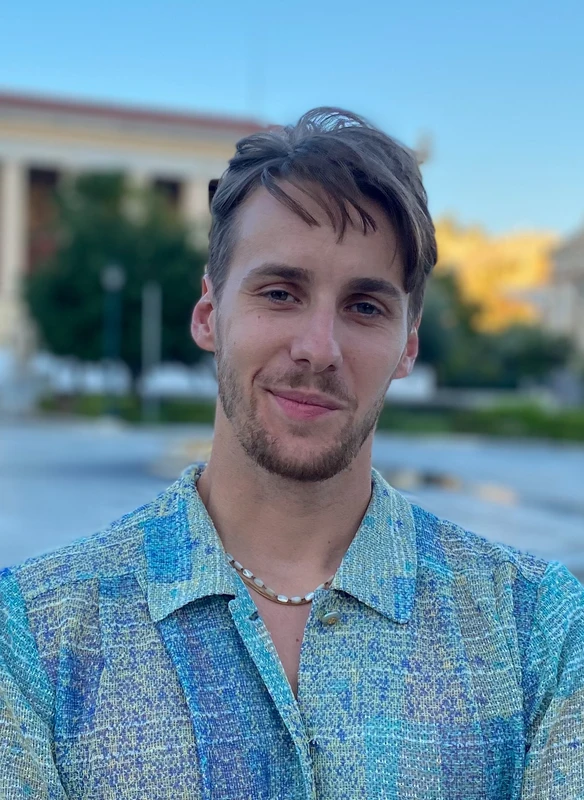
TL;DR: In this episode, NCNG host Raphael Rocher speaks with Dan Thomson, founder and CEO of Sensay, about the long arc from early crypto adoption to building autonomous digital replicas. Dan shares how his experience across hospitality entrepreneurship, a 2017-era crypto index fund, and DeFi insurance informed Sensay’s mission: creating verified personal replicas that can act on your behalf—today as assistants, and long-term as a form of digital legacy. They discuss the shift from “LLM wrappers” to agentic assistants, the importance of identity and authorization as replicas become more capable, and what Sensay is shipping next (Telegram autopilot, interactive video replicas, Discord and email tools), along with its token/NFT-based replica economy.
Context
Raphael Rocher welcomes Dan Thomson, founder and CEO of Sensay, to explore the ideas and experiences that led to building autonomous digital replicas.
Dan explains his path through early Bitcoin discovery, launching a crypto index fund, and working in DeFi insurance—then connects that to Sensay’s goal of creating a replica that feels like the real person while remaining verifiable and permissioned.
They also discuss where AI is heading as systems become more agentic, and the practical product milestones Sensay is releasing to make replicas useful in everyday workflows.
Conversation Transcript
Introduction
Dan Thomson (Founder & CEO, Sensay): My name is Dan Thomson. I'm the CEO and founder at Sensay, which is a platform designed to create autonomous, digital replicas that are, indistinguishable from a real parts of the. My background is overall a mixture of, finance, hospitality and the last four years, five years now, working, full time in Web three.
And I hadn't the time, really, so they kind of gave me a quick crash course on it, and I said, that sounds fantastic. Love it. And that, kind of let me down the. The inevitable rabbit hole of crypto. So I started off by looking into it as a form of payment, but realized the potential of it. So I was very lucky enough to buy some Bitcoin back then. And then even more lucky to essentially lock it away from myself, because I probably would have sold it a lot. Quite a few times. Since then, I started getting more into sort of. But at the time, I still had a chain of restaurants and bars to run, so my focus was really on that and not really in the sort of finance world. Ventured a bit more into web3 space, even though it was more sort of on the retail side, as, as I set up one of Europe's first index funds for crypto in 2017, based out of Gibraltar. And so that was a private fund, which essentially ran as an index fund based out of Galter, as a, as a co founder and partner on the business development side.
Quite a sad, sad time, which. But at the same time, it freed me up in a way that I hadn't really been free since I was 18, 19, I guess. And so I found myself suddenly with this, like, newfound freedom. Not that not much money, but enough to sort of get me to Latin America. And I started traveling in a way that I should have done when I was a lot younger. And during the pandemic, it was amazing because it was kind of this opportunity to travel when, you know, no one else is really traveling. And during that time, you know, I enjoyed the first sort of six. 6 months really before my mind sort of needed something to do. And this was around. This was, At this point, it was defi summer. So defi really started kicking off. And defi was, you know, essentially things like when I've been encrypted before. Decentralized exchanges, for example, hadn't really existed in a. So suddenly this whole new layer to web3 and crypto just exploded into the space. And so I was participating and essentially, making back some of the money that I'd lost while traveling and, from the previous company before I. Got offered a job to come on as the, head of marketing and cmo and head of business development at, Insure Ace, which is a, defi insurance protocol based out of Singapore.
I started there, and that's where I worked for the last, four years up until I decided to. Would have been, what was four years. Get my years confused where I'd worked as insurance for, two and a half years, before I decided to, start, Sensay. Because Sensay was this idea that I'd had for. So even before I got into crypto, properly in 2017, I'd written these books around digital immortality and mind uploading. Both based on my own personal philosophy and based on personal experiences. But, you know, I always like the idea of creating, some form of everlasting version of ourselves, something that transcends even. Our own selves and definitely gets away from the, sad fact that most of us will be forgotten after two or three generations. So I went through this bit of a existential crisis when I was, let's say, 24, 25. Very young to be having that. But, you know, I studied philosophy at university, so probably quite old for that. And I ended up writing these books. So the. The first one is called. Immortality in a digital age. And, you can find it on Amazon. And the second one is called the Digital Afterlife.
The first one is about this exploration of the philosophical side of whether or not, if it were possible, should we create digital copies of ourselves that could live essentially forever. And even when I wrote that, I understood that when you can create one digital replica of yourself, there's nothing stopping you creating multiple digital replicas of yourself. And so even then, and this is before DEFI really exploded, even back then, I understood that technology like blockchain technology would be vital to creating some kind of verification that your digital replica is acting on your behalf. So as soon as you give them any kind of autonomy, as soon as they can actually start doing things for you, anything that you can do online that your replica can do, you know, you need some way of verifying that it is your official replica. And the concept of having a, a unique wallet tied to every person with some kind of proof humanity in kyc, which then has any of the actions that your replica can perform all on chain. And those actions themselves can essentially be verified by the, by the, whoever they're interacting with and hire back to the person who they are authorized to work on behalf of. So even back then, you know, I had this, this, this tie into web3 without even realizing it when I wrote these books.
So it was inevitable that when the explosion in AI came around two years ago with chat GPT 3 and 3.5, it triggered it in my own mind that I was, like, okay, now, now I actually have to build out this technology that I wrote about all these years ago. I have to actually do this thing. And I was really enjoying working for another project. I wasn't, definitely wasn't ready to go back in, especially after how, you know, tough it had been to wrap up the previous businesses after all the time building them. But this felt bigger, this felt more important. And this. Was unavoidable. Otherwise, I know I would have sat back and watched someone else do, exactly the same thing and would be, you know, very sad about that. So Sensay was started by myself and a few co and then I brought on the co founders to build out this incredible technology where we are literally building this form of digital immortality by creating perfect, indistinguishable, autonomous digital replicas of ourselves that can interact with the world around us, saving us huge amount of time, day to day, but also will exist long after we're, we unfortunately leave this planet. So it's, it's a life lifelong story that combines. My philosophy from university, my personal experiences. And, there's plenty of stories there about, my own brushes with, mortality.
I live a quite adventurous life and lots of extreme, sports in there, so definitely had a few close calls along the way.
Combined, with the books I wrote, combined with my experience in, in web3 and tech over the last few years and and then the desire to share my, my knowledge, my stories, my, my adventures, and with, you know, not just the people around me now and, and build a really useful tool for people to use now, but also for generations to come. Like, if I. If my great, great grandkids want to have a conversation with me and get to know me, who I am, and they want to learn about what I did in my life, you know, that will be possible for their generation. Whereas I, unfortunately can't do the same with my great great grandparents. So it's a really incredible tool for transcending generations, but also, you know, in terms of the applications of the technology here and now, and, you know, that all becomes possible because of AI and Web3. Precisely on this, on this matter. AI plays a big role in the development and in the creation of your products and the evolution of your business. Now, AI is also a thing that we hear a bit everywhere, these days, especially in Web3, especially like in tech in general, but specifically in Web3, is used and overused a bit for any kind of, usage.
From Hospitality to Web3
Dan Thomson (Founder & CEO, Sensay): My actual sort of earliest ventures into, Web three was. Probably around 2015. When I. Across bitcoin for the first time because I had a chain of restaurants in London, and, I was getting more and more fed up with payment systems. And so someone came along and said, have you heard about this digital currency called bitcoin?
And so that was a couple of years doing that, at the same time as. Running the restaurants and bars then? Pretty much. I actually kind of come out of that. Just before the pandemic hit. And the pandemic then subsequently also closed all the restaurants and bars I had, which was, quite a.
Early Crypto & Index Fund Journey
Dan Thomson (Founder & CEO, Sensay): I think we're still. We're getting there. Don't get me wrong, it's getting. Much better. And the ability of how we can apply the technology to our day to day lives is incredible already. I mean, I think everyone at this point, especially anyone probably listening to this, has used AI for everything from content creating to simple.
So we've just launched interactive replicas. So you can actually have a live conversation with a, talking video, Dan Bot, and can interact with, danbot Live and talk to it, and it will talk back to you, which is incredible. So coming to a Google Meet near you very soon. We've launched, our autopilot on Telegram so you can have your replicas interact with people on your behalf on Telegram. We've got our discord, bot coming out very soon and we've got our email, drafter coming out very, very soon for public as well, which is super exciting. For our next big updates, keep an eye out for middle of November at Web Summit.
We've got something really, really huge coming out, to demo and launch at Web Summit. So we're super excited for that. And yeah, for anyone else who wants to get involved with Sensay, we did our fundraising through Sensay Token earlier in the year. All that's been vested out now. Sensay Token forms a part of our ecosystem as each replica will be minted as an NFT and will be able to be traded using the Sensay Token on the platform in the not too distant future. Yeah. The main thing really is just get involved in the conversation. Our website is Sensay IO that's S E N S A Y. And you can find any of our social media at, with Sensay or myself on most social media. Sensay Dan. It's a really incredible time. I mean, the next. Two years, three years in terms of, like, AI and development in general and Sensay's development on the whole, you know, specifically, it's going to be a really fascinating time to. Be around this kind of technology and see how fast things develop and grow, in this incredible sort of space that we're in.
Insurance & DeFi Insurance
Dan Thomson (Founder & CEO, Sensay): It's a timesaver, but the reality is it's still a little bit limited. And there's lots of AI developers out there and lots of software companies that are really finding a hard, product to sell that, justifies the cost of actually operating the AI, which in itself is not necessarily cheap at scale.
Raphael Rocher (Host, NCNG): So the real wow moment, I think is going to come when there's some agency to it, right? When you can say something like, I don't know, the equivalent of asking Siri to order your pizza. And it would know the pizzas that you want and how many, and they would go away, order them all, and have it delivered to your door.
Why Sensay Exists
Raphael Rocher (Host, NCNG): explain to me and give me a bit of context regarding. The way you basically evolved in the Web three, ecosystem. Where you're coming from, who you are, and what you're doing for Sensay.
With AI You've also got the other half, who are using a lot of AI to, weaponize it against. Against other people. And that's where we as a species are. Quite short sighted and very unfortunate that we live in, in that kind of world where that's even, even a consideration where faced with this incredible technology, the, the only thing we can think of is how do we stop people using it to blow us up and how do we use it to blow other people up?
With toxins and bad reactions. And in your case, more specifically related to Sensay. Can you maybe, simplify a bit? The way you guys use AI and how, it's integrated, within the product, basically. Yeah, of course.
Dan Thomson (Founder & CEO, Sensay): Yeah. Sorry, I went off with a bit of a tangent there. Yeah, so, how Sensay helps us in that next generation is exactly that. So when with the AI really expanding, Into everyday use and the common sort of use of these agents. Having your own personal replica becomes like having a personal assistant, that is. Knows exactly what you're looking for, that it knows exactly who you are and can answer things for you. So all of the mundane tasks, all of the things that you wish you didn't have to do, but, kind of have to do, are happy to do it can do for you. So, for example, even now, The tech is getting there. It's an early stage, but it works. So even now, my replica is already good enough that it can reply as if it were me, to telegram messages. And it drafts my emails for me. So we've got this as early versions of our tech and it's will be available to the public in the next month or so. But my replica trained on my knowledge, my understanding, my documentation, basically, you know, everything that is me online. Can reply as if it is me. And, to direct telegram messages and will also. Draft all my email responses every day. So it means that no longer do I have to spend time, like, reading and writing them out. I can just edit, edit them, before they get sent out. And it means while I'm on a call or an interview or something like this, my team isn't blocked because they don't have the relevant information from me to be able to operate efficiently. How we, you know, see ourselves in the future, where everyone has their own replica going forward is just this amazing tool that they. That anyone can use anytime. To actually, React on their behalf. Everything from matchmaking to job hunting to. Basic emails and messaging to simple replies that, you know, you might. We get asked a lot of stuff every day that's the same questions by different people or from the same people. So by quickly giving them access to that information without having to. Spend time reading and digesting every single message. Where we live in a world where there's just rounded messages all day long, every day. So by enabling a version of us to answer for us as if it is your own perfect personal assistant makes a lot of sense. And personal, assistants were always the tool of. Senior executives in big companies. And they're there for a good reason, because they save time and they let you work on the things that are most important to you. And replicas act in the exact same way, based off of your own sort of knowledge and experience and skills that you train it on.
Dan Thomson (Founder & CEO, Sensay): To exactly explain who, you know, who should, And. And that's why it keeps going around and around in circles, right, in these kind of conversations. So when the. When the AI generates new messages based off of training data that comes from individuals. Throughout sort of history or any kind of open source data. There is an ego element from certain individuals where they think, oh, my data's been used to, you know, train these replicas on, and that, that data is valuable to me. And it's, it's personal data. And they're, they're not wrong. That is their ip. And if it is out on the Internet and open source or it's been scraped, you know, illegally, then that becomes very difficult. But it also becomes extremely difficult to. Find out exactly whether or not it was scraped in the same or taken illegally, and then based on that information to then generate new knowledge and new. New content. New content, whether it's images, whether it's text, whether or not it's based off of an artist or a writer or some. Somewhat. Some individuals out there. To say that it is. The ownership should translate to the individual is based off of is very, very difficult because it's taking into account a lot of different things and the processes of, A lot of context that goes into the outputs. Not just that one writer or that one person. Sometimes it can be forced down a rabbit hole by, you know, saying, act as a certain person. And then you get into this whole issue of, identity and privacy, and then suddenly acting as someone. And that's something we deal with a lot because, you know, that's, a lot. A lot of what we had to face. But in terms of generated content belonging to anyone, I don't think it should. I think that generate. When it comes to AI, you're taking essentially pattern recognition from human humanity. And, sure, there are certain people who are more distinguishable than others. I mean, if you take, you know, Trump's tweets, for example, it's a very distinguishable way of reading someone. Opposed to, I don't know, let's, say a Morgan Freeman who is recognizable by his voice, but not necessarily by the way he writes. Likewise Gordon Ramsay, who you could probably recognize by, you know, the, the language he uses. But again, in those sort of situations, you know, you, you see their, their sort of television personalities and their personality put out on social media.
AI Revolution & Agentic Assistants
Raphael Rocher (Host, NCNG): In your case, what do you see? How do you see it evolve? Like, what do you think is the limits? What is the actual AI revolution going to look like, where is it going to happen, etc. And in a second time? More like apply to your project. How are you going to use AI? How are you using AI, and how are you prepared for the evolution linked to the AI? Where are you? AI ecosystem, basically. That's a great question. AI, in general does get thrown around far too much. But itself in its own language, is quite broad.
Dan Thomson (Founder & CEO, Sensay): AI does get used by a lot of companies that are using AI now and argue, and to be fair, probably were before, but I think now that AI has, become the buzzword. Everyone has to be using AI in some form or another, otherwise they're falling behind whether or not they were already integrating with it or not. I think it does get used in a lot of ways that are, simply rappers on other tech. And so the applications of it could easily be wiped out. And I think we're moving faster and faster towards a, day and age where, you know, an entire application of software could be built through one simple prompt to, a sufficiently good LLM.
Raphael Rocher (Host, NCNG): And LLMs are themselves are fantastic tools, but they're not necessarily the way we achieve AGI or asi. Moment of artificial intelligence and how, how we're going to get there. What's going to happen? I mean, we're still quite far away from where AI has the same capabilities of a human brain.
Dan Thomson (Founder & CEO, Sensay): And so you wouldn't actually have to do anything else. It's literally just a case of, you know, one. One stop command. Unfortunately, we do live in an age where, you know, while on the one hand, we have lots of people creating incredible things, art, drone displays. Fascinating tools.
Raphael Rocher (Host, NCNG): Makes sense. One more question. Related to AI the way we talk about it these days, most, of the time is. Mainly associated with the question of, intellectual property and data protection. I mean, data management in general. How. What is your take on this? How do you see that evolve? I know most of the question these days relies and talks about and focuses on generative AI, which is not specifically what we're talking about here. But in general. Something that is generated by an AI or something that is, improved or enhanced by an AI. Who owns the data? Where is the data going? What do we do with the data protection? And, same with the paternity of the art pieces or of the things that are done by AI. What do you think? Yeah. So, It is extremely difficult to quantify.
Identity, IP, Privacy & Authorization
Dan Thomson (Founder & CEO, Sensay): And that's, that's, you know, that's, that's the true tragedy of all of this. We have never been closer to this incredible self sufficiency and incredible age where this technology provides for us like, like never before. Provides for us in a way that we couldn't even imagine. Five years ago, let alone, you know, before that. But having a. Having, you know, a tool that can figure out some of life, life's biggest questions and problems. Having a tool that can find efficiencies in everything we do, especially in key industries, agriculture, you know, mining and shipping, so that we have available to us everything we could ever need to survive as a, as a, As a human race. Having AI that can serve as medical assistance. That, you know, combined with your wearables, can give you specific medical advice to you as an individual so that you we can all live longer, healthier, while understanding our own bodies better and not having to go to pharmacists and doctors who are paid off by, you know, pharmaceutical companies. Recommend products that they're paid to recommend. All of this combines into this just incredible, you know, advancement that we unfortunately might never get to see because of our own. Our own lack of imagination. But, yeah, I think the wow moment is. Is a few of those, actually, that I've mentioned. The biggest one I think will actually probably be the. You know, it's, either going to be somewhere between literally fixing world hunger and, AI Doctors. AI Doctors that are, personal can, you know, constantly monitor your blood and, liquid levels and any hormones, any other spikes in brain activity and. Oxygen levels, everything in your body that indicates health and reaction to certain things means we're going to, you know, identify issues on an individual level much, much faster, so that we're much in, much better in tune with our own bodies and, Will enable us to essentially live, like, much healthier, happier lives because we'll be able to order the food that we still enjoy, but know that it's going to be good for us and not, you know, fill our body with.
Raphael Rocher (Host, NCNG): But if. Do you think that they are really like that in, in person? Probably not. It's probably more of a Persona they put on. So when it comes to the actual generation of the text or images or videos based off of those training models, the IP becomes extremely blurry because do you count the generative model as its own entity?
Dan Thomson (Founder & CEO, Sensay): Do you count it as. Based off of the individual and even the concept of individual sort of IP and writing style. We are ourselves combinations of the lessons we've learned along the way, the teachers we've had, the, the styles we've read and the, the adaption from that. So, you know, in ourselves our own sort of IP and ownership just because we were the ones who happen to write it without crediting the people we learned from. In my mind and I see this. As a kind of a creator, but not a creative in that sense. For me. I don't think it's any different from us learning for ourselves and adapting. Historical texts and, and learnings and knowledge into our own style. And so in the same way that we do that, if AI is doing basically exactly the same thing, I think if that's taken into account, then the AI itself should be the owner. But if the AI itself is an owner, then you know that it should be treated as its own kind of entity, not the, individuals. And at the end of the day, it all kind of boils down to the fact that we, we all sacrifice convenience for. We sacrifice our own privacy and IP for convenience and publicity. Right. So a lot of the reason these people are famous because they put themselves out there, they put themselves on camera, they did all the interviews, they did all the stuff that becomes open source data. That's. Suddenly becomes scrapable for these large language models and therefore can generate it from them. And sure, there are a couple of examples that have been found where it's referencing specific books or specific works, and that becomes a bit easier to say that's not okay. But for the vast majority of. Regenerated tax is based off of things that are, publicly available anyway.
What’s Next & Closing
Raphael Rocher (Host, NCNG): Educational aspects or, just day to day sort of referencing translation? Pretty much you anything you can think of online. So there's been so many different applications of it already. I think the really wow moment will probably become in the next stage of it because at the moment it's a fun, fun gimmick and it's.
Raphael Rocher (Host, NCNG): Anyone could adapt for themselves. If I asked a. AI to draw mona, lisa from. The Mona Lisa. How would that be any different from me taking a photo of it and printing it out for myself on my own wall? I mean, or even trying. Or even trying to draw it. I say taking a photo because my. My art skills are terrible. But, I think if I were to, you know, try and paint it myself, if it were to be remotely half decent, then, you know, what's to say that's any different from an AI generating it from something, someone else's work? Yeah, that's very true. Maybe to finish very, very briefly, can you. Is there anything that you want to highlight in terms of the news that we can expect from, from us and say, what are the next updates? Any hot topics, any teasing you want to make? Yeah, so we, you know, last month we actually launched, we did a demo day where we, we showcased some of our latest, latest developments.
Raphael Rocher (Host, NCNG): Perfect. Thank you very much.
About Sensay
Sensay (sensay.io) builds autonomous digital replicas—personal agents trained on an individual’s knowledge, content, and communication style. Replicas can help with real-world tasks (e.g., messaging and drafting) and are designed with a long-term focus on identity verification and authorization as AI agents gain autonomy. Sensay was founded by Dan Thomson.