

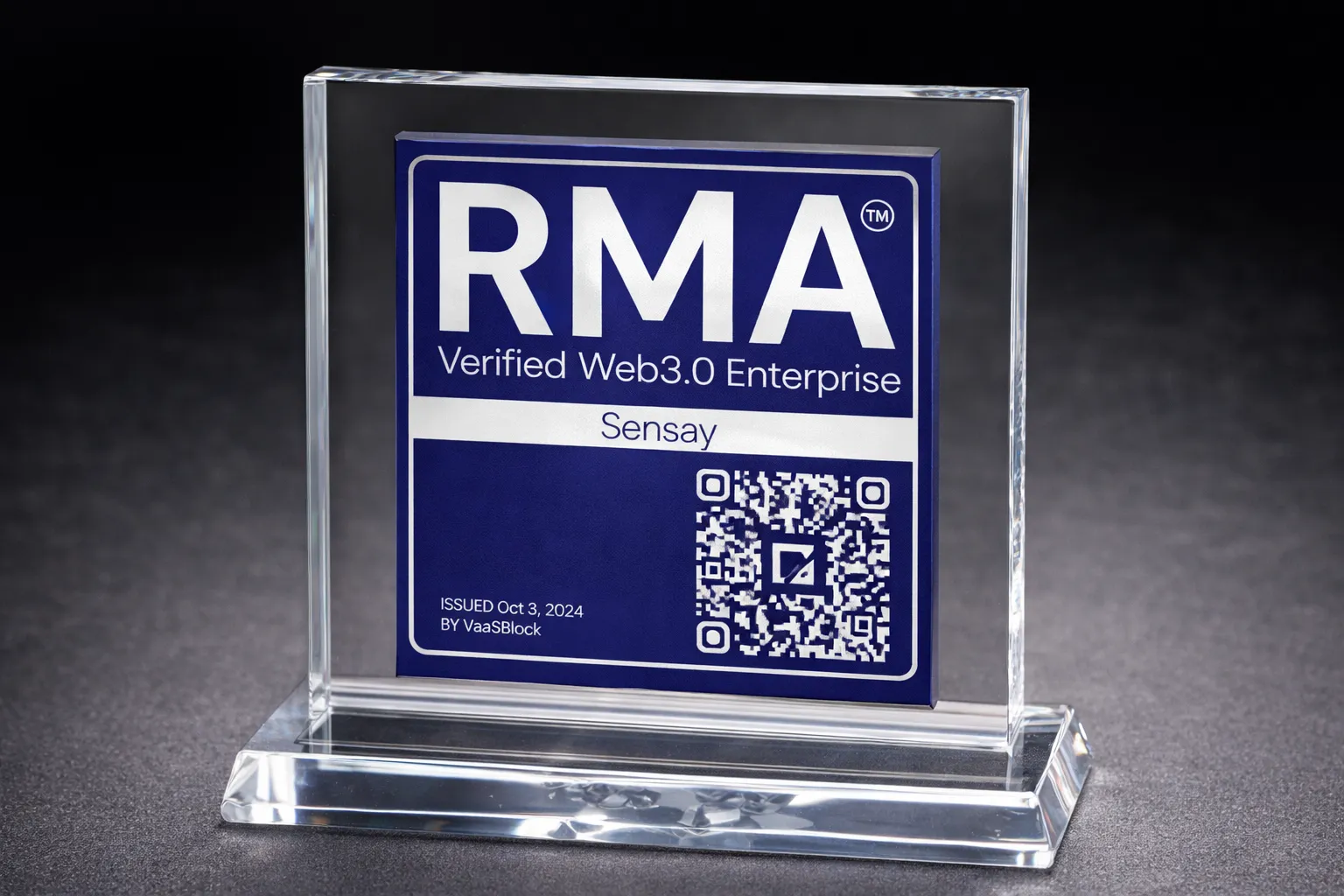
In October 2024, Sensay, a leader in autonomous AI replicas, announced that it has been awarded the esteemed RMA™ (Risk Management Authentication) certification from VaaSBlock.
The promises of AI-powered agents.
AI-powered virtual agents and avatars are transforming the way industries engage with customers, offering dynamic, interactive experiences across platforms like customer service, education, and e-commerce. These AI-driven avatars can recognize emotions, process natural language, and respond intuitively, enhancing user engagement. Companies are adopting AI avatars to personalize experiences, allowing customers to interact with digital representatives as they would with human agents, thus improving service speed and quality.
However, as promising as these applications are, they face significant challenges, particularly around privacy and data protection. AI avatars collect and process vast amounts of user data, raising questions about consent, security, and compliance. This complex landscape presents both technological and ethical challenges, as current regulatory frameworks often struggle to keep pace with these advancements. Plus, who’s in charge of controlling companies owning the AI-models processing this data?
Ensuring that these virtual and real entities can operate within secure and compliant environments remains a priority as companies strive to integrate them responsibly into their services.
Challenge: Addressing compliance concerns in AI-driven avatars
As AI and generative technology advance, so do concerns around data security, privacy, and compliance—particularly in the realm of AI-driven avatars and virtual agents. While these tools hold transformative potential, they also carry risks that can seem daunting to both businesses and users. Many worry that AI avatars, designed to collect and process personal data, might inadvertently breach privacy or misuse sensitive information without proper safeguards. Current compliance frameworks struggle to keep up with the rapidly evolving technology, leading to gaps in how data protection laws apply to AI-powered interactions.
This lack of regulation has made many cautious about integrating generative AI tools into customer-facing roles, where maintaining trust is paramount. AI and compliance may seem at odds, with AI’s evolving capabilities and current regulatory limitations highlighting the need for innovative compliance models that can adapt to these challenges. Addressing these concerns means finding a way to bridge the gap between AI’s capabilities and the structured, transparent practices required to gain user trust and meet regulatory standards. This is the challenge VaaSBlock and Sensay aim to address, collaborating to establish a reliable framework that integrates compliance directly into AI solutions.

Solution: VaaSBlock and Sensay’s Collaborative Approach
To address these compliance challenges, VaaSBlock and Sensay have joined forces, each bringing their expertise to create a solution that integrates security and regulatory compliance into AI-driven interactions. Sensay, already a pioneer in AI-avatars, is developing a powerful AI-agent specifically for VaaSBlock, designed to enhance accuracy, functionality, and compliance throughout VaaSBlock’s processes. This AI-agent is tailored to meet stringent security standards, setting a new benchmark for compliant AI interactions.
In turn, VaaSBlock has customized its Risk Management Authentication (RMA™) Badge to fit Sensay’s unique needs and market niche. This adaptation acknowledges Sensay’s advanced AI capabilities while ensuring the platform’s operations align with industry compliance standards. The RMA™ Badge, awarded after VaaSBlock’s rigorous audit, signals that Sensay’s technology not only meets but exceeds compliance expectations in data security and risk management. Together, these efforts are establishing a new precedent for trustworthy AI-powered tools, reassuring users that their data is secure and their interactions protected.
Successful Implementation – Sensay Earns Its First RMA™ Badge
Following VaaSBlock’s comprehensive audit, Sensay achieved a significant milestone by earning its first RMA™ Badge. This certification underscores Sensay’s commitment to secure and compliant AI practices, establishing them as a trustworthy player in the AI-driven avatar industry. With the RMA™, Sensay can now assure users and partners alike that their data protection and risk management protocols meet the highest standards, reinforcing confidence in their technology.
The RMA™ process, developed by VaaSBlock, serves as a recognized compliance mark across the Web3 and AI sectors. It evaluates a company’s governance, security measures, and operational practices, ensuring they align with rigorous data protection standards. For the AI industry, where compliance concerns remain a barrier to adoption, the RMA™ Badge offers a reliable benchmark, helping companies like Sensay showcase their dedication to user privacy and risk management. By securing this certification, Sensay has set a new standard for AI platforms, promoting transparency and accountability in AI-powered interactions.
Futures – Expanding AI Compliance and Security
As VaaSBlock and Sensay advance their collaboration, they are both focused on refining AI-driven compliance processes to further enhance the security and accountability of AI-powered avatars. Together, they are exploring ways to optimize the AI-agent developed by Sensay, ensuring that it can better support VaaSBlock’s security framework while expanding the scope of compliance verifications across a wider range of applications.
Looking ahead, VaaSBlock and Sensay are committed to developing solutions that anticipate regulatory changes as AI becomes an integral part of business operations. By fine-tuning their verification processes, the two companies aim to create a robust system that will empower future AI solutions to meet compliance standards from the outset. This approach lays the groundwork for widespread AI adoption, creating opportunities for AI to seamlessly integrate into fields such as healthcare, finance, and customer service with strong compliance protections.
In the broader industry, VaaSBlock’s RMA™ Badge could become a pivotal compliance standard, providing assurance to businesses and consumers alike. As AI’s role in business grows, companies like VaaSBlock and Sensay are leading the way in building a secure, compliant foundation for the next generation of AI applications.
For more information on how the RMA™ certification can enhance your project’s credibility, visit VaaSBlock’s RMA™ badge program.